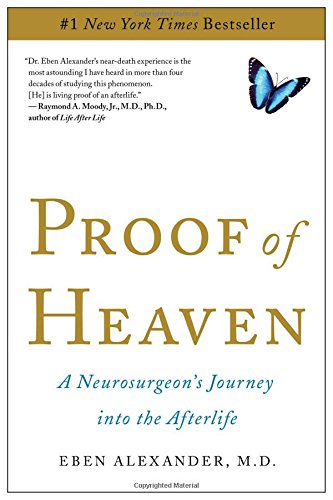

Over the past few years I've been reading fewer new books. New fiction is, for the most part, self-indulgent, meaningless narcissism wrapped inside a veneer of pretentious twattery. And non-fiction has taken to become more like fiction.
Take a look at books from a few decades ago. Greats like Isaac Asimov wrote great fiction, and also great non-fiction, and you could tell instantly which genera you were reading. Today that line between fiction and non-fiction has blurred to the point where memoirs contain largely fabricated material and novels contain pages of footnotes and references to news articles and scientific papers.
One great example is The Great Hedge of India by Roy Moxham. You start with a fantastic premise: the second largest man-made barrier the world has ever seen was once a giant thorny hedge that ran across India and today almost no one knows anything about it. Then you read the book and 80% is the author talking about himself, his travels, and his research in writing the book you are now reading. Almost nothing about the book is about the hedge itself, the book is little more than a self-referential exercise in seeing how recursive a book can be by referring to itself and the process of writing it as much as possible.
Or The 37th Parallel by Ben Mezrich. The premise is fantastic: UFO sightings and animal mutilations cluster around the 37th parallel, which is the same area where most secret US military bases are located. You then read the book and you find absolutely nothing on the phenomenon of the 37th parallel until the very last chapter. You find very little about UFOs either. Almost the entire book is about a crazy man who lost his job because he was obsessed with UFOs, the furniture he bought his wife to get her to stop nagging him about his obsession with UFOs, the misadventures he had with his equally crazy sister, and the billionaire frenemy he has who started a top secret corporation that works with the government to build private spacecraft. And it's not even written like a biography, it's written like a novel where the author injects his personal opinions throughout. About 10% of the book is fact, the rest is a story with a plot and characters and a twist ending and melodrama concocted to sell books.
Michael Drosnin's Bible Code series contains a handful of intersting facts about a statistical study of the Torah woven together with a whole heap of narrative about how the author is Indiana Jones and has to save the world. Elaine Pagles' books on early Christian history similarly contain as much narrative about the author's own quest to research and write the books as actual history.
New non-fiction has being transformed into some sort of quasi-fictional "thriller" where a kernel of fact is sewn into a narrative with characters and settings and PG-13 dialogue in order to appeal to the dumbed down twitterati and snap-crackle-and-pop chatters with three second attention spans and fifteen word vocabularies who like mass-market corporate "edgy" comedy vomit. Ten page magazine articles are expanded with loads and loads of filler to create 250 page books so wannabe Hollywood screenwriters can keep their heads above water.
Showing posts with label Novels. Show all posts
Showing posts with label Novels. Show all posts
Tuesday, October 30, 2018

Tuesday, May 17, 2011
Messenger: By Far The Worst "Sequel" to Lost Horizon I Have Ever Read
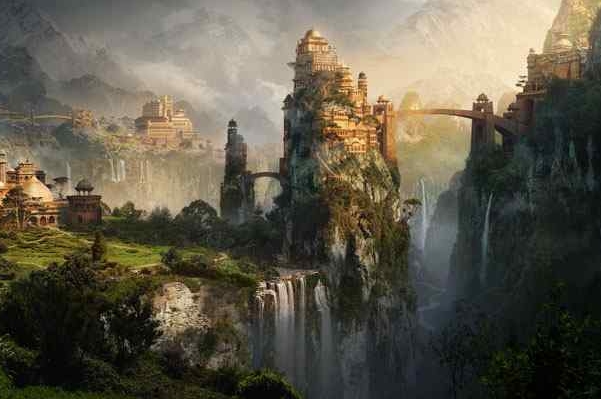
This book is so bad I must bring it to your attention, valued couple of readers. The book is Messenger by Frank DeMarco.
The first problem is that the story is told in the first person. This can work, and a lot of old writers knew how to weave complex and intelligent narritives in first person that let the reader in on an experience not otherwise possible. Today, however, about 99% of amateurish writers do this, I guess, because they think it's expected or that it looks cool or whatever. Messenger is not among that 1% that does first person right.
In this book a US pilot named George Chiari crashes his U-2 spy plane on a mission from Pakistan to China in November 1962, one month after the Chinese invasion of India, when the United States was still good friends with Pakistan (the invasion prompted an about-face in foreign policy). George's plane crashes somewhere in the mountains after his engine flames out and he denies for maybe 20 whole minutes that he can't restart it (the U-2 is shaped like a glider, so it descends slowly from 70,000 feet). Surviving relatively unharmed he runs from his plane before it explodes. It doesn't. When he decides to go back to salvage stuff from the wreck he's met by *click* hello (in movies nobody ever has their gun cocked, even when they are in hostile territory or being persued by someone, because the sound of a gun cocking is really cool and must be saved for the moment you put it up to someone's head). He turns to see a man with an antique rifle. He hears another click and turns to see he's surrounded. They tie him up and lead him to a misty valley. They climb down the valley, back up the other side, and to a bunch of old buildings that have grown together over time as the inhabitants didn't want to be caught outside when going from one to the other. It's not revealed until later that the floor of the valley is TWO WHOLE MILES down, and it's nearly impossible for him to climb down safely when he tries to escape later, yet he can do it with his hands tied no problem. He climbed nearly 11,000 feet with his hands tied after surviving a plane crash with a gun to his back all in a single afternoon! Climbing 11,000 foot Mt. Etna is a nine hour climb, and it's not four miles up on the Tibetan plateau, and the climbers aren't tied up either.
When we get there everything has been retconned!
*The fabulous buildings of Hilton's novel are now old shacks (the piano is still there, though).
*The man who recounts the story of Lost Horizon, Rutherford, was really named Kallen.
*Henry Barnard really is Henry Barnard and the name Chalmers Bryant was made up in Lost Horizon.
*The plane wasn't refueled. The Maharaja had equipped it with extra fuel tanks because he didn't like to stop unless he had to.
*The valley itself doesn't save anyone from aging, it's a drug that magically only works inside the valley (because everything's better with drugs).
Excuse yourself there, but I don't want to know what really happened, or what's believable, I want Lost Horizon!
Nothing happens for pretty much 97 pages. We find that ALL the people from the first book and indeed everyone in Shangri-La are assholes. They capture George AT GUNPOINT, take him to their monestary, show him EVERYTHING and then say "now we can't let you leave or the Chicoms will know we're here." Why the fuck did you bring him there in the first place, just to make him prisoner for the next two centuries when he most likely would have died of exposure in a few days? In my expert opinion (I'm no expert but I happen to think my opinion is expert) living as a captive for two centuries while everyone you care about thinks you're dead, grows old, and dies up to four or five generations, is far far worse than actually dying in the mountains after two days of struggle, but that's just me. George want's to see his family again. He wants to go home to his fiancee before she inevitably marries that jerk from school who will get her as a rebound when she's depressed. Tough shit. The Shangri-La mafia kidnaped him and now he's stuck there. This. Does. Not. Make. Sense.
When he finally does get around to escaping, on page 99, I had to skip ahead. I had to find out if he made it so as to put the assholes in their place. Nope. They keep him there for 17 years. Then another pilot crashes there who is working for the Chicoms and the folks at Shangri-La say "oh shit, we need to get the US to save us from the Chicoms so we can keep our asshole village safe!" They're all too old and would die if they left, so they have to send George out. He has to make it back to the US and write a book about his experience, telling the world about the existence of Shangri-La so it can be protected from Chicoms AS IF THE WHOLE REASON FOR KEEPING HIM THERE THE PREVIOUS 200 PAGES DIDN'T HAPPEN! "Sorry we wasted your life, but we have to go back on our raison d'être just because we can't fight the Chicoms on our own." Well damn, if that's not a kick in the teeth I don't know what is! Boo hoo. Cry me a river, build me a bridge, and get over it. If you ask me there is nothing worth saving in Shangri-La. In Lost Horizon Shangri-La was a time capsule for preserving civilization from a future world destruction. In Messenger Shangri-La is like a cocoon from the movie Cocoon where old folks get young again, only instead the old folks are assholes and they need to stay in their valley to smoke cigars and eat tsampa and thumb their noses at the world.
If I were George and my escape plans failed and I was kidnaped by assholes, I would burn the whole monestary and the valley to the ground. We all die together or you let me go. These are not noble people whose way of life should be preserved. These are monsters who should be vanquished.
When he does leave he has Stockholm Syndrome. He doesn't care about his fiancee or what happened to her. He doesn't care about his brother and sister, or his parents (who he says are probably dead). Nope. He pines to return to Shangri-La! He loves his captors because in those 200 pages I skipped there was something about a drunken monkey (like Stoic philosopher Chrysippus, who died laughing watching his donkey get drunk, I guess Frank DeMarco added this WHOLE CHAPTER for laughs or something) and some new age fluff about coincidences like in the Celestine Prophecy (which has piss poor writing and nothing follows logically since it's about impossible coincidences, all by the author's admission because he didn't want to write a believable novel but wanted a venue to rant about his beliefs).
And that's the book. It sucks. It sucks worse than the other "sequel."
Thursday, March 11, 2010
Hero
I'm reprinting some entries that were on the old Urban Mystic that got taken down. This one is from 21 February 2007.
A few days ago I finished reading a book, The Empty Land by Louis L'Amour. This book is amazing because it presents something that so few books today (or movies or television programs or anything else for that matter) even consider a possibility: a real hero. The main character, Matt Coburn, is a real hero. He's not some grey area, he's not out for revenge, he's not looking for some boon or reward. Matt Coburn fights for what's right because it's the right thing to do. He is an altruistic hero who seeks to help others and get nothing in return; in fact he knows in return he'll be asked to leave town after he helps free it from crime! Now that's a hero. There are people like Matt Coburn on earth. You hear about them in the news when that labourer pushed the man out of the way of a train or on 9/11 when people went back into the burning buildings to save others when they could have gotten themselves to safety. But books these days don't care about the real honest hero. They want "anti-heroes" or vigalantees seeking revenge. I for one enjoy reading about heroes, actual or fictional. Everyone should go out and read this book; it's good spiritual detox from the materialistic culture that bombards us every day.
-Dee
A few days ago I finished reading a book, The Empty Land by Louis L'Amour. This book is amazing because it presents something that so few books today (or movies or television programs or anything else for that matter) even consider a possibility: a real hero. The main character, Matt Coburn, is a real hero. He's not some grey area, he's not out for revenge, he's not looking for some boon or reward. Matt Coburn fights for what's right because it's the right thing to do. He is an altruistic hero who seeks to help others and get nothing in return; in fact he knows in return he'll be asked to leave town after he helps free it from crime! Now that's a hero. There are people like Matt Coburn on earth. You hear about them in the news when that labourer pushed the man out of the way of a train or on 9/11 when people went back into the burning buildings to save others when they could have gotten themselves to safety. But books these days don't care about the real honest hero. They want "anti-heroes" or vigalantees seeking revenge. I for one enjoy reading about heroes, actual or fictional. Everyone should go out and read this book; it's good spiritual detox from the materialistic culture that bombards us every day.
-Dee
Subscribe to:
Posts (Atom)