
The First World War could have been avoided, in 1914.
Had Russia not rushed to the aid of Serbia the war would have ended by December in an embarrassing Austro-Hungarian defeat.
Had Germany not rushed to provide blanket support (the "blank cheque") of Austria-Hungary after Serbia was only 20 minutes late responding to the Austro-Hungarian list of demands the chickenhawks in Vienna would have been forced to sit on some ice, and then, in 1916 when the emperor died, the empire would have fallen apart on its own.
Had Britain not rushed to defend Belgian neutrality against the evils of the Hun (7,000 dead Belgians were worth more to the British than 10 million dead Congolese) the war would have ended in 1914 with a repeat of the Franco-Prussian War 40 years earlier.
The war could have been avoided in at least three different ways. The question is should the war have been avoided? If not 1914 would not another casus belli arisen eventually as two bloated and decrepit empires teetered on the verge of collapse and as Germany would inevitably sought its place in the sun? Was it better to preempt a potentially more disastrous future war by charging into war in 1914?
(Coming in July)
Showing posts with label First World War. Show all posts
Showing posts with label First World War. Show all posts
Thursday, June 22, 2017

Saturday, October 29, 2016
NATO Delenda Est
Over the years, since 2002, I've intensely studied the First World War, and what we're seeing right now is a repeat of August 1914.
A century ago millions of men died for absolutely nothing, and millions more would survive with their minds and bodies destroyed. A world that had been stable for 40 years, where conflict between the great powers seemed impossible, was overturned, resulting in the rise of fascism and communism, and, ultimately, the death of an additional 150-200 million people over the 20th century.
There was no reason to fight the war. There was nothing to be gained and everything to be lost. And it all started because of the byzantine system of alliances the great powers had entangled themselves in. These alliances seemed to them to mark the end of all war, as war with any one member state would mean war with the whole world, and no rational person would want that. But, in truth, that system of alliances is what dragged the whole world into the war, turning a small regional conflict, no, a small regional incident, into a four year long meat grinder.
We find ourselves today in the same situation. NATO has 28 member states, including the world's only superpower, the United States, along with Britain, France, and some unstable places like Turkey and Albania. Just like those 1914 alliances, an attack on one member state necessitates war for all 28 members, guaranteeing that any regional disturbance will blow up into global war.
Pundits will assure the plebs that such an alliance is a safeguard against all future wars, but they're lying, just like the pundits of a century ago.
If Estonia is invaded, and at this point there is absolutely no evidence that Russia has any designs on the Baltic, that would drag the US into nuclear war with Russia. Nuclear war means death for the majority of people on the planet. Tell me, are you willing to die for Estonia? Are you willing to murder 5 billion people for Estonia? Because I'm not. And even though Russia has no intention of invading, it is the easiest thing in the world for some NATO guys in fake Russian uniforms to kill a few border guards in a false flag attack and spark a war if the neocons wanted one.
NATO was established to counter the Warsaw Pact, a similar alliance involving the Soviet Union and other eastern European communist states. The Warsaw Pact and the Soviet Union are long gone. The Cold War is over, and all the cold warriors are approaching their 70s and 80s. Are you, young men, willing to die in some old man's war? Are you, young women, willing to die because some octogenarians want to stroke their egos one last time?
The recent coup attempt in Turkey and their brazen acts of shooting Russian jets should make clear to all rational people that NATO represents an existential threat to the continued existence of humanity on this planet. NATO is a ticking time bomb that, when it goes off, will start nuclear war.
Donald Trump was absolutely correct. NATO is not only obsolete, it is a suicide pact and it should be dissolved.
A century ago millions of men died for absolutely nothing, and millions more would survive with their minds and bodies destroyed. A world that had been stable for 40 years, where conflict between the great powers seemed impossible, was overturned, resulting in the rise of fascism and communism, and, ultimately, the death of an additional 150-200 million people over the 20th century.
There was no reason to fight the war. There was nothing to be gained and everything to be lost. And it all started because of the byzantine system of alliances the great powers had entangled themselves in. These alliances seemed to them to mark the end of all war, as war with any one member state would mean war with the whole world, and no rational person would want that. But, in truth, that system of alliances is what dragged the whole world into the war, turning a small regional conflict, no, a small regional incident, into a four year long meat grinder.
We find ourselves today in the same situation. NATO has 28 member states, including the world's only superpower, the United States, along with Britain, France, and some unstable places like Turkey and Albania. Just like those 1914 alliances, an attack on one member state necessitates war for all 28 members, guaranteeing that any regional disturbance will blow up into global war.
Pundits will assure the plebs that such an alliance is a safeguard against all future wars, but they're lying, just like the pundits of a century ago.
If Estonia is invaded, and at this point there is absolutely no evidence that Russia has any designs on the Baltic, that would drag the US into nuclear war with Russia. Nuclear war means death for the majority of people on the planet. Tell me, are you willing to die for Estonia? Are you willing to murder 5 billion people for Estonia? Because I'm not. And even though Russia has no intention of invading, it is the easiest thing in the world for some NATO guys in fake Russian uniforms to kill a few border guards in a false flag attack and spark a war if the neocons wanted one.
NATO was established to counter the Warsaw Pact, a similar alliance involving the Soviet Union and other eastern European communist states. The Warsaw Pact and the Soviet Union are long gone. The Cold War is over, and all the cold warriors are approaching their 70s and 80s. Are you, young men, willing to die in some old man's war? Are you, young women, willing to die because some octogenarians want to stroke their egos one last time?
The recent coup attempt in Turkey and their brazen acts of shooting Russian jets should make clear to all rational people that NATO represents an existential threat to the continued existence of humanity on this planet. NATO is a ticking time bomb that, when it goes off, will start nuclear war.
Donald Trump was absolutely correct. NATO is not only obsolete, it is a suicide pact and it should be dissolved.
Tuesday, September 20, 2016
The Great War Avoided?
What if Russia did not declare war on Austria-Hungary in 1914?
Had Russia decided to stay out of the war then the guns of August would have fired on a much reduced theater. There would be no Great War. Without Russia coming to the aid of Serbia as the great protector of all Slavic peoples, Germany would not have entered the war. No Germany, no France, no intrusion on Belgian neutrality, no Britain, no Great War. One event set off the other in a chain reaction that turned a simple regional tussle into a global disaster that destroyed the old world order and provided the impetus for the birth of communism and Nazism.
So why did Russia go to war? Because they saw themselves as big brother to tiny little Serbia. Serbia is a newcomer on the world stage, and they might seem weak after fighting two wars in the previous two years. Austria was a great power, allegedly, and they were itching for a war with Serbia for years. The death of Franz Ferdinand was just a pretext. The ultimatum that was delivered to Serbia to avoid war was designed to be unacceptable. Austrian brass knew Serbia would never capitulate to so many outrageous demands. Everyone else knew so too, and even the Kaiser begged Franz Joseph to be more reasonable.
What everyone knew turned out to be wrong. Serbia, eager to avoid war, did capitulate to the shopping list of unreasonable demands. Unfortunately they were about 20 minutes late in delivering the telegram, so Austria went to war. The Kaiser pleaded again, but the Austrians would hear none of it.
Now this clearly appears to be a David versus Goliath situation, and I would agree, but one needs to remember that David won with a single shot! The story of David and Goliath is that of a foe who appears to be invincible but is really fatally flawed, versus an opponent who appears to be small and weak but who is really swift and brilliant, and capable of delivering a fatal blow before the enemy has time to react. While on paper Serbia looked hopelessly outclassed, the reality was the exact opposite.
The Austrian military was weak, calcified, and decrepit. There was no cohesion within the empire, that was threatening to rend itself in three directions. Austria-Hungary really was a very sick empire. The Hungarians constantly tried to stonewall every piece of legislation the Austrians tried to pass. Emperor Franz Joseph, then age 84, had sat on the throne for 66 years! The people considered him to be the immortal Emperor, because multiple generations had lived and died under his rule. There was hardly a subject alive who remembered a time before this tired old man ruled. Several times he dissolved the Hungarian government to curb their defiance, and it was only he who could hold the empire together. The moment the emperor took his last breath it would only be months before three nationalities who were constantly at each other's throats would tear the empire apart.
Franz Joseph lived to see Austria's fall from grace in the Austro-Prussian War. Prussia was now the new head of the German peoples, and their military seemed unstoppable. Austria was old, and empire of geriatrics, unable to think outside of the mouldy box that had been stored in an antiquated cedar chest for centuries. Reform was impossible, and, as a result, Austria would never be able to adapt to modern warfare.
Serbia, on the other hand, was just the opposite. The Kingdom of Serbia was young and new, and, unlike most other European nation states, was ruled by a Serb king, not a German! Instead of approaching the Germans on bent knee, begging for an inbred king, the Serbs pulled one of their own out of the mud, a peasant farmer, and made him king. A full-blood Serb ruled over the Serbs, and the people were beaming with pride.
Time and again we see that superior numbers and equipment is no match for superior training and will to fight. Serbia looked weak after fighting to Balkan Wars. Their territory had increased dramatically, and it appeared that they could not sustain a fight against a far superior enemy. The treasury had been drained, and supplies were short. Austria attacked with twice the number of men, with far better equipment and supplies, and a whole war industry to support it. It should have been an easy victory for Austria, which is why Russia decided to intervene on Serbia's behalf.
That intervention might not have been necessary, and, either way, ultimately led to the near total destruction of Serbia by involving it in a larger war.
The Austrian brass, commanded by General Oskar Potiorek, suffered from impulsivity, lack of imagination, and near incompetence. Potiorek made a disastrous initial move that was so poorly conceived that the Serbians initially didn't believe the Austrian army would commit itself to an attack in the mountains where maneuver was impossible. After four days of fierce fighting Serbia emerged victorious, pushing the Austrians back.
Austria would hammer again, hoping to use their numbers to wear the Serbians down. With little in the way of ammunition, Serbia fell back in a strategic retreat, leading the Austrians into a trap. The Serbian army suffered, to be sure, from lack of supplies, fatigue, and poor weather, but morale held, and the scorched earth policy hampered the Austrian advance. By the end of November the Austrian army found itself in barren countryside, surrounded by mountains and fortifications Serbia had prepared months in advance. Finally, under cover of a heavy storm, the two armies clashed on the banks of the Kolubara River. Like the Spartans at Thermopylae, the Serbian army held its ground in the south, while strategically withdrawing from Belgrade in the north.
Thinking they were winning, and fearing the army would outstrip its supply line, the Austrians halted. Seizing the initiative, the Serbians moved in to encircle the Austrian army, which had failed to prepare for a counter-attack. Serbian morale soared. Serbia advanced behind the Austrian lines, capturing tens of thousands of Austrians in a ten day offensive, suffering few casualties. By 15 December the Austrian army had retreated fully across the Danube.
Austria-Hungary had been soundly humiliated. They had failed in all their objectives. This tiny upstart had routed their massive and majestic army that was once the pride of Europe for centuries. Appalled by the atrocities committed by the Austrians, and inspired by the tremendous victory of so few fighting against so many, nations all over the world rallied to Serbia's cause.
Serbia had suffered tremendous losses, to their army and civilians, but they had emerged victorious against one of the great powers. They were jubilant, proud, and admired around the world. Had this been a regional war Serbia could have rested on its laurels as a rising power who had just won a seemingly impossible victory. Austria-Hungary would be left sulking, and may have to deal with insurrection in Bosnia if the people were rallied by the great Slavic victory. Had this been a regional war it would have ended here, status quo ante bellum.
But this was not a regional war, this was a world war, and it was far from over.
Nearly one year later, in October 1915, Austria-Hungary, backed by Germany and Bulgaria, launched a two-pronged invasion of little Serbia. Unable to fend off attacks from three armies, the Serbian army retreated through a very hostile Albania, losing hundreds of thousands of men to privation, terrible weather, disease epidemic, and constant harassment. Hundreds of thousands more civilians would die under an Austrian policy of genocide. By war's end Serbia had lost one quarter of its population.
Had Russia decided to stay out of the war then the guns of August would have fired on a much reduced theater. There would be no Great War. Without Russia coming to the aid of Serbia as the great protector of all Slavic peoples, Germany would not have entered the war. No Germany, no France, no intrusion on Belgian neutrality, no Britain, no Great War. One event set off the other in a chain reaction that turned a simple regional tussle into a global disaster that destroyed the old world order and provided the impetus for the birth of communism and Nazism.
So why did Russia go to war? Because they saw themselves as big brother to tiny little Serbia. Serbia is a newcomer on the world stage, and they might seem weak after fighting two wars in the previous two years. Austria was a great power, allegedly, and they were itching for a war with Serbia for years. The death of Franz Ferdinand was just a pretext. The ultimatum that was delivered to Serbia to avoid war was designed to be unacceptable. Austrian brass knew Serbia would never capitulate to so many outrageous demands. Everyone else knew so too, and even the Kaiser begged Franz Joseph to be more reasonable.
What everyone knew turned out to be wrong. Serbia, eager to avoid war, did capitulate to the shopping list of unreasonable demands. Unfortunately they were about 20 minutes late in delivering the telegram, so Austria went to war. The Kaiser pleaded again, but the Austrians would hear none of it.
Now this clearly appears to be a David versus Goliath situation, and I would agree, but one needs to remember that David won with a single shot! The story of David and Goliath is that of a foe who appears to be invincible but is really fatally flawed, versus an opponent who appears to be small and weak but who is really swift and brilliant, and capable of delivering a fatal blow before the enemy has time to react. While on paper Serbia looked hopelessly outclassed, the reality was the exact opposite.
The Austrian military was weak, calcified, and decrepit. There was no cohesion within the empire, that was threatening to rend itself in three directions. Austria-Hungary really was a very sick empire. The Hungarians constantly tried to stonewall every piece of legislation the Austrians tried to pass. Emperor Franz Joseph, then age 84, had sat on the throne for 66 years! The people considered him to be the immortal Emperor, because multiple generations had lived and died under his rule. There was hardly a subject alive who remembered a time before this tired old man ruled. Several times he dissolved the Hungarian government to curb their defiance, and it was only he who could hold the empire together. The moment the emperor took his last breath it would only be months before three nationalities who were constantly at each other's throats would tear the empire apart.
Franz Joseph lived to see Austria's fall from grace in the Austro-Prussian War. Prussia was now the new head of the German peoples, and their military seemed unstoppable. Austria was old, and empire of geriatrics, unable to think outside of the mouldy box that had been stored in an antiquated cedar chest for centuries. Reform was impossible, and, as a result, Austria would never be able to adapt to modern warfare.
Serbia, on the other hand, was just the opposite. The Kingdom of Serbia was young and new, and, unlike most other European nation states, was ruled by a Serb king, not a German! Instead of approaching the Germans on bent knee, begging for an inbred king, the Serbs pulled one of their own out of the mud, a peasant farmer, and made him king. A full-blood Serb ruled over the Serbs, and the people were beaming with pride.
Time and again we see that superior numbers and equipment is no match for superior training and will to fight. Serbia looked weak after fighting to Balkan Wars. Their territory had increased dramatically, and it appeared that they could not sustain a fight against a far superior enemy. The treasury had been drained, and supplies were short. Austria attacked with twice the number of men, with far better equipment and supplies, and a whole war industry to support it. It should have been an easy victory for Austria, which is why Russia decided to intervene on Serbia's behalf.
That intervention might not have been necessary, and, either way, ultimately led to the near total destruction of Serbia by involving it in a larger war.
The Austrian brass, commanded by General Oskar Potiorek, suffered from impulsivity, lack of imagination, and near incompetence. Potiorek made a disastrous initial move that was so poorly conceived that the Serbians initially didn't believe the Austrian army would commit itself to an attack in the mountains where maneuver was impossible. After four days of fierce fighting Serbia emerged victorious, pushing the Austrians back.
Austria would hammer again, hoping to use their numbers to wear the Serbians down. With little in the way of ammunition, Serbia fell back in a strategic retreat, leading the Austrians into a trap. The Serbian army suffered, to be sure, from lack of supplies, fatigue, and poor weather, but morale held, and the scorched earth policy hampered the Austrian advance. By the end of November the Austrian army found itself in barren countryside, surrounded by mountains and fortifications Serbia had prepared months in advance. Finally, under cover of a heavy storm, the two armies clashed on the banks of the Kolubara River. Like the Spartans at Thermopylae, the Serbian army held its ground in the south, while strategically withdrawing from Belgrade in the north.
Thinking they were winning, and fearing the army would outstrip its supply line, the Austrians halted. Seizing the initiative, the Serbians moved in to encircle the Austrian army, which had failed to prepare for a counter-attack. Serbian morale soared. Serbia advanced behind the Austrian lines, capturing tens of thousands of Austrians in a ten day offensive, suffering few casualties. By 15 December the Austrian army had retreated fully across the Danube.
Austria-Hungary had been soundly humiliated. They had failed in all their objectives. This tiny upstart had routed their massive and majestic army that was once the pride of Europe for centuries. Appalled by the atrocities committed by the Austrians, and inspired by the tremendous victory of so few fighting against so many, nations all over the world rallied to Serbia's cause.
Serbia had suffered tremendous losses, to their army and civilians, but they had emerged victorious against one of the great powers. They were jubilant, proud, and admired around the world. Had this been a regional war Serbia could have rested on its laurels as a rising power who had just won a seemingly impossible victory. Austria-Hungary would be left sulking, and may have to deal with insurrection in Bosnia if the people were rallied by the great Slavic victory. Had this been a regional war it would have ended here, status quo ante bellum.
But this was not a regional war, this was a world war, and it was far from over.
Nearly one year later, in October 1915, Austria-Hungary, backed by Germany and Bulgaria, launched a two-pronged invasion of little Serbia. Unable to fend off attacks from three armies, the Serbian army retreated through a very hostile Albania, losing hundreds of thousands of men to privation, terrible weather, disease epidemic, and constant harassment. Hundreds of thousands more civilians would die under an Austrian policy of genocide. By war's end Serbia had lost one quarter of its population.
Wednesday, April 27, 2016
Britain Should Not Have Fought in the First World War
Here is a 1 hour 40 minute debate on the issue of whether Britain should have stayed out of the First World War.
I'm very surprised by this outcome. British people, apparently, can be moved by debate. This is in contrast to my own hypothesis that debate accomplishes nothing. What is also interesting is that 10% of the audience did not vote the second time.
Proposition----------------------------Before---After
Britain should not have fought------19-------27
Britain should have fought-----------40-------62
Don't know--------------------------------41-------1
The speakers who thought Britain should have fought constantly made reference to WWII and tried to conflate the Kaiser to Hitler and the Nazis, because the position would have been untenable otherwise. They say that the Germans executing 7000 Belgian civilians was the worst atrocity ever until the Holocaust and was more than enough justification for Britain to go to war, but ignore the millions of Congolese the Belgians murdered under King Leopold's reign. I have no sympathy for the Belgians. They were horrible people in 1914 and they're still the absolute moral anus of the entire universe in 2016. The Belgians are the most immoral people who have ever lived, and if 7000 had to die to assure a quick, largely bloodless war between Germany and France in a repeat of 1870, then so be it. Had the BEF not stepped in at the Marne in 1914 there would have been no WWI. The Ottomans and Italy would not have entered, France would have been defeated in a few months (the German army was very close to Paris in September), and Russia, having lost all its allies, would have sued for peace.
France and Russia have always been the historical enemies of Britain. Russia, in particular, under the Tsar, was the most repressive state in Europe at the time. They were much worse than the Germans, who had the highest standard of living, the highest concentration of scientific and artistic geniuses, and the most freedom of any of the peoples on the continent.
The only allegedly bad thing the Germans did was engage in a very brief arms race in the building of warships, with an explicit goal of far less than the British navy. The Germans never wanted to be a threat, and they quickly abandoned the aim of expanding their own navy. Really, Germany just wanted its own place in the sun. The ancient regimes of Europe had already established their own global empires, and Germany, barely 40 years old by that point, wanted a little something for itself. They didn't want to conquer the world, or even Europe, they didn't want to depose Britain's rule of the sea, they didn't want lebensraum or to exterminate people, the Germans were not a threat to Britain. And if the Germans had political domination Europe in 1914, would that really be such a bad thing? Not for Britain. Germany would have in a stroke defeated Britain's two chief rivals. France would no longer be posturing in Africa, and Russia would no longer be trying to make inroads in Afghanistan. Britain would have come out on top had Germany won a brief European war in 1914!
Furthermore, had Germany won in 1914 the great problems of the 20th and 21st centuries would likely not have happened, certainly not to the scale that they did. The collapse of the European colonial empires led to massive problems that continue to this day. You can't expect to introduce cavemen to the 20th century and have them become modern people in a single generation. Because the colonies in Africa had lasted for such a brief time there was no chance for the African peoples to modernise sufficiently to allow for self-rule in a modern global society. You give modern weapons to cavemen you're going to have a bad time. The Europeans introduce guns and a global economy and then after a generation they leave. It's no surprise Africa is so fraught with corruption and genocide today, the natural violent tendencies of peoples who have been slaughtering one another for millennia had now been given geopolitcal legitimacy and modern weapons.
The partition of India was a disaster. The British knew it would have happened, and they just drew a line on a map, threw up their hands, and left. For 500 years the Muslims had brutally subjugated the Indians. In a free and democratic India, with Muslims outnumbered 10 to 1, their grip on power would evaporate and fear of reprisal loomed. Rather than take responsibility like adults, the British instead split India into Muslim Pakistan, and Everyone else India, and then left knowing 2 million people would be killed in the mass exodus that was to follow.
And let us not forget Arabia. You kick the Turks out and promise the Hashemite dynasty self-rule and then you stab them in the back, give half the land to the French who did absolutely nothing to deserve it, and renege on your promise to defend the Arabs from the vicious, repressive, theocratic Saudi clan who swept in and took control, introducing Wahhabism to the region, creating the second moral anus of the universe and sewing the seeds of global Islamic terrorism.
And that's just the colonies! Had Germany won in 1914 there would never have been a Holocaust. The Nazis would have never taken power and Hitler would have starved on the streets of Vienna. Lenin would have never escaped his exile and communism would never have taken hold in Russia, leading to the disaster of tens of millions of dead and the terror of Stalin. There would have been no Second World War that left 60 million dead if Germany had won in 1914. Without communism in Russia there would have been no rise of Mao in China, with the 500 million dead in the wake of the most repressive regime in human history. Tibet and Turkestan would be free. There would be no Cold War, no divided Korea, no Vietnam, no war in Afghanistan, or in Iraq. Had Britain stayed out of the war and allowed Germany to have a quick victory hundreds of millions of people would not have been murdered and the world would be a far safer place today.
I'm very surprised by this outcome. British people, apparently, can be moved by debate. This is in contrast to my own hypothesis that debate accomplishes nothing. What is also interesting is that 10% of the audience did not vote the second time.
Proposition----------------------------Before---After
Britain should not have fought------19-------27
Britain should have fought-----------40-------62
Don't know--------------------------------41-------1
The speakers who thought Britain should have fought constantly made reference to WWII and tried to conflate the Kaiser to Hitler and the Nazis, because the position would have been untenable otherwise. They say that the Germans executing 7000 Belgian civilians was the worst atrocity ever until the Holocaust and was more than enough justification for Britain to go to war, but ignore the millions of Congolese the Belgians murdered under King Leopold's reign. I have no sympathy for the Belgians. They were horrible people in 1914 and they're still the absolute moral anus of the entire universe in 2016. The Belgians are the most immoral people who have ever lived, and if 7000 had to die to assure a quick, largely bloodless war between Germany and France in a repeat of 1870, then so be it. Had the BEF not stepped in at the Marne in 1914 there would have been no WWI. The Ottomans and Italy would not have entered, France would have been defeated in a few months (the German army was very close to Paris in September), and Russia, having lost all its allies, would have sued for peace.
France and Russia have always been the historical enemies of Britain. Russia, in particular, under the Tsar, was the most repressive state in Europe at the time. They were much worse than the Germans, who had the highest standard of living, the highest concentration of scientific and artistic geniuses, and the most freedom of any of the peoples on the continent.
The only allegedly bad thing the Germans did was engage in a very brief arms race in the building of warships, with an explicit goal of far less than the British navy. The Germans never wanted to be a threat, and they quickly abandoned the aim of expanding their own navy. Really, Germany just wanted its own place in the sun. The ancient regimes of Europe had already established their own global empires, and Germany, barely 40 years old by that point, wanted a little something for itself. They didn't want to conquer the world, or even Europe, they didn't want to depose Britain's rule of the sea, they didn't want lebensraum or to exterminate people, the Germans were not a threat to Britain. And if the Germans had political domination Europe in 1914, would that really be such a bad thing? Not for Britain. Germany would have in a stroke defeated Britain's two chief rivals. France would no longer be posturing in Africa, and Russia would no longer be trying to make inroads in Afghanistan. Britain would have come out on top had Germany won a brief European war in 1914!
Furthermore, had Germany won in 1914 the great problems of the 20th and 21st centuries would likely not have happened, certainly not to the scale that they did. The collapse of the European colonial empires led to massive problems that continue to this day. You can't expect to introduce cavemen to the 20th century and have them become modern people in a single generation. Because the colonies in Africa had lasted for such a brief time there was no chance for the African peoples to modernise sufficiently to allow for self-rule in a modern global society. You give modern weapons to cavemen you're going to have a bad time. The Europeans introduce guns and a global economy and then after a generation they leave. It's no surprise Africa is so fraught with corruption and genocide today, the natural violent tendencies of peoples who have been slaughtering one another for millennia had now been given geopolitcal legitimacy and modern weapons.
The partition of India was a disaster. The British knew it would have happened, and they just drew a line on a map, threw up their hands, and left. For 500 years the Muslims had brutally subjugated the Indians. In a free and democratic India, with Muslims outnumbered 10 to 1, their grip on power would evaporate and fear of reprisal loomed. Rather than take responsibility like adults, the British instead split India into Muslim Pakistan, and Everyone else India, and then left knowing 2 million people would be killed in the mass exodus that was to follow.
And let us not forget Arabia. You kick the Turks out and promise the Hashemite dynasty self-rule and then you stab them in the back, give half the land to the French who did absolutely nothing to deserve it, and renege on your promise to defend the Arabs from the vicious, repressive, theocratic Saudi clan who swept in and took control, introducing Wahhabism to the region, creating the second moral anus of the universe and sewing the seeds of global Islamic terrorism.
And that's just the colonies! Had Germany won in 1914 there would never have been a Holocaust. The Nazis would have never taken power and Hitler would have starved on the streets of Vienna. Lenin would have never escaped his exile and communism would never have taken hold in Russia, leading to the disaster of tens of millions of dead and the terror of Stalin. There would have been no Second World War that left 60 million dead if Germany had won in 1914. Without communism in Russia there would have been no rise of Mao in China, with the 500 million dead in the wake of the most repressive regime in human history. Tibet and Turkestan would be free. There would be no Cold War, no divided Korea, no Vietnam, no war in Afghanistan, or in Iraq. Had Britain stayed out of the war and allowed Germany to have a quick victory hundreds of millions of people would not have been murdered and the world would be a far safer place today.
Thursday, August 29, 2013
The Humanity of Chemical Warfare
John Kerry said in regard to last
week's chemical attack in Syria "this is about the large scale,
indiscriminate use of weapons that the civilised world long ago
decided must never be used at all."
Is he right? Absolutely not. Well, not
the way he means it. Here's the modern history of chemical weapons.
The Nineteenth Century saw the rise of
chemical weapons in warfare, but nothing substantial. Members of the
Napoleonic school of warfare, where men march lock step into
artillery and machine guns, hated the idea of using deadly gas to
turn the tide in battle. Why, poison gas takes the nobility out of
the gentlemanly sport that is warfare! When white men fight against
savages in foreign lands they can use whatever dirty tricks necessary
to bring those subhuman animals under the proper yoke, but when good,
civilised white European men fight they must wear their best dress
blouses and shake hands first before taking their proper sides of the
field and marching lock step to certain death like a bloody good
match of polo or association football. The good white European nation
states got together and signed a treaty vowing to never use poison
gas as a means of ending the unnecessary suffering men would face on
the battlefield by getting shot to death.
The United States disagreed. The
upstart, boorish, backwater that had bested the British twice said it
would not hold back its own technological progress because a bunch of
stuffed shirts thought it ungentlemanly. But what did a bunch of damn
Yanks know?
Scottish
chemist Lyon Playfair sided with the Americans. He wanted to launch
cyanide shells on the Russians to end the Crimean War. He couldn't
understand the reaction of the good civilised white Europeans:
There was no sense in this
objection. It is considered a legitimate mode of warfare to fill
shells with molten metal which scatters among the enemy, and produced
the most frightful modes of death. Why a poisonous vapor which would
kill men without suffering is to be considered illegitimate warfare
is incomprehensible. War is destruction, and the more destructive it
can be made with the least suffering the sooner will be ended that
barbarous method of protecting national rights. No doubt in time
chemistry will be used to lessen the suffering of combatants, and
even of criminals condemned to death.
But he's a Scot! They're almost as bad
as Americans, so you can't trust him.
Well, the good civilised white
Europeans broke their own "rules of war" in 1915 when the
stalemate of the trenches had already condemned a million men to
death. The French used it first, but the Germans were the ones who
figured out how poison gas was supposed to be used.
On the afternoon of 22 April the
Germans released 150 tons of chlorine gas into a stiff wind that took
it over a four mile stretch of the front occupied by French colonial
troops. Heavier than air, the chlorine sank into the trenches and
filled the eyes and lungs of the men, turning into acid and eating
away at the insides of their bodies. Thousands of men died within
minutes and thousands more turned and fled in blind panic. No one had
ever imagined a weapon this effective could exist, not even the
Germans themselves! Stunned by their own success at breaking the
French line the Germans failed to take advantage of the attack and
made only insignificant gains.
Courage only goes so far. When a man
sees his end at the hands of an unfeeling cloud inexorably rolling
across the landscape there is not a thing in this world that can make
him stand his ground. Self-preservation takes over. Deep down inside
every man is the brain of a lizard, responsible for the basic
functions of survival. Whenever the organism is threatened the lizard
brain overpowers the rational mind of man and the inner animal is
unleashed to fight or flee. And there is no way to fight a cloud of
death, so the man takes to his feet and hauls ass in the opposite
direction.
A man whose lungs are destroyed by
chlorine cannot be saved. Doctors cannot alleviate his suffering. He
fights for hours to pull life giving breath from the air to no avail
until he finally succumbs to the inevitable. It's not a good death,
but then again neither is bleeding to death from shrapnel. And
chlorine does one thing shrapnel cannot: it breaks trenches. Chlorine
could have won the war in 1915 if the Germans capitalised on their
initial success. They could have saved the lives of tens of millions
of men and reshaped the destiny of the continent. It's possible the
Holocaust could have been avoided had poison gas been used to its
fullest for a swift German victory, but there is no way to know for
sure.
The point of war is not to kill your
enemy, it is to get your enemy to surrender with the least amount of
force expended and the fewest friendly casualties. A war that can be
won without killing a single man is the most successful war of all.
The Mongol horde utilised terror to force cities to surrender before
their horses even got within earshot of the city walls. Poison gas
can do the same. Men will run away from gas by the thousands,
territory can be occupied without having to kill anyone, and wars can
be won by terror alone. As horrible a death asphyxiation is, it is a
lot better for a few thousand men to die by poison gas than millions
to die from attrition in the trenches.
And that is what happened. The Germans
held back, the Entente developed countermeasures, and the gases got
more deadly. A chemical arms race began that would eventually lead to
the production of enough lethal nerve gas to kill everyone on the
planet several times over at the height of the Cold War.
Once the First World War had ended a
new treaty was signed, and once again the good civilised white
Europeans agreed never to use poison gas. If a war can be won without
attrition, without millions dying from bullets and shells, without
protracted land battles, why that isn't fair! That's not the
gentleman's war, is it? Why should the smartest country, the country
that invests the most in science, the country most invested in the
preservation of land and human lives win the war instead of the
country willing to make the most human sacrifices? Surely chemical
warfare is evil because it spares millions from being interred
beneath soil contaminated with millions more tons of lead fragments.
Chemical warfare does not produce lost villages, so badly
contaminated that they can never be inhabited again. A cloud of gas
rolls over an enemy line and vanquishes it, it does not persist until
the last private has bled out in a shell hole somewhere in the mud.
No, chemical weapons, when used
correctly, are the most humane weapons of all. It is only backward
thinking, the inertia within the minds of politicians and military
planners, that draw a line in the sand and seek to prevent quick wars
that do not throw men and treasure into the fires of destruction. It
is their thinking that is a moral outrage, not the weapons they
revile so fervently.
Friday, November 16, 2012
Hyperinflation Diary
A woman tells her story of growing up after the end of the First World War and the hyperinflation of the Weimar Republic. This chilling tale is testament to what happens when governments permit the unlimited printing of money, such as is happening with the Fed and QE3 (so much crap they had to start another pile). According to wiki "QE3 was announced on 13 September 2012. In an 11-to-1 vote, the Federal Reserve decided to launch a new $40 billion a month, open-ended, bond purchasing program of agency mortgage-backed securities and also to continue extremely low rates policy until at least mid-2015."
Monday, April 4, 2011
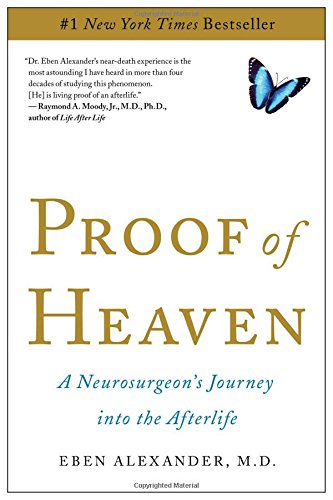
The Man From Heaven

In 2008 I was writing a short story called "The Man from Heaven" about a Buddhist monk who tried to prevent the First World War in 1889, warning the world leaders of the impending disaster, but had an accident and entered suspended animation. He wakes up in the present day and becomes a minor media sensation for a while, then, realizing not only he failed to prevent the war but that the world did not come to an end, must struggle to adapt to a world radically different from his own. After writing 19 pages and realizing that I was less than a quarter done with the story, it became apparent that this would not be a "short" story by any stretch of the imagination. An 80 page story occupies a sort of limbo. It is too short to be published on its own, but too long for the few remaining literary magazines to accept it. I supposed it could be adapted to a film script, but seeing as how the only audience the studios care about is 15 to 30 year old men who only like tits and explosions, no one would green-light a script about a 19th century Buddhist monk trying to adapt to 21st century life (not to say tits and explosions are bad, just that they are different from confused monks wandering around searching for answers to troubling questions). For that reason the project was scrapped.
Anyway, the idea for the story came from this real life example, Dashi-Dorzho Itigilov, a high level Siberian Lama whose body has been preserved for over 80 years (other wiki warning!). In 1927 Lama Itigilov told his monks to perform funeral rituals on him. He warned of the coming of communism and for all the monks to flee Russia (Stalin would try to exterminate them). One source I read says he told the monks that in 100 years (or 75 years, according to other sources) he would awaken from his hibernation to save the world, just like the fictional monk from "The Man from Heaven." Whether or not he's coming back, 84 years without any sign of decay with no form of preservation is amazing.

Stories of miraculous preservation are well known from the lives of saints. The bodies of some saints remain in very good condition without any preservation for centuries, despite being subjected to conditions that should rapidly decay a body (exposure to mositure, air, or chemicals). What makes Lama Itigilov interesting is that his skin remains soft, his joints flexible, and liquid blood remains in his veins. A medical examination revealed his body to be similar to that of a person who died between 12 and 36 hours ago (judging from the few available pictures, his moustache seems to be missing though, and his nose has deflated). His body's proteins have not denatured in any way.
The 16th Karmapa, Rangjung Rigpe Dorje, died in a hospital in Zion, Illinois in 1981. The doctors allowed his followers to perform the traditional three day Tibetan death rituals in the hotel room. During that time, while the Karmapa's body was in lotus posture, his heart remained warm, just like in a living person. The chief of staff at the hospital, Radulfo Sanchez, admits that there is no medical explanation for the Karmapa's heart remaining at body temperature for three days after death. When his body was cremated the Karmapa's two perfectly healthy dogs died and a rainbow appeared over the monestary where the cremation was being performed. Tibetan tradition speaks of the rainbow body, a body made of pure light which only those who reach highest enlightnment assume following the death of their physical body. The ranibow body is completely indestructable, and some say it can even be constituted into a new physical body at will (perhaps as Jesus did during the resurrection?). Yogananda's guru Sri Yukteswar said the same thing in Autobiography of a Yogi (Chapter 43: The Resurrection of Sri Yukteswar), that perfected beings possess bodies of light that can materialize and dematerialize at will.
Is Lama Itigilov really in a state of suspended animation? Will he awaken in 2027 to save the world, or did he realize the rainbow body, leaving his earthly form intact merely as a relic, a symbol to demonstrate to the world the veracity of the path of spirit? We'll have to wait 16 years to find out. In the mean time we can watch this clip from Al Jazeera of all sources. Runs 3 minutes 19 seconds.
Saturday, November 14, 2009
A Student in Arms: The True Artist
An exerpt from Donald Hankey's book A Student in Arms. Sometimes it takes a war to find out what makes us truly human. The depth of our humanity can only be approached through the harshest of struggles. It is through this that we are able to find out who the true artist is: the one with the true sense of the dramatic.
Includes a brief history of Mr. Hankey and the book.
-Dee
Wednesday, November 11, 2009
Veterans Day: Its History and Meaning
11 November 1918: after four years and 20 million lives lost the war to end all wars came to an end. Heroes rose and empires fell. In the years ahead wars would arise and heroes would once again be needed to heed the call of duty to protect those who need protection and to stop those who would cause others harm. This is what Veterans Day is about. We honour those who rose to greatness when their country, and the world, needed them.
It is now 90 years to the day since the war to end all wars came to an end. The last of those brave men who served in that struggle for freedom won't be here for much longer, so while I still can I would like to extend my deepest gratitude to you who served. And not only to those who served in the First World War, but in all wars since, and to all those who continue to step up when the world needs them most. Thank you.
-Dee
Friday, March 27, 2009
The Four Kinds of Leaders
An Excerpt from "Discipline and Leadership," Pages 46-50, from A Student in Arms by Donald Hankey.
Of course the types vary enormously. At first it is generally the men who want promotion that obtain the stripe, and they mostly belong to one of two classes. They are either ambitious youngsters or blustering bullies. The youngster who wants promotion has probably been a clerk and lived in a suburb. He is better educated and has a smarter appearance than the general run of the men. He covets the stripe because he wants to get out of the many menial and dirty jobs incidental to barrack life; because he thinks himself "a cut above" his fellows and wants the fact to be recognized; because, in short, he thinks that as a lance-corporal he will find life easier and more flattering to his self-esteem. He soon finds his mistake. He annoys the sergeant-major by his incompetence and the men by his superior airs. Soon he gets into a panic and begins to nag at the men. That is just what they hate. The whole situation reminds one of nothing so much as of a terrier barking at a heard of cows. As soon as the cows turn on him the terrier begins to waver, and, after trying to maintain his dignity by continuing to bark, ends by fleeing for dear life with his tail between his legs. So the young lance-corporal begins by hectoring the men, and, having roused them to a fury of irritation, ends by abject entreaty. Finally he is reduced to the ranks. The career of the bully is different. He is generally a vulgar, pushing fellow, who likes boasting and threatening, likes to feel that men are afraid of him, likes to be flattered by toadies, and likes getting men punished. The men hate him; but he sometimes manages to bluff the officers and sergeants into thinking that he is a "smart N.C.O." Usually he comes to a bad end, either through drink or gambling. When he is reduced to the ranks his lot is not an enviable one.
A deplorable number of those who are first promoted finish by forfeiting their stripe. Then comes the turn of the man who does not covet rank for its own sake, but accepts it because he thinks that it is "up to him" to do so. Generally he is a man of few words and much character. He gives an order. The man who receives it begins to argue: it is not his turn, he has only just finished another job, and so on. The N.C.O. looks at him, and repeats: "Git on and do it." The man "curls up," and does as he is told. An N.C.O. of this sort is popular. He saves any amount of wear and tear, and this is appreciated by the men. He gets things done, and that is appreciated by the sergeants and officers.
Finally, there is the gentleman, who is the most interesting of them all from our point of view. He is generally a thoroughly bad disciplinarian in the official sense, and at the same time he is often a magnificent leader of men. He is fair and disinterested. He has a certain prestige through being rather incomprehensible to the average private. He does not care a scrap for his rank. He is impervious to the fear of losing it. He takes it from a sense of duty, and his one idea is to get things done with as little friction as possible. He often succeeds in gaining the confidence of his men, so that they will work for him as for no one else. But, on the other hand, his methods are apt to be quite unorthodox and highly prejudicial to the cause of discipline as a whole. His authority is so personal that it is very hard for anordinary N.C.O. to take his place.
Sunday, March 22, 2009
The True Aritst
An Excerpt from "A Sense of the Dramatic," Pages 173-174, from A Student in Arms by Donald Hankey.
A sense of the dramatic is, of course, closely connected with a sense of humor. If you have this faculty for getting outside yourself and criticizing yourself, you will be pretty sure to see whether you look ridiculous. If you are a real artist in the exercise of the gift, you will also see yourself in your right perspective with regard to other people. The artist must not be an egoist. He must not allow the limelight to be centred on himself. He will see himself, not as the hero of the story, but as one of the characters – the hero, perhaps, of one chapter, but equally a minor character in the others. The greatest artist of all, probably, is the man who prays, and tries to see the story as the Author designed it. He will have the truest sense of proportion, the most adequate sense of humor of all. Undoubtedly prayer is the highest form of exercising this sense of the dramatic.
Monday, November 10, 2008
Veterans Day: Its History and Meaning
11 November 1918: after four years and 20 million lives lost the war to end all wars came to an end. Heroes rose and empires fell. In the years ahead wars would arise and heroes would once again be needed to heed the call of duty to protect those who need protection and to stop those who would cause others harm. This is what Veterans Day is about. We honour those who rose to greatness when their country, and the world, needed them.It is now 90 years to the day since the war to end all wars came to an end. The last of those brave men who served in that struggle for freedom won't be here for much longer, so while I still can I would like to extend my deepest gratitude to you who served. And not only to those who served in the First World War, but in all wars since, and to all those who continue to step up when the world needs them most. Thank you.-Dee
Subscribe to:
Posts (Atom)