
From the same talk as yesterday's video. Practicing ethics cannot make you enlightened, but you cannot be enlightened without practicing ethics. Runs 9:22.
Sunday, August 28, 2011

Ken Wilber on Morality
Ken Wilber talks about morality and why it is the foundation of spiritual development. Runs 9 minutes.
Saturday, August 27, 2011
Imagine No Religion
I'm not sure John Lennon meant "no religion" to mean everyone should be an atheist. He was a lot smarter than that. Just looking at the most horrible acts of the twentieth century make the fact clear that atheism in its various guises (social Darwinism, communism, eugenics) caused more human suffering than anything else besides Smallpox. What I think he meant was that shouldn't have the fierce sectarian divisions that often come with religion. We have such gems of quotes from Lennon on religion as:
“People got the image I was anti-Christ or antireligion,” he said. “I’m not at all. I’m a most religious fellow. I’m religious in the sense of admitting there is more to it than meets the eye. I’m certainly not an atheist.”
He also didn't believe in Darwinism:
“Nor do I think we came from monkeys, by the way,” he insisted. “That’s another piece of garbage. What the hell’s it based on? We couldn’t’ve come from anything—fish, maybe, but not monkeys. I don’t believe in the evolution of fish to monkeys to men. Why aren’t monkeys changing into men now? It’s absolute garbage.”
Unfortunately people do misappropriate Lennon's music and his image. There are those who claim that religion is the root of all evil while ignoring all the good it does (what Ken Wilber calls the conveyor belt; I've also argued a lot about Christianity's integral role in ending slavery). Well, getting on topic, finally, here is the ultimate outcome of a society that has ditched religion, leveled off on flatland narcissism, and believes in nothing: the UK riots.
A country with cradle to craftmatic adjustable bed handouts, where no one has to work because they get government stipends, where everyone gets free (albeit very shitty) health care, could not help but explode when those handouts are taken away. The UK is broke so they decided to cut back on a pittance of the handouts so know-it-all teenagers dediced to smash stuff for no evident reason. Lots of buildings were destroyed and people killed (there may be racist elements involved). Of course you could say if people were allowed to own guns they could defend themselves, their families, and even total strangers, but the UK is ruled by a king (a queen actually; there won't be a king for a while), and kings love to have a control on the possession of weapons. Absent the ability to own guns, sales of baseball bats rose three hundred percent (my estimate) because everyone over 20 was afraid for their lives as know-it-all teenagers with immortality complexes destroyed everything insane.
The author, A. N. Wilson, has some brilliant points to make:
A Christian woman working for British Airways who wears a cross round her neck is asked to remove it for fear of offending other people. A nurse who prays with a patient in hospital is committing an almost criminal act. Catholic adoption agencies which disapprove of gay adoptive parents on religious grounds have their licences taken away.
And all the while, our governing classes and academics and teachers chip away at the fundamental truths of the great religions — truths that have stood the test of time for thousands of years — in their arrogant certainty that there are no moral absolutes and that the human race can make up the rules as it goes along.
At the nuttier fringes of the chattering classes there are those, like the geneticist Richard Dawkins and the journalist Christopher Hitchens, who actually believe that religion is a mental poison responsible for all the evils in the world.
The misguided and vacuous thinking of these so-called intellectuals is compounded by a sordid celebrity-culture which holds up role models who should be despised rather than admired.
Amy Winehouse, a pathetic drug-infused alcoholic girl of very modest talent, is held up as great diva; and when she died, her house was surrounded by fans, laying empty vodka bottles as a ‘tribute’.
What happens when you imagine a world with no religion? I don't have to imagine, I can just look across the pond to see how a society lacking morality and values is faling apart. How long before the madness comes to America? I don't know, but here's something I wrote a few months ago that may help:
In 2008 I said Obama would be like four more terms of Bush.
In 2009 I said I never imagined things could ever get this bad.
In 2010 I wished I was back in 2009.
In 2011 I said the world had gone mad.
Now I'm saying the world will not last till the end of 2012.
If we ever needed to heed Lennon's advice to "give peace a chance" now is that time.
“People got the image I was anti-Christ or antireligion,” he said. “I’m not at all. I’m a most religious fellow. I’m religious in the sense of admitting there is more to it than meets the eye. I’m certainly not an atheist.”
He also didn't believe in Darwinism:
“Nor do I think we came from monkeys, by the way,” he insisted. “That’s another piece of garbage. What the hell’s it based on? We couldn’t’ve come from anything—fish, maybe, but not monkeys. I don’t believe in the evolution of fish to monkeys to men. Why aren’t monkeys changing into men now? It’s absolute garbage.”
Unfortunately people do misappropriate Lennon's music and his image. There are those who claim that religion is the root of all evil while ignoring all the good it does (what Ken Wilber calls the conveyor belt; I've also argued a lot about Christianity's integral role in ending slavery). Well, getting on topic, finally, here is the ultimate outcome of a society that has ditched religion, leveled off on flatland narcissism, and believes in nothing: the UK riots.
A country with cradle to craftmatic adjustable bed handouts, where no one has to work because they get government stipends, where everyone gets free (albeit very shitty) health care, could not help but explode when those handouts are taken away. The UK is broke so they decided to cut back on a pittance of the handouts so know-it-all teenagers dediced to smash stuff for no evident reason. Lots of buildings were destroyed and people killed (there may be racist elements involved). Of course you could say if people were allowed to own guns they could defend themselves, their families, and even total strangers, but the UK is ruled by a king (a queen actually; there won't be a king for a while), and kings love to have a control on the possession of weapons. Absent the ability to own guns, sales of baseball bats rose three hundred percent (my estimate) because everyone over 20 was afraid for their lives as know-it-all teenagers with immortality complexes destroyed everything insane.
The author, A. N. Wilson, has some brilliant points to make:
A Christian woman working for British Airways who wears a cross round her neck is asked to remove it for fear of offending other people. A nurse who prays with a patient in hospital is committing an almost criminal act. Catholic adoption agencies which disapprove of gay adoptive parents on religious grounds have their licences taken away.
And all the while, our governing classes and academics and teachers chip away at the fundamental truths of the great religions — truths that have stood the test of time for thousands of years — in their arrogant certainty that there are no moral absolutes and that the human race can make up the rules as it goes along.
At the nuttier fringes of the chattering classes there are those, like the geneticist Richard Dawkins and the journalist Christopher Hitchens, who actually believe that religion is a mental poison responsible for all the evils in the world.
The misguided and vacuous thinking of these so-called intellectuals is compounded by a sordid celebrity-culture which holds up role models who should be despised rather than admired.
Amy Winehouse, a pathetic drug-infused alcoholic girl of very modest talent, is held up as great diva; and when she died, her house was surrounded by fans, laying empty vodka bottles as a ‘tribute’.
What happens when you imagine a world with no religion? I don't have to imagine, I can just look across the pond to see how a society lacking morality and values is faling apart. How long before the madness comes to America? I don't know, but here's something I wrote a few months ago that may help:
In 2008 I said Obama would be like four more terms of Bush.
In 2009 I said I never imagined things could ever get this bad.
In 2010 I wished I was back in 2009.
In 2011 I said the world had gone mad.
Now I'm saying the world will not last till the end of 2012.
If we ever needed to heed Lennon's advice to "give peace a chance" now is that time.
Friday, August 19, 2011
Five Reasons I Like Rick Perry
And two that don't really do it for me.
Note: my commentary will be in [square brackets]. The rest of the text is directly from the Yahoo News story.
1. Abolish lifetime tenure for federal judges by amending Article III, Section I of the Constitution.
[Couldn't agree more. Kings serve for life, and we fought two wars to rid ourselves of the yoke of a king (the Revolution and War of 1812, when Britain fought back). By giving the judges lifetime tenure it divorces them from reality and from the people, the concent of whom is from whence they derive their power.]
2. Congress should have the power to override Supreme Court decisions with a two-thirds vote.
[Maybe not a two-thirds vote, maybe something stronger, but nothing in government should be final. Even the Constitution can be amended, so should the Supreme Court, lest they become absolutist.]
3. Scrap the federal income tax by repealing the Sixteenth Amendment.
[Last year this was one of two BIG things I said needed to be done to fix the country. If not possible to achieve a repeal I did propose an alternate income tax scheme.]
4. End the direct election of senators by repealing the Seventeenth Amendment.
Overturning this amendment would restore the original language of the Constitution, which gave state legislators the power to appoint the members of the Senate.
Ratified during the Progressive Era in 1913 , the same year as the Sixteenth Amendment, the Seventeenth Amendment gives citizens the ability to elect senators on their own. Perry writes that supporters of the amendment at the time were "mistakenly" propelled by "a fit of populist rage."
"The American people mistakenly empowered the federal government during a fit of populist rage in the early twentieth century by giving it an unlimited source of income (the Sixteenth Amendment) and by changing the way senators are elected (the Seventeenth Amendment)," he writes.
[This is even more important than getting rid of the tax. When the Constitution was written it was decided that the two houses of Congress would be populated in two different ways: Representatives are chosen by the people and Senators are chosen by the state legislatures. This was one of the most brilliant decisions in all of world history. The whole point of the Constitution was to maximise the power of the States, but reign them in just enough so the Union could stick together, which wasn't possible under the Articles of Confederation. Representatives were elected by popular vote and each state got a number of Representatives proportional to total population, this way we the people get our say. Senators were chosen by the state legislatures and each state got two so that the power held by big states and small states would be equal where it really counted. Having Senators chosen by the state legislatures was a guarantee to states' rights. The Senators represented the will of the states whereas the Representatives represented the will of the people. This was a brilliant balancing act to protect everyone from each other. Then along came the populists who wanted to turn the United States into a mobocracy and changed the Constitution to say the Senators are elected by the people too, taking power away from the states and giving it to whoever had the deepest pockets and the Federal government, as the two are one and the same.]
5. Require the federal government to balance its budget every year.
Of all his proposed ideas, Perry calls this one "the most important," and of all the plans, a balanced budget amendment likely has the best chance of passage.
"The most important thing we could do is amend the Constitution--now--to restrict federal spending," Perry writes in his book. "There are generally thought to be two options: the traditional 'balanced budget amendment' or a straightforward 'spending limit amendment,' either of which would be a significant improvement. I prefer the latter . . . . Let's use the people's document--the Constitution--to put an actual spending limit in place to control the beast in Washington."
A campaign to pass a balanced budget amendment through Congress fell short by just one vote in the Senate in the 1990s.
Last year, House Republicans proposed a spending-limit amendment that would limit federal spending to 20 percent of the economy. According to the amendment's language, the restriction could be overridden by a two-thirds vote in both Houses of Congress or by a declaration of war.
[I want to scream in orgasmic delight at the thought of a balanced budget. I even like the provision that special circumstances, like war, can call for extra spending, because Hitler had to die whatever the cost in treasure.]
And the two I'm not too thrilled about:
6. The federal Constitution should define marriage as between one man and one woman in all 50 states.
[I don't think government has the power to make this decision. The government, including state governments, should stay as far away from marriage as possible.]
7. Abortion should be made illegal throughout the country.
[I lean toward states rights on this one, but not entirely. There are circumstances where I think abortion is justified (e.g. certain congenital abnormalities that are always fatal, often with the baby surviving only a few hours or days), or even required (situations that lead to maternal death). Is Perry saying he would rather have the mother die to preserve "the soul of this country and to the traditional values [of] our founding fathers"?]
Note: my commentary will be in [square brackets]. The rest of the text is directly from the Yahoo News story.
1. Abolish lifetime tenure for federal judges by amending Article III, Section I of the Constitution.
[Couldn't agree more. Kings serve for life, and we fought two wars to rid ourselves of the yoke of a king (the Revolution and War of 1812, when Britain fought back). By giving the judges lifetime tenure it divorces them from reality and from the people, the concent of whom is from whence they derive their power.]
2. Congress should have the power to override Supreme Court decisions with a two-thirds vote.
[Maybe not a two-thirds vote, maybe something stronger, but nothing in government should be final. Even the Constitution can be amended, so should the Supreme Court, lest they become absolutist.]
3. Scrap the federal income tax by repealing the Sixteenth Amendment.
[Last year this was one of two BIG things I said needed to be done to fix the country. If not possible to achieve a repeal I did propose an alternate income tax scheme.]
4. End the direct election of senators by repealing the Seventeenth Amendment.
Overturning this amendment would restore the original language of the Constitution, which gave state legislators the power to appoint the members of the Senate.
Ratified during the Progressive Era in 1913 , the same year as the Sixteenth Amendment, the Seventeenth Amendment gives citizens the ability to elect senators on their own. Perry writes that supporters of the amendment at the time were "mistakenly" propelled by "a fit of populist rage."
"The American people mistakenly empowered the federal government during a fit of populist rage in the early twentieth century by giving it an unlimited source of income (the Sixteenth Amendment) and by changing the way senators are elected (the Seventeenth Amendment)," he writes.
[This is even more important than getting rid of the tax. When the Constitution was written it was decided that the two houses of Congress would be populated in two different ways: Representatives are chosen by the people and Senators are chosen by the state legislatures. This was one of the most brilliant decisions in all of world history. The whole point of the Constitution was to maximise the power of the States, but reign them in just enough so the Union could stick together, which wasn't possible under the Articles of Confederation. Representatives were elected by popular vote and each state got a number of Representatives proportional to total population, this way we the people get our say. Senators were chosen by the state legislatures and each state got two so that the power held by big states and small states would be equal where it really counted. Having Senators chosen by the state legislatures was a guarantee to states' rights. The Senators represented the will of the states whereas the Representatives represented the will of the people. This was a brilliant balancing act to protect everyone from each other. Then along came the populists who wanted to turn the United States into a mobocracy and changed the Constitution to say the Senators are elected by the people too, taking power away from the states and giving it to whoever had the deepest pockets and the Federal government, as the two are one and the same.]
5. Require the federal government to balance its budget every year.
Of all his proposed ideas, Perry calls this one "the most important," and of all the plans, a balanced budget amendment likely has the best chance of passage.
"The most important thing we could do is amend the Constitution--now--to restrict federal spending," Perry writes in his book. "There are generally thought to be two options: the traditional 'balanced budget amendment' or a straightforward 'spending limit amendment,' either of which would be a significant improvement. I prefer the latter . . . . Let's use the people's document--the Constitution--to put an actual spending limit in place to control the beast in Washington."
A campaign to pass a balanced budget amendment through Congress fell short by just one vote in the Senate in the 1990s.
Last year, House Republicans proposed a spending-limit amendment that would limit federal spending to 20 percent of the economy. According to the amendment's language, the restriction could be overridden by a two-thirds vote in both Houses of Congress or by a declaration of war.
[I want to scream in orgasmic delight at the thought of a balanced budget. I even like the provision that special circumstances, like war, can call for extra spending, because Hitler had to die whatever the cost in treasure.]
And the two I'm not too thrilled about:
6. The federal Constitution should define marriage as between one man and one woman in all 50 states.
[I don't think government has the power to make this decision. The government, including state governments, should stay as far away from marriage as possible.]
7. Abortion should be made illegal throughout the country.
[I lean toward states rights on this one, but not entirely. There are circumstances where I think abortion is justified (e.g. certain congenital abnormalities that are always fatal, often with the baby surviving only a few hours or days), or even required (situations that lead to maternal death). Is Perry saying he would rather have the mother die to preserve "the soul of this country and to the traditional values [of] our founding fathers"?]
Thursday, August 18, 2011
Barney Frank
Barney Frank (the guy whose speech no one can understand) is on MSNBC on the Rachel Maddow Show, being watched by all of ten people, when he lifts his cheek and lets out an atomic fart, without excusing himself, without even pausing. Thanks to the video being posted on the Internet something produced by MSNBC is getting more viewers than I have fingers and toes. This made my day. This is easily the funniest thing I have seen in months and probably one of the funniest things ever. In this world gone mad it's nice to have something good like this to report about.
Wednesday, August 17, 2011
Surgeons and the Soul
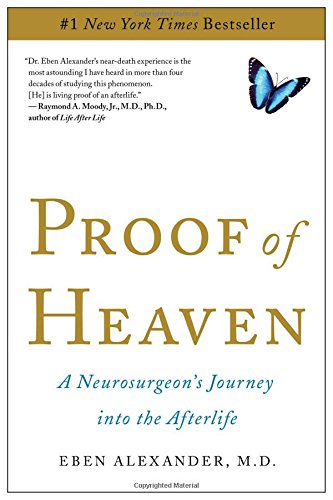
Neurosurgeon Eben Alexander talks about his NDE while he had bacterial meningitis (2 videos, 9 minutes total).
Cardiac surgeon Lloyd Rudy tells two stories about his patients NDEs and what they brought back (12 1/2 minutes). One man comes back after twenty minutes with no heart beat with veridical perceptions of the operation.
Cardiac surgeon Lloyd Rudy tells two stories about his patients NDEs and what they brought back (12 1/2 minutes). One man comes back after twenty minutes with no heart beat with veridical perceptions of the operation.
Tuesday, August 16, 2011
The One Beyond Duality
Prior to being. Above essence. Here is a thirty minute lecture with Prof. Philip Cary on Plotinus, Neoplatonism, and the unity of all things. First is a diagram I made while listening of Plotinus' cosmology:
 In the center is the One, beyond distinctions, the source of all existence, shining like the sun. Around it is the Divine Mind (Nous), which is suffused with the light of the One. It is perfect in its intelligence and is unmoved and unchanging. Beyond this is the Soul. When turned in, to take part in the perfection of the Divine Mind, it is the one World Soul. When turned out it takes on the multiplicity of every individual soul. Beyond this is the world of matter and seperation, suffering, desire, and death. The soul looks out and falsly identifies with images in the physical world. Everything is created as an outflowing of the One, its superabundance, although it is not actually doing anything. The rays of the One become more and more diffuse the farther out one goes, and the more imperfect and fragmented things become.
Here is another 30 minute lecture, also by Prof. Cary, that gets into Plotinus' spirituality. I think it is actually better than the first.
 In the center is the One, beyond distinctions, the source of all existence, shining like the sun. Around it is the Divine Mind (Nous), which is suffused with the light of the One. It is perfect in its intelligence and is unmoved and unchanging. Beyond this is the Soul. When turned in, to take part in the perfection of the Divine Mind, it is the one World Soul. When turned out it takes on the multiplicity of every individual soul. Beyond this is the world of matter and seperation, suffering, desire, and death. The soul looks out and falsly identifies with images in the physical world. Everything is created as an outflowing of the One, its superabundance, although it is not actually doing anything. The rays of the One become more and more diffuse the farther out one goes, and the more imperfect and fragmented things become.
Here is another 30 minute lecture, also by Prof. Cary, that gets into Plotinus' spirituality. I think it is actually better than the first.
Subscribe to:
Posts (Atom)