
Michael Egnor explains the science behind the mind and the brain, and why they are fundamentally different from computers.
The mind is unitary, immaterial, and will is free.
Here is something Dr. Egnor wrote about Wilder Penfield (who he mentions in the video) a few years ago:
Penfield was a neurosurgeon who pioneered the field of epilepsy surgery. He operated on thousands of patients who were awake (under local anesthesia), and were able to speak to him while he stimulated various regions of their brains.
Penfield found that he could invoke all sorts of things- movements, sensations, memories. But in every instance (hundreds of thousands of individual stimulations- in different locations in each patient- during his career), the patients were aware that the stimulation was being done to them, but not by them. There was a part of the mind that was independent of brain stimulation and that constituted a part of subjective experience that Penfield was not able to manipulate with his surgery.
I've performed some epilepsy surgery (although it's not my primary specialty), and my experience has been the same. Patients always know that the memory or sensation or movement is is imposed on them, not by them. Some colleagues who do specialize in epilepsy surgery have confirmed Penfield's observations as well.
Penfield called this "double consciousness", meaning that there was a part of subjective experience that he could invoke or modify materially, and a different part that was immune to such manipulation.
There probably has been no other person who has had Penfield's volume of direct experience with stimulation of the brain during consciousness (he probably did at least 10,000 such operations, perhaps more. He was practically the only person in the world doing this work in the early and mid 20th century.) He was a meticulous scientist (not that common among neurosurgeons, who tend to be 'cowboys').
He considered the strict materialist view of the mind to be utter nonsense.
Showing posts with label Consciousness. Show all posts
Showing posts with label Consciousness. Show all posts
Thursday, August 9, 2018

Saturday, April 28, 2018
Dean Radin on Real Magic
Garrett Stevens, host of the Hemi-Sync Podcast, interviews Dean Radin about his new book Real Magic.
Sunday, March 4, 2018
Why Enlightenment is Unattainable
Ken Wilber takes us through the major states of consciousness and explains the paradoxical reality that enlightenment is literally unattainable.
Saturday, December 30, 2017
Angels and Zombies
Christian de Quincey, PhD, is dean of consciousness studies at the University of Philosophical Research. He is a faculty member at John F. Kennedy University and Sophia University. He is founder and director of the Wisdom Academy. He is author of Radical Nature: The Soul of Matter, Radical Knowing: Understanding Consciousness Through Relationship, Consciousness From Zombies to Angels: The Shadow and the Light of Knowing Who You Are, Deep Spirit: Cracking the Noetic Code, and Blindspots: 21 Good Reasons to Think Before You Talk.
Here he describes a philosophical thought experiment concerning world of “zombies” that is identical in every physical respect to our normal world of experience – except for the fact that nothing and nobody is conscious. If such a world could exist it would mean that consciousness is not necessarily the product of a human brain. De Quincey also expresses his opinion that it will not ever be possible in the future to build robots that possess feelings and consciousness. “Angels,” in the philosophy of mind represent the opposite of zombies. They are entities that are, theoretically, fully conscious but entirely disembodied. Psychological speaking, the metaphors of angels and zombies represent the highest and lowest of human potentials.
Sunday, May 28, 2017
A Brief History of the Study of Consciousness
Stuart Hameroff explains the Orchestrated Objective Reduction (Orch-OR) theory of quantum consciousness in microtubules. He presents data in support of three hypotheses:
1. Consciousness is a process in the structure of the universe, connected
to the brain via quantum computations in microtubules ('Orch OR')
2. OR-based primitive feelings present in the universe may have prompted
the origin of life and driven its evolution... to 'feel good'
3. Resonating brain microtubules with transcranial ultrasound (TUS) can
safely and painlessly improve mood, and offer promise for Alzheimer's
disease, traumatic brain injury and other disorders
1. Consciousness is a process in the structure of the universe, connected
to the brain via quantum computations in microtubules ('Orch OR')
2. OR-based primitive feelings present in the universe may have prompted
the origin of life and driven its evolution... to 'feel good'
3. Resonating brain microtubules with transcranial ultrasound (TUS) can
safely and painlessly improve mood, and offer promise for Alzheimer's
disease, traumatic brain injury and other disorders
Saturday, May 20, 2017
The Nature of Psi with Vernon Neppe
Thinking Allowed with Jeffrey Mishlove
Dr. Vernon Neppe describes areas of psi research that have all achieved statistical significance at the six sigma level. These include remote viewing, random event generator research, the global consciousness project, the ganzfeld studies, studies on the sense of being stared at, and feeling the future studies based on the work of Daryl Bem, presentiment studies. Neppe also includes some research in the area of survival after death. All of this research shows that human consciousness is capable of interacting with the physical world in ways that bypass the normal sensory and motor systems of the body. Neppe presents a single, multi-dimensional model that could account for psi.
Dr. Vernon Neppe describes areas of psi research that have all achieved statistical significance at the six sigma level. These include remote viewing, random event generator research, the global consciousness project, the ganzfeld studies, studies on the sense of being stared at, and feeling the future studies based on the work of Daryl Bem, presentiment studies. Neppe also includes some research in the area of survival after death. All of this research shows that human consciousness is capable of interacting with the physical world in ways that bypass the normal sensory and motor systems of the body. Neppe presents a single, multi-dimensional model that could account for psi.
Monday, May 8, 2017
Rupert Sheldrake & Mark Vernon - What Happens When We Die?
A fascinating look at the possible connection between dreaming, expectations, the subconscious, and what happens after death.
Wednesday, April 19, 2017
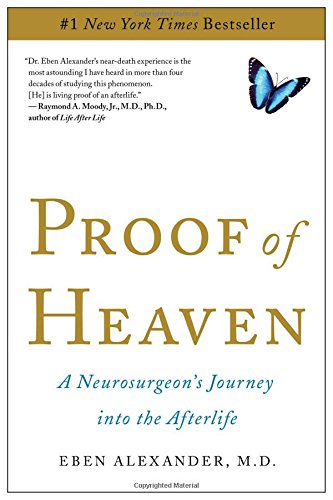
Eben Alexander: A Neurosurgeon's Journey through the Afterlife
Neurosurgeon Eben Alexander talks about his NDE while he had bacterial meningitis. Dr. Alexander has written about his experience in the remarkable book Proof of Heaven (for other similar books check out the Recommended Books page). The incredible rarity and severity of his illness, which wiped out not only his neocortex but brainstem as well, makes Dr. Alexander's experience a very strong case for the independence of consciousness from the physical structure and functioning of the brain. He explains more in this marvelous talk at the Theosophical Society.
Runs 98 minutes.
Runs 98 minutes.
Tuesday, February 14, 2017
The Supernatural with Richard Smoley
Fabulous talk from Thinking Allowed. Easily one of the best of the series.
Richard Smoley is editor of Quest: The Journal of the Theosophical
Society in America. He is also former editor of Gnosis Magazine. His
books include Hidden Wisdom: The Guide to the Western Inner Traditions,
Inner Christianity: The Guide to the Esoteric Tradition, Forbidden
Faith: The Secret History of Gnosticism, The Essential Nostradamus,
Conscious Love: Insights from Mystical Christianity, The Dice Game of
Shiva: How Consciousness Creates the Universe, The Supernatural:
Writings on an Unknown History, The Deal: A Guide to Radical and
Complete Forgiveness, and How God Became God: What Scholars Are Really
Saying About God and the Bible.
Here he notes that many of the
great spiritual teachers of the twentieth century (Blavatsky, Steiner,
Gurdjieff, Jung) had teachers who remain unknown. He suggests that this
reflects the desire of all these individuals to avoid the limelight of
public scrutiny. While describing most channeled material as “banal”, he
praises Jane Roberts’ Seth material as well as A Course in Miracles. He
reviews the history of Satanism and, paradoxically, associates it with
the objectivist philosophy of Ayn Rand. He also comments on the writings
of Aleister Crowley as well as tantra.
Richard Smoley is editor of Quest: The Journal of the Theosophical
Society in America. He is also former editor of Gnosis Magazine. His
books include Hidden Wisdom: The Guide to the Western Inner Traditions,
Inner Christianity: The Guide to the Esoteric Tradition, Forbidden
Faith: The Secret History of Gnosticism, The Essential Nostradamus,
Conscious Love: Insights from Mystical Christianity, The Dice Game of
Shiva: How Consciousness Creates the Universe, The Supernatural:
Writings on an Unknown History, The Deal: A Guide to Radical and
Complete Forgiveness, and How God Became God: What Scholars Are Really
Saying About God and the Bible.
Here he notes that many of the
great spiritual teachers of the twentieth century (Blavatsky, Steiner,
Gurdjieff, Jung) had teachers who remain unknown. He suggests that this
reflects the desire of all these individuals to avoid the limelight of
public scrutiny. While describing most channeled material as “banal”, he
praises Jane Roberts’ Seth material as well as A Course in Miracles. He
reviews the history of Satanism and, paradoxically, associates it with
the objectivist philosophy of Ayn Rand. He also comments on the writings
of Aleister Crowley as well as tantra.
Thursday, January 19, 2017
A Guide to Your Interiors
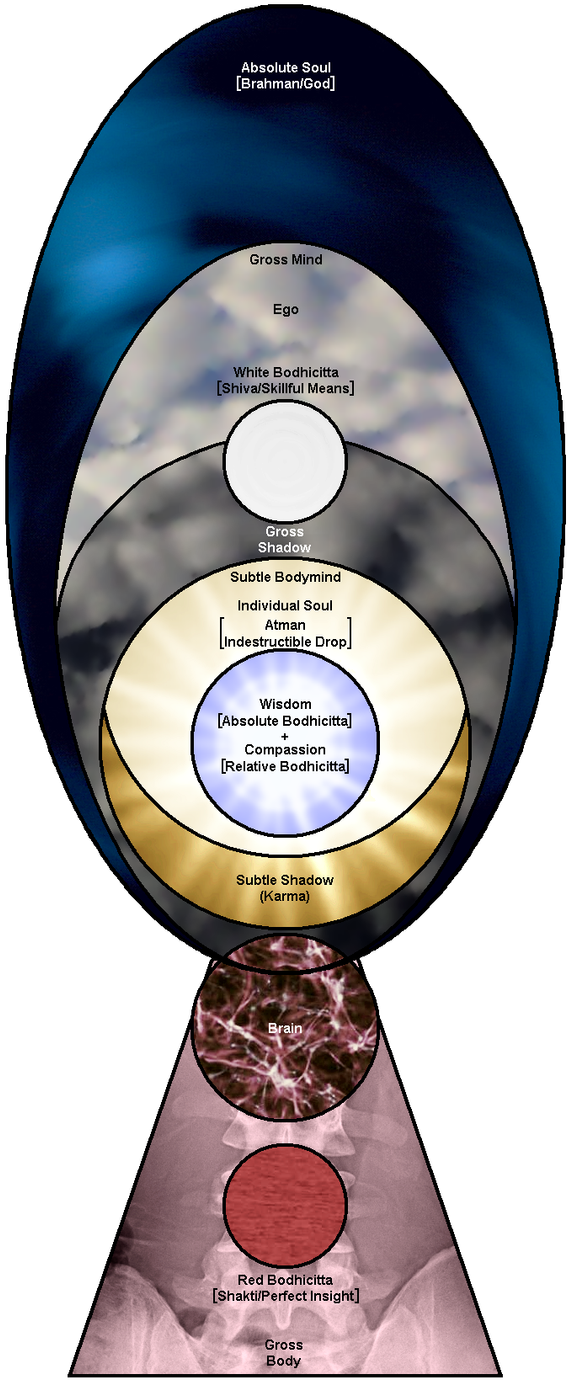
Starting at the bottom, everyone knows what the Gross Body is. It's the thing we normally think of when we think of the body. Sometimes it is gross, but here it's referred to as gross because it is the most dense form of matter.
At the top of the Gross Body is the Brain. Everyone knows what the brain is. It's a vital organ and most people only use the stem. The brain is the seat of consciousness, most likely the microtubules.
Right below the brain is something called the Red Bodhicitta, located at the navel. It's part of the subtle anatomy, but it's more tied to the gross anatomy than it is to the subtle bodymind. It's located here in relation to the brain because it's relative location is important. The red bodhicitta represents perfect insight. It is one of two anchors that hold keep the soul attached to the body, and is the power source of the body. It provides the energy for meditation. We get the red bodhicitta from our mother.
Atop the brain is a series of elliptical forms.
I'll start with the white circle. It is the White Bodhicitta, and it is skillful means. It is said to be the mind of enlightenment. At the moment of death the white bochicitta descends from the crown of the head and presents us with the perfect opportunity to attain enlightenment. If not, we'll get several other chances later on, but that's a topic for another day. We get the white bodhicitta from our father.
The next biggest ellipse, with the pretty clouds, is the Gross Mind. That's what we think of when we think of the mind. The gross mind is almost constantly full of thoughts that arise and cease, represented here as clouds that obscure the clear blue sky. The gross mind contains two parts, the Ego, which is the frontal personality that we associate with, and the Gross Shadow (the darker part), which is all the stuff we have disidentified with and have repressed. The shadow is almost always unconscious, and it is much larger than the conscious ego. It is the seat of projection. Any bit of the shadow we do not reintegrate into the ego during this lifetime we must deal with either in the between life state or the next life. There is no getting around it.
Inside the gross mind is the Subtle Bodymind (a combination of the subtle body and the subtle mind). It is full of golden light, often encountered in the early stages of meditation. The subtle bodymind is what reincarnates. Any it of the gross shadow that we failed to deal with in life will accumulate in the Subtle Shadow, the darker part of the subtle bodymind. Sometimes it's called Karma, but that word has a lot of baggage associated with it. It's the aspects of our self that we do not want to deal with. It is all the unconscious tendencies that pull us through life, and pull us to the next life. It doesn't seem to be a sort of accountant that balances good deeds and bad deeds, it seems to be more like a magnet that draws us to a life we are most attune with. Fears, addictions, unresolved issues, all of that pulls us in certain directions. Usually directions the ego does not want.
Inside that, at the very center of the self, is the Individual Soul (sometimes called the Atman or the Indestructible Drop), represented here as a sphere of blue light (often encountered in deeper stages of meditation). The soul is the original self-contraction that started manifestation. It is made of two things: wisdom (absolute bodhicitta) and compassion (relative bodhicitta). Wisdom is our capacity to recognise emptiness, and compassion is our capacity to be moral. The soul is said to be absolutely indestructible. It is the very subtlest mind of enlightenment that anchors all other structures. The soul is indestructible even for perfectly enlightened buddhas. It is not an unchanging substance, or a thing, it is the very heart of the mind. If the soul never changed then enlightenment would be impossible!
At the very outside, the biggest ellipse, is the Absolute Soul (God or Brahman). It is Absolute Existence and Absolute Truth. It is clear light (clear meaning transparent, like pre-dawn twilight). Absolute freedom and fulfillment; the source and goal of all existence. The gross body is projected out from the Absolute and appears to us to be something outside and apart from it, but you can see from the overlap that the gross bodymind, like everything else, exists within the Absolute. At the moment of enlightenment the individual soul identifies with and abides as the Absolute Soul without any loss of individuality.
Saturday, December 24, 2016
Blood Miracle Forecasts Bad Omen
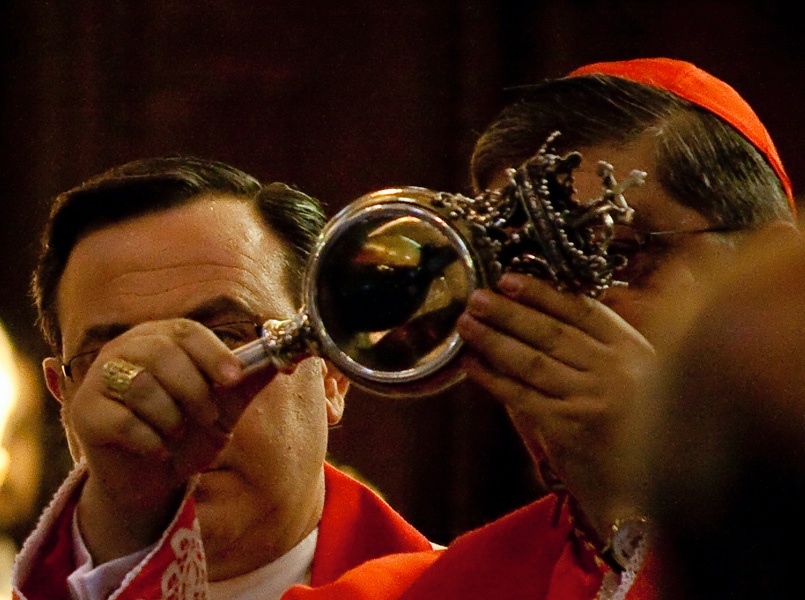
Cardinal Crescenzio Sepeial holding the vial containing Saint Januarius' blood.
Photo Credit:
Paola Magni
The vial containing the blood of Saint Januarius failed to liquefy. Just who is Saint Januarius, and why is this issue with his blood important? Here's the story, from Michael Talbot's Holographic Universe (p. 119-120):
"Every year in September and May a huge crowd gathers at the Duomo San Gennaro, the principal cathedral of Naples, to witness a miracle. The miracle involves a small vial containing a brown crusty substance alleged to be the blood of San Gennaro, or St. Januarius, who was beheaded by the Roman emperor Diocletian in A.D. 305. According to legend, after the saint was martyred a serving woman collected some of his blood as a relic. No one knows precisely what happened after that, save that the blood didn't turn up again until the end of the thirteenth century when it was ensconced in a silver reliquary in the cathedral.
"The miracle is that twice yearly, when the crowd shouts at the vial, the brown crusty substance changes into a bubbling, bright red liquid. There is little doubt that the liquid is real blood. in 1902 a group of scientists from the University of Naples made a spectroscopic analysis of the liquid by passing a beam of light through it, verifying that it was blood. Unfortunately, because the reliquary containing the blood is so old and fragile, the church will not allow it to be cracked open so that other tests can be done, and so the phenomenon has never been thoroughly studied.
"But there is further evidence that the transformation is a more than ordinary event. Occasionally throughout history (the first written account of the public performance of the miracle dates back to 1389) when the vial is brought out, the blood refuses to liquefy. Although rare, this is considered a very bad omen by the citizens of Naples. In the past, the failure of the miracle has directly preceded the eruption of Vesuvius and the Napoleonic invasion of Naples. More recently, in 1976 and 1978, it presaged the worst earthquake in Italian history and the election of a communist city government in Naples, respectively.
"Is the liquefaction of San Gennaro's blood a miracle? It appears to be, at least in the sense that it seems impossible to explain by known scientific laws." [emphasis added]
Skep-dicks have claimed the substance in the vial is a thixotropic gel containing iron oxide. Of course, they've produced bullshit stunts where they've created a similar substance that liquefies when shaken, but that's not proof of anything. A ventriloquist can reproduce the effect of voices coming out of a radio but that doesn't mean that radios are fake. Just because an effect can be reproduced through other means doesn't in any way indicate that those are the only means of producing the effect. There are many ways to produce powered flight, and there are many different types of light bulb, and all sorts of other phenomena can be produced in different ways. Magicians reproducing psychic phenomena does not in the least prove, or even provide evidence that psychic phenomena are fake. It's a confidence trick designed to subvert the rational mind.
From Live Science:
"The blood did not liquefy in 1939, when World War II broke out, nor in
1943, the year the Nazi occupied Italy, nor in 1973, remembered for a
bout of cholera in Naples. Most recently, it failed to liquefy in 1980,
when a devastating earthquake struck Irpinia, some 30 miles east of
Naples, leaving more than 2,400 people dead.
"According to the website storiacity.it,
over the centuries the failed miracle coincided with 22 epidemics, 11
revolutions, three droughts, 14 archbishops death (within a 30-day
period), nine dead popes (over a period of a few weeks), four wars, 19
earthquakes, and three religious persecutions."
The blood failed to liquefy again on the 16th of December this year. Every time the blood has failed to liquefy there has been some disaster.
That could mean one of two things:
1. The liquefaction of the blood is a genuine miracle and failure to liquefy really does portend bad omens.
2a. The liquefaction of the blood is a psychic phenomena involving the collective consciousness of the people of Naples to see into the future and predict when calamities are about to occur.
2b. The blood is fake but unconscious precognition is still involved. Either the priests and other church officials psychically sense the future and purposefully do some trick to keep the fake substance a solid to warn the public, or the collective consciousness of the people of Naples keeps the fake substance a solid because of unconscious precognition.
The skep-dicks have no legs to stand on. The failure of the substance to liquefy has always coincided with disasters. It doesn't matter what is in the vial, blood or iron oxide gel, either a miracle or psychic powers are involved, because no matter what's in the vial, the substance itself or the people around it are still able to predict the future, something materialism says is impossible.
What does that mean for 2017? Let me just say that if I had any travel plans for Naples I would cancel them.
Thursday, October 6, 2016
Evidentiality of Spiritualist Mediumship with Stephen E. Braude
Part two of yesterday's interview. Does mediumship present better evidence for survival or for living agent psi?
Wednesday, October 5, 2016
Philosophy and Post-Mortem Survival with Stephen E. Braude
Stephen Braude discusses philosophical questions related to survival of consciousness. He brings up two interesting points. First, that we're thinking of "super psi" wrong (he prefers to call it "living agent psi"). Most people think of the "super" more like super hero rather than super glue. It is not psi above and beyond anything we have experienced before, it is just really good quality psi (the issue of some remarkably accurate remote viewers was brought up. Check out Joe McMoneagle's Memoirs of a Psychic Spy, now in the convenient book section, for some stories.). Second, survival necessitates super psi, in that deceased persons would need remarkable ESP abilities to communicate with one another and the living, and to know what the living are currently doing, since they lack the five physical senses.
Tuesday, August 9, 2016
Spirit Possession with Terence Palmer
"We have to acknowledge the simple fact
that we are a possessing spirit. We are a spirit entity that
possesses a physical form, and that's the fundamental groundwork that
we have to work from."
Terry Palmer, PhD, is author of The Science of Spirit Possession. He is a
member of the Society for Psychical Research as well as the Scientific
and Medical Network. He is also a fellow of the Royal Society of
Medicine.
Here notes that, while there are many negative
connotations to the term spirit possession, there are also positive
examples. He describes his encounter with an ostensible spirit who
identified itself as Lao Tsu. He also presents an example of a negative
encounter. He notes that it can be extremely difficult to distinguish
between an autonomous spirit entity, such as the spirit of someone who
is deceased, and thought-forms of our own creation. Both types of
phenomena can possess an individual.
that we are a possessing spirit. We are a spirit entity that
possesses a physical form, and that's the fundamental groundwork that
we have to work from."
Terry Palmer, PhD, is author of The Science of Spirit Possession. He is a
member of the Society for Psychical Research as well as the Scientific
and Medical Network. He is also a fellow of the Royal Society of
Medicine.
Here notes that, while there are many negative
connotations to the term spirit possession, there are also positive
examples. He describes his encounter with an ostensible spirit who
identified itself as Lao Tsu. He also presents an example of a negative
encounter. He notes that it can be extremely difficult to distinguish
between an autonomous spirit entity, such as the spirit of someone who
is deceased, and thought-forms of our own creation. Both types of
phenomena can possess an individual.
Monday, June 6, 2016
The Gods Themselves
"Eyewitness reports of human encounters
with "supernatural beings" have been documented as far back
as the painted caves of Upper Paleolithic Europe 35,000 years ago and
brought right up to date with bizarre accounts of abductions by
aliens in the twenty-first century. Such reports include powerful
common themes... that science is unable to explain."
Supernatural: Meetings with the
Ancient Teachers of Mankind, Revised Edition, Graham Hancock,
page 269
What are the gods? Could billions of people from pre-history have believed in lies, founded on nothing but the hollow words of priests? Or were the gods based on some truth, some genuine metaphysical intelligence that humans contacted and communed with?
The gods, or the germ of the gods, began as extensions of the Truth. For whatever reason they fragmented; were rent from Truth and thrust into contact with the world: Dionysus, Anubis, Azazel, Quetzalcoatl, Huitzilopochtli*, and others. Not all the gods, most are just myth; the personification of abstract thought. Did the average Greek believe in Zeus, or Athena, or Ares? Probably not. They represented aspects of human psychology and served as a means of learning these truths, just as ego, superego, and id centuries later.
Ares and Athena are both gods of war - personifications of abstract
ideas - but they signify different approaches to war. Ares represents
the old style of fighting, like Achilles or barbarians; men who fight
for personal glory and bloodlust. Athena represents civilised warfare,
with strategy and tactics and allegiance to the city-state. Stories involving the two were commentaries on societal evolution, from archaic to classical; from tribes and kinship groups to political entities that united multiple disparate families.
However, some gods represent genuine aspects of Truth that can be approached through transpersonal experience: the original teachers of mankind. Millions of people, from all times and all nations, speak of meeting the same entities through the use of drugs, fasting, or rhythmic dance. They cannot all be sharing in the same hallucination, or else be imitating one another from reading past accounts. No, these experiences must point to a genuine reality.
Over the countless eons, psychic garbage has accumulated around these fragments and they've taken on lives of their own. What began as projections of Truth were, through prolonged exposure to the collective shadow of humanity, rendered into entities with thoughts and personalities all their own. Wise and powerful beyond all conception, yet totally dependent upon humans for their existence. This is the condition of the gods. A lack of prayers cannot starve them, as in Aristophanes' The Birds, or has commonly been believed throughout the centuries. They do not need us to believe. Our beliefs merely give definition to their form. They have appeared in every culture under many names. All they require is the continuation within the collective unconscious of the same thought patterns, the same vortices, that created them. And so it does not matter if you believe in Anubis per se, it is the psychopomp, the one who delivers souls from this world to the next. Call it Yama, or the Grim Reaper, or Charon, or the Being of Light, it is still the same entity by whatever name you give it, and so long as the need remains for such a being, so shall it continue to exist, in all the different guises disparate cultures have given it.
That is the folly of man, thinking himself Adam, with the power to change the essence of a thing by changing its name. Water is still the same whether it is in a pot, or a towel, or on the floor, or in a cloud, or ice. A man is still a man, whatever mask he wears, by whatever name he refers himself. You cannot change a horse into a cow by changing the definition of "cow" to include horses, nor can you affect the gods by believing, or disbelieving, or by granting them different titles. You can lie to all the world, but in the pure light of Truth you cannot lie to yourself, and you will find, when you die, the lies you've told become chains and anchors preventing you from ascending to the Truth.
These gods are not the God, and though they live a long time, they are not immortal, and must return to the Truth eventually, when humanity has evolved and there is no further need for this world. On the contrary, a true immortal, though his body may die, his soul will remain as the unique expression of his being, even when his identity shifts from the individual to the Truth itself, dissolving the illusion of separation. The soul of the immortal is indestructible, even if he does not see himself as the individual.
In part two I will look at the nature of that which we call God.
*The god of human sacrifice. The Aztecs were unique in all the world for the sheer brutality and the numbers of their victims. Something, very dark and diabolical, had to compel the Aztecs to commit ritualised murder on such an enormous scale.
with "supernatural beings" have been documented as far back
as the painted caves of Upper Paleolithic Europe 35,000 years ago and
brought right up to date with bizarre accounts of abductions by
aliens in the twenty-first century. Such reports include powerful
common themes... that science is unable to explain."
Supernatural: Meetings with the
Ancient Teachers of Mankind, Revised Edition, Graham Hancock,
page 269
What are the gods? Could billions of people from pre-history have believed in lies, founded on nothing but the hollow words of priests? Or were the gods based on some truth, some genuine metaphysical intelligence that humans contacted and communed with?
The gods, or the germ of the gods, began as extensions of the Truth. For whatever reason they fragmented; were rent from Truth and thrust into contact with the world: Dionysus, Anubis, Azazel, Quetzalcoatl, Huitzilopochtli*, and others. Not all the gods, most are just myth; the personification of abstract thought. Did the average Greek believe in Zeus, or Athena, or Ares? Probably not. They represented aspects of human psychology and served as a means of learning these truths, just as ego, superego, and id centuries later.
Ares and Athena are both gods of war - personifications of abstract
ideas - but they signify different approaches to war. Ares represents
the old style of fighting, like Achilles or barbarians; men who fight
for personal glory and bloodlust. Athena represents civilised warfare,
with strategy and tactics and allegiance to the city-state. Stories involving the two were commentaries on societal evolution, from archaic to classical; from tribes and kinship groups to political entities that united multiple disparate families.
However, some gods represent genuine aspects of Truth that can be approached through transpersonal experience: the original teachers of mankind. Millions of people, from all times and all nations, speak of meeting the same entities through the use of drugs, fasting, or rhythmic dance. They cannot all be sharing in the same hallucination, or else be imitating one another from reading past accounts. No, these experiences must point to a genuine reality.
Over the countless eons, psychic garbage has accumulated around these fragments and they've taken on lives of their own. What began as projections of Truth were, through prolonged exposure to the collective shadow of humanity, rendered into entities with thoughts and personalities all their own. Wise and powerful beyond all conception, yet totally dependent upon humans for their existence. This is the condition of the gods. A lack of prayers cannot starve them, as in Aristophanes' The Birds, or has commonly been believed throughout the centuries. They do not need us to believe. Our beliefs merely give definition to their form. They have appeared in every culture under many names. All they require is the continuation within the collective unconscious of the same thought patterns, the same vortices, that created them. And so it does not matter if you believe in Anubis per se, it is the psychopomp, the one who delivers souls from this world to the next. Call it Yama, or the Grim Reaper, or Charon, or the Being of Light, it is still the same entity by whatever name you give it, and so long as the need remains for such a being, so shall it continue to exist, in all the different guises disparate cultures have given it.
That is the folly of man, thinking himself Adam, with the power to change the essence of a thing by changing its name. Water is still the same whether it is in a pot, or a towel, or on the floor, or in a cloud, or ice. A man is still a man, whatever mask he wears, by whatever name he refers himself. You cannot change a horse into a cow by changing the definition of "cow" to include horses, nor can you affect the gods by believing, or disbelieving, or by granting them different titles. You can lie to all the world, but in the pure light of Truth you cannot lie to yourself, and you will find, when you die, the lies you've told become chains and anchors preventing you from ascending to the Truth.
These gods are not the God, and though they live a long time, they are not immortal, and must return to the Truth eventually, when humanity has evolved and there is no further need for this world. On the contrary, a true immortal, though his body may die, his soul will remain as the unique expression of his being, even when his identity shifts from the individual to the Truth itself, dissolving the illusion of separation. The soul of the immortal is indestructible, even if he does not see himself as the individual.
In part two I will look at the nature of that which we call God.
*The god of human sacrifice. The Aztecs were unique in all the world for the sheer brutality and the numbers of their victims. Something, very dark and diabolical, had to compel the Aztecs to commit ritualised murder on such an enormous scale.
Tuesday, April 19, 2016
A Very Brief Introduction to Dragons
Were dragons real? Think about it, virtually every culture on earth, throughout all of history, has spoken of giant flying reptiles. All these stories can't possibly trace back to a single source. There has to be something deeper going on here.
The obvious problem is we don't find dragon bones. But we don't find the bones of lots of things. The number of unique human fossils could fill a bathtub, and a great many dinosaur species are known from a single bone (including the largest dinosaur ever discovered, which was identified by one bone that was destroyed in WWII in an air raid, and no other bones have been discovered since). Since fossils of anything are very rare it is not at all surprising that dragon fossils are rare, or non-existent.
What if we are looking in the wrong place?
People from all over the world who take certain hallucinogenic plants report seeing the same beings. One commonly encountered being is a man with an alligator head, and this alligator headed man says the same things to everyone. It can't all be a case of suggestion, where people encounter what they expect based on second-hand sources. What I suspect is that these are real non-physical beings who don't look like anything, being non-physical, but they assume a certain form in the mind of the person having the experience out of convenience.
What if dragons are like that? Dragons are not flesh and blood reptiles, they are non-physical beings encountered in altered states. That would explain why they can live for thousands of years, why they are wise beyond the limits of human intelligence, and why they are only encountered at the end of an arduous quest undertaken by an individual who has had specific preparation. What if going out to slay a dragon did not involve a knight suiting up in armor and riding off to battle a dinosaur, what if it involved fasting, and sensory deprivation, and ingesting certain hallucinogenic plants, and then the knight doesn't kill the dragon, the knight's encounter with the dragon allows him to eliminate negative qualities within himself? That is why only particularly pure knights of great spiritual fortitude could go out to meet with dragons, because the psychic shock would be disastrous for a lesser mortal (like a very bad trip). In that sense then dragons are not the enemy, they are the ally.
The obvious problem is we don't find dragon bones. But we don't find the bones of lots of things. The number of unique human fossils could fill a bathtub, and a great many dinosaur species are known from a single bone (including the largest dinosaur ever discovered, which was identified by one bone that was destroyed in WWII in an air raid, and no other bones have been discovered since). Since fossils of anything are very rare it is not at all surprising that dragon fossils are rare, or non-existent.
What if we are looking in the wrong place?
People from all over the world who take certain hallucinogenic plants report seeing the same beings. One commonly encountered being is a man with an alligator head, and this alligator headed man says the same things to everyone. It can't all be a case of suggestion, where people encounter what they expect based on second-hand sources. What I suspect is that these are real non-physical beings who don't look like anything, being non-physical, but they assume a certain form in the mind of the person having the experience out of convenience.
What if dragons are like that? Dragons are not flesh and blood reptiles, they are non-physical beings encountered in altered states. That would explain why they can live for thousands of years, why they are wise beyond the limits of human intelligence, and why they are only encountered at the end of an arduous quest undertaken by an individual who has had specific preparation. What if going out to slay a dragon did not involve a knight suiting up in armor and riding off to battle a dinosaur, what if it involved fasting, and sensory deprivation, and ingesting certain hallucinogenic plants, and then the knight doesn't kill the dragon, the knight's encounter with the dragon allows him to eliminate negative qualities within himself? That is why only particularly pure knights of great spiritual fortitude could go out to meet with dragons, because the psychic shock would be disastrous for a lesser mortal (like a very bad trip). In that sense then dragons are not the enemy, they are the ally.
Saturday, April 9, 2016
Reincarnation Questions and Hypotheses
There are a few reasons I suspect reincarnation is both possible and exists:
1. As a child I had past life memories (I don't remember anything now). I stopped talking about it when no one believed me.
2. It is the best explanation for other children who have veridical past life memories.
3. It explains certain things about human development that we don't understand.
4. It makes sense mechanically, working as a sort of metaphysical version of gravity.
5. It's fair.
6. Pretty much everyone believed in reincarnation in some form until the 14th century. (Reincarnation, of at least certain individuals who suffer traumatic deaths, is still a part of orthodox Judaism today.)
The main questions that exist surrounding the idea of reincarnation are as follows:
1. Which of the two suggested mechanisms for reincarnation is accurate, the individual soul coming back life after life as all the world's religions suggest, or the new age model where different souls incarnate that are connected through an "over-soul"?
2. How long is the typical duration between successive incarnations on Earth?
There seems to be a great deal of leeway with this, depending on the belief of the person. Some people who believe in instantaneous reincarnation may indeed instantaneously reincarnate. In the Tibetan model rebirth takes place after 45 days, ideally, though with reincarnated lamas it looks like it usually takes 2 or 3 years. With a lot of people from the Second World War and the Holocaust they seem to have started coming back after 50 or 60 years. Yogananda suggests 200 years is a normal time. I suspect that people wait to reincarnate until after the whole family has died, so they can all meet up again before departing once more for Earth, although with sudden horrific deaths the wait time seems to be a lot shorter.
An enlightened being can reincarnate at will, but with the average person I suspect something akin to the Hindu system is in place where a person spends time in one of the astral heavens until the merit they accrued in the previous lifetime has expired (which may take hundreds or even thousands of years) before having to come back. This makes sense, metaphysically.
3. How many souls are there that are incarnating? Let's for the moment just talk about humans. (I suspect more advanced animals like apes and dolphins also reincarnate like humans, but we can't ask them so it's impossible to know. Also animals who have spent a great deal of time with humans, like pets, also may have individual rebirths. Generally it is said that wild animals, and I suspect plants too since recent studies with tomatoes and trees reveal that at least certain plants are conscious too, tend not to have individual souls, but I have no idea.) There are at least 8 billion human souls, and since the maximum number of humans possible on the Earth is assumed to be about 12 billion let's say that's the minimum number of individual souls. That would mean that the time between incarnations would necessarily be very short. If, on the other hand, there were 100 billion souls then the time between incarnations would be very long, since there have only been 108 billion people who have ever lived, so only a handful would have ever reincarnated. If there are 1 trillion souls then no one will ever need to reincarnate because it will take millions of years to run out and hopefully humanity will all reach enlightenment before then and we can be done with the Earth permanently.
4. Why are all, or most, of the faculties lost in the interim between incarnations? Babies, even of enlightened beings, still have to learn to walk and talk all over again, and very few people come here knowing calculus (reincarnation is, I think, the only explanation for genius as seen in people like Freeman Dyson who knew more about mathematics as a very young child than most people ever learn in a lifetime). You would think someone like the Dalai Lama who has come back 14 times now would be born knowing how to walk and talk, because he has that much more experience than an ordinary mortal.
It does seem that some memories sneak through, at least at the beginning. Young children exhibit xenoglossy, speaking languages they never learned, but they knew from a previous life. This universally disappears after 4 or 5 years. And with genius and rapid development of certain faculties there seems to be some degree of anemnesis at play. If you learned something ten times already then relearning it in your next life will be very easy.
These lists are in no way exhaustive. Rather, they serve as a useful summary of the situation.
1. As a child I had past life memories (I don't remember anything now). I stopped talking about it when no one believed me.
2. It is the best explanation for other children who have veridical past life memories.
3. It explains certain things about human development that we don't understand.
4. It makes sense mechanically, working as a sort of metaphysical version of gravity.
5. It's fair.
6. Pretty much everyone believed in reincarnation in some form until the 14th century. (Reincarnation, of at least certain individuals who suffer traumatic deaths, is still a part of orthodox Judaism today.)
The main questions that exist surrounding the idea of reincarnation are as follows:
1. Which of the two suggested mechanisms for reincarnation is accurate, the individual soul coming back life after life as all the world's religions suggest, or the new age model where different souls incarnate that are connected through an "over-soul"?
2. How long is the typical duration between successive incarnations on Earth?
There seems to be a great deal of leeway with this, depending on the belief of the person. Some people who believe in instantaneous reincarnation may indeed instantaneously reincarnate. In the Tibetan model rebirth takes place after 45 days, ideally, though with reincarnated lamas it looks like it usually takes 2 or 3 years. With a lot of people from the Second World War and the Holocaust they seem to have started coming back after 50 or 60 years. Yogananda suggests 200 years is a normal time. I suspect that people wait to reincarnate until after the whole family has died, so they can all meet up again before departing once more for Earth, although with sudden horrific deaths the wait time seems to be a lot shorter.
An enlightened being can reincarnate at will, but with the average person I suspect something akin to the Hindu system is in place where a person spends time in one of the astral heavens until the merit they accrued in the previous lifetime has expired (which may take hundreds or even thousands of years) before having to come back. This makes sense, metaphysically.
3. How many souls are there that are incarnating? Let's for the moment just talk about humans. (I suspect more advanced animals like apes and dolphins also reincarnate like humans, but we can't ask them so it's impossible to know. Also animals who have spent a great deal of time with humans, like pets, also may have individual rebirths. Generally it is said that wild animals, and I suspect plants too since recent studies with tomatoes and trees reveal that at least certain plants are conscious too, tend not to have individual souls, but I have no idea.) There are at least 8 billion human souls, and since the maximum number of humans possible on the Earth is assumed to be about 12 billion let's say that's the minimum number of individual souls. That would mean that the time between incarnations would necessarily be very short. If, on the other hand, there were 100 billion souls then the time between incarnations would be very long, since there have only been 108 billion people who have ever lived, so only a handful would have ever reincarnated. If there are 1 trillion souls then no one will ever need to reincarnate because it will take millions of years to run out and hopefully humanity will all reach enlightenment before then and we can be done with the Earth permanently.
4. Why are all, or most, of the faculties lost in the interim between incarnations? Babies, even of enlightened beings, still have to learn to walk and talk all over again, and very few people come here knowing calculus (reincarnation is, I think, the only explanation for genius as seen in people like Freeman Dyson who knew more about mathematics as a very young child than most people ever learn in a lifetime). You would think someone like the Dalai Lama who has come back 14 times now would be born knowing how to walk and talk, because he has that much more experience than an ordinary mortal.
It does seem that some memories sneak through, at least at the beginning. Young children exhibit xenoglossy, speaking languages they never learned, but they knew from a previous life. This universally disappears after 4 or 5 years. And with genius and rapid development of certain faculties there seems to be some degree of anemnesis at play. If you learned something ten times already then relearning it in your next life will be very easy.
These lists are in no way exhaustive. Rather, they serve as a useful summary of the situation.
Tuesday, April 5, 2016
My Problems with Spiritualists
I usually have two problems with most spiritualists. First to clarify, when I say "spiritualist" I categorically DO NOT mean people who say they are "spiritual but not religious." I've already written at length my distaste for those people. Spiritualism is the belief that spirit exists distinct from matter (or within some realm of more rarefied subtle matter or etheric or astral matter) and can be contacted through mediums. And this has been tested scientifically and there are really only two possible options to explain the data:
1. The Survival Hypothesis. The minds and personalities of people survive death of the body in pretty much the same state as when they were alive and they can communicate, at least at a rudimentary level, with the living.
or
2. The Super-ESP Hypothesis. The minds of certain living people are capable of extraordinary feats of ESP bordering on omniscience, whereby they can access information about the deceased by reading the minds of multiple living people all over the world simultaneously and access other information through remote viewing of locked drawers, diaries, or other varied sources, often coming up with information that is not known to the bereaved person or persons and not verified until much later, all this coupled with a subconscious dissociative personality disorder that the medium believes with absolute conviction is a real deceased individual they are communicating with.
And that's it. And after 150 years of testing no one has devised an experiment to distinguish between the two conclusively for the unfortunate reason that all the scientists working on the problem are stuck trying to convince die-hard atheist materialists who serve as the gatekeepers of what is and is not officially sanctioned science that real information is being attained through psychic means.
You might think that's a false dilemma and decide to take the third option, but, to be honest, if you take the third option I question your intelligence and would be surprised you would even know what a false dilemma is or that you had the capacity to fully comprehend the issue.
3. The Demon-Haunted World. A class of non-physical (or astral) beings called demons exist and they are omniscient, or at least as intelligent as necessary to trick humans that they are deceased humans because God is an asshole and filled the universe with billions of demons who trick people because God is an asshole and wants to send 99.999% of people to suffer in Hell forever.
If you accept options 1 or 2 you are a rational person who has examined the evidence. If you accept option 3 you are a moron. If you reject them all and accept option 4, that it's all deliberate trickery from often Nobel Prize winning scientists who want to ruin their reputations by studying ghosts, you're either ignorant of the data or a cynical asshole and most likely never even bothered looking at the data because you reject it a priori.
As a side note, we can get into metaphysics, with astral and etheric and subtle energies and all that stuff some other time, and I know Ken Wilber has talked down the issue and has promoted his "Integral Post-Metaphysics" and Kant's critique of metaphysics, but if you read Excerpt G (page 46), Ken does admit to true metaphysics within his model:
" The fact that the subtle (and causal) bodymind can transmigrate the gross bodymind is indeed metaphysical; but the fact that these subtle energies are postulated as real, concrete, detectable, often measurable—if subtler—energies, stops the whole conception from spinning off into the vaporware of pure metaphysics. If you read hypothesis #4 in conjunction with the first three hypotheses, I think you will see that they are at least consistent with each other; and thus I believe that an integral theory of subtle energies can accommodate the existence of transmigration, if we decide, on other grounds, that there is enough evidence to conclude that transmigration occurs."
It's a good read, but if you're in a hurry you can watch this video.
Getting back to the central issue of what my problems with spiritualists are.
The first problem is the denial of the good that other religions (specifically Christianity and to a lesser extent Buddhism) have and continue to bring to humanity. I wouldn't say this is the hatred of religion, as we see in the "spiritual but not religious" people (except Islam, which they adore), and it probably is not cultural relativism either that says "all religions are equal" or some such nonsense. It might be a sort of spiritual myopia. They are so invested in the truth claims of their own beliefs – the messages delivered by spirits – that they reject out of hand the truth claims of opposing beliefs. So, for example, if spirits say reincarnation does not exist they will believe it without hesitation even though the spirit they are communicating with might be lying or ignorant or both. A second possibility is similar to when you're a teenager and you're embarrassed by what you did as a child, which is basically how climbing the developmental ladder works all through first tier. First tier stages (archaic, magic, mythic, rational, pluralistic, or egocentric, ethnocentric, worldcentric, or any other conceptions) are all exclusive in their thinking. Someone who is ethnocentric looks down on someone who is egocentric (and on someone who is worldcentric), just as someone who is worldcentric looks down on someone who is egocentric and someone who is ethnocentric, even though they themselves necessarily had to pass through all the lower stages to get to where they are. This continues, quite naturally, until one reaches second tier – integral – and can appreciate that all levels have truth and utility appropriate for people at that level.
So, someone who is a spiritualist would reject the truth and utility of organised religion even though for the vast majority of people who have ever lived organised religion is the only thing keeping them from stealing and killing and raping. Religion not only serves as a social glue, it serves as the only affective social glue that has ever been discovered. And since everyone starts out at square one when they are born and has to learn reason and morality, eliminating religion is a particularly bad idea because until people mature to the level where they can apply reason to appreciate natural law and morality (which for most people is never), religion is necessary to keep people from becoming monsters.
Sometimes, yes, religions do influence people to become monsters, particularly lower level religions, but certainly Christianity has had its reformation and the worst Christians you will ever likely encounter are assholes who protest soldiers' funerals.
Aside from legitimacy, religion provides the only affective means of bringing people enlightenment. This ties into the second problem I have with most spiritualists, which is something I'll call subtle reductionism, what Ken Wilber calls the Vishnu Complex. I'll get to that in a minute.
One of the central beliefs of spiritualists is the extreme gradualist approach to development, that spirits develop astronomically slowly, though inexorably, over gazillions of years to reach ultimate perfection. If I could spend fifty trillion eons in an astral heaven where my thoughts instantly manifest my desires I'd say that's a pretty good deal. The general idea is that it gets boring after a time and then you decide to progress. And I'll admit, after the hell and hardship of this life I might look forward to some downtime.
The classic counter to this, which makes sense to me, is the argument of reincarnationists that once your merit is worn out you have to come back here, so the astral worlds are temporary. The only way out of the cycle is enlightenment. The idea of progression through infinitely more rarefied realms does have somewhat of a parallel with the idea of a pure land in Buddhism or Sri Yukteswar's Hiranyaloka from Autobiography of a Yogi. You can progress to a special astral world where the infinite merit and compassion of an enlightened being permits you to progress spiritually without the need to reincarnate.
Now you might not want to believe in reincarnation, and I think most spiritualists don't, for the pretty thoughtless reason "Who would want to come back?!" Very few people, I suspect, would want to come back, but the traditions maintain that it's more like jumping off a cliff. Once you jump you don't get to choose whether you fall down or not, gravity will take over automatically. You don't get to choose whether you reincarnate or not, unless you're already enlightened, your spiritual gravity pulls you unconsciously where you are most suited, and for most people that's back here on Earth. Even if you don't believe in reincarnation, and I think it makes a certain degree of sense, there's still one more reason to see the gradualist approach as not all that's great.
The gradualist approach really does not solve the problem of suffering in this life, it defers it to the next. There is a bit of an inherent laziness to it. "If I'm going to get there anyway I might as well take my time." That is very similar to the traditional religious approach of suffering through life with the knowledge of a reward in the afterlife. The idea of a metaphysical safety net is certainly comforting and has served humanity very well for millennia, but it does not bring about true transpersonal development. Even in an astral heaven there is still self and other, there is still separation, and where there is separation there is suffering. That is why spirits choose to leave the lower astral heavens, often called "Summerland", where thoughts manifest instantly, because it gets boring after a while. The types of suffering in astral worlds are radically different than in the physical world (and in the astral hells are much worse), but as long as separation exists suffering necessarily exists. Enlightenment is the only way out, and religion provides the only door to enlightenment.
That brings us to my second objection, subtle reductionism, which is nothing other than the denial of the causal. Subtle reductionism is nowhere near as disastrous as the gross reductionism of fundamaterialists, it is definitely a step in the right direction, but in denying the existence of the causal one is also denying the ultimate end of suffering.
Basically the subtle realms work like psychotherapy. One reaches an end of psychotherapy when one realises that one can go on forever. The subtle realms are like that. You ascend higher and higher, into ever more subtle planes of illumination and bliss, and it just doesn't stop. There is no upward limit, there is no ultimate end. In meditation people can spend a lifetime just getting to more rarefied states and just bliss-out and as soon as they come down and have to go to work they are the same jerk as they were from day one. You can certainly gain psychic powers through forms of meditation, but if you just keep ascending through all the essential lights and sounds you will not reach enlightenment. This inertial desire to keep ascending through the subtle is what Ken Wilber calls the Vishnu Complex. You are so enamored with God you don't want to seek your true identity. And since you have to stop meditating eventually you will suffer when it ends. As long as separation exists suffering necessarily exists. And that's all the gradualist approach of most spiritualists promises, ever higher states of lights and sounds.
This denial of the causal is wonderfully presented in Greg Stone's book Under the Tree. It's a pretty obscure book, so I'll explain it a little. This man with a punny name encounters ice on the highway and runs his car off a cliff and goes into a coma. He has a near death experience that spends a great many pages just trying to convince him he really is dead, since he doesn't believe in an afterlife, and then it goes off into explaining how the universe works.
Mr. Pun's spirit guide explains to him why all the religions are wrong when they say that we are all one. You see, we really are all separate, but when you incarnate on the Earth you have to pass through a filter, and that filter only lets one soul through at a time, and since we all have to squeeze through that filter we think, "Oh, only one can fit, so there must be only one of us," but that's just faulty logic.
Except that's not what any religion says at all. Remember, you do not automatically become enlightened upon death. If you did there would be absolutely no point to life here on Earth at all. It would all be a waste of time and you could be a child rapist or an axe murderer and it wouldn't matter because we all go up into light and bliss when we die anyway. That's exactly the same horrible belief as the materialists who say you die and rot, just in the opposite direction. If nothing you do in this life has any impact on the next, and we're all just here to learn lessons, or to experience suffering, or because it's rousing good fun, then life truly is meaningless and you might as well just shoot heroin all day, because it won't make one bit of difference. If Hitler and his victims go to the same place after death then the universe is completely lacking in justice or compassion and was created and run by Satan.
Since you do not become enlightened upon death (and we know this because spirits coming through mediums admit to it; they admit to not knowing everything), then anything you hear from spirits about anything other than their particular state of being is just their own guess. If spirits tell you they enjoy coffee and cigars and fine velvet arm chairs on the other side, then you can believe them. If spirits tell you what is happening at the ultimate level, and that they know with absolute certainty how everything works and the mechanisms of reincarnation or whatever, they're either outright lying or they are guessing. Since the personality remains intact then a liar on the Earth is a liar in the afterlife, and subconscious biases and fears still cloud one's thinking.
One group of people we can believe are enlightened individuals on this Earth, because they all say the same exact thing. There is no guessing with enlightenment, there is just experience, or more accurately lack of experience. In the causal there is nothing arising. There are no separate things, just consciousness as such. Nothing bad arises to torture you and leave, nothing good arises to torture you when it leaves, there are no others, there is no you, there just is. And they all say this, for the past 3000 years, they all say this. No one is guessing since this is not speculation of what is happening at higher levels because all levels have been left behind. You step off the ride completely.
Ramakrishna explains this beautifully. He was a life-long devote of Kali, and he would go into spontaneous ecstasy and be engrossed in her image. When he met the naked swami Totapuri and tried to learn Advaita he kept seeing Kali when he meditated. Furious, Totapuri stuck a piece of broken glass between Ramakrishna's eyes and admonished him to meditate on that spot. The next time Ramakrishna meditated he says "As soon as the gracious form of the Divine Mother appeared before me, I used my discrimination as a sword and with it clove Her in two. The last barrier fell. My spirit at once soared beyond the relative plane. I lost myself in samadhi." (The Gospel of Sri Ramakrishna, page 49)
You can see a wonderful depiction of this from the 1955 Bengali film biography of Ramakrishna.
And it's like that for everyone. Ramana Maharshi, Richard Rose, Ken Wilber, everyone. You too can check it out for yourself. I did. You do not need to take anyone's word for it, you need accept no beliefs handed to you from spirits, you can meditate for a really long time and see for yourself if enlightenment is all it's cracked up to be. You don't need to consult mediums, you don't need to wait countless eons to ascend higher planes in the afterlife, you can do this right now, in this lifetime, and it is the single most important thing you ever will, or can, do.
There is nothing in the causal. It is completely empty. If ascending higher subtle realms is like climbing stairs to higher and higher floors in a building, then the leap to the causal would be like going from the third to the fourth dimension. It's not higher than the highest floor in the building, it bypasses height all together. It is not getting to the next level in a video game, it's shutting the game off and realising that it was a game all along and not real. It's not that there is no you, there is only me, there's no me either. You step into the causal and no one is home, there is just consciousness as such. There is awareness but it is in no way tied to any identity, and you realise that any identity you held was just a contraction of all that is, no more real than the characters in a movie are to the actors who play them.
All that said, spiritualists are leagues ahead of the average person in the world today, and light years ahead of the fundamaterialists who are the elites who run the world and act as gatekeepers to what is and is not science. I would love for all the world to adopt the beliefs of spiritualists, I would love for mediumship to be taken seriously, for psychical studies to become the paramount branch of science. It would solve very nearly all the world's problems. At the same time it is imperative to realise that mediumship can only take one so far, and that we all must take up the discipline and strive toward enlightenment, whether now or in some future life. The comfort value of survival wears off once you survive death. Then a whole new set of challenges arise that you must face. Psychological challenges from all the subconscious baggage you have accumulated over this and possibly other lifetimes. All that needs to be worked through eventually. The choice is yours to deal with it over the next gazillion years or right now, all at once, in this lifetime. Most people can't, but you definitely should try. Try as if your life depended on it.
1. The Survival Hypothesis. The minds and personalities of people survive death of the body in pretty much the same state as when they were alive and they can communicate, at least at a rudimentary level, with the living.
or
2. The Super-ESP Hypothesis. The minds of certain living people are capable of extraordinary feats of ESP bordering on omniscience, whereby they can access information about the deceased by reading the minds of multiple living people all over the world simultaneously and access other information through remote viewing of locked drawers, diaries, or other varied sources, often coming up with information that is not known to the bereaved person or persons and not verified until much later, all this coupled with a subconscious dissociative personality disorder that the medium believes with absolute conviction is a real deceased individual they are communicating with.
And that's it. And after 150 years of testing no one has devised an experiment to distinguish between the two conclusively for the unfortunate reason that all the scientists working on the problem are stuck trying to convince die-hard atheist materialists who serve as the gatekeepers of what is and is not officially sanctioned science that real information is being attained through psychic means.
You might think that's a false dilemma and decide to take the third option, but, to be honest, if you take the third option I question your intelligence and would be surprised you would even know what a false dilemma is or that you had the capacity to fully comprehend the issue.
3. The Demon-Haunted World. A class of non-physical (or astral) beings called demons exist and they are omniscient, or at least as intelligent as necessary to trick humans that they are deceased humans because God is an asshole and filled the universe with billions of demons who trick people because God is an asshole and wants to send 99.999% of people to suffer in Hell forever.
If you accept options 1 or 2 you are a rational person who has examined the evidence. If you accept option 3 you are a moron. If you reject them all and accept option 4, that it's all deliberate trickery from often Nobel Prize winning scientists who want to ruin their reputations by studying ghosts, you're either ignorant of the data or a cynical asshole and most likely never even bothered looking at the data because you reject it a priori.
As a side note, we can get into metaphysics, with astral and etheric and subtle energies and all that stuff some other time, and I know Ken Wilber has talked down the issue and has promoted his "Integral Post-Metaphysics" and Kant's critique of metaphysics, but if you read Excerpt G (page 46), Ken does admit to true metaphysics within his model:
" The fact that the subtle (and causal) bodymind can transmigrate the gross bodymind is indeed metaphysical; but the fact that these subtle energies are postulated as real, concrete, detectable, often measurable—if subtler—energies, stops the whole conception from spinning off into the vaporware of pure metaphysics. If you read hypothesis #4 in conjunction with the first three hypotheses, I think you will see that they are at least consistent with each other; and thus I believe that an integral theory of subtle energies can accommodate the existence of transmigration, if we decide, on other grounds, that there is enough evidence to conclude that transmigration occurs."
It's a good read, but if you're in a hurry you can watch this video.
Getting back to the central issue of what my problems with spiritualists are.
The first problem is the denial of the good that other religions (specifically Christianity and to a lesser extent Buddhism) have and continue to bring to humanity. I wouldn't say this is the hatred of religion, as we see in the "spiritual but not religious" people (except Islam, which they adore), and it probably is not cultural relativism either that says "all religions are equal" or some such nonsense. It might be a sort of spiritual myopia. They are so invested in the truth claims of their own beliefs – the messages delivered by spirits – that they reject out of hand the truth claims of opposing beliefs. So, for example, if spirits say reincarnation does not exist they will believe it without hesitation even though the spirit they are communicating with might be lying or ignorant or both. A second possibility is similar to when you're a teenager and you're embarrassed by what you did as a child, which is basically how climbing the developmental ladder works all through first tier. First tier stages (archaic, magic, mythic, rational, pluralistic, or egocentric, ethnocentric, worldcentric, or any other conceptions) are all exclusive in their thinking. Someone who is ethnocentric looks down on someone who is egocentric (and on someone who is worldcentric), just as someone who is worldcentric looks down on someone who is egocentric and someone who is ethnocentric, even though they themselves necessarily had to pass through all the lower stages to get to where they are. This continues, quite naturally, until one reaches second tier – integral – and can appreciate that all levels have truth and utility appropriate for people at that level.
So, someone who is a spiritualist would reject the truth and utility of organised religion even though for the vast majority of people who have ever lived organised religion is the only thing keeping them from stealing and killing and raping. Religion not only serves as a social glue, it serves as the only affective social glue that has ever been discovered. And since everyone starts out at square one when they are born and has to learn reason and morality, eliminating religion is a particularly bad idea because until people mature to the level where they can apply reason to appreciate natural law and morality (which for most people is never), religion is necessary to keep people from becoming monsters.
Sometimes, yes, religions do influence people to become monsters, particularly lower level religions, but certainly Christianity has had its reformation and the worst Christians you will ever likely encounter are assholes who protest soldiers' funerals.
Aside from legitimacy, religion provides the only affective means of bringing people enlightenment. This ties into the second problem I have with most spiritualists, which is something I'll call subtle reductionism, what Ken Wilber calls the Vishnu Complex. I'll get to that in a minute.
One of the central beliefs of spiritualists is the extreme gradualist approach to development, that spirits develop astronomically slowly, though inexorably, over gazillions of years to reach ultimate perfection. If I could spend fifty trillion eons in an astral heaven where my thoughts instantly manifest my desires I'd say that's a pretty good deal. The general idea is that it gets boring after a time and then you decide to progress. And I'll admit, after the hell and hardship of this life I might look forward to some downtime.
The classic counter to this, which makes sense to me, is the argument of reincarnationists that once your merit is worn out you have to come back here, so the astral worlds are temporary. The only way out of the cycle is enlightenment. The idea of progression through infinitely more rarefied realms does have somewhat of a parallel with the idea of a pure land in Buddhism or Sri Yukteswar's Hiranyaloka from Autobiography of a Yogi. You can progress to a special astral world where the infinite merit and compassion of an enlightened being permits you to progress spiritually without the need to reincarnate.
Now you might not want to believe in reincarnation, and I think most spiritualists don't, for the pretty thoughtless reason "Who would want to come back?!" Very few people, I suspect, would want to come back, but the traditions maintain that it's more like jumping off a cliff. Once you jump you don't get to choose whether you fall down or not, gravity will take over automatically. You don't get to choose whether you reincarnate or not, unless you're already enlightened, your spiritual gravity pulls you unconsciously where you are most suited, and for most people that's back here on Earth. Even if you don't believe in reincarnation, and I think it makes a certain degree of sense, there's still one more reason to see the gradualist approach as not all that's great.
The gradualist approach really does not solve the problem of suffering in this life, it defers it to the next. There is a bit of an inherent laziness to it. "If I'm going to get there anyway I might as well take my time." That is very similar to the traditional religious approach of suffering through life with the knowledge of a reward in the afterlife. The idea of a metaphysical safety net is certainly comforting and has served humanity very well for millennia, but it does not bring about true transpersonal development. Even in an astral heaven there is still self and other, there is still separation, and where there is separation there is suffering. That is why spirits choose to leave the lower astral heavens, often called "Summerland", where thoughts manifest instantly, because it gets boring after a while. The types of suffering in astral worlds are radically different than in the physical world (and in the astral hells are much worse), but as long as separation exists suffering necessarily exists. Enlightenment is the only way out, and religion provides the only door to enlightenment.
That brings us to my second objection, subtle reductionism, which is nothing other than the denial of the causal. Subtle reductionism is nowhere near as disastrous as the gross reductionism of fundamaterialists, it is definitely a step in the right direction, but in denying the existence of the causal one is also denying the ultimate end of suffering.
Basically the subtle realms work like psychotherapy. One reaches an end of psychotherapy when one realises that one can go on forever. The subtle realms are like that. You ascend higher and higher, into ever more subtle planes of illumination and bliss, and it just doesn't stop. There is no upward limit, there is no ultimate end. In meditation people can spend a lifetime just getting to more rarefied states and just bliss-out and as soon as they come down and have to go to work they are the same jerk as they were from day one. You can certainly gain psychic powers through forms of meditation, but if you just keep ascending through all the essential lights and sounds you will not reach enlightenment. This inertial desire to keep ascending through the subtle is what Ken Wilber calls the Vishnu Complex. You are so enamored with God you don't want to seek your true identity. And since you have to stop meditating eventually you will suffer when it ends. As long as separation exists suffering necessarily exists. And that's all the gradualist approach of most spiritualists promises, ever higher states of lights and sounds.
This denial of the causal is wonderfully presented in Greg Stone's book Under the Tree. It's a pretty obscure book, so I'll explain it a little. This man with a punny name encounters ice on the highway and runs his car off a cliff and goes into a coma. He has a near death experience that spends a great many pages just trying to convince him he really is dead, since he doesn't believe in an afterlife, and then it goes off into explaining how the universe works.
Mr. Pun's spirit guide explains to him why all the religions are wrong when they say that we are all one. You see, we really are all separate, but when you incarnate on the Earth you have to pass through a filter, and that filter only lets one soul through at a time, and since we all have to squeeze through that filter we think, "Oh, only one can fit, so there must be only one of us," but that's just faulty logic.
Except that's not what any religion says at all. Remember, you do not automatically become enlightened upon death. If you did there would be absolutely no point to life here on Earth at all. It would all be a waste of time and you could be a child rapist or an axe murderer and it wouldn't matter because we all go up into light and bliss when we die anyway. That's exactly the same horrible belief as the materialists who say you die and rot, just in the opposite direction. If nothing you do in this life has any impact on the next, and we're all just here to learn lessons, or to experience suffering, or because it's rousing good fun, then life truly is meaningless and you might as well just shoot heroin all day, because it won't make one bit of difference. If Hitler and his victims go to the same place after death then the universe is completely lacking in justice or compassion and was created and run by Satan.
Since you do not become enlightened upon death (and we know this because spirits coming through mediums admit to it; they admit to not knowing everything), then anything you hear from spirits about anything other than their particular state of being is just their own guess. If spirits tell you they enjoy coffee and cigars and fine velvet arm chairs on the other side, then you can believe them. If spirits tell you what is happening at the ultimate level, and that they know with absolute certainty how everything works and the mechanisms of reincarnation or whatever, they're either outright lying or they are guessing. Since the personality remains intact then a liar on the Earth is a liar in the afterlife, and subconscious biases and fears still cloud one's thinking.
One group of people we can believe are enlightened individuals on this Earth, because they all say the same exact thing. There is no guessing with enlightenment, there is just experience, or more accurately lack of experience. In the causal there is nothing arising. There are no separate things, just consciousness as such. Nothing bad arises to torture you and leave, nothing good arises to torture you when it leaves, there are no others, there is no you, there just is. And they all say this, for the past 3000 years, they all say this. No one is guessing since this is not speculation of what is happening at higher levels because all levels have been left behind. You step off the ride completely.
Ramakrishna explains this beautifully. He was a life-long devote of Kali, and he would go into spontaneous ecstasy and be engrossed in her image. When he met the naked swami Totapuri and tried to learn Advaita he kept seeing Kali when he meditated. Furious, Totapuri stuck a piece of broken glass between Ramakrishna's eyes and admonished him to meditate on that spot. The next time Ramakrishna meditated he says "As soon as the gracious form of the Divine Mother appeared before me, I used my discrimination as a sword and with it clove Her in two. The last barrier fell. My spirit at once soared beyond the relative plane. I lost myself in samadhi." (The Gospel of Sri Ramakrishna, page 49)
You can see a wonderful depiction of this from the 1955 Bengali film biography of Ramakrishna.
And it's like that for everyone. Ramana Maharshi, Richard Rose, Ken Wilber, everyone. You too can check it out for yourself. I did. You do not need to take anyone's word for it, you need accept no beliefs handed to you from spirits, you can meditate for a really long time and see for yourself if enlightenment is all it's cracked up to be. You don't need to consult mediums, you don't need to wait countless eons to ascend higher planes in the afterlife, you can do this right now, in this lifetime, and it is the single most important thing you ever will, or can, do.
There is nothing in the causal. It is completely empty. If ascending higher subtle realms is like climbing stairs to higher and higher floors in a building, then the leap to the causal would be like going from the third to the fourth dimension. It's not higher than the highest floor in the building, it bypasses height all together. It is not getting to the next level in a video game, it's shutting the game off and realising that it was a game all along and not real. It's not that there is no you, there is only me, there's no me either. You step into the causal and no one is home, there is just consciousness as such. There is awareness but it is in no way tied to any identity, and you realise that any identity you held was just a contraction of all that is, no more real than the characters in a movie are to the actors who play them.
All that said, spiritualists are leagues ahead of the average person in the world today, and light years ahead of the fundamaterialists who are the elites who run the world and act as gatekeepers to what is and is not science. I would love for all the world to adopt the beliefs of spiritualists, I would love for mediumship to be taken seriously, for psychical studies to become the paramount branch of science. It would solve very nearly all the world's problems. At the same time it is imperative to realise that mediumship can only take one so far, and that we all must take up the discipline and strive toward enlightenment, whether now or in some future life. The comfort value of survival wears off once you survive death. Then a whole new set of challenges arise that you must face. Psychological challenges from all the subconscious baggage you have accumulated over this and possibly other lifetimes. All that needs to be worked through eventually. The choice is yours to deal with it over the next gazillion years or right now, all at once, in this lifetime. Most people can't, but you definitely should try. Try as if your life depended on it.
Sunday, March 20, 2016
The Science of Eternity
An older documentary with Alan Pemberton, featuring interviews with survival enthusiast Michael Roll, physicist Ronald Pearson (whose work has come under scrutiny by other pro-survival scientists, including Brian Josephson), Tom Harrison and Gwen and Alf Byrne who have participated in medium circles where their loved ones materialised, and David Icke, who talks about why the elite do not want us to believe in life after death. Runs 68 minutes.
Thursday, March 17, 2016
The Joe Rogan Experience with Graham Hancock
Joe Rogan talks with Graham Hancock about ancient civilisations, the ice age, psychadelics, the war on drugs, and why the power elite don't want us asking questions about deep antiquity. Runs 2 hours.
Subscribe to:
Posts (Atom)