
There's been a recent push to change the definition of "big bang", just as with changing the definition of countless other words to suit the will of dialectical materialism. This past month I've come across a new video† by a very popular youtube channel and an article on a popular website talk about "what happened before the big bang" and "why the big bang wasn't the start of everything".
Just as "nothing" no longer means absolutely nothing, it means "the ground state of the quantum vacuum", now the "big bang" isn't what it always has meant, when time, space, matter, and energy all came into existence from absolutely nothing, now it means "inflation", which happened 10^-32 seconds AFTER what was previously defined as the big bang. This is a devious little reach around to claim that "stuff happened before the big bang", just like calling "the ground state of the quantum vacuum" "nothing" allows you to say that ""science" (dialectical materialism) can explain how the universe was created from nothing without God."
Eternal inflation, the idea that the inflation that sped up the expansion of the early universe didnt' stop, it still continues in other regions of space beyond our cosmic horizon, spawning new bubble universes forever, was the first to go. Some thought inflation was eternal into the past too, but in 2003 Vilenkin and Alan Guth ran the calculations on Hubble's Constant and found that it doesn't work. Inflation may continue forever into the future, but it had to have a beginning in the past.
Next came the big bounce, the idea that after a long time, a trillion years or so, expansion slows and stops, eventually reversing until everything flys back into a single point called the Big Crunch. Then the shock of impact of everything on everything starts a new Big Bang, and the cycle continues forever. Unfortunately, disorder increases with time, so each new universe must be more disordered than the one that birthed it. If the cycle had been going on forever disorder would be infinite and the universe would be completely featureless. Since there's stuff in the universe the cycles couldn't have gone on forever. Some people then suggested that the universe just gets bigger with each bounce, so the disorder spreads out more so no one notices it (like in the M-Brane ekpyrotic model and possibly whatever the hell Penrose's new idea is - no one seems to understand his Aeons of time model, within the physics community or anywhere). But if the whole thing is getting bigger it had to start somewhere really really small, maximally small, and that means a finite beginning.
There's also an idea from the 1930s called the cosmic egg or primeval atom, where yes, there was a Big Bang 13.7 billion years ago, but the thing that banged was an uber-dense subatomic thing that existed forever until it got tired of existing as a tiny little particle and exploded. However, Vilenkin and a graduate student Audrey Mithani showed that quantum instability would have led to the egg's collapse after a finite time. The crack (the Big Bang) had to happen before the egg collapsed into oblivion so it couldn't have existed forever, even if it existed for a really, really long time before the Big Bang.
Here are several prior pieces I've written on why inflation cannot be past eternal:
Balking Hawking Part 1
Balking Hawking Part 2
Georg Cantor's Infinities (Part Two)
Balking Someone
Balking Hawking Part 3: In The Beginning
Make no mistake, when people say "science says" they mean "dialectical materialism says". Science does not say anything, science does not prove anything, individual scientists may say things, but science is not a catalogue of facts, science is a process.
I've made a video many years ago back when I used to make videos called "First Principle Anecdota"* that everything you know, and every conceivable system for attaining knowledge (that is, all forms of epistemology) necessarily relies on what are called "axioms" or "first principles", which are assumptions which must be taken as given but can never be proven true. At its base you can NEVER know anything about the world with absolute certainty. Everything must be based on things which you assume to be true but can never prove. Based on those assumptions you can create a system to demonstrate facts with arbitrary certainty, but the certainty of those facts is always arbitrary and is based entirely on your assumptions.
I've probably talked to hundreds of people about this and no one seems to get it. Not the "praise science" crowd who believe in dialectical materialism. It's like people can get arbitrarily smart, but their smartness is always asymptotic to the level of intelligence needed to realize that all knowledge is built upon unprovable assumptions.
Ordinary people, who are just smart enough to be dangerous, are easy to trick by these linguistic gymnastics like redefining words. You redefine "big bang" and "nothing" and get disaffected teenagers into becoming atheists. That's how they get you. Meanwhile the geniuses (technically the plural is genii), the real hard-nosed intellectual atheists who really look into the subjects like Anthony Flew, turn to belief in God because they realize that the universe and life are far too complex to be explainable by any series of coincidences.
I said a few years ago, somewhat tongue-in-cheek, "How do you change a cow into a horse? You redefine the word "horse" to include cows."
That's really what we've been seeing this past decade go into overdrive as the Fabian socialists who run the West have taken to redefining words as a form of mind control and behavior modification.
----------------------------------------
*By the way, my videos tend to have very specific titles, and if you search that in quotes mine will appear as the first result. I know Google has algoreithms that skew results to be more in line with previous searches, but I've never searched for that video before, so it's as close to neutral as you can get.
†That video that claimed inflation is the big bang is predicated on a lie. Most people do not watch videos to the end, and at the very end they admitted that inflation does not explain the initial state of the universe (what has always been referred to as the big bang). The video admitted at the very end that everything was a lie knowing almost no one will watch to the end.
This is just like how the New York Times will deliberately publish articles with provocative titles and then in paragraph 6 they will give the truth knowing no one will read that far into the article. An article may be titled "Trump Hates Brown People" and the article may have nothing to do with Trump except at the very end there might be a quote from some race baiter which says "Ralph Sharpman said in interview that "Trump hates brown people."" The NYT will run with that quote, and put it in quotations, but not tell you it's a quote from someone else or tell you the article is about Ralph Sharpman until the very end.
This is how they can technically not be lying outright but still be lying by saying something true in a misleading way. It's lying because it omits the context of the original statement.
Showing posts with label REAL Science. Show all posts
Showing posts with label REAL Science. Show all posts
Monday, September 2, 2019

Thursday, August 9, 2018
Machines Have No Minds
Michael Egnor explains the science behind the mind and the brain, and why they are fundamentally different from computers.
The mind is unitary, immaterial, and will is free.
Here is something Dr. Egnor wrote about Wilder Penfield (who he mentions in the video) a few years ago:
Penfield was a neurosurgeon who pioneered the field of epilepsy surgery. He operated on thousands of patients who were awake (under local anesthesia), and were able to speak to him while he stimulated various regions of their brains.
Penfield found that he could invoke all sorts of things- movements, sensations, memories. But in every instance (hundreds of thousands of individual stimulations- in different locations in each patient- during his career), the patients were aware that the stimulation was being done to them, but not by them. There was a part of the mind that was independent of brain stimulation and that constituted a part of subjective experience that Penfield was not able to manipulate with his surgery.
I've performed some epilepsy surgery (although it's not my primary specialty), and my experience has been the same. Patients always know that the memory or sensation or movement is is imposed on them, not by them. Some colleagues who do specialize in epilepsy surgery have confirmed Penfield's observations as well.
Penfield called this "double consciousness", meaning that there was a part of subjective experience that he could invoke or modify materially, and a different part that was immune to such manipulation.
There probably has been no other person who has had Penfield's volume of direct experience with stimulation of the brain during consciousness (he probably did at least 10,000 such operations, perhaps more. He was practically the only person in the world doing this work in the early and mid 20th century.) He was a meticulous scientist (not that common among neurosurgeons, who tend to be 'cowboys').
He considered the strict materialist view of the mind to be utter nonsense.
The mind is unitary, immaterial, and will is free.
Here is something Dr. Egnor wrote about Wilder Penfield (who he mentions in the video) a few years ago:
Penfield was a neurosurgeon who pioneered the field of epilepsy surgery. He operated on thousands of patients who were awake (under local anesthesia), and were able to speak to him while he stimulated various regions of their brains.
Penfield found that he could invoke all sorts of things- movements, sensations, memories. But in every instance (hundreds of thousands of individual stimulations- in different locations in each patient- during his career), the patients were aware that the stimulation was being done to them, but not by them. There was a part of the mind that was independent of brain stimulation and that constituted a part of subjective experience that Penfield was not able to manipulate with his surgery.
I've performed some epilepsy surgery (although it's not my primary specialty), and my experience has been the same. Patients always know that the memory or sensation or movement is is imposed on them, not by them. Some colleagues who do specialize in epilepsy surgery have confirmed Penfield's observations as well.
Penfield called this "double consciousness", meaning that there was a part of subjective experience that he could invoke or modify materially, and a different part that was immune to such manipulation.
There probably has been no other person who has had Penfield's volume of direct experience with stimulation of the brain during consciousness (he probably did at least 10,000 such operations, perhaps more. He was practically the only person in the world doing this work in the early and mid 20th century.) He was a meticulous scientist (not that common among neurosurgeons, who tend to be 'cowboys').
He considered the strict materialist view of the mind to be utter nonsense.
Saturday, April 28, 2018
Dean Radin on Real Magic
Garrett Stevens, host of the Hemi-Sync Podcast, interviews Dean Radin about his new book Real Magic.
Friday, January 19, 2018
Thorium is the Power of the Future
Thomas Jam Pedersen, engineer and co-founder of Copenhagen Atomics, was skeptical at first upon discovering and reading about thorium energy, which is present everywhere in the world and could technically provide an inexpensive energy supply for everyone for thousand years.
While the world is still heavily relying on fossil fuels, thorium energy and nuclear reactors, which reuse nuclear waste, are now part of the energy debate, proposing a pollution-free solution that could provide an unlimited supply of fuel for the next millennium.
Thomas Jam Pedersen aims to build a thorium molten salt reactor in Copenhagen, and introduce thorium energy to the public eye.
While the world is still heavily relying on fossil fuels, thorium energy and nuclear reactors, which reuse nuclear waste, are now part of the energy debate, proposing a pollution-free solution that could provide an unlimited supply of fuel for the next millennium.
Thomas Jam Pedersen aims to build a thorium molten salt reactor in Copenhagen, and introduce thorium energy to the public eye.
Friday, June 9, 2017
The Alexandria Project
Has the body of Alexander the Great been discovered in an Egyptian monastery?
Stephan A. Schwartz has used remote viewing to locate many archaeological finds that were believed to have been lost. In one project in Alexandria, Egypt, Prof. Schwartz and his team may have made the discovery of the millennium, the location of the bones of Alexander the Great. He is working on getting permission from the Egyptian government to do DNA tests on the bones, located at the Monastery of Saint Macarius in Wadi El Natrun to see if the skeleton that was discovered using remote viewing is the body.
Stephan A. Schwartz has used remote viewing to locate many archaeological finds that were believed to have been lost. In one project in Alexandria, Egypt, Prof. Schwartz and his team may have made the discovery of the millennium, the location of the bones of Alexander the Great. He is working on getting permission from the Egyptian government to do DNA tests on the bones, located at the Monastery of Saint Macarius in Wadi El Natrun to see if the skeleton that was discovered using remote viewing is the body.
Sunday, May 28, 2017
A Brief History of the Study of Consciousness
Stuart Hameroff explains the Orchestrated Objective Reduction (Orch-OR) theory of quantum consciousness in microtubules. He presents data in support of three hypotheses:
1. Consciousness is a process in the structure of the universe, connected
to the brain via quantum computations in microtubules ('Orch OR')
2. OR-based primitive feelings present in the universe may have prompted
the origin of life and driven its evolution... to 'feel good'
3. Resonating brain microtubules with transcranial ultrasound (TUS) can
safely and painlessly improve mood, and offer promise for Alzheimer's
disease, traumatic brain injury and other disorders
1. Consciousness is a process in the structure of the universe, connected
to the brain via quantum computations in microtubules ('Orch OR')
2. OR-based primitive feelings present in the universe may have prompted
the origin of life and driven its evolution... to 'feel good'
3. Resonating brain microtubules with transcranial ultrasound (TUS) can
safely and painlessly improve mood, and offer promise for Alzheimer's
disease, traumatic brain injury and other disorders
Wednesday, April 19, 2017
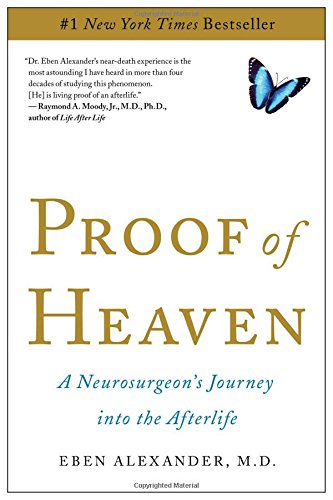
Eben Alexander: A Neurosurgeon's Journey through the Afterlife
Neurosurgeon Eben Alexander talks about his NDE while he had bacterial meningitis. Dr. Alexander has written about his experience in the remarkable book Proof of Heaven (for other similar books check out the Recommended Books page). The incredible rarity and severity of his illness, which wiped out not only his neocortex but brainstem as well, makes Dr. Alexander's experience a very strong case for the independence of consciousness from the physical structure and functioning of the brain. He explains more in this marvelous talk at the Theosophical Society.
Runs 98 minutes.
Runs 98 minutes.
Thursday, February 23, 2017
The Cult of Darwin
Evolution is why I originally went to school, specifically to study human evolution. That lasted about a year before I realised that it was simultaneously boring and a cult. It's not occult, it is a cult. It is a materialist quasi-religion with very little evidence. Occasionally you will find a transitional form here or there, but you need about 50,000 transitions between species and maybe you find 2 or 3, which doesn't really prove anything.
Evolution is based on the logical fallacy post hoc ergo propter hoc. Because fossil B looks similar to fossil A and appears in later strata that means species B evolved from species A.
There's no way logically to draw that conclusion. Just because B appears after A does not mean A is the cause of B.
First of all, with fossils we're basing phylogeny on morphology. That's wrong. You can't do that. If you were to try that with living organisms you would get nonsense. A hippopotamus looks a lot like a pig, but genetically they're nothing alike. Ants and termites are both eusocial insects that live underground, but genetically they're nothing alike. Birds and bats both have similar skeletal structures that are necessary for flight, but genetically they're nothing alike. You can't base phylogeny on morphology because it doesn't work. Phylogeny needs to be based on genetics if on anything.
And yet all fossils are organised based on morphology even though that technique fails when it is tried on living species. Fossils themselves provide no evidence other than the sudden appearance and disappearance of certain species.
At the same time, every experiment that has ever been conducted to test evolution has also failed.
40,000 years of selective breeding has not turned dogs into a separate species. Dogs can still breed with wolves, and can still breed with coyotes and other canines. That makes them the same species, doesn't it? (That's a separate side issue: we don't even know what a species is.) Furthermore, as Tom Bethell points out in the video below, all these different dog breeds are allowed to mate in the wild and the offspring, over just a couple generations, return to the same morphology of the wild dog. 40,000 years of being separate from wolves and when returned to the wild dogs will revert back to wolves in a couple of generations. Nothing has changed except gossamer cosmetic features.
Another example is Richard Lenski's E. coli. 80,000 generations and nothing has changed. The longest laboratory experiment in evolution ever conducted and nothing has changed but cosmetics. The bacteria are plumper, because they are kept in a hypertonic solution, but if released into the wild they immediately return to their normal shape, and the rate of expression of a single pre-existing gene has increased, allowing for the digestion of citrate. That gene already existed, it was just turned off, and now it's turned on because the bacteria are placed in an environment that has a high concentration of citrate. In 80,000 generations nothing has happened.
And yet we are supposed to believe that in 80,000 generations humans went from Australopithecus to us. It's impossible. You couldn't do it in 8 million generations.
And that's just with natural selection (which, as Karl Popper correctly pointed out, isn't testable and is not a scientific theory). Abiogenesis is a whole other Pandora's can of worms unto itself.
Estimates place the odds of all the correct chemical reactions taking place, forming all the right amino acids, assembling into the right proteins, all in the correct sequence to form the first cell at 1:10^80. Anything beyond 1:10^50 is statistically impossible. It would require more time than the entire expected lifespan of the universe. Deep time is deep, but it's not bottomless. The ONLY recourse to this problem is the multiverse. There needs to be a minimum of 10^500 random parallel universes in order for our one to have life. That's metaphysics; that's religion, not science. It's impossible, even in theory, to verify the existence of these other universes.
Neodarwinism is not science, it's a materialistic religion based on multiple unfalsifiable assumptions. It polices speech and behaviour like any religion, it has dogma like any religion, it's deeply in bed with government like a religion, and it gets tithes (government grants) like a religion. It has a holy book, a prophet, and it has worship service (new atheist revival meetings and undergraduate courses). It absolves its believers of guilt (if you're just an animal and when you die you rot you can justify literally anything and need feel bad about nothing), and it provides believers with a sense of belonging to a community.
Evolution is a religion.
And that's why I quit. I wanted the truth, I didn't want to replace one set of beliefs for another.
At the same time I think it's important to state that I have no alternative. I'm not a supporter of any alternative hypothesis. I don't believe God created all the species all at once, I don't believe ancient aliens visited the Earth and killed off the dinosaurs so they could create humans to mine gold, I don't believe backward causation from some future omega point is pulling life toward an ultimate goal, and that's kind of it, those are really the three hypotheses that people have put forth over the centuries. Within the fossil record some species just appear at one time and die out at another, and we have absolutely no idea why. Within our own experience in the field we find species going extinct (often because we extinct them), and we find new species, but those species were just in inaccessible places, we've never observed a new species evolve.
The only honest, philosophically defensible position, I think, is agnosticism. Species appear and disappear and we have absolutely no clue as to why. Any other position is metaphysics, not science.
Evolution is based on the logical fallacy post hoc ergo propter hoc. Because fossil B looks similar to fossil A and appears in later strata that means species B evolved from species A.
There's no way logically to draw that conclusion. Just because B appears after A does not mean A is the cause of B.
First of all, with fossils we're basing phylogeny on morphology. That's wrong. You can't do that. If you were to try that with living organisms you would get nonsense. A hippopotamus looks a lot like a pig, but genetically they're nothing alike. Ants and termites are both eusocial insects that live underground, but genetically they're nothing alike. Birds and bats both have similar skeletal structures that are necessary for flight, but genetically they're nothing alike. You can't base phylogeny on morphology because it doesn't work. Phylogeny needs to be based on genetics if on anything.
And yet all fossils are organised based on morphology even though that technique fails when it is tried on living species. Fossils themselves provide no evidence other than the sudden appearance and disappearance of certain species.
At the same time, every experiment that has ever been conducted to test evolution has also failed.
40,000 years of selective breeding has not turned dogs into a separate species. Dogs can still breed with wolves, and can still breed with coyotes and other canines. That makes them the same species, doesn't it? (That's a separate side issue: we don't even know what a species is.) Furthermore, as Tom Bethell points out in the video below, all these different dog breeds are allowed to mate in the wild and the offspring, over just a couple generations, return to the same morphology of the wild dog. 40,000 years of being separate from wolves and when returned to the wild dogs will revert back to wolves in a couple of generations. Nothing has changed except gossamer cosmetic features.
Another example is Richard Lenski's E. coli. 80,000 generations and nothing has changed. The longest laboratory experiment in evolution ever conducted and nothing has changed but cosmetics. The bacteria are plumper, because they are kept in a hypertonic solution, but if released into the wild they immediately return to their normal shape, and the rate of expression of a single pre-existing gene has increased, allowing for the digestion of citrate. That gene already existed, it was just turned off, and now it's turned on because the bacteria are placed in an environment that has a high concentration of citrate. In 80,000 generations nothing has happened.
And yet we are supposed to believe that in 80,000 generations humans went from Australopithecus to us. It's impossible. You couldn't do it in 8 million generations.
And that's just with natural selection (which, as Karl Popper correctly pointed out, isn't testable and is not a scientific theory). Abiogenesis is a whole other Pandora's can of worms unto itself.
Estimates place the odds of all the correct chemical reactions taking place, forming all the right amino acids, assembling into the right proteins, all in the correct sequence to form the first cell at 1:10^80. Anything beyond 1:10^50 is statistically impossible. It would require more time than the entire expected lifespan of the universe. Deep time is deep, but it's not bottomless. The ONLY recourse to this problem is the multiverse. There needs to be a minimum of 10^500 random parallel universes in order for our one to have life. That's metaphysics; that's religion, not science. It's impossible, even in theory, to verify the existence of these other universes.
Neodarwinism is not science, it's a materialistic religion based on multiple unfalsifiable assumptions. It polices speech and behaviour like any religion, it has dogma like any religion, it's deeply in bed with government like a religion, and it gets tithes (government grants) like a religion. It has a holy book, a prophet, and it has worship service (new atheist revival meetings and undergraduate courses). It absolves its believers of guilt (if you're just an animal and when you die you rot you can justify literally anything and need feel bad about nothing), and it provides believers with a sense of belonging to a community.
Evolution is a religion.
And that's why I quit. I wanted the truth, I didn't want to replace one set of beliefs for another.
At the same time I think it's important to state that I have no alternative. I'm not a supporter of any alternative hypothesis. I don't believe God created all the species all at once, I don't believe ancient aliens visited the Earth and killed off the dinosaurs so they could create humans to mine gold, I don't believe backward causation from some future omega point is pulling life toward an ultimate goal, and that's kind of it, those are really the three hypotheses that people have put forth over the centuries. Within the fossil record some species just appear at one time and die out at another, and we have absolutely no idea why. Within our own experience in the field we find species going extinct (often because we extinct them), and we find new species, but those species were just in inaccessible places, we've never observed a new species evolve.
The only honest, philosophically defensible position, I think, is agnosticism. Species appear and disappear and we have absolutely no clue as to why. Any other position is metaphysics, not science.
Saturday, December 24, 2016
Blood Miracle Forecasts Bad Omen

Cardinal Crescenzio Sepeial holding the vial containing Saint Januarius' blood.
Photo Credit:
Paola Magni
The vial containing the blood of Saint Januarius failed to liquefy. Just who is Saint Januarius, and why is this issue with his blood important? Here's the story, from Michael Talbot's Holographic Universe (p. 119-120):
"Every year in September and May a huge crowd gathers at the Duomo San Gennaro, the principal cathedral of Naples, to witness a miracle. The miracle involves a small vial containing a brown crusty substance alleged to be the blood of San Gennaro, or St. Januarius, who was beheaded by the Roman emperor Diocletian in A.D. 305. According to legend, after the saint was martyred a serving woman collected some of his blood as a relic. No one knows precisely what happened after that, save that the blood didn't turn up again until the end of the thirteenth century when it was ensconced in a silver reliquary in the cathedral.
"The miracle is that twice yearly, when the crowd shouts at the vial, the brown crusty substance changes into a bubbling, bright red liquid. There is little doubt that the liquid is real blood. in 1902 a group of scientists from the University of Naples made a spectroscopic analysis of the liquid by passing a beam of light through it, verifying that it was blood. Unfortunately, because the reliquary containing the blood is so old and fragile, the church will not allow it to be cracked open so that other tests can be done, and so the phenomenon has never been thoroughly studied.
"But there is further evidence that the transformation is a more than ordinary event. Occasionally throughout history (the first written account of the public performance of the miracle dates back to 1389) when the vial is brought out, the blood refuses to liquefy. Although rare, this is considered a very bad omen by the citizens of Naples. In the past, the failure of the miracle has directly preceded the eruption of Vesuvius and the Napoleonic invasion of Naples. More recently, in 1976 and 1978, it presaged the worst earthquake in Italian history and the election of a communist city government in Naples, respectively.
"Is the liquefaction of San Gennaro's blood a miracle? It appears to be, at least in the sense that it seems impossible to explain by known scientific laws." [emphasis added]
Skep-dicks have claimed the substance in the vial is a thixotropic gel containing iron oxide. Of course, they've produced bullshit stunts where they've created a similar substance that liquefies when shaken, but that's not proof of anything. A ventriloquist can reproduce the effect of voices coming out of a radio but that doesn't mean that radios are fake. Just because an effect can be reproduced through other means doesn't in any way indicate that those are the only means of producing the effect. There are many ways to produce powered flight, and there are many different types of light bulb, and all sorts of other phenomena can be produced in different ways. Magicians reproducing psychic phenomena does not in the least prove, or even provide evidence that psychic phenomena are fake. It's a confidence trick designed to subvert the rational mind.
From Live Science:
"The blood did not liquefy in 1939, when World War II broke out, nor in
1943, the year the Nazi occupied Italy, nor in 1973, remembered for a
bout of cholera in Naples. Most recently, it failed to liquefy in 1980,
when a devastating earthquake struck Irpinia, some 30 miles east of
Naples, leaving more than 2,400 people dead.
"According to the website storiacity.it,
over the centuries the failed miracle coincided with 22 epidemics, 11
revolutions, three droughts, 14 archbishops death (within a 30-day
period), nine dead popes (over a period of a few weeks), four wars, 19
earthquakes, and three religious persecutions."
The blood failed to liquefy again on the 16th of December this year. Every time the blood has failed to liquefy there has been some disaster.
That could mean one of two things:
1. The liquefaction of the blood is a genuine miracle and failure to liquefy really does portend bad omens.
2a. The liquefaction of the blood is a psychic phenomena involving the collective consciousness of the people of Naples to see into the future and predict when calamities are about to occur.
2b. The blood is fake but unconscious precognition is still involved. Either the priests and other church officials psychically sense the future and purposefully do some trick to keep the fake substance a solid to warn the public, or the collective consciousness of the people of Naples keeps the fake substance a solid because of unconscious precognition.
The skep-dicks have no legs to stand on. The failure of the substance to liquefy has always coincided with disasters. It doesn't matter what is in the vial, blood or iron oxide gel, either a miracle or psychic powers are involved, because no matter what's in the vial, the substance itself or the people around it are still able to predict the future, something materialism says is impossible.
What does that mean for 2017? Let me just say that if I had any travel plans for Naples I would cancel them.
Thursday, October 6, 2016
Cults: Veganism
Lierre Keith is a writer, radical feminist, food activist, and environmentalist (three out of four isn't bad). She's written a book, The Vegetarian Myth: Food, Justice, and Sustainability, that exposes the cult of veganism and how it is destroying the planet (literally).
Amazon's description:
Part memoir, nutritional primer, and political manifesto, this controversial examination exposes the destructive history of agriculture—causing the devastation of prairies and forests, driving countless species extinct, altering the climate, and destroying the topsoil—and asserts that, in order to save the planet, food must come from within living communities. In order for this to happen, the argument champions eating locally and sustainably and encourages those with the resources to grow their own food. Further examining the question of what to eat from the perspective of both human and environmental health, the account goes beyond health choices and discusses potential moral issues from eating—or not eating—animals. Through the deeply personal narrative of someone who practiced veganism for 20 years, this unique exploration also discusses alternatives to industrial farming, reveals the risks of a vegan diet, and explains why animals belong on ecologically sound farms.
Agriculture is tremendously destructive of the environment. The vegan lifestyle is actually the least environmentally friendly of all possible options. Forests and fields need to be cleared, habitat needs to be destroyed, aquifers need to be drained, and oil needs to be drilled to make fertiliser. The system of agribusiness we have in place right now is only possible due to massive government subsidies and petrochemical fertiliser. 5 billion people are alive today because of artificial phosphate fertilisers and ground water irrigation. Those phosphates won't last forever, and neither will the groundwater, just like the guano. Personally I suspect there's two or more centuries worth of oil that remain to be exploited, but phosphates and ground water are being depleted faster than they can be replenished, and I don't put much hope for future utopianisms. Old methods of agriculture can only supply food for about two billion people, not seven, and it takes millions of years for aquifers to fill with water and caves to fill with shit to be used to grow food for five billion real people who will die if they don't eat anything.
There was a great discovery in 1802 of something called guano. Guano is bird shit, and it is perfect for fertiliser (and for making explosives and gunpowder). The great powers of Europe waged wars and colonised the entire planet in search of guano. For thousandsof years seabirds had crapped on tiny rocks and islands, creating piles of guano hundreds of feet thick, and it only took about a century for all the guano to be mined. How long will it take for all the groundwater, phosphate, and oil to be mined? 50 years? 100? Some places like Saudi Arabia, which had tremendous aquifers, have already depleated their groundwater in a single lifetime. They engaged in massive agriculture, growing cash crops like alfalfa and soy that use a tremendous amount of water, and now that they've run out they are buying up water in the United States to grow soy on US soil, depleating our own water reserves.
Some people, most people I would assume, place hope in "future science". "Future science will solve all of our problems!" Has it? Most animals were not designed to eat corn (a human invention of the Andes peoples). But the government subsidises corn, and petrochemical fertilisers can grow a ton of it cheap, so tons of corn are grown and fed to animals to fatten them up quickly. Those animals, because they are eating junk and living in their own shit in cages too small to move, need to be pumped with antibiotics to keep from dropping dead. Massive reliance on antibiotics in factory farms have produced superbugs that are now resistant to all of our drugs of last resort. Just this year colistin, a drug so potent and toxic that it was used only to combat bacteria that would respond to no other treatment, has just met its match in drug resistant superbugs. How could this happen? Because although colostin was only very rarely used in humans, China pumped tons of the stuff into pigs and chickens to keep them from dropping dead in hideously polluted factory farms. Just this May the first colostin-resistant bacteria was discovered. We have no idea if that bacteria has escaped into the wild. Even if it has not we're not too far away from a time when all antibiotics are rendered useless (unless we develop new ones, and there haven't been any new antibiotics in decades). In a single lifetime we have seen the rise and fall of drugs to combat disease.
It's not just superbugs, it's our own bodies too. We're not designed to ingest massive quantities of grown hormone, antibiotics, estrogen from birth control that ends up in the water supply, and all the other toxic crap we're putting into food to grow lots of it really quick and make it last forever.
What if "future science" doesn't solve all of our problems? What is "future science" anyway? It's that stuff no one wants to invest in because it's not two hundred year old science. I love oil. I'm sitting on oil, typing on oil, looking at pictures projected on oil, in a house lit by oil, and I eat food that exists only because of oil, but maybe we should be investing in things beside oil because it's stupid to rely on only one kind of power source, just in case something bad happens to it?
Getting beyond that, the human body isn't designed to eat a plant diet. Most plants are toxic and need to be cooked to destroy those toxins before it is safe to eat them. Even then, most plants aren't too good for your body anyway, and cellulose is impossible to digest, so most of what you're eating just ends up filling the toilet. Some animals can digest plants, animals with very long, complicated guts. Pack hunters like humans, have shorter guts designed to digest meat from animals with longer guts. Herbivores do all the work, we get all the benefit. It's win-win really. Cows, sheep, and pigs are tremendously successful species, because they taste good. Domesticated animals have a very good chance of reproducing. That's why there are billions of them. These animals have thrived, while their wild counterparts have gone extinct, because they have adapted to life under human control. Eating meat keeps many species from going extinct, keeps wilderness land from being destroyed and turned into farms, and provides the human body what it needs to survive.
That said, there's a right and a wrong way to raise animals. The factory farms that pump animals full of antibiotics is the wrong way. What's the right way? Read the book.
Amazon's description:
Part memoir, nutritional primer, and political manifesto, this controversial examination exposes the destructive history of agriculture—causing the devastation of prairies and forests, driving countless species extinct, altering the climate, and destroying the topsoil—and asserts that, in order to save the planet, food must come from within living communities. In order for this to happen, the argument champions eating locally and sustainably and encourages those with the resources to grow their own food. Further examining the question of what to eat from the perspective of both human and environmental health, the account goes beyond health choices and discusses potential moral issues from eating—or not eating—animals. Through the deeply personal narrative of someone who practiced veganism for 20 years, this unique exploration also discusses alternatives to industrial farming, reveals the risks of a vegan diet, and explains why animals belong on ecologically sound farms.
Agriculture is tremendously destructive of the environment. The vegan lifestyle is actually the least environmentally friendly of all possible options. Forests and fields need to be cleared, habitat needs to be destroyed, aquifers need to be drained, and oil needs to be drilled to make fertiliser. The system of agribusiness we have in place right now is only possible due to massive government subsidies and petrochemical fertiliser. 5 billion people are alive today because of artificial phosphate fertilisers and ground water irrigation. Those phosphates won't last forever, and neither will the groundwater, just like the guano. Personally I suspect there's two or more centuries worth of oil that remain to be exploited, but phosphates and ground water are being depleted faster than they can be replenished, and I don't put much hope for future utopianisms. Old methods of agriculture can only supply food for about two billion people, not seven, and it takes millions of years for aquifers to fill with water and caves to fill with shit to be used to grow food for five billion real people who will die if they don't eat anything.
There was a great discovery in 1802 of something called guano. Guano is bird shit, and it is perfect for fertiliser (and for making explosives and gunpowder). The great powers of Europe waged wars and colonised the entire planet in search of guano. For thousandsof years seabirds had crapped on tiny rocks and islands, creating piles of guano hundreds of feet thick, and it only took about a century for all the guano to be mined. How long will it take for all the groundwater, phosphate, and oil to be mined? 50 years? 100? Some places like Saudi Arabia, which had tremendous aquifers, have already depleated their groundwater in a single lifetime. They engaged in massive agriculture, growing cash crops like alfalfa and soy that use a tremendous amount of water, and now that they've run out they are buying up water in the United States to grow soy on US soil, depleating our own water reserves.
Some people, most people I would assume, place hope in "future science". "Future science will solve all of our problems!" Has it? Most animals were not designed to eat corn (a human invention of the Andes peoples). But the government subsidises corn, and petrochemical fertilisers can grow a ton of it cheap, so tons of corn are grown and fed to animals to fatten them up quickly. Those animals, because they are eating junk and living in their own shit in cages too small to move, need to be pumped with antibiotics to keep from dropping dead. Massive reliance on antibiotics in factory farms have produced superbugs that are now resistant to all of our drugs of last resort. Just this year colistin, a drug so potent and toxic that it was used only to combat bacteria that would respond to no other treatment, has just met its match in drug resistant superbugs. How could this happen? Because although colostin was only very rarely used in humans, China pumped tons of the stuff into pigs and chickens to keep them from dropping dead in hideously polluted factory farms. Just this May the first colostin-resistant bacteria was discovered. We have no idea if that bacteria has escaped into the wild. Even if it has not we're not too far away from a time when all antibiotics are rendered useless (unless we develop new ones, and there haven't been any new antibiotics in decades). In a single lifetime we have seen the rise and fall of drugs to combat disease.
It's not just superbugs, it's our own bodies too. We're not designed to ingest massive quantities of grown hormone, antibiotics, estrogen from birth control that ends up in the water supply, and all the other toxic crap we're putting into food to grow lots of it really quick and make it last forever.
What if "future science" doesn't solve all of our problems? What is "future science" anyway? It's that stuff no one wants to invest in because it's not two hundred year old science. I love oil. I'm sitting on oil, typing on oil, looking at pictures projected on oil, in a house lit by oil, and I eat food that exists only because of oil, but maybe we should be investing in things beside oil because it's stupid to rely on only one kind of power source, just in case something bad happens to it?
Getting beyond that, the human body isn't designed to eat a plant diet. Most plants are toxic and need to be cooked to destroy those toxins before it is safe to eat them. Even then, most plants aren't too good for your body anyway, and cellulose is impossible to digest, so most of what you're eating just ends up filling the toilet. Some animals can digest plants, animals with very long, complicated guts. Pack hunters like humans, have shorter guts designed to digest meat from animals with longer guts. Herbivores do all the work, we get all the benefit. It's win-win really. Cows, sheep, and pigs are tremendously successful species, because they taste good. Domesticated animals have a very good chance of reproducing. That's why there are billions of them. These animals have thrived, while their wild counterparts have gone extinct, because they have adapted to life under human control. Eating meat keeps many species from going extinct, keeps wilderness land from being destroyed and turned into farms, and provides the human body what it needs to survive.
That said, there's a right and a wrong way to raise animals. The factory farms that pump animals full of antibiotics is the wrong way. What's the right way? Read the book.
Thursday, June 9, 2016
The Apports of Amyr Amiden with Stanley Krippner
A fantastic discussion with Stanley Krippner and Jeffrey Mishlove.
Stanley Krippner, Ph.D., professor of psychology at Saybrook University,
is a Fellow in five APA divisions, and past-president of two divisions
(30 and 32).
Here he describes his research in Brazil with an unusual spiritist
medium, Amyr Amiden, who had the ability to produce apports. Krippner
describes how his team observed over ninety instances of objects simply
appearing in mid-air and dropping to the ground in front of startled
observers. The objects included semi-precious stones, medallions, and
even jewelry. Many research papers were published regarding these
observations. Furthermore, the research team was able to record various
physiological, and geomagnetic, measurements while the phenomena
occurred. Krippner’s studies are probably the most extensive, scientific
observations of apports on record.
Runs 30 minutes
Stanley Krippner, Ph.D., professor of psychology at Saybrook University,
is a Fellow in five APA divisions, and past-president of two divisions
(30 and 32).
Here he describes his research in Brazil with an unusual spiritist
medium, Amyr Amiden, who had the ability to produce apports. Krippner
describes how his team observed over ninety instances of objects simply
appearing in mid-air and dropping to the ground in front of startled
observers. The objects included semi-precious stones, medallions, and
even jewelry. Many research papers were published regarding these
observations. Furthermore, the research team was able to record various
physiological, and geomagnetic, measurements while the phenomena
occurred. Krippner’s studies are probably the most extensive, scientific
observations of apports on record.
Runs 30 minutes
Thursday, March 17, 2016
The Joe Rogan Experience with Graham Hancock
Joe Rogan talks with Graham Hancock about ancient civilisations, the ice age, psychadelics, the war on drugs, and why the power elite don't want us asking questions about deep antiquity. Runs 2 hours.
Wednesday, March 16, 2016
The Purpose-Guided Universe
Dr. Bernard Haisch, astrophysicist and UFO enthusiast, author of The God Theory and The Purpose-Guided Universe, talks about God, physics, the anthropic principle, and the meeting of science and religion. This talk is a little dated, as the Higgs boson has since been discovered (or, more accurately a Higgs boson has been discovered, there might be more than one), but it is still very good. Runs 2 hours.
Sunday, January 31, 2016
The Tenth Planet
It seems that Caltech may have discovered a TENTH planet in the solar system (Pluto is a planet and always will be*). Gravitational disturbances within the Kuiper Belt have led to a number of researchers hypothesising the existence of a massive planet very very far from the Sun. This planet, if it exists, is estimated to be 10 times as massive as the Earth and is at a distance of 700 AU, and it takes between 10,000 and 20,000 years to complete one orbit (90 times longer than Neptune). It may well be the long hypothesised fifth gas giant.
The planet has not yet been directly observed, only its gravitational effects on other bodies. This is exactly how Neptune was discovered.
[Mike] Brown
notes that the putative ninth planet—at 5,000 times the mass of
Pluto—is sufficiently large that there should be no debate about whether
it is a true planet. Unlike the class of smaller objects now known as
dwarf planets, Planet Nine gravitationally dominates its neighborhood of
the solar system. In fact, it dominates a region larger than any of the
other known planets—a fact that Brown says makes it "the most planet-y
of the planets in the whole solar system."
One key prediction of the planet hypothesis is that a group of Kuiper objects should be detected inclined perpendicular to the ecliptic, and five such objects were discovered. Unlike global warming, the computer models for the tenth planet actually match the observed data. This is how to do real science, not political science.
Making visual observations of this new planet, if it exists, will be difficult. It should be quite dim, and no one knows exactly how far away it is. It is not known where to look, but at least there is good evidence that there is something out there to look for.
* The International Astronomical Union, a good ol' boy's club for elite astronomers, decided to cancel Pluto's membership in the planet club. They took a vote. But a vote isn’t exactly a rigorous scientific argument, so to give its decision the flavor of science, the IAU came up with a definition of "planet" so convoluted it seemed entirely arbitrary.
To qualify as a planet, a body must orbit the sun and be large enough to be at least roughly spherical, two rules that make sense. But it must also have gravitationally "cleared its neighborhood" of other bodies, meaning it has its orbital traffic lane all to itself, which Pluto doesn’t, at least during the most remote portion of its journey around the sun. The rule seemed carefully crafted so that "dwarf planets" like Pluto, Eris and the asteroid Ceres didn’t make the cut.
But that's not the half of it. If the Earth were placed where Pluto is it would not have enough mass to "clear its neighborhood", and so the Earth would not be a planet! That's right. An earth-sized object situated between 30 and 40 AU from the Sun would not have enough mass to qualify as a planet. The farther from the Sun the more area must be dominated by the object's mass, so it gets harder and harder the farther away you get for a large spherical object to qualify as a planet.
But the Earth IS a planet where it is in space, meaning the third criterion doesn't signify anything intrinsic about the body itself! The definition of what is and is not a planet should not rest on some factor independent of the planet itself.
Until someone can come up with a compelling, intrinsic reason (a reason that would not disqualify the Earth!) why Pluto should not be a planet, then I am considering it a planet.
The planet has not yet been directly observed, only its gravitational effects on other bodies. This is exactly how Neptune was discovered.
[Mike] Brown
notes that the putative ninth planet—at 5,000 times the mass of
Pluto—is sufficiently large that there should be no debate about whether
it is a true planet. Unlike the class of smaller objects now known as
dwarf planets, Planet Nine gravitationally dominates its neighborhood of
the solar system. In fact, it dominates a region larger than any of the
other known planets—a fact that Brown says makes it "the most planet-y
of the planets in the whole solar system."
One key prediction of the planet hypothesis is that a group of Kuiper objects should be detected inclined perpendicular to the ecliptic, and five such objects were discovered. Unlike global warming, the computer models for the tenth planet actually match the observed data. This is how to do real science, not political science.
Making visual observations of this new planet, if it exists, will be difficult. It should be quite dim, and no one knows exactly how far away it is. It is not known where to look, but at least there is good evidence that there is something out there to look for.
* The International Astronomical Union, a good ol' boy's club for elite astronomers, decided to cancel Pluto's membership in the planet club. They took a vote. But a vote isn’t exactly a rigorous scientific argument, so to give its decision the flavor of science, the IAU came up with a definition of "planet" so convoluted it seemed entirely arbitrary.
To qualify as a planet, a body must orbit the sun and be large enough to be at least roughly spherical, two rules that make sense. But it must also have gravitationally "cleared its neighborhood" of other bodies, meaning it has its orbital traffic lane all to itself, which Pluto doesn’t, at least during the most remote portion of its journey around the sun. The rule seemed carefully crafted so that "dwarf planets" like Pluto, Eris and the asteroid Ceres didn’t make the cut.
But that's not the half of it. If the Earth were placed where Pluto is it would not have enough mass to "clear its neighborhood", and so the Earth would not be a planet! That's right. An earth-sized object situated between 30 and 40 AU from the Sun would not have enough mass to qualify as a planet. The farther from the Sun the more area must be dominated by the object's mass, so it gets harder and harder the farther away you get for a large spherical object to qualify as a planet.
But the Earth IS a planet where it is in space, meaning the third criterion doesn't signify anything intrinsic about the body itself! The definition of what is and is not a planet should not rest on some factor independent of the planet itself.
Until someone can come up with a compelling, intrinsic reason (a reason that would not disqualify the Earth!) why Pluto should not be a planet, then I am considering it a planet.
Friday, November 20, 2015
Science and the Survival of Consciousness after Death
Dr. Bruce Greyson in a 2010 talk about survival of consciousness. Runs 42 minutes. Some of it seems familiar. Maybe there is overlap with the last presentation, maybe from another interview.
Monday, November 16, 2015
Stuart Hameroff on Quantum Consciousness
Dr. Stuart Hameroff, anesthesiologist and philosopher, is the co-creator, along with Dr. Roger Penrose, of the Orch-OR (Orchestrated Objective Reduction) theory of consciousness. Orch-OR postulates consciousness as a quantum phenomenon located mainly in the microtubules of the brain. As coherent quantum information, consciousness can exist outside the brain, possibly indefinitely, retaining its unique identity, and might even be able to enter a new brain, accounting for reincarnation. Orch-OR may be unique in that it may be the only materialistic explanation for consciousness that can account for survival after death and the effects of psychedelic drugs and intense states of meditation. Dr. Hameroff also proposes an experiment for testing the hypothesis, involving different regimens of anesthetic drugs.
Dr. Hameroff explains the Orch-OR model in greater detail in this one hour interview.
Dr. Hameroff explains the Orch-OR model in greater detail in this one hour interview.
Friday, November 13, 2015
Is Consciousness Produced by the Brain?
Dr. Bruce Greyson, professor of psychiatry and neurobehavioral sciences at the University of Virginia, gives a one hour talk on evidence that consciousness can exist independent of the brain, including deathbed lucidity, patients with little brain tissue, children remembering past lives, and the near death experience. Followed by questions.
From the Cosmology and Consciousness Conference - Mind and Matter in 2011.
From the Cosmology and Consciousness Conference - Mind and Matter in 2011.
Monday, September 28, 2015
Liquid Water on Mars
NASA announced earlier today that liquid water was discovered on Mars. For decades there has been speculation that there was water some indeterminate time in the past and that it was all gone. People speculated that other factors were at play with what appeared to be (and in fact are) features that change seasonally (remember, Mars has seasons because of its tilted axis just like the Earth does). Well, now there's no hedging bets, there absolutely is liquid water on Mars.
Hydrated salts were discovered in the Hale crater in dark streaks that change with the seasons. In the Martian Summer the ice melts and forms salt water streams that refreeze in the Winter. The high salinity keeps the water liquid at temperatures well below its freezing point. The minerals in the water are mostly magnesium perchlorate, magnesium chlorate, and sodium perchlorate.
Water, so far as we know, is a necessary condition for life, and even though that water contains strong oxidisers, who knows, there may be life on Mars. Those microscopic fossils might just be the tip of the iceberg.
Hydrated salts were discovered in the Hale crater in dark streaks that change with the seasons. In the Martian Summer the ice melts and forms salt water streams that refreeze in the Winter. The high salinity keeps the water liquid at temperatures well below its freezing point. The minerals in the water are mostly magnesium perchlorate, magnesium chlorate, and sodium perchlorate.
Water, so far as we know, is a necessary condition for life, and even though that water contains strong oxidisers, who knows, there may be life on Mars. Those microscopic fossils might just be the tip of the iceberg.
Sunday, January 11, 2015
Pyramid Secrets Revealed
Jean-Pierre Houdin, French architect, quit his job and sold his home so he could devote himself 24 hours a day for five years to solve the mystery of how the Great Pyramid was built. The result of all that work is probably the only credible hypothesis anyone has ever come up with. Working with Egyptologist Bob Brier, Houdin visits Egypt to look for evidence of his internal ramp hypothesis and does not leave empty handed. It turns out there is a lot of supporting evidence of an internal ramp. Houdin's hypothesis also explains the mystery of the Grand Gallery, a feature that appears in no other pyramid. He proposes that a series of sledges holding heavy counterweights were placed inside the Grand Gallery, permitting a handful of men to lift the mammoth 60 tonne granite stones found in the King's Chamber, a feat that would have been impossible to achieve with manpower alone. Houdin's hypothesis also explains the meaning of the machines that were said to be used to construct the pyramid. It turns out the whole structure was one giant machine after all, designed to build itself from the inside out. No aliens are required to explain the pyramid and our intelligence is not insulted with fanciful notions of thousands of men hauling stones up a giant ramp that would be many times larger than the pyramid itself.
Runs 51 minutes.
Runs 51 minutes.
Saturday, January 3, 2015
Richard Rose: Zen and Death
Do we want the Truth or do we want to be "educated"? There is a tendency of people in control, whether in universities or in governments, to want to "educate". Not for the Truth, but for the convenience of the moment, thinking they are the prophets of the zeitgeist, and by their manipulation of the public mind the will bring people around to the "right" direction.
- Richard Rose
Richard Rose talks on everything. He talks about the four categories of mystical experiences, how society conditions us to believe lies regarding who we are and what death is, the near death experience, and the importance of finding the Truth and who we really are. We exist before we are born and continue to exist after we die. The purpose of life is finding this Truth out for ourselves through direct experience. Runs 1 hour 10 minutes.
- Richard Rose
Richard Rose talks on everything. He talks about the four categories of mystical experiences, how society conditions us to believe lies regarding who we are and what death is, the near death experience, and the importance of finding the Truth and who we really are. We exist before we are born and continue to exist after we die. The purpose of life is finding this Truth out for ourselves through direct experience. Runs 1 hour 10 minutes.
Subscribe to:
Posts (Atom)