
Ken Wilber explains why only religion provides the structures and tools necessary for both growing up and waking up. Nothing else can create a cohesive community that gives meaning to our lives, or provide the means of escaping suffering and discovering our true identity.
Showing posts with label Yoga. Show all posts
Showing posts with label Yoga. Show all posts
Wednesday, August 23, 2017

Sunday, November 8, 2015
Expansiveness
Swami Kriyananda talks about other worlds, the limitations of the body, and the relationship between the frontal lobes and superconsciousness. Runs 19 minutes.
Wednesday, October 21, 2015
What is a Mantra?
Swami Kriyananada talks about mantras, sound, and the power of intention. Runs 13 minutes.
Tuesday, September 29, 2015
The Mystery of Death
Kriyananda expounds upon Yogananda's teaching of death, suicide, and the three worlds: gross, subtle, and causal. He talks about how desires become karma that keep us trapped in a cycle of rebirth. Runs 21 minutes.
Friday, February 20, 2015
God and Attachment
Another lovely video with Kriyananda. Here he talks about gratitude and getting rid of attachments. Everything you have is on loan and must be surrendered one day. Give your fear and worries to God and you'll live in peace.
Saturday, January 3, 2015
Richard Rose: Zen and Death
Do we want the Truth or do we want to be "educated"? There is a tendency of people in control, whether in universities or in governments, to want to "educate". Not for the Truth, but for the convenience of the moment, thinking they are the prophets of the zeitgeist, and by their manipulation of the public mind the will bring people around to the "right" direction.
- Richard Rose
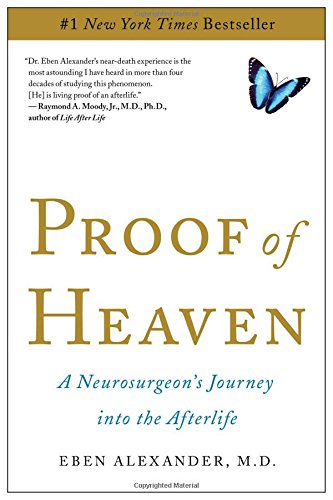
Richard Rose talks on everything. He talks about the four categories of mystical experiences, how society conditions us to believe lies regarding who we are and what death is, the near death experience, and the importance of finding the Truth and who we really are. We exist before we are born and continue to exist after we die. The purpose of life is finding this Truth out for ourselves through direct experience. Runs 1 hour 10 minutes.
- Richard Rose
Richard Rose talks on everything. He talks about the four categories of mystical experiences, how society conditions us to believe lies regarding who we are and what death is, the near death experience, and the importance of finding the Truth and who we really are. We exist before we are born and continue to exist after we die. The purpose of life is finding this Truth out for ourselves through direct experience. Runs 1 hour 10 minutes.
Monday, October 13, 2014
Swami Rama the Himalayan Master
Here is a lovely 20 minute video on the life of Swami Rama, who came to the West and demonstrated yogic powers (siddhis) under controlled scientific conditions.
Monday, September 8, 2014
Sunday, September 7, 2014
Abide as the Self
A lovely hour long film on Ramana Maharshi, narrated by Ram Dass. Presented here are rare photos and bits of film to go along with the story of Ramana's life and his essential teachings on self enquiry.
Friday, February 22, 2013
Dean Radin: Changes in Consciousness
Dean Radin talks about how meditation (usually) makes you a better person and trying to study the siddhis (supernormal powers attained through meditation) scientifically.
Friday, April 27, 2012
Dietary Disasters
Two new stories about diets going bad.
From the NY Daily News, an unnamed Swiss woman starved to death after watching a documentary about Prahlad Jani in January 2011 (and the news just got released?). The woman watched a documentary called "In The Beginning There Was Light" (the trailer BEGINS with the words "I'm not saying stop eating and drinking"!) about breatharianism, the practice of living off of sunlight instead of food. I have not watched the film but a copy is being tracked down as we speak, but right from the trailer I can see that no one advocated that this woman starve herself to death. Transitioning to living without food, if it's possible at all, is very lengthy and difficult just like transitioning from being a couch potato to an Olympic athelete is very lengthy and difficult. Similarly, most people won't ever become Olympic atheletes just as most people won't ever be able to live without food.
Here is the trailer of the film:
From The Blaze, a North Carolina man Steve Cooksey faces jail time for writing a diet journal online. The gestapo of NC says you need a state-approved license to dispense nutritional advice to anyone or you can spend 120 days in jail. Mr. Cooksey wrote about his experiment with a 30-day "paleo" diet (no dairy, no grain, no eggs, etc.) and some stuff he found online about the diet and the government says that he can't do that. If he wants to write about his diet he can't show it to anyone or tell anyone about it, even his closest friends and family, or that counts as dispensing nutritional advice and must be punished.
One day he went to a seminar at church and the state approved dietary police were feeding the people there propaganda so Cooksey spoke up and forever gained the ire of the state. They investigated him like government does to people it doesn't like and are now making threats. This is big government fascism if ever such a thing existed.
From the NY Daily News, an unnamed Swiss woman starved to death after watching a documentary about Prahlad Jani in January 2011 (and the news just got released?). The woman watched a documentary called "In The Beginning There Was Light" (the trailer BEGINS with the words "I'm not saying stop eating and drinking"!) about breatharianism, the practice of living off of sunlight instead of food. I have not watched the film but a copy is being tracked down as we speak, but right from the trailer I can see that no one advocated that this woman starve herself to death. Transitioning to living without food, if it's possible at all, is very lengthy and difficult just like transitioning from being a couch potato to an Olympic athelete is very lengthy and difficult. Similarly, most people won't ever become Olympic atheletes just as most people won't ever be able to live without food.
Here is the trailer of the film:
From The Blaze, a North Carolina man Steve Cooksey faces jail time for writing a diet journal online. The gestapo of NC says you need a state-approved license to dispense nutritional advice to anyone or you can spend 120 days in jail. Mr. Cooksey wrote about his experiment with a 30-day "paleo" diet (no dairy, no grain, no eggs, etc.) and some stuff he found online about the diet and the government says that he can't do that. If he wants to write about his diet he can't show it to anyone or tell anyone about it, even his closest friends and family, or that counts as dispensing nutritional advice and must be punished.
One day he went to a seminar at church and the state approved dietary police were feeding the people there propaganda so Cooksey spoke up and forever gained the ire of the state. They investigated him like government does to people it doesn't like and are now making threats. This is big government fascism if ever such a thing existed.
Sunday, April 10, 2011
Sadhu Haridas
I first learned of Sadhu Haridas just this year while reading Man's Eternal Quest, an anthology of talks given by Paramhansa Yogananda (the first of three such anthologies put out by SRF, each, I assume, about 500 pages long. To be fair, I may have read something about him in passing in some other book and simply forgotten, though I don't think it is pertinent to this subject.). Yogananda mentions Sadhu Haridas performing a feat similar to that of Pilot Baba, namely, he was buried alive for forty days in 1837 with only the limited supply of air inside the coffin, and when he was dug up he sprung out without any ill effects.
An article written at the time by Claude Wade, describes the situation as follows. Sadhu Haridas, refered to as the fakir, was tied into a white linen bag "squatted like a Hindu idol" (lotus posture?), with his ears and nostrils plugged with cotton and wax. He was then sealed with a padlock in a wooden box measuring four feet by three feet and buried in a cell three feet beneath the ground that was just big enough for two men to sit inside next to the box (in another article the box is said to be four feet by eight feet, see Cpt. Osborn link below). This cell was dug inside a small room made of brick. The door was made of heavy wood sealed also with a padlock and mud (so people would know if the room had been opened before it was supposed to). The building belonged to Ranjit Singh, the Maharaja of the Punjab, who placed his personal seal on the door to prevent it from being tampered with. He placed four guards at the door who were relieved every two hours, day and night, for the duration of the forty days.
Mr. Wade describes the moment when Sadhu Haridas was removed from the wooden box:
"The servant then began pouring warm water over the figure; but as my object was to see if any fraudulent practices could be detected, I proposed to Runjeet Singh to tear open the bag, and have a perfect view of the body before any means of resuscitation were employed. I accordingly did so; and may here remark, that the bag, when first seen by us, looked mildewed, as if it had been buried some time. The legs and arms of the body were shrivelled and stiff, the face full, the head reclining on the shoulder like that of a corpse. I then called to the medical gentleman who was attending me to come down and inspect the body, which he did, but could discover no pulsation in the heart, the temples, or the arm. There was, however, a heat about the region of the brain, which no other part of the body exhibited."
Servants removed the stoppers from his nostrils and ears, bathed him in warm water, massaged his limbs, and gave him ghee to drink. After about thirty minutes Sadhu Haridas woke up and spoke to the Maharaja "do you believe me now?" to which the Maharaja "replied in the affirmative," and then bestowed upon the Sadhu a royal token reserved for princes and other persons of distinction.
Claude came out of the experience completely convinced that there had been "no fraud or collusion in the exhibition [they] had witnessed."
This event, according to a British Captain Osborn writing in 1880, was an experiment performed by the Maharaja who did not believe Sadhu Haridas could return to life from a deathlike state as he claimed he could. If we are to believe this account (and remember, vintage DOES NOT discount scientific experiments, otherwise every experiment ever conducted would have to be repeated every year because time erases factuality), then this provides a good example of the genuine scientific mindset alive and well in India more than a century ago. Just like the experiments with Prahlad Jani, genuine science can be performed to test yogic powers, NOT just debunking exercises. According to Cpt. Osborn, the Maharaja believed that fraud was involved and took every step necessary to prevent anyone from tampering with the Sadhu's body before the experiment was completed. The Maharaja was determined to leave the Sadhu's body inside the cell for forty days, and then discover either a living man, thus demonstrating his claim, or a corpse, demonstrating a fraud.
According to Cpt. Osborn, Sadhu Haridas lived off of milk for several days before being interred. On the day he was buried he swallowed thirty yards of linen and then brought it up again to clean his stomach. He then had his long beard shaved on the day he was buried in the ground and when he was dug up there was no hair growth on his face, which for the Captain proved he had been in suspended animation the whole time.
On the day he was buried Haridas first entered suspended animation; he "[layed] his tongue far back in his throat, crosses his hands on his breast, and suspends animation by means of holding his breath," and then was enclosed in the linen bag and locked into a wooden chest by the Maharaja himself. The chest was buried in a barley field and the above mentioned brick room was manufactured around where the chest was buried. (In the yogic tradition if one places the tongue up behind the palate they can stimulate a nerve that will allow them to go without food for several weeks or months. I've never met or read about anyone who has done this, so I can't say if it is true or not.)
What this experiment tells us, about yoga, or the siddhis, or human physiology, is, in itself, not much. No single experiment can stand as arbiter over anything. However, it does serve as one example among many that can lead us to certain conclusions, namely: 1. At least some siddhis are real (so far all those we can test have been demonstrated to be real), and 2. Human beings are capable of far greater control over their physiological functions than current medical science is willing to permit. In conclusion, I will borrow the words of Claude Wade on the subject:
"I shared entirely in the apparent incredulity of the fact of a man being buried alive and surviving the trial without food or drink for various periods of duration; but, however incompatible with our knowledge of physiology, in the absence of any visible proof to the contrary, I am bound to declare my belief in the facts which I have represented, however impossible their existence may appear to others."
The other wiki has a very short article on Sadhu Haridas that doesn't say much, if anything, beyond what is mentioned above.
Post Script
Sai Baba's health is continuing to improve slowly after 15 days of hospitalisation. Updates can be found at this site created specifically for devotees to follow the progress of Swami's condition.
An article written at the time by Claude Wade, describes the situation as follows. Sadhu Haridas, refered to as the fakir, was tied into a white linen bag "squatted like a Hindu idol" (lotus posture?), with his ears and nostrils plugged with cotton and wax. He was then sealed with a padlock in a wooden box measuring four feet by three feet and buried in a cell three feet beneath the ground that was just big enough for two men to sit inside next to the box (in another article the box is said to be four feet by eight feet, see Cpt. Osborn link below). This cell was dug inside a small room made of brick. The door was made of heavy wood sealed also with a padlock and mud (so people would know if the room had been opened before it was supposed to). The building belonged to Ranjit Singh, the Maharaja of the Punjab, who placed his personal seal on the door to prevent it from being tampered with. He placed four guards at the door who were relieved every two hours, day and night, for the duration of the forty days.
Mr. Wade describes the moment when Sadhu Haridas was removed from the wooden box:
"The servant then began pouring warm water over the figure; but as my object was to see if any fraudulent practices could be detected, I proposed to Runjeet Singh to tear open the bag, and have a perfect view of the body before any means of resuscitation were employed. I accordingly did so; and may here remark, that the bag, when first seen by us, looked mildewed, as if it had been buried some time. The legs and arms of the body were shrivelled and stiff, the face full, the head reclining on the shoulder like that of a corpse. I then called to the medical gentleman who was attending me to come down and inspect the body, which he did, but could discover no pulsation in the heart, the temples, or the arm. There was, however, a heat about the region of the brain, which no other part of the body exhibited."
Servants removed the stoppers from his nostrils and ears, bathed him in warm water, massaged his limbs, and gave him ghee to drink. After about thirty minutes Sadhu Haridas woke up and spoke to the Maharaja "do you believe me now?" to which the Maharaja "replied in the affirmative," and then bestowed upon the Sadhu a royal token reserved for princes and other persons of distinction.
Claude came out of the experience completely convinced that there had been "no fraud or collusion in the exhibition [they] had witnessed."
This event, according to a British Captain Osborn writing in 1880, was an experiment performed by the Maharaja who did not believe Sadhu Haridas could return to life from a deathlike state as he claimed he could. If we are to believe this account (and remember, vintage DOES NOT discount scientific experiments, otherwise every experiment ever conducted would have to be repeated every year because time erases factuality), then this provides a good example of the genuine scientific mindset alive and well in India more than a century ago. Just like the experiments with Prahlad Jani, genuine science can be performed to test yogic powers, NOT just debunking exercises. According to Cpt. Osborn, the Maharaja believed that fraud was involved and took every step necessary to prevent anyone from tampering with the Sadhu's body before the experiment was completed. The Maharaja was determined to leave the Sadhu's body inside the cell for forty days, and then discover either a living man, thus demonstrating his claim, or a corpse, demonstrating a fraud.
According to Cpt. Osborn, Sadhu Haridas lived off of milk for several days before being interred. On the day he was buried he swallowed thirty yards of linen and then brought it up again to clean his stomach. He then had his long beard shaved on the day he was buried in the ground and when he was dug up there was no hair growth on his face, which for the Captain proved he had been in suspended animation the whole time.
On the day he was buried Haridas first entered suspended animation; he "[layed] his tongue far back in his throat, crosses his hands on his breast, and suspends animation by means of holding his breath," and then was enclosed in the linen bag and locked into a wooden chest by the Maharaja himself. The chest was buried in a barley field and the above mentioned brick room was manufactured around where the chest was buried. (In the yogic tradition if one places the tongue up behind the palate they can stimulate a nerve that will allow them to go without food for several weeks or months. I've never met or read about anyone who has done this, so I can't say if it is true or not.)
What this experiment tells us, about yoga, or the siddhis, or human physiology, is, in itself, not much. No single experiment can stand as arbiter over anything. However, it does serve as one example among many that can lead us to certain conclusions, namely: 1. At least some siddhis are real (so far all those we can test have been demonstrated to be real), and 2. Human beings are capable of far greater control over their physiological functions than current medical science is willing to permit. In conclusion, I will borrow the words of Claude Wade on the subject:
"I shared entirely in the apparent incredulity of the fact of a man being buried alive and surviving the trial without food or drink for various periods of duration; but, however incompatible with our knowledge of physiology, in the absence of any visible proof to the contrary, I am bound to declare my belief in the facts which I have represented, however impossible their existence may appear to others."
The other wiki has a very short article on Sadhu Haridas that doesn't say much, if anything, beyond what is mentioned above.
Post Script
Sai Baba's health is continuing to improve slowly after 15 days of hospitalisation. Updates can be found at this site created specifically for devotees to follow the progress of Swami's condition.
Saturday, February 12, 2011
Autobiography of a Yogi
February has been a pretty negative month, hasn't it? Trying to improve the situation, more in line with the Ananda villages video, here is a brief introduction to one of the most influential books of the past century (at least as far as my readers should be concerned). Paramhansa Yogananda wrote his Autobiography of a Yogi in 1946 (an updated version was published in 1952, shortly after he took mahasamadhi). According to the other wiki (take that with as much salt as Bloomberg will permit), Autobiography of a Yogi has been translated into 25 languages and sold more than one million copies. Yeah, it's a real shame that complete and utter shit like Twilight, lacking in any literary, artistic, political, or scientific value (it's about the author's fantasy of a geriatric psycho killer who stalks and wants to rape a teenage girl), has sold a hundred times more copies, but, as Scary Dave says, I ain't bitter.
The video is narrated by Yogananda's disciple, Kriyananda, and includes photographs of many of the locations mentioned in the book and original music performed by Kriyananda. Runs 27 minutes.
The video is narrated by Yogananda's disciple, Kriyananda, and includes photographs of many of the locations mentioned in the book and original music performed by Kriyananda. Runs 27 minutes.
Wednesday, February 9, 2011
Ananda World Brotherhood Colonies
Swami Paramhansa Yogananda's great wish was to establish world brotherhood colonies, communities devoted to plain living and high thinking, where people could practice Dharma away from the negative atmosphere of the modern world, while still being a part of it. These colonies embodied the ideal preached by Jesus of being in the world but not of it. They also embody Sri Aurobindo's* ideal of Integral Yoga, combining the best advances made east and west.
Yogananda's disciple, Swami Kriyananda, helped to set up eight of these colonies (several in USA, Asisi, Italy, and Pune, India). I looked into the economic model practised by the Ananda villages, and I must say I was pleasantly surprised. They are not some hippie, take handouts from the government, socialist orders. Everyone in Ananda is responsible for their own income and they have to pay for their own housing. If anywhere is a good example of responsible living, it seems to be the Ananda villages.
Here is a wonderful video on the history of Yogananda in America, his disciple Kriyananda, and the Ananda villages. Run time 23 minutes.
*Aurobindo also set up an intentional community, Auroville, in Pondicherry in India, which was then governed by the French because, as a political dissident, Aurobindo was a criminal in British India.\
Yogananda's disciple, Swami Kriyananda, helped to set up eight of these colonies (several in USA, Asisi, Italy, and Pune, India). I looked into the economic model practised by the Ananda villages, and I must say I was pleasantly surprised. They are not some hippie, take handouts from the government, socialist orders. Everyone in Ananda is responsible for their own income and they have to pay for their own housing. If anywhere is a good example of responsible living, it seems to be the Ananda villages.
Here is a wonderful video on the history of Yogananda in America, his disciple Kriyananda, and the Ananda villages. Run time 23 minutes.
*Aurobindo also set up an intentional community, Auroville, in Pondicherry in India, which was then governed by the French because, as a political dissident, Aurobindo was a criminal in British India.\
Subscribe to:
Posts (Atom)