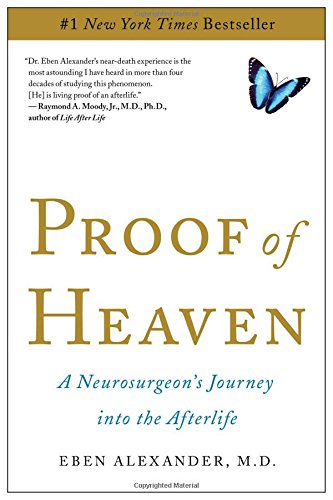

I usually have two problems with most spiritualists. First to clarify, when I say "spiritualist" I categorically DO NOT mean people who say they are "spiritual but not religious." I've already written at length my distaste for those people. Spiritualism is the belief that spirit exists distinct from matter (or within some realm of more rarefied subtle matter or etheric or astral matter) and can be contacted through mediums. And this has been tested scientifically and there are really only two possible options to explain the data:
1. The Survival Hypothesis. The minds and personalities of people survive death of the body in pretty much the same state as when they were alive and they can communicate, at least at a rudimentary level, with the living.
or
2. The Super-ESP Hypothesis. The minds of certain living people are capable of extraordinary feats of ESP bordering on omniscience, whereby they can access information about the deceased by reading the minds of multiple living people all over the world simultaneously and access other information through remote viewing of locked drawers, diaries, or other varied sources, often coming up with information that is not known to the bereaved person or persons and not verified until much later, all this coupled with a subconscious dissociative personality disorder that the medium believes with absolute conviction is a real deceased individual they are communicating with.
And that's it. And after 150 years of testing no one has devised an experiment to distinguish between the two conclusively for the unfortunate reason that all the scientists working on the problem are stuck trying to convince die-hard atheist materialists who serve as the gatekeepers of what is and is not officially sanctioned science that real information is being attained through psychic means.
You might think that's a false dilemma and decide to take the third option, but, to be honest, if you take the third option I question your intelligence and would be surprised you would even know what a false dilemma is or that you had the capacity to fully comprehend the issue.
3. The Demon-Haunted World. A class of non-physical (or astral) beings called demons exist and they are omniscient, or at least as intelligent as necessary to trick humans that they are deceased humans because God is an asshole and filled the universe with billions of demons who trick people because God is an asshole and wants to send 99.999% of people to suffer in Hell forever.
If you accept options 1 or 2 you are a rational person who has examined the evidence. If you accept option 3 you are a moron. If you reject them all and accept option 4, that it's all deliberate trickery from often Nobel Prize winning scientists who want to ruin their reputations by studying ghosts, you're either ignorant of the data or a cynical asshole and most likely never even bothered looking at the data because you reject it a priori.
As a side note, we can get into metaphysics, with astral and etheric and subtle energies and all that stuff some other time, and I know Ken Wilber has talked down the issue and has promoted his "Integral Post-Metaphysics" and Kant's critique of metaphysics, but if you read Excerpt G (page 46), Ken does admit to true metaphysics within his model:
" The fact that the subtle (and causal) bodymind can transmigrate the gross bodymind is indeed metaphysical; but the fact that these subtle energies are postulated as real, concrete, detectable, often measurable—if subtler—energies, stops the whole conception from spinning off into the vaporware of pure metaphysics. If you read hypothesis #4 in conjunction with the first three hypotheses, I think you will see that they are at least consistent with each other; and thus I believe that an integral theory of subtle energies can accommodate the existence of transmigration, if we decide, on other grounds, that there is enough evidence to conclude that transmigration occurs."
It's a good read, but if you're in a hurry you can watch this video.
Getting back to the central issue of what my problems with spiritualists are.
The first problem is the denial of the good that other religions (specifically Christianity and to a lesser extent Buddhism) have and continue to bring to humanity. I wouldn't say this is the hatred of religion, as we see in the "spiritual but not religious" people (except Islam, which they adore), and it probably is not cultural relativism either that says "all religions are equal" or some such nonsense. It might be a sort of spiritual myopia. They are so invested in the truth claims of their own beliefs – the messages delivered by spirits – that they reject out of hand the truth claims of opposing beliefs. So, for example, if spirits say reincarnation does not exist they will believe it without hesitation even though the spirit they are communicating with might be lying or ignorant or both. A second possibility is similar to when you're a teenager and you're embarrassed by what you did as a child, which is basically how climbing the developmental ladder works all through first tier. First tier stages (archaic, magic, mythic, rational, pluralistic, or egocentric, ethnocentric, worldcentric, or any other conceptions) are all exclusive in their thinking. Someone who is ethnocentric looks down on someone who is egocentric (and on someone who is worldcentric), just as someone who is worldcentric looks down on someone who is egocentric and someone who is ethnocentric, even though they themselves necessarily had to pass through all the lower stages to get to where they are. This continues, quite naturally, until one reaches second tier – integral – and can appreciate that all levels have truth and utility appropriate for people at that level.
So, someone who is a spiritualist would reject the truth and utility of organised religion even though for the vast majority of people who have ever lived organised religion is the only thing keeping them from stealing and killing and raping. Religion not only serves as a social glue, it serves as the only affective social glue that has ever been discovered. And since everyone starts out at square one when they are born and has to learn reason and morality, eliminating religion is a particularly bad idea because until people mature to the level where they can apply reason to appreciate natural law and morality (which for most people is never), religion is necessary to keep people from becoming monsters.
Sometimes, yes, religions do influence people to become monsters, particularly lower level religions, but certainly Christianity has had its reformation and the worst Christians you will ever likely encounter are assholes who protest soldiers' funerals.
Aside from legitimacy, religion provides the only affective means of bringing people enlightenment. This ties into the second problem I have with most spiritualists, which is something I'll call subtle reductionism, what Ken Wilber calls the Vishnu Complex. I'll get to that in a minute.
One of the central beliefs of spiritualists is the extreme gradualist approach to development, that spirits develop astronomically slowly, though inexorably, over gazillions of years to reach ultimate perfection. If I could spend fifty trillion eons in an astral heaven where my thoughts instantly manifest my desires I'd say that's a pretty good deal. The general idea is that it gets boring after a time and then you decide to progress. And I'll admit, after the hell and hardship of this life I might look forward to some downtime.
The classic counter to this, which makes sense to me, is the argument of reincarnationists that once your merit is worn out you have to come back here, so the astral worlds are temporary. The only way out of the cycle is enlightenment. The idea of progression through infinitely more rarefied realms does have somewhat of a parallel with the idea of a pure land in Buddhism or Sri Yukteswar's Hiranyaloka from Autobiography of a Yogi. You can progress to a special astral world where the infinite merit and compassion of an enlightened being permits you to progress spiritually without the need to reincarnate.
Now you might not want to believe in reincarnation, and I think most spiritualists don't, for the pretty thoughtless reason "Who would want to come back?!" Very few people, I suspect, would want to come back, but the traditions maintain that it's more like jumping off a cliff. Once you jump you don't get to choose whether you fall down or not, gravity will take over automatically. You don't get to choose whether you reincarnate or not, unless you're already enlightened, your spiritual gravity pulls you unconsciously where you are most suited, and for most people that's back here on Earth. Even if you don't believe in reincarnation, and I think it makes a certain degree of sense, there's still one more reason to see the gradualist approach as not all that's great.
The gradualist approach really does not solve the problem of suffering in this life, it defers it to the next. There is a bit of an inherent laziness to it. "If I'm going to get there anyway I might as well take my time." That is very similar to the traditional religious approach of suffering through life with the knowledge of a reward in the afterlife. The idea of a metaphysical safety net is certainly comforting and has served humanity very well for millennia, but it does not bring about true transpersonal development. Even in an astral heaven there is still self and other, there is still separation, and where there is separation there is suffering. That is why spirits choose to leave the lower astral heavens, often called "Summerland", where thoughts manifest instantly, because it gets boring after a while. The types of suffering in astral worlds are radically different than in the physical world (and in the astral hells are much worse), but as long as separation exists suffering necessarily exists. Enlightenment is the only way out, and religion provides the only door to enlightenment.
That brings us to my second objection, subtle reductionism, which is nothing other than the denial of the causal. Subtle reductionism is nowhere near as disastrous as the gross reductionism of fundamaterialists, it is definitely a step in the right direction, but in denying the existence of the causal one is also denying the ultimate end of suffering.
Basically the subtle realms work like psychotherapy. One reaches an end of psychotherapy when one realises that one can go on forever. The subtle realms are like that. You ascend higher and higher, into ever more subtle planes of illumination and bliss, and it just doesn't stop. There is no upward limit, there is no ultimate end. In meditation people can spend a lifetime just getting to more rarefied states and just bliss-out and as soon as they come down and have to go to work they are the same jerk as they were from day one. You can certainly gain psychic powers through forms of meditation, but if you just keep ascending through all the essential lights and sounds you will not reach enlightenment. This inertial desire to keep ascending through the subtle is what Ken Wilber calls the Vishnu Complex. You are so enamored with God you don't want to seek your true identity. And since you have to stop meditating eventually you will suffer when it ends. As long as separation exists suffering necessarily exists. And that's all the gradualist approach of most spiritualists promises, ever higher states of lights and sounds.
This denial of the causal is wonderfully presented in Greg Stone's book Under the Tree. It's a pretty obscure book, so I'll explain it a little. This man with a punny name encounters ice on the highway and runs his car off a cliff and goes into a coma. He has a near death experience that spends a great many pages just trying to convince him he really is dead, since he doesn't believe in an afterlife, and then it goes off into explaining how the universe works.
Mr. Pun's spirit guide explains to him why all the religions are wrong when they say that we are all one. You see, we really are all separate, but when you incarnate on the Earth you have to pass through a filter, and that filter only lets one soul through at a time, and since we all have to squeeze through that filter we think, "Oh, only one can fit, so there must be only one of us," but that's just faulty logic.
Except that's not what any religion says at all. Remember, you do not automatically become enlightened upon death. If you did there would be absolutely no point to life here on Earth at all. It would all be a waste of time and you could be a child rapist or an axe murderer and it wouldn't matter because we all go up into light and bliss when we die anyway. That's exactly the same horrible belief as the materialists who say you die and rot, just in the opposite direction. If nothing you do in this life has any impact on the next, and we're all just here to learn lessons, or to experience suffering, or because it's rousing good fun, then life truly is meaningless and you might as well just shoot heroin all day, because it won't make one bit of difference. If Hitler and his victims go to the same place after death then the universe is completely lacking in justice or compassion and was created and run by Satan.
Since you do not become enlightened upon death (and we know this because spirits coming through mediums admit to it; they admit to not knowing everything), then anything you hear from spirits about anything other than their particular state of being is just their own guess. If spirits tell you they enjoy coffee and cigars and fine velvet arm chairs on the other side, then you can believe them. If spirits tell you what is happening at the ultimate level, and that they know with absolute certainty how everything works and the mechanisms of reincarnation or whatever, they're either outright lying or they are guessing. Since the personality remains intact then a liar on the Earth is a liar in the afterlife, and subconscious biases and fears still cloud one's thinking.
One group of people we can believe are enlightened individuals on this Earth, because they all say the same exact thing. There is no guessing with enlightenment, there is just experience, or more accurately lack of experience. In the causal there is nothing arising. There are no separate things, just consciousness as such. Nothing bad arises to torture you and leave, nothing good arises to torture you when it leaves, there are no others, there is no you, there just is. And they all say this, for the past 3000 years, they all say this. No one is guessing since this is not speculation of what is happening at higher levels because all levels have been left behind. You step off the ride completely.
Ramakrishna explains this beautifully. He was a life-long devote of Kali, and he would go into spontaneous ecstasy and be engrossed in her image. When he met the naked swami Totapuri and tried to learn Advaita he kept seeing Kali when he meditated. Furious, Totapuri stuck a piece of broken glass between Ramakrishna's eyes and admonished him to meditate on that spot. The next time Ramakrishna meditated he says "As soon as the gracious form of the Divine Mother appeared before me, I used my discrimination as a sword and with it clove Her in two. The last barrier fell. My spirit at once soared beyond the relative plane. I lost myself in samadhi." (The Gospel of Sri Ramakrishna, page 49)
You can see a wonderful depiction of this from the 1955 Bengali film biography of Ramakrishna.
And it's like that for everyone. Ramana Maharshi, Richard Rose, Ken Wilber, everyone. You too can check it out for yourself. I did. You do not need to take anyone's word for it, you need accept no beliefs handed to you from spirits, you can meditate for a really long time and see for yourself if enlightenment is all it's cracked up to be. You don't need to consult mediums, you don't need to wait countless eons to ascend higher planes in the afterlife, you can do this right now, in this lifetime, and it is the single most important thing you ever will, or can, do.
There is nothing in the causal. It is completely empty. If ascending higher subtle realms is like climbing stairs to higher and higher floors in a building, then the leap to the causal would be like going from the third to the fourth dimension. It's not higher than the highest floor in the building, it bypasses height all together. It is not getting to the next level in a video game, it's shutting the game off and realising that it was a game all along and not real. It's not that there is no you, there is only me, there's no me either. You step into the causal and no one is home, there is just consciousness as such. There is awareness but it is in no way tied to any identity, and you realise that any identity you held was just a contraction of all that is, no more real than the characters in a movie are to the actors who play them.
All that said, spiritualists are leagues ahead of the average person in the world today, and light years ahead of the fundamaterialists who are the elites who run the world and act as gatekeepers to what is and is not science. I would love for all the world to adopt the beliefs of spiritualists, I would love for mediumship to be taken seriously, for psychical studies to become the paramount branch of science. It would solve very nearly all the world's problems. At the same time it is imperative to realise that mediumship can only take one so far, and that we all must take up the discipline and strive toward enlightenment, whether now or in some future life. The comfort value of survival wears off once you survive death. Then a whole new set of challenges arise that you must face. Psychological challenges from all the subconscious baggage you have accumulated over this and possibly other lifetimes. All that needs to be worked through eventually. The choice is yours to deal with it over the next gazillion years or right now, all at once, in this lifetime. Most people can't, but you definitely should try. Try as if your life depended on it.
Showing posts with label Meditation. Show all posts
Showing posts with label Meditation. Show all posts
Tuesday, April 5, 2016

Wednesday, October 21, 2015
What is a Mantra?
Swami Kriyananada talks about mantras, sound, and the power of intention. Runs 13 minutes.
Saturday, May 23, 2015
Meditation Problems and Benefits
Here's a Daily Mail article about the supposed dangers of meditation and how it's evil and you should just take a pill. There's a bullshit study out in the Lancet about all of seven prisoners who used some sort of mindfulness practice.
Inmates at seven prisons in the Midlands took 90-minute classes once a week and completed tests to measure their higher cognitive functions in a ten week randomised control trial.
The prisoners’ moods improved, and their stress and psychological distress reduced - but they were found to be just as aggressive before the mindfulness techniques.
Aside from the uselessly small sample size, mindfulness is not designed to target aggression. Mindfulness deals with getting above feelings, thoughts, and perceptions. Mindfulness is a way of developing
wisdom, which is only the ability to recognise Emptiness. There are
separate practices for compassion and shadow work to deal with
aggression. From the perspective of the Absolute NOTHING is arising,
no thoughts, no perceptions, no emotions. It is impossible to deal
with relative issues from an Absolute perspective because there is no
relativity to deal with!
The guiding principle of mindfulness is to live more ‘in the moment’, spending less time going over past stresses and worrying about future problems.
The guiding principle of mindfulness is to notice the moment-by-moment arising and ceasing of conditions so as to disidentify with them. You have thoughts, but you are not your thoughts; you have feelings, but you are not your feelings; you have sensations, but you are not your sensations; you have perceptions, but you are not your sensations. You are the Witness of all things that are arising and ceasing, and as Witness you cannot see yourself.
It is a secular practice that is said to help people recognise and overcome negative thoughts while noticing small pleasures.
This right here is the problem. It is not a secular practice to lower blood pressure or anything else they claim it to be. It is a spiritual practice to recognise Spirit as such. Just because there are side benefits does not mean that those benefits are the main, or even a significant, focus of the practice itself. Without a proper framework any realisation will not stick. You can get into certain states and make the mind unmovable, and then as soon as you get out of them you are back to who you were before you started. If you were a jerk before meditation you will be a jerk after meditation. The other areas you work on are to stop yourself from being a jerk in the relative world so that when you stop meditating you don't go back to being a jerk.
There are five different practices that must be used in conjunction to hit the mind from all angles if you want to do everything you can go guarantee enlightenment:
1. Wisdom
The ability to recognize Emptiness. Absolute Truth. Worked at through state training, concentrative or insight. (e.g. praying without ceasing, visualization, "the Terminator thought", awareness of the breath)
2. Compassion
The ability to manifest morality in the world. Relative truth. (Sila, radical forgiveness, tonglen)
3. Shadow
Unconscious aspects the self does not identify with. The source of attachment and projection. (Psychoanalysis, dream analysis, 3-2-1 process)
4. Framework
Thinking. Philosophy. Stages of development. This is what makes realization stick. Without it you've just had an experience that can be interpreted as anything, agita, a drug trip, hallucination, demons, messianic status, etc. (Retreat from untruth, Integral AQAL model, A Course in Miracles text, Socratic method)
5. Body
Physical exercise and nutrition. This is to maintain the body so you can be healthy and fit enough to do the mental work in the manfiest world. Having a healthy body allows the mind to transcend the body more easily because the fewer physical problems there are to serve as distractions (hunger, pains, fatigue, illness), the more effort can go into training the mind. (Calisthenics, weight lifting, hatha yoga, tai chi chuan, proper diet, vitamins)
Meditation and mindfulness is promoted by celebrities including Gwyneth Paltrow and Russell Brand, who boast of its power to help people put stress out of their minds and live for the moment.
But the treatment can itself trigger mania, depression, hallucinations and psychosis, psychological studies in the UK and US have found.
The practice is part of a growing movement based on ancient Eastern traditions of meditation.
However, 60 per cent of people who had been on a meditation retreat had suffered at least one negative side effect, including panic, depression and confusion, a study in the US found.
Those mediation "retreats" are ridiculous. Spend three days stroking your own ego and you'll become enlightened.
With regard to bad drug trips, some people take drugs to try to short cut enlightenment. And when they get taken above the mundane and see that life as they know it is all illusion and time doesn't exist they cannot handle it all at once and some commit suicide. You shouldn't take dope looking for pretty lights and sounds because you might get all of Beethoven downloaded into your brain in a nanosecond.
Dangers exist because we've spent countless eons living with reduced consciousness, practically unconscious compared to the great heights we are meant to attain. Change requires a great many steps that one must necessarily traverse. That's why most change is gradual. So gradual, in fact, that most people don't even notice it, like aging. Abrupt change requires going through all those steps all at once and usually looks like getting struck by lightning. One cannot bench 500 pounds having never exercised before, the muscles need to adapt. And if one were to attempt such a feat it would be very painful. The same is true with trying to force all of cosmic consciousness into a brain that is hardwired to focus on food and reproduction and the egoic pursuits.
Problems only arise when people try to force too much current through a wire that is not rated to handle it. In most people there's little current, but some people spend years getting the current to expand to the point where they can handle it. Sometimes, usually when people do something they're not supposed to, there's too much current and people have bad experiences, but that's not some jerk God doing it to be mean, that's someone who has only lifted a pool noodle trying to bench 500 pounds all at once.
That's why there's so much secrecy surrounding mystical initiation. It's the same reason calculus or sniper training aren't taught to kindergartners, there are a lot of prior steps that must be learned first because there are a whole lot of ways to mess things up even with simple mistakes.
The average person is nowhere near ready to find out the inner workings of one's own mind. It would be like taking someone from the middle of the Amazon forest who has never had contact with the modern world and putting that person in the middle of Hong Kong and expecting the Amazonian to become a millionaire in a weekend. It's impossible. That's why the eightfold path does not begin with samadhi, it begins with the intention, or determination to follow the path through till the end, and then it immediately moves to morality. A moral framework is necessary to get a person to become receptive to these higher realities.
If you're using meditation as a means of blissing out or lowering your blood pressure you're trying to fly a kite during a thunderstorm and hoping that lightning might produce a really cool sensation when it strikes you.
Inmates at seven prisons in the Midlands took 90-minute classes once a week and completed tests to measure their higher cognitive functions in a ten week randomised control trial.
The prisoners’ moods improved, and their stress and psychological distress reduced - but they were found to be just as aggressive before the mindfulness techniques.
Aside from the uselessly small sample size, mindfulness is not designed to target aggression. Mindfulness deals with getting above feelings, thoughts, and perceptions. Mindfulness is a way of developing
wisdom, which is only the ability to recognise Emptiness. There are
separate practices for compassion and shadow work to deal with
aggression. From the perspective of the Absolute NOTHING is arising,
no thoughts, no perceptions, no emotions. It is impossible to deal
with relative issues from an Absolute perspective because there is no
relativity to deal with!
The guiding principle of mindfulness is to live more ‘in the moment’, spending less time going over past stresses and worrying about future problems.
The guiding principle of mindfulness is to notice the moment-by-moment arising and ceasing of conditions so as to disidentify with them. You have thoughts, but you are not your thoughts; you have feelings, but you are not your feelings; you have sensations, but you are not your sensations; you have perceptions, but you are not your sensations. You are the Witness of all things that are arising and ceasing, and as Witness you cannot see yourself.
It is a secular practice that is said to help people recognise and overcome negative thoughts while noticing small pleasures.
This right here is the problem. It is not a secular practice to lower blood pressure or anything else they claim it to be. It is a spiritual practice to recognise Spirit as such. Just because there are side benefits does not mean that those benefits are the main, or even a significant, focus of the practice itself. Without a proper framework any realisation will not stick. You can get into certain states and make the mind unmovable, and then as soon as you get out of them you are back to who you were before you started. If you were a jerk before meditation you will be a jerk after meditation. The other areas you work on are to stop yourself from being a jerk in the relative world so that when you stop meditating you don't go back to being a jerk.
There are five different practices that must be used in conjunction to hit the mind from all angles if you want to do everything you can go guarantee enlightenment:
1. Wisdom
The ability to recognize Emptiness. Absolute Truth. Worked at through state training, concentrative or insight. (e.g. praying without ceasing, visualization, "the Terminator thought", awareness of the breath)
2. Compassion
The ability to manifest morality in the world. Relative truth. (Sila, radical forgiveness, tonglen)
3. Shadow
Unconscious aspects the self does not identify with. The source of attachment and projection. (Psychoanalysis, dream analysis, 3-2-1 process)
4. Framework
Thinking. Philosophy. Stages of development. This is what makes realization stick. Without it you've just had an experience that can be interpreted as anything, agita, a drug trip, hallucination, demons, messianic status, etc. (Retreat from untruth, Integral AQAL model, A Course in Miracles text, Socratic method)
5. Body
Physical exercise and nutrition. This is to maintain the body so you can be healthy and fit enough to do the mental work in the manfiest world. Having a healthy body allows the mind to transcend the body more easily because the fewer physical problems there are to serve as distractions (hunger, pains, fatigue, illness), the more effort can go into training the mind. (Calisthenics, weight lifting, hatha yoga, tai chi chuan, proper diet, vitamins)
Meditation and mindfulness is promoted by celebrities including Gwyneth Paltrow and Russell Brand, who boast of its power to help people put stress out of their minds and live for the moment.
But the treatment can itself trigger mania, depression, hallucinations and psychosis, psychological studies in the UK and US have found.
The practice is part of a growing movement based on ancient Eastern traditions of meditation.
However, 60 per cent of people who had been on a meditation retreat had suffered at least one negative side effect, including panic, depression and confusion, a study in the US found.
Those mediation "retreats" are ridiculous. Spend three days stroking your own ego and you'll become enlightened.
With regard to bad drug trips, some people take drugs to try to short cut enlightenment. And when they get taken above the mundane and see that life as they know it is all illusion and time doesn't exist they cannot handle it all at once and some commit suicide. You shouldn't take dope looking for pretty lights and sounds because you might get all of Beethoven downloaded into your brain in a nanosecond.
Dangers exist because we've spent countless eons living with reduced consciousness, practically unconscious compared to the great heights we are meant to attain. Change requires a great many steps that one must necessarily traverse. That's why most change is gradual. So gradual, in fact, that most people don't even notice it, like aging. Abrupt change requires going through all those steps all at once and usually looks like getting struck by lightning. One cannot bench 500 pounds having never exercised before, the muscles need to adapt. And if one were to attempt such a feat it would be very painful. The same is true with trying to force all of cosmic consciousness into a brain that is hardwired to focus on food and reproduction and the egoic pursuits.
Problems only arise when people try to force too much current through a wire that is not rated to handle it. In most people there's little current, but some people spend years getting the current to expand to the point where they can handle it. Sometimes, usually when people do something they're not supposed to, there's too much current and people have bad experiences, but that's not some jerk God doing it to be mean, that's someone who has only lifted a pool noodle trying to bench 500 pounds all at once.
That's why there's so much secrecy surrounding mystical initiation. It's the same reason calculus or sniper training aren't taught to kindergartners, there are a lot of prior steps that must be learned first because there are a whole lot of ways to mess things up even with simple mistakes.
The average person is nowhere near ready to find out the inner workings of one's own mind. It would be like taking someone from the middle of the Amazon forest who has never had contact with the modern world and putting that person in the middle of Hong Kong and expecting the Amazonian to become a millionaire in a weekend. It's impossible. That's why the eightfold path does not begin with samadhi, it begins with the intention, or determination to follow the path through till the end, and then it immediately moves to morality. A moral framework is necessary to get a person to become receptive to these higher realities.
If you're using meditation as a means of blissing out or lowering your blood pressure you're trying to fly a kite during a thunderstorm and hoping that lightning might produce a really cool sensation when it strikes you.
Tuesday, April 21, 2015
God and Buddha
Robert Thurman and Deepak Chopra rap for an hour and a half on Buddhism, Vedanta, God, primordial awareness, suffering, liberation, contradiction, and everything in between. A lovely dialogue.
Monday, February 23, 2015
The Man From Heaven 2
A few years ago I told you about Dashi-Dorzho Itigilov, a Siberian Lama whose body has been preserved for 87 years. Itigilov's body remains in the state just following death, with soft skin, flexible joints, and liquid blood still in his veins. Recently a new body was discovered, on the black market (I found the black market once, but that's a different story). The man is currently unidentified, but there is speculation that he might have been Itigilov's teacher. The new body appears to be in much worse condition, very dessicated with dark grey skin, but still in a fantastic state of preservation for a body believed to have died 200 years ago. Buddhist art professor from Ulaanbaatar Ganhugiyn Purevbata says that the man is not dead, simply in a deep state of meditation. I'm not ready to say that this unidentified man, or Itigilov for that matter, will spring to life at any moment, but it does allow us to look at the fine line between life and death.
New research from Dr. Sam Parnia is showing that death is not a moment in time, it is a process, and a process that can be reversed many hours, or sometimes days, after a person is traditionally classified as dead. When the 16th Karmapa, Rangjung Rigpe Dorje died in 1981 his heart remained warm for three days following the time he was legally classified as dead. Lama Surya Das, American Dzogchen Buddhist master, says that this state is called tukdam, a period of a few days after death during which the body remains in the same position and does not begin to decay. The mind is said to be in such a deep state of absorption that the body remains preserved, neither dead nor alive, until the person leaves the body behind. After a few days the body will fall over and begin to decay like normal. Up to this point we have hard documented evidence of bodies remaining preserved for a few days, but the idea that a monk can remain in this state for a century or more, according to Surya Das, is just mythology.
The idea of self-mummification (sokushinbutsu in Japanese) to create a "living Buddha" that will last forever might seem at the outset to be a contradiction of impermanence (anicca), but it is better understood in terms of skillful means (upaya). The mummified body, lasting for hundreds of years, serves as a symbol to future generations. The laity need their symbols of hope, their totems, to worship and keep them going in this world of suffering. Some may aspire to become monks, and future monks may themselves may aspire to study the dharma more diligently, and may even take on the difficult practice of self-mummification to serve as inspiration to still future generations.
If you would like to know more there is a documentary floating around the ether somewhere called Mystery of the Tibetan Mummy which tells of a 500 year old self-mummified Tibetan lama and goes into a little detail of Dzogchen practices and the history of sokushinbutsu. If you manage to find a copy feel free to leave a link in the comments section. (I have it on my computer, but I'm not about to incur the wrath of the youtubes for uploading copyrighted material, even if it aired only once and Discovery Channel has no intention of making any more money off of it.)
New research from Dr. Sam Parnia is showing that death is not a moment in time, it is a process, and a process that can be reversed many hours, or sometimes days, after a person is traditionally classified as dead. When the 16th Karmapa, Rangjung Rigpe Dorje died in 1981 his heart remained warm for three days following the time he was legally classified as dead. Lama Surya Das, American Dzogchen Buddhist master, says that this state is called tukdam, a period of a few days after death during which the body remains in the same position and does not begin to decay. The mind is said to be in such a deep state of absorption that the body remains preserved, neither dead nor alive, until the person leaves the body behind. After a few days the body will fall over and begin to decay like normal. Up to this point we have hard documented evidence of bodies remaining preserved for a few days, but the idea that a monk can remain in this state for a century or more, according to Surya Das, is just mythology.
The idea of self-mummification (sokushinbutsu in Japanese) to create a "living Buddha" that will last forever might seem at the outset to be a contradiction of impermanence (anicca), but it is better understood in terms of skillful means (upaya). The mummified body, lasting for hundreds of years, serves as a symbol to future generations. The laity need their symbols of hope, their totems, to worship and keep them going in this world of suffering. Some may aspire to become monks, and future monks may themselves may aspire to study the dharma more diligently, and may even take on the difficult practice of self-mummification to serve as inspiration to still future generations.
If you would like to know more there is a documentary floating around the ether somewhere called Mystery of the Tibetan Mummy which tells of a 500 year old self-mummified Tibetan lama and goes into a little detail of Dzogchen practices and the history of sokushinbutsu. If you manage to find a copy feel free to leave a link in the comments section. (I have it on my computer, but I'm not about to incur the wrath of the youtubes for uploading copyrighted material, even if it aired only once and Discovery Channel has no intention of making any more money off of it.)
Monday, September 8, 2014
Sunday, September 7, 2014
Abide as the Self
A lovely hour long film on Ramana Maharshi, narrated by Ram Dass. Presented here are rare photos and bits of film to go along with the story of Ramana's life and his essential teachings on self enquiry.
Wednesday, June 18, 2014
Thursday, March 20, 2014
Life at a Japanese Zen Monastery
This is what the West is missing. You can't live like that, you have to pay "property tax" which means you rent the land you live on from the government. The existence of "property tax" binds you to the wage slave economy. You cannot escape and become self-sufficient. You cannot have true monasticism and simple living with the economic system of the West.
"Peter Barakan interviews Muho Noelke, the German abbot of Antaiji, a Zen monastery that is located deep in the mountains, close to the Japanese sea. The community commits itself to the practice of zazen and the study of the Buddha's teaching, while cultivating the fields around the temple, cutting grass and trees and doing construction work to keep self-sufficient. Muho explains about zazen, community life and the relation between teacher and student."
Friday, February 22, 2013
Dean Radin: Changes in Consciousness
Dean Radin talks about how meditation (usually) makes you a better person and trying to study the siddhis (supernormal powers attained through meditation) scientifically.
Thursday, December 27, 2012
Richard Rose, American Zen Master
Richard Rose is often described as being a Zen master, although his inquiry is a lot more similar to Ramana Maharshi's method. The Zen part comes from his insistence on direct transmission. Rose lived in a Catholic seminary before becoming a scientist and working in various fields including physics and biology. In 1947 while meditating, he died and experienced at first everything and then nothing, and spent the rest of his life trying to get people to have the very same revelation. Richard Rose died in 2005 after struggling with Alzheimer's for several years.
Here are clips from what appears to be two lectures, totalling 24 minutes on the soul, the Absolute, and the ego, as well as becoming the Truth instead of just speculating on it.
Here are clips from what appears to be two lectures, totalling 24 minutes on the soul, the Absolute, and the ego, as well as becoming the Truth instead of just speculating on it.
Sunday, December 23, 2012
States, Stages, and Meditation
Ken Wilber describes vertical and horizontal enlightenment. Vertical here deals with structure stages, going from first-tier to second-tier to third-tier (magenta/purple up through turquoise and beyond) culminating in what Aurobindo called Supermind. Each stage transcends and includes all previous stages and as you go up you identify with a wider and wider groups (egocentric, ethnocentric, worldcentric, Kosmocentric).
Horizontal enlightenment is what is typically thought of when people speak of enlightnement, going through the state stages, (gross, subtle, causal, etc.) ending at what Genpo Roshi calls Big Mind. What is important to remember is that one can take state training at almost any level, so someone can be able to enter high states of absorption and be what people would typically consider "enlightened" and once they get out of their meditation and back into the world they are still operating from whatever stage they are at. Big Mind is the nondual ground of being, Supermind is the integration of the small mind with Big Mind.
Next, Ken describes why meditating is helpful toward ending world hunger.
As a person gradually disidentifies with a wider and wider array of states of consciousness, broadening their identity, it makes it a lot easier to climb the ladder to higher and higher stages. If you want to have a positive impact on the world you should work toward climbing toward an orange altitude or higher (why not shoot for second-tier?), and one way that is very good at moving people up stages is meditation.
Horizontal enlightenment is what is typically thought of when people speak of enlightnement, going through the state stages, (gross, subtle, causal, etc.) ending at what Genpo Roshi calls Big Mind. What is important to remember is that one can take state training at almost any level, so someone can be able to enter high states of absorption and be what people would typically consider "enlightened" and once they get out of their meditation and back into the world they are still operating from whatever stage they are at. Big Mind is the nondual ground of being, Supermind is the integration of the small mind with Big Mind.
Next, Ken describes why meditating is helpful toward ending world hunger.
As a person gradually disidentifies with a wider and wider array of states of consciousness, broadening their identity, it makes it a lot easier to climb the ladder to higher and higher stages. If you want to have a positive impact on the world you should work toward climbing toward an orange altitude or higher (why not shoot for second-tier?), and one way that is very good at moving people up stages is meditation.
Sunday, December 16, 2012
Precious Human Birth
The body
is the chariot (ratha) of the individual
(jeevi), who is the Master. Human birth is the
glorious and precious opportunity amongst all living
beings. The human body is the castle from which one can
fight successfully against the foes of attachment and
egoism. It is the boat by which one can cross the sea of
change and chance. The realization of the reality within
oneself, through relentless spiritual discipline is an
arduous challenge – as fraught with dangers and
calamity, like playing with fire or duelling with wild
animals. Scriptures (Upanishads) have compared the
spiritual aspirant’s path to that of a razor’s
edge. One has to be alert, vigilant and fully trained to
meet all emergencies. Use the precious opportunity of this
human birth and leverage your intelligence, discrimination
and detachment you are gifted with, to rise above all, and
realize the Ultimate Reality.
-
Divine Discourse, Oct 15, 1966.
is the chariot (ratha) of the individual
(jeevi), who is the Master. Human birth is the
glorious and precious opportunity amongst all living
beings. The human body is the castle from which one can
fight successfully against the foes of attachment and
egoism. It is the boat by which one can cross the sea of
change and chance. The realization of the reality within
oneself, through relentless spiritual discipline is an
arduous challenge – as fraught with dangers and
calamity, like playing with fire or duelling with wild
animals. Scriptures (Upanishads) have compared the
spiritual aspirant’s path to that of a razor’s
edge. One has to be alert, vigilant and fully trained to
meet all emergencies. Use the precious opportunity of this
human birth and leverage your intelligence, discrimination
and detachment you are gifted with, to rise above all, and
realize the Ultimate Reality.
-
Divine Discourse, Oct 15, 1966.
Sunday, June 10, 2012
Maitreya - A New Perspective (Repost - 25 July 2006)
For centuries hundreds of people have claimed to be Maitreya, the next Buddha to enter into our world. So far none of them have shown any reason for us to believe their claim. They have never exhibited any of the Buddha's transcendental powers or boundless wisdom. Claimants include the laughable, such as L. Ron Hubbard, some guy (he has no name aside from Maitreya) from Share International, Suma Ching Hai, and a whole host of others.
While there are undoubtedly many spiritually advanced people on the Earth at this time and even some fully enlightened beings (until someone comes up with at least some kind of evidence that Sai Baba is a fake I won't even entertain the idea; millions of people say he's the real deal but there are only a few "unconfirmed reports" (the actual words used) of his misdeeds), it doesn't seem as if Maitreya has come yet. There is a slim possibility that a Buddhist monk, Palden Dorje, could possibly be Maitreya awaiting to awaken. The prophecies say that Maitreya will come at a time when the oceans have decreased in size, allowing him to travel across the world quicker (could this be an allusion to jet airplanes?) and that he will come as a bodhisattva who will achieve Buddhahood in seven days. Certainly Palden Dorje exhibits the qualities of a bodhisattva. Between 2005 and 2006 he sat in meditation for six months without eating or drinking or using the head. Scientists sent to study him reported that he breaths only three times an hour. He was bitten by a cobra twice and shows no ill effects and once he burst into flames and burnt his clothes off to prove his powers to doubters. Not too long ago (some time in March I think) he left the spot where he was meditating to venture further into the wilderness because a media circus sprouted around him. He said it will take six years to reach Buddhahood, but with all this distraction could it be seven? This is interesting because I'm not well versed in Pali (the language of the Buddhist canon) and have to rely on the English translations. Noting that Biblical English sometimes uses the word "day" in place of "year" it's no stretch that Maitreya could realize enlightenment in seven days where each day is equal to a year and not a literal day. Admitedly this is a stretch but still, it's an interesting potential correlation. Definitely something to write about. Well, I guess the only way to know is wait until 2011 when Palden Dorje returns. Hopefully the world will be ready for the new Buddha by then, though it would have to take a miracle (further proof of Maitreya's arrival?).
While there are undoubtedly many spiritually advanced people on the Earth at this time and even some fully enlightened beings (until someone comes up with at least some kind of evidence that Sai Baba is a fake I won't even entertain the idea; millions of people say he's the real deal but there are only a few "unconfirmed reports" (the actual words used) of his misdeeds), it doesn't seem as if Maitreya has come yet. There is a slim possibility that a Buddhist monk, Palden Dorje, could possibly be Maitreya awaiting to awaken. The prophecies say that Maitreya will come at a time when the oceans have decreased in size, allowing him to travel across the world quicker (could this be an allusion to jet airplanes?) and that he will come as a bodhisattva who will achieve Buddhahood in seven days. Certainly Palden Dorje exhibits the qualities of a bodhisattva. Between 2005 and 2006 he sat in meditation for six months without eating or drinking or using the head. Scientists sent to study him reported that he breaths only three times an hour. He was bitten by a cobra twice and shows no ill effects and once he burst into flames and burnt his clothes off to prove his powers to doubters. Not too long ago (some time in March I think) he left the spot where he was meditating to venture further into the wilderness because a media circus sprouted around him. He said it will take six years to reach Buddhahood, but with all this distraction could it be seven? This is interesting because I'm not well versed in Pali (the language of the Buddhist canon) and have to rely on the English translations. Noting that Biblical English sometimes uses the word "day" in place of "year" it's no stretch that Maitreya could realize enlightenment in seven days where each day is equal to a year and not a literal day. Admitedly this is a stretch but still, it's an interesting potential correlation. Definitely something to write about. Well, I guess the only way to know is wait until 2011 when Palden Dorje returns. Hopefully the world will be ready for the new Buddha by then, though it would have to take a miracle (further proof of Maitreya's arrival?).
Wednesday, June 6, 2012
Sunday, November 20, 2011
Buddha Loves That Mean Green
By which I mean money, not weed (although Shiva would care to disagree).

At current gold prices Buddha's net worth is estimated at $30,4367,085 - not bad for a guy who lived as a wandering ascetic for 51 years.

Meanwhile, Donald Trump continues to Think Big and Kick Ass at $2.7 billion.
Up at UD is a story about the difference between Buddhist meditators (yo) and ordinary mortals. Whereas an ordinary mortal would only accept a crappy gift from a rich friend 25% of the time, a Buddhist meditator would accept the same crappy gift 50% of the time. The reason, according to the article, is that meditation changes the way the brain works so people use reason instead of emotion. A reasonable person would think "hey, better than nothing," whereas an emotional person would think "son of a bitch could afford more, screw their gift!"
It's a short story and that's pretty much all it says.
At current gold prices Buddha's net worth is estimated at $30,4367,085 - not bad for a guy who lived as a wandering ascetic for 51 years.
Meanwhile, Donald Trump continues to Think Big and Kick Ass at $2.7 billion.
Up at UD is a story about the difference between Buddhist meditators (yo) and ordinary mortals. Whereas an ordinary mortal would only accept a crappy gift from a rich friend 25% of the time, a Buddhist meditator would accept the same crappy gift 50% of the time. The reason, according to the article, is that meditation changes the way the brain works so people use reason instead of emotion. A reasonable person would think "hey, better than nothing," whereas an emotional person would think "son of a bitch could afford more, screw their gift!"
It's a short story and that's pretty much all it says.
Wednesday, November 16, 2011
The Games We Play
When I was a kid I often thought life was like a video game. Everything seemed contrived and I set out to have fun playing it. Now I spend less time focusing on what, in 2006, I called "The Game of Life," but the thought does periodically come to mind, as it has at this 3 AM listening to the rain outside my window. Now, while I am not suggesting that the purpose of life is a game, that we are here to play, the case can be made that, fundamentally, that statement is accurate. It seems to me that there are many, many levels to the Game of Life.
In 2008 I was drawn to the notion that, like it or not, and most of the time it is not, we are always playing and never living from a position of authenticity. We are never living from a position of the true self, but instead are always putting on masks and hiding from the truth.
We are always lying, all the time, even, and I would say especially, with ourselves about who we are. We create a series of intersubjective rules where certain actions, behaviours, mannerisms, appearances, styles of dress, professions, and patterns of consumption will define us as a "winner" and other actions etc., will define us as a "loser." We are always trying to win this game we are playing with other people and with ourself. It may get us somewhere and there may be some temporary benefits to playing this game, but the real effect is seen in the anxiety it creates; the sense of shame and inadequacy we feel, the depression, the anger, the confusion all from this drive toward inauthenticity. It is no surprise that we are the most heavily medicated people in all of history. We damage ourselves psychologically so much and we are taken to believe, through clever advertising, that the cause to our problems are external to our own minds (be they society, our brain, the 1%, etc.) that we become drug addicts and shell out loads of money to either the cartels or the government's favourite pharmaceutical companies, who are deeply in bed together and working to create a drugged society.
As a result of this game you do not have one self. You create a new persona for every person you interact with. There is the self you present to yourself, the self you present to me, the self you present to persons X, Y, and Z, etc. All of this is a fiction. It is a mechanism of avoiding the truth. Maybe we cannot cope with who we are, cannot accept who we are. We are too damaged and so we play hide and seek with ourself. We erect boundaries and hide everything we cannot stand about who we are and it is this lie that is fundamentally the source of our problems. We invest so heavily in maintaining the lie that the lie consumes us.
Life is a game and it is one that we play to avoid ourself. Now there are some people who have uprooted this lie and are living from authenticity and there are more who have tricked themselves into believing that they are being authentic, but this is just the smallest percentage of the population. Most people will never even become aware of the lie. They cannot handle the psychological shock. For those of us who are aware that we are playing there is a long road ahead to get out of the game. Meditation cannot free us because it ignores the lie completely. In samadhi there is nothing arising, including the lie, but once we come out we are right back in the same pattern of self-deception (which is why so many great Eastern masters came to the West and became entangled in problems with drugs, money, or sex: they were fine in the ashram where no temptation existed, but back in society where temptation abounds they have no psychological mechanism for dealing with it. It's a lot like the alcoholic who doesn't deal with alcohol, he just avoids it. Avoiding temptation is not the same as overcoming it.). We have a Shadow, and that is what Western psychotherapy works on. We must integrate East and West to uproot the lie and start living from authenticity.
In 2008 I was drawn to the notion that, like it or not, and most of the time it is not, we are always playing and never living from a position of authenticity. We are never living from a position of the true self, but instead are always putting on masks and hiding from the truth.
We are always lying, all the time, even, and I would say especially, with ourselves about who we are. We create a series of intersubjective rules where certain actions, behaviours, mannerisms, appearances, styles of dress, professions, and patterns of consumption will define us as a "winner" and other actions etc., will define us as a "loser." We are always trying to win this game we are playing with other people and with ourself. It may get us somewhere and there may be some temporary benefits to playing this game, but the real effect is seen in the anxiety it creates; the sense of shame and inadequacy we feel, the depression, the anger, the confusion all from this drive toward inauthenticity. It is no surprise that we are the most heavily medicated people in all of history. We damage ourselves psychologically so much and we are taken to believe, through clever advertising, that the cause to our problems are external to our own minds (be they society, our brain, the 1%, etc.) that we become drug addicts and shell out loads of money to either the cartels or the government's favourite pharmaceutical companies, who are deeply in bed together and working to create a drugged society.
As a result of this game you do not have one self. You create a new persona for every person you interact with. There is the self you present to yourself, the self you present to me, the self you present to persons X, Y, and Z, etc. All of this is a fiction. It is a mechanism of avoiding the truth. Maybe we cannot cope with who we are, cannot accept who we are. We are too damaged and so we play hide and seek with ourself. We erect boundaries and hide everything we cannot stand about who we are and it is this lie that is fundamentally the source of our problems. We invest so heavily in maintaining the lie that the lie consumes us.
Life is a game and it is one that we play to avoid ourself. Now there are some people who have uprooted this lie and are living from authenticity and there are more who have tricked themselves into believing that they are being authentic, but this is just the smallest percentage of the population. Most people will never even become aware of the lie. They cannot handle the psychological shock. For those of us who are aware that we are playing there is a long road ahead to get out of the game. Meditation cannot free us because it ignores the lie completely. In samadhi there is nothing arising, including the lie, but once we come out we are right back in the same pattern of self-deception (which is why so many great Eastern masters came to the West and became entangled in problems with drugs, money, or sex: they were fine in the ashram where no temptation existed, but back in society where temptation abounds they have no psychological mechanism for dealing with it. It's a lot like the alcoholic who doesn't deal with alcohol, he just avoids it. Avoiding temptation is not the same as overcoming it.). We have a Shadow, and that is what Western psychotherapy works on. We must integrate East and West to uproot the lie and start living from authenticity.
Tuesday, July 12, 2011
Absorb into Yourself, All the Rivers of Your Desires
Swami Kriyananda talks about how the joy from worldly desires drain us while the joy of the Self renews us. He also talks about how eternity is never boring because even though it never changes it's always new.
Runs 8:19
Runs 8:19
Saturday, February 12, 2011
Autobiography of a Yogi
February has been a pretty negative month, hasn't it? Trying to improve the situation, more in line with the Ananda villages video, here is a brief introduction to one of the most influential books of the past century (at least as far as my readers should be concerned). Paramhansa Yogananda wrote his Autobiography of a Yogi in 1946 (an updated version was published in 1952, shortly after he took mahasamadhi). According to the other wiki (take that with as much salt as Bloomberg will permit), Autobiography of a Yogi has been translated into 25 languages and sold more than one million copies. Yeah, it's a real shame that complete and utter shit like Twilight, lacking in any literary, artistic, political, or scientific value (it's about the author's fantasy of a geriatric psycho killer who stalks and wants to rape a teenage girl), has sold a hundred times more copies, but, as Scary Dave says, I ain't bitter.
The video is narrated by Yogananda's disciple, Kriyananda, and includes photographs of many of the locations mentioned in the book and original music performed by Kriyananda. Runs 27 minutes.
The video is narrated by Yogananda's disciple, Kriyananda, and includes photographs of many of the locations mentioned in the book and original music performed by Kriyananda. Runs 27 minutes.
Wednesday, February 9, 2011
Ananda World Brotherhood Colonies
Swami Paramhansa Yogananda's great wish was to establish world brotherhood colonies, communities devoted to plain living and high thinking, where people could practice Dharma away from the negative atmosphere of the modern world, while still being a part of it. These colonies embodied the ideal preached by Jesus of being in the world but not of it. They also embody Sri Aurobindo's* ideal of Integral Yoga, combining the best advances made east and west.
Yogananda's disciple, Swami Kriyananda, helped to set up eight of these colonies (several in USA, Asisi, Italy, and Pune, India). I looked into the economic model practised by the Ananda villages, and I must say I was pleasantly surprised. They are not some hippie, take handouts from the government, socialist orders. Everyone in Ananda is responsible for their own income and they have to pay for their own housing. If anywhere is a good example of responsible living, it seems to be the Ananda villages.
Here is a wonderful video on the history of Yogananda in America, his disciple Kriyananda, and the Ananda villages. Run time 23 minutes.
*Aurobindo also set up an intentional community, Auroville, in Pondicherry in India, which was then governed by the French because, as a political dissident, Aurobindo was a criminal in British India.\
Yogananda's disciple, Swami Kriyananda, helped to set up eight of these colonies (several in USA, Asisi, Italy, and Pune, India). I looked into the economic model practised by the Ananda villages, and I must say I was pleasantly surprised. They are not some hippie, take handouts from the government, socialist orders. Everyone in Ananda is responsible for their own income and they have to pay for their own housing. If anywhere is a good example of responsible living, it seems to be the Ananda villages.
Here is a wonderful video on the history of Yogananda in America, his disciple Kriyananda, and the Ananda villages. Run time 23 minutes.
*Aurobindo also set up an intentional community, Auroville, in Pondicherry in India, which was then governed by the French because, as a political dissident, Aurobindo was a criminal in British India.\
Subscribe to:
Posts (Atom)