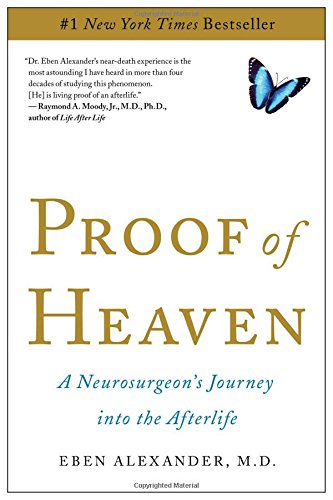

I usually have two problems with most spiritualists. First to clarify, when I say "spiritualist" I categorically DO NOT mean people who say they are "spiritual but not religious." I've already written at length my distaste for those people. Spiritualism is the belief that spirit exists distinct from matter (or within some realm of more rarefied subtle matter or etheric or astral matter) and can be contacted through mediums. And this has been tested scientifically and there are really only two possible options to explain the data:
1. The Survival Hypothesis. The minds and personalities of people survive death of the body in pretty much the same state as when they were alive and they can communicate, at least at a rudimentary level, with the living.
or
2. The Super-ESP Hypothesis. The minds of certain living people are capable of extraordinary feats of ESP bordering on omniscience, whereby they can access information about the deceased by reading the minds of multiple living people all over the world simultaneously and access other information through remote viewing of locked drawers, diaries, or other varied sources, often coming up with information that is not known to the bereaved person or persons and not verified until much later, all this coupled with a subconscious dissociative personality disorder that the medium believes with absolute conviction is a real deceased individual they are communicating with.
And that's it. And after 150 years of testing no one has devised an experiment to distinguish between the two conclusively for the unfortunate reason that all the scientists working on the problem are stuck trying to convince die-hard atheist materialists who serve as the gatekeepers of what is and is not officially sanctioned science that real information is being attained through psychic means.
You might think that's a false dilemma and decide to take the third option, but, to be honest, if you take the third option I question your intelligence and would be surprised you would even know what a false dilemma is or that you had the capacity to fully comprehend the issue.
3. The Demon-Haunted World. A class of non-physical (or astral) beings called demons exist and they are omniscient, or at least as intelligent as necessary to trick humans that they are deceased humans because God is an asshole and filled the universe with billions of demons who trick people because God is an asshole and wants to send 99.999% of people to suffer in Hell forever.
If you accept options 1 or 2 you are a rational person who has examined the evidence. If you accept option 3 you are a moron. If you reject them all and accept option 4, that it's all deliberate trickery from often Nobel Prize winning scientists who want to ruin their reputations by studying ghosts, you're either ignorant of the data or a cynical asshole and most likely never even bothered looking at the data because you reject it a priori.
As a side note, we can get into metaphysics, with astral and etheric and subtle energies and all that stuff some other time, and I know Ken Wilber has talked down the issue and has promoted his "Integral Post-Metaphysics" and Kant's critique of metaphysics, but if you read Excerpt G (page 46), Ken does admit to true metaphysics within his model:
" The fact that the subtle (and causal) bodymind can transmigrate the gross bodymind is indeed metaphysical; but the fact that these subtle energies are postulated as real, concrete, detectable, often measurable—if subtler—energies, stops the whole conception from spinning off into the vaporware of pure metaphysics. If you read hypothesis #4 in conjunction with the first three hypotheses, I think you will see that they are at least consistent with each other; and thus I believe that an integral theory of subtle energies can accommodate the existence of transmigration, if we decide, on other grounds, that there is enough evidence to conclude that transmigration occurs."
It's a good read, but if you're in a hurry you can watch this video.
Getting back to the central issue of what my problems with spiritualists are.
The first problem is the denial of the good that other religions (specifically Christianity and to a lesser extent Buddhism) have and continue to bring to humanity. I wouldn't say this is the hatred of religion, as we see in the "spiritual but not religious" people (except Islam, which they adore), and it probably is not cultural relativism either that says "all religions are equal" or some such nonsense. It might be a sort of spiritual myopia. They are so invested in the truth claims of their own beliefs – the messages delivered by spirits – that they reject out of hand the truth claims of opposing beliefs. So, for example, if spirits say reincarnation does not exist they will believe it without hesitation even though the spirit they are communicating with might be lying or ignorant or both. A second possibility is similar to when you're a teenager and you're embarrassed by what you did as a child, which is basically how climbing the developmental ladder works all through first tier. First tier stages (archaic, magic, mythic, rational, pluralistic, or egocentric, ethnocentric, worldcentric, or any other conceptions) are all exclusive in their thinking. Someone who is ethnocentric looks down on someone who is egocentric (and on someone who is worldcentric), just as someone who is worldcentric looks down on someone who is egocentric and someone who is ethnocentric, even though they themselves necessarily had to pass through all the lower stages to get to where they are. This continues, quite naturally, until one reaches second tier – integral – and can appreciate that all levels have truth and utility appropriate for people at that level.
So, someone who is a spiritualist would reject the truth and utility of organised religion even though for the vast majority of people who have ever lived organised religion is the only thing keeping them from stealing and killing and raping. Religion not only serves as a social glue, it serves as the only affective social glue that has ever been discovered. And since everyone starts out at square one when they are born and has to learn reason and morality, eliminating religion is a particularly bad idea because until people mature to the level where they can apply reason to appreciate natural law and morality (which for most people is never), religion is necessary to keep people from becoming monsters.
Sometimes, yes, religions do influence people to become monsters, particularly lower level religions, but certainly Christianity has had its reformation and the worst Christians you will ever likely encounter are assholes who protest soldiers' funerals.
Aside from legitimacy, religion provides the only affective means of bringing people enlightenment. This ties into the second problem I have with most spiritualists, which is something I'll call subtle reductionism, what Ken Wilber calls the Vishnu Complex. I'll get to that in a minute.
One of the central beliefs of spiritualists is the extreme gradualist approach to development, that spirits develop astronomically slowly, though inexorably, over gazillions of years to reach ultimate perfection. If I could spend fifty trillion eons in an astral heaven where my thoughts instantly manifest my desires I'd say that's a pretty good deal. The general idea is that it gets boring after a time and then you decide to progress. And I'll admit, after the hell and hardship of this life I might look forward to some downtime.
The classic counter to this, which makes sense to me, is the argument of reincarnationists that once your merit is worn out you have to come back here, so the astral worlds are temporary. The only way out of the cycle is enlightenment. The idea of progression through infinitely more rarefied realms does have somewhat of a parallel with the idea of a pure land in Buddhism or Sri Yukteswar's Hiranyaloka from Autobiography of a Yogi. You can progress to a special astral world where the infinite merit and compassion of an enlightened being permits you to progress spiritually without the need to reincarnate.
Now you might not want to believe in reincarnation, and I think most spiritualists don't, for the pretty thoughtless reason "Who would want to come back?!" Very few people, I suspect, would want to come back, but the traditions maintain that it's more like jumping off a cliff. Once you jump you don't get to choose whether you fall down or not, gravity will take over automatically. You don't get to choose whether you reincarnate or not, unless you're already enlightened, your spiritual gravity pulls you unconsciously where you are most suited, and for most people that's back here on Earth. Even if you don't believe in reincarnation, and I think it makes a certain degree of sense, there's still one more reason to see the gradualist approach as not all that's great.
The gradualist approach really does not solve the problem of suffering in this life, it defers it to the next. There is a bit of an inherent laziness to it. "If I'm going to get there anyway I might as well take my time." That is very similar to the traditional religious approach of suffering through life with the knowledge of a reward in the afterlife. The idea of a metaphysical safety net is certainly comforting and has served humanity very well for millennia, but it does not bring about true transpersonal development. Even in an astral heaven there is still self and other, there is still separation, and where there is separation there is suffering. That is why spirits choose to leave the lower astral heavens, often called "Summerland", where thoughts manifest instantly, because it gets boring after a while. The types of suffering in astral worlds are radically different than in the physical world (and in the astral hells are much worse), but as long as separation exists suffering necessarily exists. Enlightenment is the only way out, and religion provides the only door to enlightenment.
That brings us to my second objection, subtle reductionism, which is nothing other than the denial of the causal. Subtle reductionism is nowhere near as disastrous as the gross reductionism of fundamaterialists, it is definitely a step in the right direction, but in denying the existence of the causal one is also denying the ultimate end of suffering.
Basically the subtle realms work like psychotherapy. One reaches an end of psychotherapy when one realises that one can go on forever. The subtle realms are like that. You ascend higher and higher, into ever more subtle planes of illumination and bliss, and it just doesn't stop. There is no upward limit, there is no ultimate end. In meditation people can spend a lifetime just getting to more rarefied states and just bliss-out and as soon as they come down and have to go to work they are the same jerk as they were from day one. You can certainly gain psychic powers through forms of meditation, but if you just keep ascending through all the essential lights and sounds you will not reach enlightenment. This inertial desire to keep ascending through the subtle is what Ken Wilber calls the Vishnu Complex. You are so enamored with God you don't want to seek your true identity. And since you have to stop meditating eventually you will suffer when it ends. As long as separation exists suffering necessarily exists. And that's all the gradualist approach of most spiritualists promises, ever higher states of lights and sounds.
This denial of the causal is wonderfully presented in Greg Stone's book Under the Tree. It's a pretty obscure book, so I'll explain it a little. This man with a punny name encounters ice on the highway and runs his car off a cliff and goes into a coma. He has a near death experience that spends a great many pages just trying to convince him he really is dead, since he doesn't believe in an afterlife, and then it goes off into explaining how the universe works.
Mr. Pun's spirit guide explains to him why all the religions are wrong when they say that we are all one. You see, we really are all separate, but when you incarnate on the Earth you have to pass through a filter, and that filter only lets one soul through at a time, and since we all have to squeeze through that filter we think, "Oh, only one can fit, so there must be only one of us," but that's just faulty logic.
Except that's not what any religion says at all. Remember, you do not automatically become enlightened upon death. If you did there would be absolutely no point to life here on Earth at all. It would all be a waste of time and you could be a child rapist or an axe murderer and it wouldn't matter because we all go up into light and bliss when we die anyway. That's exactly the same horrible belief as the materialists who say you die and rot, just in the opposite direction. If nothing you do in this life has any impact on the next, and we're all just here to learn lessons, or to experience suffering, or because it's rousing good fun, then life truly is meaningless and you might as well just shoot heroin all day, because it won't make one bit of difference. If Hitler and his victims go to the same place after death then the universe is completely lacking in justice or compassion and was created and run by Satan.
Since you do not become enlightened upon death (and we know this because spirits coming through mediums admit to it; they admit to not knowing everything), then anything you hear from spirits about anything other than their particular state of being is just their own guess. If spirits tell you they enjoy coffee and cigars and fine velvet arm chairs on the other side, then you can believe them. If spirits tell you what is happening at the ultimate level, and that they know with absolute certainty how everything works and the mechanisms of reincarnation or whatever, they're either outright lying or they are guessing. Since the personality remains intact then a liar on the Earth is a liar in the afterlife, and subconscious biases and fears still cloud one's thinking.
One group of people we can believe are enlightened individuals on this Earth, because they all say the same exact thing. There is no guessing with enlightenment, there is just experience, or more accurately lack of experience. In the causal there is nothing arising. There are no separate things, just consciousness as such. Nothing bad arises to torture you and leave, nothing good arises to torture you when it leaves, there are no others, there is no you, there just is. And they all say this, for the past 3000 years, they all say this. No one is guessing since this is not speculation of what is happening at higher levels because all levels have been left behind. You step off the ride completely.
Ramakrishna explains this beautifully. He was a life-long devote of Kali, and he would go into spontaneous ecstasy and be engrossed in her image. When he met the naked swami Totapuri and tried to learn Advaita he kept seeing Kali when he meditated. Furious, Totapuri stuck a piece of broken glass between Ramakrishna's eyes and admonished him to meditate on that spot. The next time Ramakrishna meditated he says "As soon as the gracious form of the Divine Mother appeared before me, I used my discrimination as a sword and with it clove Her in two. The last barrier fell. My spirit at once soared beyond the relative plane. I lost myself in samadhi." (The Gospel of Sri Ramakrishna, page 49)
You can see a wonderful depiction of this from the 1955 Bengali film biography of Ramakrishna.
And it's like that for everyone. Ramana Maharshi, Richard Rose, Ken Wilber, everyone. You too can check it out for yourself. I did. You do not need to take anyone's word for it, you need accept no beliefs handed to you from spirits, you can meditate for a really long time and see for yourself if enlightenment is all it's cracked up to be. You don't need to consult mediums, you don't need to wait countless eons to ascend higher planes in the afterlife, you can do this right now, in this lifetime, and it is the single most important thing you ever will, or can, do.
There is nothing in the causal. It is completely empty. If ascending higher subtle realms is like climbing stairs to higher and higher floors in a building, then the leap to the causal would be like going from the third to the fourth dimension. It's not higher than the highest floor in the building, it bypasses height all together. It is not getting to the next level in a video game, it's shutting the game off and realising that it was a game all along and not real. It's not that there is no you, there is only me, there's no me either. You step into the causal and no one is home, there is just consciousness as such. There is awareness but it is in no way tied to any identity, and you realise that any identity you held was just a contraction of all that is, no more real than the characters in a movie are to the actors who play them.
All that said, spiritualists are leagues ahead of the average person in the world today, and light years ahead of the fundamaterialists who are the elites who run the world and act as gatekeepers to what is and is not science. I would love for all the world to adopt the beliefs of spiritualists, I would love for mediumship to be taken seriously, for psychical studies to become the paramount branch of science. It would solve very nearly all the world's problems. At the same time it is imperative to realise that mediumship can only take one so far, and that we all must take up the discipline and strive toward enlightenment, whether now or in some future life. The comfort value of survival wears off once you survive death. Then a whole new set of challenges arise that you must face. Psychological challenges from all the subconscious baggage you have accumulated over this and possibly other lifetimes. All that needs to be worked through eventually. The choice is yours to deal with it over the next gazillion years or right now, all at once, in this lifetime. Most people can't, but you definitely should try. Try as if your life depended on it.
Showing posts with label Sri Ramakrishna. Show all posts
Showing posts with label Sri Ramakrishna. Show all posts
Tuesday, April 5, 2016

Monday, December 20, 2010
The Master's Effulgence
From The Gospel of Sri Ramakrishna
Vedanta
"The Brahmani was the enthusiastic teacher and astonished beholder of Sri Ramakrishna in his spiritual progress. She became proud of the achievements of her unique pupil. But the pupil himself was not permitted to rest; his destiny beckoned him forward. His Divine Mother would allow him no respite till he had left behind the entire realm of duality with its visions, emotions, and ecstatic dreams. But for the new ascent the old tender guide would not suffice. The Brahmani, on whom he had depended for three years, saw her son escape from her to follow the command of a teacher with masculine strength, a sterner mien, a gnarled physique, and a virile voice. The new guru was a wondering monk, the sturdy Totapuri, whom Sri Ramakrishna learnt to address affectionately as Nangta, the 'Naked One,' because of his total renunciation of all earthly attachments and objects, including even a piece of wearing-cloth.
"Totapuri was the bearer of a philosophy new to Sri Ramakrishna, the Non-dualistic Vedanta, whose conclusions Totapuri had experienced in his own life. This ancient Hindu system designates the Ultimate Reality as Brahman, also described as Satchidananda, Existence-Knowledge-Bliss Absolute. Brahman is the only Real Existence. In It there is no time, no space, no causality, no multiplicity. But through maya – its inscrutable Power – time, space, and causality are projected and the One appears to break into the many. The non-dual Spirit appears as multiple individuals endowed with forms and subject to the conditions of time. The Immortal becomes a victim of birth and death. The Changeless undergoes change. The sinless Pure Soul, hypnotized by Its own maya, experiences the joys of heaven and the pains of hell. But these experiences based on the duality of the subject-object relationship are unreal. Even the vision of a Personal God is, ultimately speaking, as illusory as the experience of any other object. Man attains his liberation, therefore, by piercing the veil of maya and rediscovering his total identity with Brahman. Knowing himself to be one with the Universal Spirit, he realizes ineffable Peace. Only then does he go beyond the fiction of birth and death; only then does he become immortal. And this is the ultimate goal of Vedanta – to dehypnotize the soul now hypnotized by its own ignorance.
"The path of the Vedantic discipline is the path of negation, 'neti,' in which, by stern determination, all that is unreal is renounced. It is the path of jnana, knowledge, the direct method of realizing the Absolute. After the negation of everything relative, including the discriminating ego itself, the aspirant merges in the One without a second, in the bliss of nirvikalpa samadhi, where subject and object are alike dissolved. The soul goes beyond the realm of thought. The domain of duality is transcended. Maya is left behind with all its changes and modifications. The Real Man towers above the delusions of creation, preservation, and destruction. An avalanche of indescribable Bliss sweeps away all relative ideas of pain and pleasure, good and evil. There shines in the heart of glory of the Eternal Brahman, Existence-Knowledge-Bliss Absolute. Knower, knowledge, and known are dissolved in the Ocean of one eternal Consciousness; love, lover, and beloved merge in the unbounded Sea of supreme Felicity; birth, growth, and death vanish in infinite Existence. All doubts and misgivings are quelled for ever; the oscillations of the mind are stopped; the momentum of past actions is exhausted. Breaking down the ridgepole of the tabernacle in which the soul has made its abode for untold ages, stilling the body, calming the mind, drowning the ego, the joy of Brahman wells up in the superconscious state. Space disappears into Pure Being, time is swallowed up in eternity, and causation becomes a dream of the past. Only Existence is. Who can describe what the soul then feels in its communion with the Self?
"Even when a man descends from this dizzy hight, he is devoid of ideas of 'I' and 'mine'; he looks on the body as a mere shadow, an outer sheath encasing the soul. He does not dwell on the past, takes no thought for the future, and looks with indifference on the present. He surveys everything in the world with an eye of equality; he is no longer touched by the infinite variety of phenomena; he no longer reacts to pleasure and pain. He remains unmoved whether he – that is to say, his body – is worshipped by the good or tormented by the wicked; for he realizes that it is the one Brahman that manifests Itself through everything. The impact of such an experience devastates the body and mind. Consciousness becomes blasted, as it were, with an excess of light. In the Vedantic books it is said that after the experience of nirvikalpa samadhi the body drops off like a dry leaf. Only those who are born with a special mission for humanity can return from this height to the valleys of normal life. They live and move in the world for the welfare of mankind. They are invested with a supreme spiritual power. A divine glory shines through them."
Vedanta
"The Brahmani was the enthusiastic teacher and astonished beholder of Sri Ramakrishna in his spiritual progress. She became proud of the achievements of her unique pupil. But the pupil himself was not permitted to rest; his destiny beckoned him forward. His Divine Mother would allow him no respite till he had left behind the entire realm of duality with its visions, emotions, and ecstatic dreams. But for the new ascent the old tender guide would not suffice. The Brahmani, on whom he had depended for three years, saw her son escape from her to follow the command of a teacher with masculine strength, a sterner mien, a gnarled physique, and a virile voice. The new guru was a wondering monk, the sturdy Totapuri, whom Sri Ramakrishna learnt to address affectionately as Nangta, the 'Naked One,' because of his total renunciation of all earthly attachments and objects, including even a piece of wearing-cloth.
"Totapuri was the bearer of a philosophy new to Sri Ramakrishna, the Non-dualistic Vedanta, whose conclusions Totapuri had experienced in his own life. This ancient Hindu system designates the Ultimate Reality as Brahman, also described as Satchidananda, Existence-Knowledge-Bliss Absolute. Brahman is the only Real Existence. In It there is no time, no space, no causality, no multiplicity. But through maya – its inscrutable Power – time, space, and causality are projected and the One appears to break into the many. The non-dual Spirit appears as multiple individuals endowed with forms and subject to the conditions of time. The Immortal becomes a victim of birth and death. The Changeless undergoes change. The sinless Pure Soul, hypnotized by Its own maya, experiences the joys of heaven and the pains of hell. But these experiences based on the duality of the subject-object relationship are unreal. Even the vision of a Personal God is, ultimately speaking, as illusory as the experience of any other object. Man attains his liberation, therefore, by piercing the veil of maya and rediscovering his total identity with Brahman. Knowing himself to be one with the Universal Spirit, he realizes ineffable Peace. Only then does he go beyond the fiction of birth and death; only then does he become immortal. And this is the ultimate goal of Vedanta – to dehypnotize the soul now hypnotized by its own ignorance.
"The path of the Vedantic discipline is the path of negation, 'neti,' in which, by stern determination, all that is unreal is renounced. It is the path of jnana, knowledge, the direct method of realizing the Absolute. After the negation of everything relative, including the discriminating ego itself, the aspirant merges in the One without a second, in the bliss of nirvikalpa samadhi, where subject and object are alike dissolved. The soul goes beyond the realm of thought. The domain of duality is transcended. Maya is left behind with all its changes and modifications. The Real Man towers above the delusions of creation, preservation, and destruction. An avalanche of indescribable Bliss sweeps away all relative ideas of pain and pleasure, good and evil. There shines in the heart of glory of the Eternal Brahman, Existence-Knowledge-Bliss Absolute. Knower, knowledge, and known are dissolved in the Ocean of one eternal Consciousness; love, lover, and beloved merge in the unbounded Sea of supreme Felicity; birth, growth, and death vanish in infinite Existence. All doubts and misgivings are quelled for ever; the oscillations of the mind are stopped; the momentum of past actions is exhausted. Breaking down the ridgepole of the tabernacle in which the soul has made its abode for untold ages, stilling the body, calming the mind, drowning the ego, the joy of Brahman wells up in the superconscious state. Space disappears into Pure Being, time is swallowed up in eternity, and causation becomes a dream of the past. Only Existence is. Who can describe what the soul then feels in its communion with the Self?
"Even when a man descends from this dizzy hight, he is devoid of ideas of 'I' and 'mine'; he looks on the body as a mere shadow, an outer sheath encasing the soul. He does not dwell on the past, takes no thought for the future, and looks with indifference on the present. He surveys everything in the world with an eye of equality; he is no longer touched by the infinite variety of phenomena; he no longer reacts to pleasure and pain. He remains unmoved whether he – that is to say, his body – is worshipped by the good or tormented by the wicked; for he realizes that it is the one Brahman that manifests Itself through everything. The impact of such an experience devastates the body and mind. Consciousness becomes blasted, as it were, with an excess of light. In the Vedantic books it is said that after the experience of nirvikalpa samadhi the body drops off like a dry leaf. Only those who are born with a special mission for humanity can return from this height to the valleys of normal life. They live and move in the world for the welfare of mankind. They are invested with a supreme spiritual power. A divine glory shines through them."
Wednesday, October 20, 2010
Ken Wilber and Weed
Ken Wilber is naive and believes politicians tell the truth. He also supports "rude boy" cultist Andrew Cohen (pictured above).
If weed were legalized the government could collect $400 billion a year in taxes and pay off both wars in a few years.
The Other Wiki's page on Cohen, the man who supposedly gained complete and final enlightenment in two and a half weeks.
The Other Wiki's page on Cohen's guru, H. W. L. Poonja. He pronounced Cohen's enlightenment after two and a half weeks.
Be Scofield's "Integral Abuse" article on Cohen and evolutionary enlightenment. He asks the brilliant question about Cohen's "rude boy" enlightenment: "But I must ask, if Cohen's tactics are so revolutionary and 'crazy wisdom' is needed to become enlightened, why haven't any of his students become enlightened? And why are these tactics so necessary when neither Cohen or Wilber attribute their awakenings to these sorts of experiences?"
WHAT enlightenment??! - a site where former Cohen devotees vent. May be true, may be lies, I don't know, I didn't read it.
The Urban Mystic versus The Shirtless Spiritual
Geoffrey D. Falk, a man with no kind words to say to anyone (except maybe Ramana Maharshi), has a site that demonstrates that all gurus, no matter how great, are still human, even if they are divine. Warning: Goeff does believe in the Randi prize, even though there is good evidence to suggest it is a fraud and even though so called "skeptics" say that winning the prize would prove nothing. Goeff might be skeptical of gurus but he sure isn't skeptical of his own skepticism. He quotes Randi several times and believes fully the sexual incidents involving Sai Baba, even though every single court case involving Baba was thrown. In one the so called "victims" were brought in and said they had never heard of the man who brought the case to court, had never met him, and had never claimed Baba molested them. The man, a disillusioned Western devotee, made the whole thing up to get back at Baba for giving him a ring with a zircon instead of a real diamond, even though he said it was a "die-mind" ring, not a "diamond" ring (meaning the death of the ego). He also says videos of Baba's miracles reveal sleight of hand when a magician interviewed for Haraldsson's book says the videos are all too poor quality to come to any honest conclusions. He also supports the view of scholars who find spurious homoeroticism in the life and teachings of Ramakrishna, based on bad translations of Bengali into English (Narasingha Sil and Jeffrey Kripal who mistranslate Bengali to English, misunderstand Tantra, and misuse psychoanalysis to do things it was never meant to do). Goeff also seems to have a thing for stories about gurus and blonds (both men and women). Gentlemen may or may not prefer blonds, but according to Goeff all gurus do. Virtually all of the sexual stories involve blonds from exotic lands like the band mates from ABBA. He also quotes Joe Nickell, another skep-dick phony paranormal investigator, and Indian "rationalists" who call themselves "rationalists" even though they are materialists who believe sense perception is the only means of true knowledge, and the original rationalists were people who believed the senses are unreliable and only reason can be used to gain true knowledge, like Descartes and Kant.
In fact, there's a caveat to his book, listed on his website that reads:
The inclusion of any particular individual in Stripping the Gurus is not meant to suggest or imply that he or she represents him- or herself as a guru, nor is it meant to suggest or imply that he or she has indulged in sex, violence, the abuse of others, or any other illegal or immoral activities.
So it all could be false. Most of it probably is.
He is a disillusioned spiritual believer, much like Michael Shermer, which would explain why he's so angry and full of vitriol. He also decorates his site with the anti-religious/secular humanist/utopianist "A" symbol, meaning he's a utopianist/secular humanist/anti-religious do away with others freedom of thought because they're too stupid kind of guy FakeSagan warned about.
Saturday, June 26, 2010
In the World, Not Of It
From The Gospel of Sri Ramakrishna
Wednesday, June 25, 1884
MASTER: ...."What is the use of making pilgrimages if you can attain love of God remaining where you are? I have been to Benares and noticed the same trees there as here. The same green tamarind-leaves!
"Pilgrimage becomes futile if it does not enable you to attain love of God. Love of God is the one essential and necessary thing. Do you know the meaning of 'kites' and 'vultures'? There are many people who talk big and who say that they have performed most of the duties enjoined in the scriptures. But with all that their minds are engrossed in worldliness and deeply preoccupied with money, riches, name, fame, creature comforts, and such things."
The Master was about to take his leave. The pundit and his friends bowed low before him.
It was not yet dusk, and Sri Ramakrishna returned to Ishan's house with the devotees. The Master took his seat in the drawing-room with Ishan and his sons, a pundit, and a few devotees.
MASTER (smiling, to Ishan): "I said to Pundit Shashadhar: 'You have hardly set your foot on the tree, and yet you aspire to lay hold of a big bunch of fruit. First of all practise some spiritual discipline; then you may teach others.'"
ISHAN: "Every preacher thinks that he enlightens others. The glow-worm also may think that it illuminates the world. Imagining this to be the glow-worm's feeling, someone said to it: 'O glow-worm, how can you bring light to the world? You only reveal the intensity of the darkness.'"
MASTER: (with a smile): "But Shashadahr is not just a scholar. He also has a little discrimination and dispassion."
The Master was about to leave for Dakshineswar. Ishan and the other devotees stood around him while he gave Ishan various words of advice.
MASTER: "A devotee who can call on God while living a householder's life is a hero indeed. God thinks: 'He who has renounced the world for My sake will surely pray to Me; he must serve Me. Is there anything very remarkable about it? People will cry shame on him if he fails to do so. But he is blessed indeed who prays to Me in the midst of his worldly duties. He is trying to find Me, overcoming a great obstacle – pushing away, as it were, a huge block of stone weighing a ton. Such a man is a real hero.'
"Live in the world like an ant. The world contains a mixture of truth and untruth, sugar and sand. Be an ant and take the sugar.
"Again, the world is a mixture of milk and water, the bliss of God-Consciousness and the pleasure of sense enjoyment. Be a swan and drink the milk, leaving the water aside.
(Pages 307-309)
Here Sri Ramakrishna makes two very good points about the search for God (the journey without distance):
1. God is everywhere. One does not need to visit some holy place, some temple or church, or make some grand physical journey to commune with God. All that matters is love. "Love of God is the one essential and necessary thing." People can make grand gestures of visiting holy sites to pray and yet have it all just be a show to win fame and recognition, whereas someone who is filled with the love of God can find God while going for a walk in the woods or helping a poor beggar on the streets.
2. One does not need to renounce the world to find God. Indeed, it is a truly great feat to find God while retaining one's worldly duties. Anyone can sell their possessions, become a monk, and meditate for twelve hours a day. That's no challenge at all. What is really difficult is to take the time to practice while not renouncing the world. Turning everyday activities into opportunities for consciousness growth, such as washing the dishes, maintaining ethical practices at work, and helping your aging parents. As Jesus said, be in the world but not of it (John 17: 14-16, though the exact phrase does not appear in the text, it is a nice, concise summary). You have a greater opportunity to grow in compassion and to see the universal love of God that permeates everyone by completing your duties in the world while remembering that you are not this little, limited, physical body born of the world.
A good example of this is Lahiri Mahasaya, the householder-yogi who reintroduced the lost art of Kriya Yoga to the world.
Wednesday, June 25, 1884
MASTER: ...."What is the use of making pilgrimages if you can attain love of God remaining where you are? I have been to Benares and noticed the same trees there as here. The same green tamarind-leaves!
"Pilgrimage becomes futile if it does not enable you to attain love of God. Love of God is the one essential and necessary thing. Do you know the meaning of 'kites' and 'vultures'? There are many people who talk big and who say that they have performed most of the duties enjoined in the scriptures. But with all that their minds are engrossed in worldliness and deeply preoccupied with money, riches, name, fame, creature comforts, and such things."
The Master was about to take his leave. The pundit and his friends bowed low before him.
It was not yet dusk, and Sri Ramakrishna returned to Ishan's house with the devotees. The Master took his seat in the drawing-room with Ishan and his sons, a pundit, and a few devotees.
MASTER (smiling, to Ishan): "I said to Pundit Shashadhar: 'You have hardly set your foot on the tree, and yet you aspire to lay hold of a big bunch of fruit. First of all practise some spiritual discipline; then you may teach others.'"
ISHAN: "Every preacher thinks that he enlightens others. The glow-worm also may think that it illuminates the world. Imagining this to be the glow-worm's feeling, someone said to it: 'O glow-worm, how can you bring light to the world? You only reveal the intensity of the darkness.'"
MASTER: (with a smile): "But Shashadahr is not just a scholar. He also has a little discrimination and dispassion."
The Master was about to leave for Dakshineswar. Ishan and the other devotees stood around him while he gave Ishan various words of advice.
MASTER: "A devotee who can call on God while living a householder's life is a hero indeed. God thinks: 'He who has renounced the world for My sake will surely pray to Me; he must serve Me. Is there anything very remarkable about it? People will cry shame on him if he fails to do so. But he is blessed indeed who prays to Me in the midst of his worldly duties. He is trying to find Me, overcoming a great obstacle – pushing away, as it were, a huge block of stone weighing a ton. Such a man is a real hero.'
"Live in the world like an ant. The world contains a mixture of truth and untruth, sugar and sand. Be an ant and take the sugar.
"Again, the world is a mixture of milk and water, the bliss of God-Consciousness and the pleasure of sense enjoyment. Be a swan and drink the milk, leaving the water aside.
(Pages 307-309)
Here Sri Ramakrishna makes two very good points about the search for God (the journey without distance):
1. God is everywhere. One does not need to visit some holy place, some temple or church, or make some grand physical journey to commune with God. All that matters is love. "Love of God is the one essential and necessary thing." People can make grand gestures of visiting holy sites to pray and yet have it all just be a show to win fame and recognition, whereas someone who is filled with the love of God can find God while going for a walk in the woods or helping a poor beggar on the streets.
2. One does not need to renounce the world to find God. Indeed, it is a truly great feat to find God while retaining one's worldly duties. Anyone can sell their possessions, become a monk, and meditate for twelve hours a day. That's no challenge at all. What is really difficult is to take the time to practice while not renouncing the world. Turning everyday activities into opportunities for consciousness growth, such as washing the dishes, maintaining ethical practices at work, and helping your aging parents. As Jesus said, be in the world but not of it (John 17: 14-16, though the exact phrase does not appear in the text, it is a nice, concise summary). You have a greater opportunity to grow in compassion and to see the universal love of God that permeates everyone by completing your duties in the world while remembering that you are not this little, limited, physical body born of the world.
A good example of this is Lahiri Mahasaya, the householder-yogi who reintroduced the lost art of Kriya Yoga to the world.
Subscribe to:
Posts (Atom)