
There's been a recent push to change the definition of "big bang", just as with changing the definition of countless other words to suit the will of dialectical materialism. This past month I've come across a new video† by a very popular youtube channel and an article on a popular website talk about "what happened before the big bang" and "why the big bang wasn't the start of everything".
Just as "nothing" no longer means absolutely nothing, it means "the ground state of the quantum vacuum", now the "big bang" isn't what it always has meant, when time, space, matter, and energy all came into existence from absolutely nothing, now it means "inflation", which happened 10^-32 seconds AFTER what was previously defined as the big bang. This is a devious little reach around to claim that "stuff happened before the big bang", just like calling "the ground state of the quantum vacuum" "nothing" allows you to say that ""science" (dialectical materialism) can explain how the universe was created from nothing without God."
Eternal inflation, the idea that the inflation that sped up the expansion of the early universe didnt' stop, it still continues in other regions of space beyond our cosmic horizon, spawning new bubble universes forever, was the first to go. Some thought inflation was eternal into the past too, but in 2003 Vilenkin and Alan Guth ran the calculations on Hubble's Constant and found that it doesn't work. Inflation may continue forever into the future, but it had to have a beginning in the past.
Next came the big bounce, the idea that after a long time, a trillion years or so, expansion slows and stops, eventually reversing until everything flys back into a single point called the Big Crunch. Then the shock of impact of everything on everything starts a new Big Bang, and the cycle continues forever. Unfortunately, disorder increases with time, so each new universe must be more disordered than the one that birthed it. If the cycle had been going on forever disorder would be infinite and the universe would be completely featureless. Since there's stuff in the universe the cycles couldn't have gone on forever. Some people then suggested that the universe just gets bigger with each bounce, so the disorder spreads out more so no one notices it (like in the M-Brane ekpyrotic model and possibly whatever the hell Penrose's new idea is - no one seems to understand his Aeons of time model, within the physics community or anywhere). But if the whole thing is getting bigger it had to start somewhere really really small, maximally small, and that means a finite beginning.
There's also an idea from the 1930s called the cosmic egg or primeval atom, where yes, there was a Big Bang 13.7 billion years ago, but the thing that banged was an uber-dense subatomic thing that existed forever until it got tired of existing as a tiny little particle and exploded. However, Vilenkin and a graduate student Audrey Mithani showed that quantum instability would have led to the egg's collapse after a finite time. The crack (the Big Bang) had to happen before the egg collapsed into oblivion so it couldn't have existed forever, even if it existed for a really, really long time before the Big Bang.
Here are several prior pieces I've written on why inflation cannot be past eternal:
Balking Hawking Part 1
Balking Hawking Part 2
Georg Cantor's Infinities (Part Two)
Balking Someone
Balking Hawking Part 3: In The Beginning
Make no mistake, when people say "science says" they mean "dialectical materialism says". Science does not say anything, science does not prove anything, individual scientists may say things, but science is not a catalogue of facts, science is a process.
I've made a video many years ago back when I used to make videos called "First Principle Anecdota"* that everything you know, and every conceivable system for attaining knowledge (that is, all forms of epistemology) necessarily relies on what are called "axioms" or "first principles", which are assumptions which must be taken as given but can never be proven true. At its base you can NEVER know anything about the world with absolute certainty. Everything must be based on things which you assume to be true but can never prove. Based on those assumptions you can create a system to demonstrate facts with arbitrary certainty, but the certainty of those facts is always arbitrary and is based entirely on your assumptions.
I've probably talked to hundreds of people about this and no one seems to get it. Not the "praise science" crowd who believe in dialectical materialism. It's like people can get arbitrarily smart, but their smartness is always asymptotic to the level of intelligence needed to realize that all knowledge is built upon unprovable assumptions.
Ordinary people, who are just smart enough to be dangerous, are easy to trick by these linguistic gymnastics like redefining words. You redefine "big bang" and "nothing" and get disaffected teenagers into becoming atheists. That's how they get you. Meanwhile the geniuses (technically the plural is genii), the real hard-nosed intellectual atheists who really look into the subjects like Anthony Flew, turn to belief in God because they realize that the universe and life are far too complex to be explainable by any series of coincidences.
I said a few years ago, somewhat tongue-in-cheek, "How do you change a cow into a horse? You redefine the word "horse" to include cows."
That's really what we've been seeing this past decade go into overdrive as the Fabian socialists who run the West have taken to redefining words as a form of mind control and behavior modification.
----------------------------------------
*By the way, my videos tend to have very specific titles, and if you search that in quotes mine will appear as the first result. I know Google has algoreithms that skew results to be more in line with previous searches, but I've never searched for that video before, so it's as close to neutral as you can get.
†That video that claimed inflation is the big bang is predicated on a lie. Most people do not watch videos to the end, and at the very end they admitted that inflation does not explain the initial state of the universe (what has always been referred to as the big bang). The video admitted at the very end that everything was a lie knowing almost no one will watch to the end.
This is just like how the New York Times will deliberately publish articles with provocative titles and then in paragraph 6 they will give the truth knowing no one will read that far into the article. An article may be titled "Trump Hates Brown People" and the article may have nothing to do with Trump except at the very end there might be a quote from some race baiter which says "Ralph Sharpman said in interview that "Trump hates brown people."" The NYT will run with that quote, and put it in quotations, but not tell you it's a quote from someone else or tell you the article is about Ralph Sharpman until the very end.
This is how they can technically not be lying outright but still be lying by saying something true in a misleading way. It's lying because it omits the context of the original statement.
Showing posts with label Scientism. Show all posts
Showing posts with label Scientism. Show all posts
Monday, September 2, 2019

Friday, May 24, 2019
Nihilism is Garbage

Friedrich Nietzsche: The Anti-Nihilist.
"I am Superman. Look at my muscles."
Nihilism is garbage. If you are a nihilist you are a nobody, a non-entity, a loser, and a defeatist.
I am intimately familiar with suffering. Injuries, disease, constant pain, years of unemployment and a string of dead-end jobs that offer no fulfillment. I know it all, and I'll admit to becoming a little bitter over the years, though I do think it has helped me advance philosophically.
People like to blame God, or speculate on how a life full of suffering is devoid of all meaning. The modern world feeds this mentality. It is designed from on high to make us feel inadequate. Anti-social media want us to feel like all of our frienimies are doing so much better than us when they are often just as miserable. Advertising wants us to be miserable so that we buy more crap we don't need or want. The media live off of suffering: "If it bleeds, it leads." Add to this the armies of Internet "black pills" and doomsayers who sell ebooks and subscriptions to even more doom online, and you have a recipe for nihilism, which Friedrich Nietzsche and personal experience in the world will tell you is currently the dominant philosophy of the West. Once we got rid of Christianity, when we killed God, we now find ourselves in this nightmare world where life is devoid of meaning.

God is dead. God remains dead. And we have killed him. How shall we, murderers of all murderers, console ourselves? That which was the holiest and mightiest of all that the world has yet possessed has bled to death under our knives. Who will wipe this blood off us? With what water could we purify ourselves? What festivals of atonement, what sacred games shall we need to invent? Is not the greatness of this deed too great for us? Must we not ourselves become gods simply to be worthy of it? There has never been a greater deed; and whosoever shall be born after us - for the sake of this deed he shall be part of a higher history than all history hitherto."Nietzsche recognized that with the advent of the nihilism brought on by the new scientific materialism of modernity (and the full-on celebration of meaninglessness that has come about in post-modernism), we would face an existential crisis. The idea of God is so central to giving meaning to our lives that without it we are no better than ants, toiling day and night for jobs we hate just to keep our heads above water while we fill the pockets of Mammon worshipers who have managed to take the reigns of civilization, all without meaning or purpose.
From Nietzsche's The Gay Science
God is dead, and we have killed him, and we are woefully incapable of filling the void in our current condition. It is one thing to feel at conflict with society and man's laws, but it is quite another to feel at conflict with the Source of all life and morality itself. Eliminating God leads to the enshrinement of the State, as the vacant throne of the Absolute cannot remain vacant in the mind of man for long. Whether the natural sciences or the all-powerful State, something man-made must take the role left vacant by the crucifixion of God. This has led to the worst totalitarianism, as, while God's laws are immutable, there is no limit to His mercy. However, the State has no mercy; it has no room for forgiveness of 'sins' against political correctness, as the State recognizes no authority outside itself. This is why the authoritarian Godless State has led to the worst atrocities in history: the murder of hundreds of millions with industrial sterility and efficiency.
When you no longer believe in God then you will believe in anything, and everything becomes permissible. If God is not your master than you are a slave to your senses. You are like the addict, the drunkard who cannot control how he drinks, but is controlled by his drinking. When you are free to do anything then you lose all of your freedom, because you are no longer in control of your body, but your body is in control of you. And when your body controls you then you are open to being controlled by the powers that be to fuel their endless lust for more power.
The reverse of nihilism, of "If it bleeds, it leads," is the philosophy of Major Dutch Schaefer: "If it bleeds, we can kill it."
The movie Predator shows us that no matter how powerful the adversary, no matter how hopeless the situation, our enemies are no less mortal than we are, and our troubles can be overcome. We just have to become the best possible version of ourselves. We have to become better than we thought we could be. Dutch didn't win because he was stronger than the Predator, or because he was necessarily smarter either. The Predators are thousands of years ahead of humans, having fully developed interstellar travel, cloaking devices, universal translators, and super medicine that allows for rapid healing of what would otherwise be incapacitating wounds. Dutch was able to win because he was able to exploit the weaknesses of his opponent to his advantage. He may not be smarter, but he can think on his feet and is more adaptable.
This is the philosophy of existentialism. Yes, life is full of suffering, but it is also full of joy, and you're hurting yourself to focus on the suffering while ignoring the joy. There are simple steps to reclaiming your joy and to once again find meaning and purpose in your life. Like everything it all begins with a choice. You have to take control of your own life and reclaim your birthright. You can take your life back because you choose to.
Thursday, March 17, 2016
The Joe Rogan Experience with Graham Hancock
Joe Rogan talks with Graham Hancock about ancient civilisations, the ice age, psychadelics, the war on drugs, and why the power elite don't want us asking questions about deep antiquity. Runs 2 hours.
Tuesday, September 1, 2015
The Hidden History Of The Human Race
A 45 minute video composed of bits and pieces of interviews with Michael Cremo from the 1990s about how the scientistic magisterium deliberately lies about human antiquity. Includes information on Virginia Steen-McIntyre and the controversy in Hueyatlaco, Mexico.
Tuesday, January 14, 2014
Interview With Dr. Nicholas Cummings
Nicholas Cummings is the former head of the APA (American Psychological Association) and has done all of this. He led the movement to have homosexuality declassified as a mental illness AND he supports same sex marriage. He can't possibly be "anti-gay" or "homophobic". He's done more for homosexuals than most other people have, especially the bully pulpit that has taken over the media with their megaphones and shout-down sessions. However he is deeply distrubed by the escalating trend away from science toward "political correctness" when studying homosexuality and developing public policy, as well as the intense venomous hostility toward all debate and even recognising that someone can hold an opposing viewpoint and deserve to live.
File this under crap I don't want to think about but I don't get that luxury because it's everywhere and I've learned way more about the topic than I ever wanted to, along with all this:
• Global Warming - now "Climate Change" because if it's getting warmer or cooler it's still YOUR fault and you should feel bad.
• Uri Geller (I STILL have never written anything close to being longer than "Forbidden Knowledge" for The Urban Mystic)
• The Arab Spring
• Feminazism
• Eugenics
Thursday, November 22, 2012
Is There Enough Time For Humans to Have Evolved From Apes?
Dr. Ann Gauger explains why experiments with changing proteins reveal that it is mathematically impossible for an ape-like ancestor to turn into a human in well over the age of the universe, let alone a few million years.
Wednesday, August 15, 2012
Bugs Stay Bugs
Has anyone ever asked you, "If humans evolved from monkeys, then why do we still have monkeys?" Or maybe you have encountered this one: "If evolution happens, then why don't we ever see new species?" Such question are often asked by people who have no understanding of evolutionary processes and who may not even believe that such processes exist. The fact that anyone today, given the overwhelming evidence for biological evolution, would ask such questions is a depressing reflection of the poor quality of biological education in the United States.
[Introduction to Physical Anthropology, Tenth Edition, page 23]
My problems with the book are legion, but here's an interesting one relevant to this paragraph. The genus Homo appeared with Homo habilis, the oldest fossil of which, KNM ER 1813, is about 1.9 million years old. That means the genus Homo has been around for about 82,600 generations, during which time we went from this:

to this:

That's a significant change, and humans evolve slow, but bacteria evolve quickly (supposedly), which is why we see all this antibiotic resistance springing up (actually, those "super bugs" can only exist in modern super clean settings like hospitals; when put in a neutral environment they are easily outcompeted by their non-drug resistant counterparts).
Richard Lenski at Michigan State ran his famous long-term E. coli experiment that got him a spot at the National Academy of Sciences. In that time since the experiment started and his big discovery in 2008 his germs lived through 31,500 generations, not quite half the time it took to turn chimp-man into modern humans. E. coli is missing an enzyme called citrate permease, which would allow them to transport citrate trough their cell membrane in the presence of oxygen. The development of a gene, Cit+, necessary to transport citrate required the mutation seen at generation 31,500 and another mutation at generation 20,000. To this day (at least as of 2011) Lenski has not been specific about his Cit+ cells (even defensive and condescending when asked), but another study showed the existence of mutant E. coli that could perform the same trick did so by overexpression of an existing gene that allowed them to transport citrate in anaerobic conditions (citT). If Lenski's Cit+ cells are like the citT cells, then the only change was in the rate of gene expression, not the appearance of anything new.
In the same time it took Lenski's E. coli to (probably) alter the expression rate of a preexisting gene and develop the ability to digest citrate in aerobic coditions, under circumstances set up to pressure them to develop this change and food was given to them, Homo erectus had appeared and Homo habilis was gone. Erectus was significantly larger, had nearly doubled brain size, reduced sexual dimorphism, invented fire, likely had the ability for some form of speech, lived in the first hunter-gatherer societies, and spread out over most of Afro-Eurasia, and all under natural conditions, where there existed real competition, predators, and the reality of having to work for food.
Why don't we ever see new species then? We watch E. coli for now 50,000 generations under ideal conditions and essentially nothing happened, yet somehow there was a quantum leap in human evolution that no one was around to see. My question, then, is, if speciation happens why does it only happen when no one is looking? Better yet, why is speciation an experiment that can't be replicated?
ADDENDUM
Michael Behe paper (The Quarterly Review of Biology, Vol. 85, No. 4, December 2010) critiquing Lenski's experiment.
Evolution News article on the Lenski experiment.
Monday, January 16, 2012
Balking Hawking Part 3: In The Beginning
Ever since the idea of the Big Bang was conceived cosmologists who hated God looked for a way around creation. The universe couldn't have a beginning; it would ruin the perfect harmony of an eternal universe. No beginning, no need for an explanation, right? To celebrate Hawking's 70th birthday here is a third installment in the series on him, his cosmology, and his theology.
See Also Balking Hawking Part 1, Part 2, and Georg Cantor's Infinities Part 2.
From NewScientist:
"Many physicists have been fighting a rearguard action against [the Big Bang] for decades, largely because of its theological overtones. If you have an instant of creation, don't you need a creator?
Cosmologists thought they had a workaround. Over the years, they have tried on several different models of the universe that dodge the need for a beginning while still requiring a big bang. But recent research has shot them full of holes (see "Why physicists can't avoid a creation event"). It now seems certain that the universe did have a beginning."
Lawrence Krauss in his new book A Universe From Nothing tries to deal a knock-out blow to the deity by replacing one metaphysical system with another. God is given up for the multiverse, a cacophony of quantum randomness belching out universes like Our Idiot Brother.
It is in vogue now to redefine "nothing" to mean "the quantum vacuum that has always existed," but in an interview on Coast to Coast AM, Krauss does his fellow metaphysicists one better. He admitted that you don't even need a quantum vacuum or quantum laws, as NewScientist explains:
"However, the laws of physics can't be conjured from nothing. In the end, the best answer is that they arise from our existence within a multiverse, where all the universes have their own laws - ours being just so for no particular reason.
Krauss contends that the multiverse makes the question of what determined our laws of nature "less significant". Truthfully, it just puts the question beyond science - for now, at least. That (together with the frustratingly opaque origins of a multiverse) means Krauss can't quite knock out those who think there must ultimately be a prime mover. Not that this matters too much: the juvenile asides that litter the first third of the book (for example, "I am tempted to retort here that theologians are expert at nothing") mean that, by the time we get to the fascinating core of his argument, Krauss will be preaching only to the converted."
[emphasis mine]
The multiverse: the great unknown and unknowable. A meta-space that is beyond our space-time and thus forever beyond our ability to test it. Being untestable the multiverse must surrender its claim to the title "science" and accept that it is now, and forever, metaphysics. To do away with the idea of a creation, an absolute beginning of the universe, Krauss throws science away and invents an untestable story. Even the Bible contains historical details that can be tested, the multiverse is just "bullshit metaphysics".
Metaphysicists have tried to propose systems where the universe (or multiverse) is eternal into the past, but Alexander Vilenkin of Tufts University has shot holes in all of them (even though he still believes in the multiverse, it had to have a beginning in the finite past).
Eternal inflation, the idea that the inflation that sped up the expansion of the early universe didnt' stop, it still continues in other regions of space beyond our cosmic horizon, spawning new bubble universes forever, was the first to go. Some thought inflation was eternal into the past too, but in 2003 Vilenkin and Alan Guth ran the calculations on Hubble's Constant and found that it doesn't work. Inflation may continue forever into the future, but it had to have a beginning in the past.
Next came the big bounce, the idea that after a long time, a trillion years or so, expansion slows and stops, eventually reversing until everything flys back into a single point called the Big Crunch. Then the shock of impact of everything on everything starts a new Big Bang, and the cycle continues forever. Unfortunately, disorder increases with time, so each new universe must be more disordered than the one that birthed it. If the cycle had been going on forever disorder would be infinite and the universe would be completely featureless. Since there's stuff in the universe the cycles couldn't have gone on forever. Some people then suggested that the universe just gets bigger with each bounce, so the disorder spreads out more so no one notices it (like in the M-Brane ekpyrotic model and possibly whatever the hell Penrose's new idea is - no one seems to understand his Aeons of time model, within the physics community or anywhere). But if the whole thing is getting bigger it had to start somewhere really really small, maximally small, and that means a finite beginning.
There's also an idea from the 1930s called the cosmic egg or primeval atom, where yes, there was a Big Bang 13.7 billion years ago, but the thing that banged was an uber-dense subatomic thing that existed forever until it got tired of existing as a tiny little particle and exploded. However, Vilenkin and a graduate student Audrey Mithani showed that quantum instability would have led to the egg's collapse after a finite time. The crack (the Big Bang) had to happen before the egg collapsed into oblivion so it couldn't have existed forever, even if it existed for a really, really long time before the Big Bang.
Vilenkin concludes[:] "All the evidence we have says that the universe had a beginning."
V.J. Torley of UD comments on the implications of a universe requiring a beginning. He reasons (muses, really), in line with William Lane Craig, that the cause of the universe, which cannot be within the universe itself, must be personal. Scientific and mathematic laws are just descriptions of observations. They are not Platonic furniture of reality, and they are causally inert. Only a person, an agent, can bring about the creation of the universe, acting for some reason. The evidence from fine tuning (not only of the universe, but if you read Georg Cantor's Infinities Part 2 and other links provided in the UD article, you'll see that the multiverse too must be fine tuned) is suggestive of a highly mathematical and aesthetic mind behind the constants of the universe.
There you have it, a birthday present, albeit a very bad one, from Alexander Vilenkin to Stephen Hawking: a universe with a definite beginning in the finite past.
See Also Balking Hawking Part 1, Part 2, and Georg Cantor's Infinities Part 2.
From NewScientist:
"Many physicists have been fighting a rearguard action against [the Big Bang] for decades, largely because of its theological overtones. If you have an instant of creation, don't you need a creator?
Cosmologists thought they had a workaround. Over the years, they have tried on several different models of the universe that dodge the need for a beginning while still requiring a big bang. But recent research has shot them full of holes (see "Why physicists can't avoid a creation event"). It now seems certain that the universe did have a beginning."
Lawrence Krauss in his new book A Universe From Nothing tries to deal a knock-out blow to the deity by replacing one metaphysical system with another. God is given up for the multiverse, a cacophony of quantum randomness belching out universes like Our Idiot Brother.
It is in vogue now to redefine "nothing" to mean "the quantum vacuum that has always existed," but in an interview on Coast to Coast AM, Krauss does his fellow metaphysicists one better. He admitted that you don't even need a quantum vacuum or quantum laws, as NewScientist explains:
"However, the laws of physics can't be conjured from nothing. In the end, the best answer is that they arise from our existence within a multiverse, where all the universes have their own laws - ours being just so for no particular reason.
Krauss contends that the multiverse makes the question of what determined our laws of nature "less significant". Truthfully, it just puts the question beyond science - for now, at least. That (together with the frustratingly opaque origins of a multiverse) means Krauss can't quite knock out those who think there must ultimately be a prime mover. Not that this matters too much: the juvenile asides that litter the first third of the book (for example, "I am tempted to retort here that theologians are expert at nothing") mean that, by the time we get to the fascinating core of his argument, Krauss will be preaching only to the converted."
[emphasis mine]
The multiverse: the great unknown and unknowable. A meta-space that is beyond our space-time and thus forever beyond our ability to test it. Being untestable the multiverse must surrender its claim to the title "science" and accept that it is now, and forever, metaphysics. To do away with the idea of a creation, an absolute beginning of the universe, Krauss throws science away and invents an untestable story. Even the Bible contains historical details that can be tested, the multiverse is just "bullshit metaphysics".
Metaphysicists have tried to propose systems where the universe (or multiverse) is eternal into the past, but Alexander Vilenkin of Tufts University has shot holes in all of them (even though he still believes in the multiverse, it had to have a beginning in the finite past).
Eternal inflation, the idea that the inflation that sped up the expansion of the early universe didnt' stop, it still continues in other regions of space beyond our cosmic horizon, spawning new bubble universes forever, was the first to go. Some thought inflation was eternal into the past too, but in 2003 Vilenkin and Alan Guth ran the calculations on Hubble's Constant and found that it doesn't work. Inflation may continue forever into the future, but it had to have a beginning in the past.
Next came the big bounce, the idea that after a long time, a trillion years or so, expansion slows and stops, eventually reversing until everything flys back into a single point called the Big Crunch. Then the shock of impact of everything on everything starts a new Big Bang, and the cycle continues forever. Unfortunately, disorder increases with time, so each new universe must be more disordered than the one that birthed it. If the cycle had been going on forever disorder would be infinite and the universe would be completely featureless. Since there's stuff in the universe the cycles couldn't have gone on forever. Some people then suggested that the universe just gets bigger with each bounce, so the disorder spreads out more so no one notices it (like in the M-Brane ekpyrotic model and possibly whatever the hell Penrose's new idea is - no one seems to understand his Aeons of time model, within the physics community or anywhere). But if the whole thing is getting bigger it had to start somewhere really really small, maximally small, and that means a finite beginning.
There's also an idea from the 1930s called the cosmic egg or primeval atom, where yes, there was a Big Bang 13.7 billion years ago, but the thing that banged was an uber-dense subatomic thing that existed forever until it got tired of existing as a tiny little particle and exploded. However, Vilenkin and a graduate student Audrey Mithani showed that quantum instability would have led to the egg's collapse after a finite time. The crack (the Big Bang) had to happen before the egg collapsed into oblivion so it couldn't have existed forever, even if it existed for a really, really long time before the Big Bang.
Vilenkin concludes[:] "All the evidence we have says that the universe had a beginning."
V.J. Torley of UD comments on the implications of a universe requiring a beginning. He reasons (muses, really), in line with William Lane Craig, that the cause of the universe, which cannot be within the universe itself, must be personal. Scientific and mathematic laws are just descriptions of observations. They are not Platonic furniture of reality, and they are causally inert. Only a person, an agent, can bring about the creation of the universe, acting for some reason. The evidence from fine tuning (not only of the universe, but if you read Georg Cantor's Infinities Part 2 and other links provided in the UD article, you'll see that the multiverse too must be fine tuned) is suggestive of a highly mathematical and aesthetic mind behind the constants of the universe.
There you have it, a birthday present, albeit a very bad one, from Alexander Vilenkin to Stephen Hawking: a universe with a definite beginning in the finite past.
Wednesday, June 22, 2011
The Other Wiki's Bias
You know, I know, and every sentient being in the universe knows that the other wiki is biased toward fundamaterialism. This topic has been written about before on the old Urban Mystic, and now it is being written about here.
But first, here's a bit of old news that really reminds me of the other wiki. On 7 February 2011, Muzzammil Syed Hassan, the founder of a Muslim-oriented television network, Bridges TV, behedded his wife inside the tv studio because she wanted a divorce. She filed for a divorce because he liked to beat her. Hassan believed he was in the right, as any good Muslim would beat and behead his wife, but he was convicted of second degree murder and is serving 25 years in prison (meaning he'll be out in 5, 10 tops, for making his bed and cleaning the toilet). The mission of the television network was to counter negative stereotypes of Muslims in the west after the 9/11 attacks.
On to the main story, Daily Grail writer Greg Taylor has posted a short piece on the bias of the other wiki in favor of fundamaterialism.
But first, here's a comment left on UD by someone writing as junkdnaforlife on the other wiki's bias (bold in original):
This is an expert from the talk page of the Shroud of Turin article. The problem here was that too many atheists were complaining that the Shroud article was too “pro-authentic”, and had to be changed. The re-butt to this claim was that all the “pro-authentic” info was from peer reviewed journals, and that if the scientific evidence pointed more towards authentic than not, than that is that. But the atheists would not have it. Scientific evidence is apparently only gospel if it fits with their dogma.
So what did the lead editor have to say about the weight of peer review articles vs. “skeptic websites”?
“Wikipedia does not work that way my friend. If the readers at large feel the article is too pro-authenticity, it does not matter what the academics think. At the moment there
is just one IP complaining, the key is not to get to the point where 20 IPs complain.
Then we will need a rewrite. And I must say the complaints of this IP are not all empty.
He has some valid points. I do not see Joe Nickle as respectable, but he has 1,000 times more readers than all the other academics combined, so he can not be ignored and must be mentioned. Wikipedia is a “public” item, not an academic item.” History2007 (talk) 16:55, 6 November 2010 (UTC)
Again: Wikipedia is a “public” item, not an academic item.”
Remember this is a response to the overwhelming peer reviewed papers that support the Shroud’s authenticity. So to combat the peer reviewed papers, the science and reason police simply state that the academics do not matter more or less than a popular writer. The number of “readers” someone has now apparently holds as much weight than a Phd in the field. Perez Hilton can therefore weigh in on string theory. As long as the evidence goes against their dogma, then any BS is apparently allowed to hold as much water as peer review. And not just allowed but mandatory.
Back on track, Mr. Taylor corrected an article on trance medium Leonora Piper, pointing out flaws in skep-dick Martin Gardner's debunking. These corrections were removed and the original garbage put back up because Taylor's work was "original research":
According to user LuckyLouie, the reason for this was that "Wikipedia has a very clear policy of avoiding primary sources and instead using secondary sources that are at least one step removed from an event", and "On Wikipedia we like our 'informations' to come from reliable sources...rather than an editor doing their own original research and coming to their own original conclusions."
As an historian I can say folks in my field value primary sources over anything else. Historians want to get at primary sources, to know what really happened, rather than rely on what someone wrote later on. I learned about the value of primary sources first hand, so I can say that the other wiki and myself are fundamentally different in our view of what is and is not important in assessing facts (like Indiana Jones said, historians deal with facts, philosophers deal with truth).
Mr. Taylor points out that the other wiki holds up arch-skep-dicks as bastions of information, even when they have not done any relevant research on a topic, whereas any conflicting experts, people who have spent decades doing actual research in a given field, are tossed aside.
Gardner's article should never, ever be cited by anyone as having any authority in the Piper case. This is not based on opinion, or belief in the paranormal - it's based simply on Gardner's inability to provide factual information.
What follows is a list of Gardner's either ignorance of the facts or a deliberate attempt to mislead people.
Michael Prescott gives his take on the issue here. It's also short and a good read.
But first, here's a bit of old news that really reminds me of the other wiki. On 7 February 2011, Muzzammil Syed Hassan, the founder of a Muslim-oriented television network, Bridges TV, behedded his wife inside the tv studio because she wanted a divorce. She filed for a divorce because he liked to beat her. Hassan believed he was in the right, as any good Muslim would beat and behead his wife, but he was convicted of second degree murder and is serving 25 years in prison (meaning he'll be out in 5, 10 tops, for making his bed and cleaning the toilet). The mission of the television network was to counter negative stereotypes of Muslims in the west after the 9/11 attacks.
On to the main story, Daily Grail writer Greg Taylor has posted a short piece on the bias of the other wiki in favor of fundamaterialism.
But first, here's a comment left on UD by someone writing as junkdnaforlife on the other wiki's bias (bold in original):
This is an expert from the talk page of the Shroud of Turin article. The problem here was that too many atheists were complaining that the Shroud article was too “pro-authentic”, and had to be changed. The re-butt to this claim was that all the “pro-authentic” info was from peer reviewed journals, and that if the scientific evidence pointed more towards authentic than not, than that is that. But the atheists would not have it. Scientific evidence is apparently only gospel if it fits with their dogma.
So what did the lead editor have to say about the weight of peer review articles vs. “skeptic websites”?
“Wikipedia does not work that way my friend. If the readers at large feel the article is too pro-authenticity, it does not matter what the academics think. At the moment there
is just one IP complaining, the key is not to get to the point where 20 IPs complain.
Then we will need a rewrite. And I must say the complaints of this IP are not all empty.
He has some valid points. I do not see Joe Nickle as respectable, but he has 1,000 times more readers than all the other academics combined, so he can not be ignored and must be mentioned. Wikipedia is a “public” item, not an academic item.” History2007 (talk) 16:55, 6 November 2010 (UTC)
Again: Wikipedia is a “public” item, not an academic item.”
Remember this is a response to the overwhelming peer reviewed papers that support the Shroud’s authenticity. So to combat the peer reviewed papers, the science and reason police simply state that the academics do not matter more or less than a popular writer. The number of “readers” someone has now apparently holds as much weight than a Phd in the field. Perez Hilton can therefore weigh in on string theory. As long as the evidence goes against their dogma, then any BS is apparently allowed to hold as much water as peer review. And not just allowed but mandatory.
Back on track, Mr. Taylor corrected an article on trance medium Leonora Piper, pointing out flaws in skep-dick Martin Gardner's debunking. These corrections were removed and the original garbage put back up because Taylor's work was "original research":
According to user LuckyLouie, the reason for this was that "Wikipedia has a very clear policy of avoiding primary sources and instead using secondary sources that are at least one step removed from an event", and "On Wikipedia we like our 'informations' to come from reliable sources...rather than an editor doing their own original research and coming to their own original conclusions."
As an historian I can say folks in my field value primary sources over anything else. Historians want to get at primary sources, to know what really happened, rather than rely on what someone wrote later on. I learned about the value of primary sources first hand, so I can say that the other wiki and myself are fundamentally different in our view of what is and is not important in assessing facts (like Indiana Jones said, historians deal with facts, philosophers deal with truth).
Mr. Taylor points out that the other wiki holds up arch-skep-dicks as bastions of information, even when they have not done any relevant research on a topic, whereas any conflicting experts, people who have spent decades doing actual research in a given field, are tossed aside.
Gardner's article should never, ever be cited by anyone as having any authority in the Piper case. This is not based on opinion, or belief in the paranormal - it's based simply on Gardner's inability to provide factual information.
What follows is a list of Gardner's either ignorance of the facts or a deliberate attempt to mislead people.
Michael Prescott gives his take on the issue here. It's also short and a good read.
Wednesday, January 5, 2011
It's Just Like Watching The Detectives
Last night I watched a program on the new Oprah Winfrey channel, OWN, called "Miracle Detectives," and I must say, this is one program that disappoints on every page. First I should say that I don't watch Oprah's program (although as a boy I did, on rare occasions), but I had just finished three solid hours of research into the history of psychiatry and needed to relax so I turned on the seed (a term that has been used to refer to the television in my family for years) and was met with a rather anemic selection. I came across something called "Miracle Detectives" and read the synopsis. A man was cut in half by a train and survived (actually, he just had his legs cut off, but it was still a very serious injury), and a house drips holy oil. I decided to watch it and had to write notes out of disappointment.
The program features a man, Randall Sullivan, who owns exactly one outfit, and a woman, Indre Viskontas, who changes her clothes at least ten times an episode. Randy, if I can call him that, was in a war or something and he saw purple lightning and now he believes everything is a miracle and testing God is a sin. Indre claims to be some sort of doctor, I guess, and she believes nothing is a miracle and will latch on to any explanation no matter how unlikely or asinine it may be.
They go around investigating miracles to see, well, if they really are miracles, or at least that's the premise of the show. The truth is anything but.
On tonight's show, they go to investigate a woman who went to Lourdes in France (loading the page will resize your browser) and got some of the water. She brought it back and put it in a font in her house. When she woke up she discovered the water had turned into perfumed oil. Some time later she turned her house into a shrine, filled to capacity with icons, each of which exudes holy oil, along with the walls of the room as well. Now, I have a shrine in my house, millions of people do, but this is bordering on psychotic. There are more icons in her house, which is really tiny too, than in any church I've ever been to, even those huge old ones in the big cities that they turned into museums.
The oil has been associated with many healings. People have been healed of cancer and blindness, among other illnesses not mentioned in the program. The team goes to investigate. They visit one woman who was losing her vision due to a macular hole. Her friend gave her a cotton ball dipped in the oil, and she rubbed it on her eye every day for a week and when she went to the doctor he said the hole was gone. Randy was totally convinced. He threw his hands in the air and said "It's a miracle!" Indre said that the woman is very sad and she is using her faith as a crutch. Randy takes some of the oil to the world's leading expert on holy oil in Utah or somewhere and he smells it and says if it's real it can't contain any synthetic chemicals. Indre goes to some random eye doctor and asks about the woman's condition. He said that in 20 years of practice he has only seen two "spontaneous" healings in which a macular hole sealed up. Indre takes this to mean that the woman's case is the result of the atheist's supreme god of chance, not questioning about the two other "spontaneous" cases, which themselves might have been miracles, or, if not, were at least fantastically unlikely events and may have nothing at all to do with this woman and the oil. There might have been any number of other factors involved in those other cases, but she's not skeptical of her own skepticism, so it doesn't matter. She doesn't have to disprove the miracle, she just has to come up with any cock and balls story that might in some distant planet explain it away, and she did and was satisfied.
She brings in a building contractor who gives a very quick lookie loo of the room and says that because of the way the plaster on the walls is he can tell the room has not been tampered with, no hoses have been put in the walls to pour the oil out. He says it looks like someone splattered the oil on the walls, then he leaves.
She then calls in Joe Nickell, the skep-dick who found no evidence of anything paranormal, ever, so we know he's biased. She has an orgasm or two describing how he "debunks" things, meaning she's not interested in objectivity or science, since "debunking" is not part of the scientific method and no scientist ever has debunked anything. Science is open ended. Despite being a smug bastard he is the only one in the team with any sense and he sets up two tests. He has a camera watching a few statues for 24 hours, to see if oil spontaneously appears or someone puts it on it when no one is looking, and he takes a sample of oil to get a chemical analysis. The results are in. After one day no new oil appeared. Well, not exactly. A little oil did appear in the font, but he said it was just residue, so it didn't count, not surprisingly. He declaired it a fake and left after smelling his own farts. Randy interjected, the owner of the house says the oil comes out mostly on feast days, and only very little appears at other times in the year, and since the test was not on a feast day then it's not surprising only a little oil appeared. He just leaves. Joe just leaves. Now, if it was me I would have run a six month study on the house, not content to make pronouncements after only one night, but hey, we're not interested in science here.
The results of the chemical analysis? The oil is mostly vegetable oil with a glycol in it, most likely* propylene glycol, a synthetic chemical used in perfumes (and has it's own website, not many chemicals I know of can say that!). Randy is willing to admit he is very disappointed but falls short of saying it's not a miracle, even though according to that guy he visited when he went skiing in Utah, God doesn't use synthetic chemicals because synthetic chemicals don't know how your body works and natural chemicals do, somehow. The show ends with them looking at each other, him sad she indifferent. The camera holds on them for forth seconds with no audio.
Now Oprah is always talking about miracles. She believes President Zero is a miracle, and Deepak Chopra said on her show he was a product of "the all knowing quantum field," the kind that comes around once every thousand years. I was surprised that the Oprah channel had a show that seemed openly antagonistic to the idea of miracles. The chick on the show is a stereotypical skep-dick debunker, and the guy is extremely gullible and antagonistic to science. This is exactly how NOT to perform science and how NOT to investigate miracles. I won't be watching this program again.
-Dee
*I forgot, so this is just a guess.
P.S. At 1,252 words this is officially the new longest post on The Urban Mystic!
The program features a man, Randall Sullivan, who owns exactly one outfit, and a woman, Indre Viskontas, who changes her clothes at least ten times an episode. Randy, if I can call him that, was in a war or something and he saw purple lightning and now he believes everything is a miracle and testing God is a sin. Indre claims to be some sort of doctor, I guess, and she believes nothing is a miracle and will latch on to any explanation no matter how unlikely or asinine it may be.
They go around investigating miracles to see, well, if they really are miracles, or at least that's the premise of the show. The truth is anything but.
On tonight's show, they go to investigate a woman who went to Lourdes in France (loading the page will resize your browser) and got some of the water. She brought it back and put it in a font in her house. When she woke up she discovered the water had turned into perfumed oil. Some time later she turned her house into a shrine, filled to capacity with icons, each of which exudes holy oil, along with the walls of the room as well. Now, I have a shrine in my house, millions of people do, but this is bordering on psychotic. There are more icons in her house, which is really tiny too, than in any church I've ever been to, even those huge old ones in the big cities that they turned into museums.
The oil has been associated with many healings. People have been healed of cancer and blindness, among other illnesses not mentioned in the program. The team goes to investigate. They visit one woman who was losing her vision due to a macular hole. Her friend gave her a cotton ball dipped in the oil, and she rubbed it on her eye every day for a week and when she went to the doctor he said the hole was gone. Randy was totally convinced. He threw his hands in the air and said "It's a miracle!" Indre said that the woman is very sad and she is using her faith as a crutch. Randy takes some of the oil to the world's leading expert on holy oil in Utah or somewhere and he smells it and says if it's real it can't contain any synthetic chemicals. Indre goes to some random eye doctor and asks about the woman's condition. He said that in 20 years of practice he has only seen two "spontaneous" healings in which a macular hole sealed up. Indre takes this to mean that the woman's case is the result of the atheist's supreme god of chance, not questioning about the two other "spontaneous" cases, which themselves might have been miracles, or, if not, were at least fantastically unlikely events and may have nothing at all to do with this woman and the oil. There might have been any number of other factors involved in those other cases, but she's not skeptical of her own skepticism, so it doesn't matter. She doesn't have to disprove the miracle, she just has to come up with any cock and balls story that might in some distant planet explain it away, and she did and was satisfied.
She brings in a building contractor who gives a very quick lookie loo of the room and says that because of the way the plaster on the walls is he can tell the room has not been tampered with, no hoses have been put in the walls to pour the oil out. He says it looks like someone splattered the oil on the walls, then he leaves.
She then calls in Joe Nickell, the skep-dick who found no evidence of anything paranormal, ever, so we know he's biased. She has an orgasm or two describing how he "debunks" things, meaning she's not interested in objectivity or science, since "debunking" is not part of the scientific method and no scientist ever has debunked anything. Science is open ended. Despite being a smug bastard he is the only one in the team with any sense and he sets up two tests. He has a camera watching a few statues for 24 hours, to see if oil spontaneously appears or someone puts it on it when no one is looking, and he takes a sample of oil to get a chemical analysis. The results are in. After one day no new oil appeared. Well, not exactly. A little oil did appear in the font, but he said it was just residue, so it didn't count, not surprisingly. He declaired it a fake and left after smelling his own farts. Randy interjected, the owner of the house says the oil comes out mostly on feast days, and only very little appears at other times in the year, and since the test was not on a feast day then it's not surprising only a little oil appeared. He just leaves. Joe just leaves. Now, if it was me I would have run a six month study on the house, not content to make pronouncements after only one night, but hey, we're not interested in science here.
The results of the chemical analysis? The oil is mostly vegetable oil with a glycol in it, most likely* propylene glycol, a synthetic chemical used in perfumes (and has it's own website, not many chemicals I know of can say that!). Randy is willing to admit he is very disappointed but falls short of saying it's not a miracle, even though according to that guy he visited when he went skiing in Utah, God doesn't use synthetic chemicals because synthetic chemicals don't know how your body works and natural chemicals do, somehow. The show ends with them looking at each other, him sad she indifferent. The camera holds on them for forth seconds with no audio.
Now Oprah is always talking about miracles. She believes President Zero is a miracle, and Deepak Chopra said on her show he was a product of "the all knowing quantum field," the kind that comes around once every thousand years. I was surprised that the Oprah channel had a show that seemed openly antagonistic to the idea of miracles. The chick on the show is a stereotypical skep-dick debunker, and the guy is extremely gullible and antagonistic to science. This is exactly how NOT to perform science and how NOT to investigate miracles. I won't be watching this program again.
-Dee
*I forgot, so this is just a guess.
P.S. At 1,252 words this is officially the new longest post on The Urban Mystic!
Wednesday, December 1, 2010
Survival of Someone
Everyone who references Phillip Longman's article "Survival of the Godliest" titles thier own critiques "Survival of the Godliest" so I didn't. He writes about the trend of religious people having more children than secular people, so in the future there will be a trend toward more religious people and less secular people. Also, the more religious the person is the more children they have, so more deeply fundamental religious folks have more children than fair weather religious folks, but more on that latter.
Once again we resume our exploration of the topic of the demographic decline of atheism. Modern fundamaterialists of all stripes like to think that we're fucking killing the earf and humans have to go extinct to save the planet. Some like to anthropomorphise the planet, thinking the earf to be their mother goddess. Those who are not dirt worshiping dirt worshipers (when people refer to "mother earth" they mean dirt) are in the Dickey D crowd, folks who think they're better than us and shutter at the fact that they must inhabit the same space-time continuum as us lower forms of life. They don't care about the earth but they are smart enough to use the language of the dirt worshiping dirt worshipers in order to get the dirt worshiping dirt worshipers to join forces with them against their religious enemies.
Not too long ago I got into an argument with someone who may or may not fall into one or both of the above groups. Now, I don't like to get into arguments. They're rarely fun and even rarelyer accomplish anything. I'm more like a reporter. I report things here and then tell you, my valued couple of readers, to go out and do your own research and come to your own conclusions. Often I will give opinions, but more often than not I will admit that more study is needed and we shouldn't jump to conclusions. She used a lot of ten dollar words, said I was mistaking correlation with causation, and that when Muslims move to Europe and secularize their fertility rate drops. Well, big words won't win you an argument, around half the people who take a side on the issue of declining population raise the issue of the decline of secular people and I doubt ALL of them are mistaking correlation with causation (aside from myself and Phillip Longman, Vincent Torely at UD, and secular University of London professor Eric Kaufmann must be mistaking correlation for causation, plus Dean Radin didn't mention any logical mistakes with this argument, though he did question what the world would look like if the trend continues), plus, the argument is that religious people have more children so will outbreed secular people, if Muslims who migrate to Europe SECULARIZE one would expect them to have fewer children if the argument were correct. I'm not trying to make an argument from authority. All the people I've listed fall into the group of humanity, and as a member of that group there is metaphysical certainty that they will be mistaken at least once in their lives. I'm also not trying to make a climate change (hide the decline) type appeal to concensus, which does not exist in science. However, using fancy rhetorical devices won't make the argument go away just because you don't like the implications with regard to your lifestyle choice. Vincent at UD presented a good argument why secular people may still win the demographic battle, due to legislation (some passed, some very easy to pass) that would limit the number of children religious people could have or prevent them from having children in the first place, and those few children they do have, assure that they are given secular indoctrination so secularism survives the demographic decline. On top of that I might suggest that in the future, at the current rate of government expansion, there may come a day when political dissidents (libertarians, fundamentalist religious folks, etc.) may just be rounded up into camps (extraordinary rendition, 110,000 Japanese rounded up during WWII, it's happened before) and exterminated, or at least removed from the breeding population.
Getting back to Longman's article, he writes:
"To be sure, in countries rich and poor, under all forms of government, birth rates are declining across the globe. But they are declining least among those adhering to strict religious codes and literal belief in the Bible, the Torah, or the Koran. Indeed, the pattern of human fertility now fits this pattern: the least likely to procreate are those who profess no believe in God; those who describe themselves as agnostic or simply spiritual are only somewhat slightly less likely to be childless. Moving up the spectrum, family size increases among practicing Unitarians, Reform Jews, mainline Protestants and “cafeteria” Catholics, but the birthrates found in these populations are still far below replacement levels. Only as we approach the realm of religious belief and practice marked by an intensity we might call, for lack of a better word, “fundamentalism,” do we find pockets of high fertility and consequent rapid population growth."
If you're wondering where the Urban Mystic falls on that scale, well, I'm wondering too. At the present moment it's best to let Longman do the talking.
"When confronted with the fact that they are being outbred, secularists often respond that many if not most children born into highly religious families will grow up to reject the faith of their fathers — such is the assumed allure of freedom and individuality....Arguing against this proposition, however, are some stubborn demographic facts. Among fundamentalist families, it turns out, the apple does not fall far from the tree. And the more demanding the faith, the more this rule applies."
According to Eric Kaufmann's new book, Shall the Religious Inherit the Earth?: Demography and Politics in the Twenty-First Century, Darwin explains why secular people will be much fewer and farther between in the future and the religious shall greatly multiply.
"In a world in which childbearing is rarely accidental and almost never rewarding economically, birthrates increasingly reflect values choices. And so, by Darwinian process, those who adhere to traditions that preserve and celebrate the ancient injunction to “go forth and multiply” wind up putting more of their genes and ideas into the future than those who don’t. As Kaufmann shows, fertility, over time, plays out like compound interest. That is, even if religiously fundamentalist families only have a few more children than secular or religiously moderate counterparts, and they can keep those children holding on to fundamentalist faith and values (especially related to child-bearing), the passage of generations will greatly magnify their numbers and influence. Similarly, secularists and others who choose to have only one or two children, and who pass those values on to their children, will, over time, see their population decline precipitously."
Will religious people inherit the earth? Will secular people go extinct? I will say this only once, so pay attention: I don't know.
I am NOT an unbiased observer. There are few such people, maybe none. I do have a stake in the matter, and you may as well. I can only present to you the information that I am given and then ask that you draw your own conclusions.
-Dee
Once again we resume our exploration of the topic of the demographic decline of atheism. Modern fundamaterialists of all stripes like to think that we're fucking killing the earf and humans have to go extinct to save the planet. Some like to anthropomorphise the planet, thinking the earf to be their mother goddess. Those who are not dirt worshiping dirt worshipers (when people refer to "mother earth" they mean dirt) are in the Dickey D crowd, folks who think they're better than us and shutter at the fact that they must inhabit the same space-time continuum as us lower forms of life. They don't care about the earth but they are smart enough to use the language of the dirt worshiping dirt worshipers in order to get the dirt worshiping dirt worshipers to join forces with them against their religious enemies.
Not too long ago I got into an argument with someone who may or may not fall into one or both of the above groups. Now, I don't like to get into arguments. They're rarely fun and even rarelyer accomplish anything. I'm more like a reporter. I report things here and then tell you, my valued couple of readers, to go out and do your own research and come to your own conclusions. Often I will give opinions, but more often than not I will admit that more study is needed and we shouldn't jump to conclusions. She used a lot of ten dollar words, said I was mistaking correlation with causation, and that when Muslims move to Europe and secularize their fertility rate drops. Well, big words won't win you an argument, around half the people who take a side on the issue of declining population raise the issue of the decline of secular people and I doubt ALL of them are mistaking correlation with causation (aside from myself and Phillip Longman, Vincent Torely at UD, and secular University of London professor Eric Kaufmann must be mistaking correlation for causation, plus Dean Radin didn't mention any logical mistakes with this argument, though he did question what the world would look like if the trend continues), plus, the argument is that religious people have more children so will outbreed secular people, if Muslims who migrate to Europe SECULARIZE one would expect them to have fewer children if the argument were correct. I'm not trying to make an argument from authority. All the people I've listed fall into the group of humanity, and as a member of that group there is metaphysical certainty that they will be mistaken at least once in their lives. I'm also not trying to make a climate change (hide the decline) type appeal to concensus, which does not exist in science. However, using fancy rhetorical devices won't make the argument go away just because you don't like the implications with regard to your lifestyle choice. Vincent at UD presented a good argument why secular people may still win the demographic battle, due to legislation (some passed, some very easy to pass) that would limit the number of children religious people could have or prevent them from having children in the first place, and those few children they do have, assure that they are given secular indoctrination so secularism survives the demographic decline. On top of that I might suggest that in the future, at the current rate of government expansion, there may come a day when political dissidents (libertarians, fundamentalist religious folks, etc.) may just be rounded up into camps (extraordinary rendition, 110,000 Japanese rounded up during WWII, it's happened before) and exterminated, or at least removed from the breeding population.
Getting back to Longman's article, he writes:
"To be sure, in countries rich and poor, under all forms of government, birth rates are declining across the globe. But they are declining least among those adhering to strict religious codes and literal belief in the Bible, the Torah, or the Koran. Indeed, the pattern of human fertility now fits this pattern: the least likely to procreate are those who profess no believe in God; those who describe themselves as agnostic or simply spiritual are only somewhat slightly less likely to be childless. Moving up the spectrum, family size increases among practicing Unitarians, Reform Jews, mainline Protestants and “cafeteria” Catholics, but the birthrates found in these populations are still far below replacement levels. Only as we approach the realm of religious belief and practice marked by an intensity we might call, for lack of a better word, “fundamentalism,” do we find pockets of high fertility and consequent rapid population growth."
If you're wondering where the Urban Mystic falls on that scale, well, I'm wondering too. At the present moment it's best to let Longman do the talking.
"When confronted with the fact that they are being outbred, secularists often respond that many if not most children born into highly religious families will grow up to reject the faith of their fathers — such is the assumed allure of freedom and individuality....Arguing against this proposition, however, are some stubborn demographic facts. Among fundamentalist families, it turns out, the apple does not fall far from the tree. And the more demanding the faith, the more this rule applies."
According to Eric Kaufmann's new book, Shall the Religious Inherit the Earth?: Demography and Politics in the Twenty-First Century, Darwin explains why secular people will be much fewer and farther between in the future and the religious shall greatly multiply.
"In a world in which childbearing is rarely accidental and almost never rewarding economically, birthrates increasingly reflect values choices. And so, by Darwinian process, those who adhere to traditions that preserve and celebrate the ancient injunction to “go forth and multiply” wind up putting more of their genes and ideas into the future than those who don’t. As Kaufmann shows, fertility, over time, plays out like compound interest. That is, even if religiously fundamentalist families only have a few more children than secular or religiously moderate counterparts, and they can keep those children holding on to fundamentalist faith and values (especially related to child-bearing), the passage of generations will greatly magnify their numbers and influence. Similarly, secularists and others who choose to have only one or two children, and who pass those values on to their children, will, over time, see their population decline precipitously."
Will religious people inherit the earth? Will secular people go extinct? I will say this only once, so pay attention: I don't know.
I am NOT an unbiased observer. There are few such people, maybe none. I do have a stake in the matter, and you may as well. I can only present to you the information that I am given and then ask that you draw your own conclusions.
-Dee
Saturday, November 13, 2010
I'm A Skeptic
From Entangled Minds (from Xtranormal.com) comes a five minute video in which a self-proclaimed skeptic from the 1980s approaches an attractive scientist (as attractive as a computer generated image can be I guess) and they have a discussion about what is and is not science. The self-proclaimed skeptic (skep-dick as they are referred to on The Urban Mystic) talks about how folks like him make proclamations from preconcieved beliefs about what is and is not real. The scientist, like Ken Wilber did in his deep science video, explains that there is a scientific method and that experiments need to be conducted and theories revised. Science, unlike skep-dick-ism (or fundamaterialism), does not start with the conclusion and work its way back using circular reasoning. Science is open-ended and willing to change based on new data.
"I'm A Skeptic" video
Ken Wilber on deep science
Also, Daniel Drasin's "Zen and the Art of Debunkery" has just been updated for 2010. The link on the official Irked-Confusion site will have to be changed now.
"I'm A Skeptic" video
Ken Wilber on deep science
Also, Daniel Drasin's "Zen and the Art of Debunkery" has just been updated for 2010. The link on the official Irked-Confusion site will have to be changed now.
Wednesday, October 20, 2010
Ken Wilber and Weed
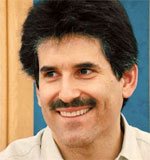
Ken Wilber is naive and believes politicians tell the truth. He also supports "rude boy" cultist Andrew Cohen (pictured above).
If weed were legalized the government could collect $400 billion a year in taxes and pay off both wars in a few years.
The Other Wiki's page on Cohen, the man who supposedly gained complete and final enlightenment in two and a half weeks.
The Other Wiki's page on Cohen's guru, H. W. L. Poonja. He pronounced Cohen's enlightenment after two and a half weeks.
Be Scofield's "Integral Abuse" article on Cohen and evolutionary enlightenment. He asks the brilliant question about Cohen's "rude boy" enlightenment: "But I must ask, if Cohen's tactics are so revolutionary and 'crazy wisdom' is needed to become enlightened, why haven't any of his students become enlightened? And why are these tactics so necessary when neither Cohen or Wilber attribute their awakenings to these sorts of experiences?"
WHAT enlightenment??! - a site where former Cohen devotees vent. May be true, may be lies, I don't know, I didn't read it.
The Urban Mystic versus The Shirtless Spiritual
Geoffrey D. Falk, a man with no kind words to say to anyone (except maybe Ramana Maharshi), has a site that demonstrates that all gurus, no matter how great, are still human, even if they are divine. Warning: Goeff does believe in the Randi prize, even though there is good evidence to suggest it is a fraud and even though so called "skeptics" say that winning the prize would prove nothing. Goeff might be skeptical of gurus but he sure isn't skeptical of his own skepticism. He quotes Randi several times and believes fully the sexual incidents involving Sai Baba, even though every single court case involving Baba was thrown. In one the so called "victims" were brought in and said they had never heard of the man who brought the case to court, had never met him, and had never claimed Baba molested them. The man, a disillusioned Western devotee, made the whole thing up to get back at Baba for giving him a ring with a zircon instead of a real diamond, even though he said it was a "die-mind" ring, not a "diamond" ring (meaning the death of the ego). He also says videos of Baba's miracles reveal sleight of hand when a magician interviewed for Haraldsson's book says the videos are all too poor quality to come to any honest conclusions. He also supports the view of scholars who find spurious homoeroticism in the life and teachings of Ramakrishna, based on bad translations of Bengali into English (Narasingha Sil and Jeffrey Kripal who mistranslate Bengali to English, misunderstand Tantra, and misuse psychoanalysis to do things it was never meant to do). Goeff also seems to have a thing for stories about gurus and blonds (both men and women). Gentlemen may or may not prefer blonds, but according to Goeff all gurus do. Virtually all of the sexual stories involve blonds from exotic lands like the band mates from ABBA. He also quotes Joe Nickell, another skep-dick phony paranormal investigator, and Indian "rationalists" who call themselves "rationalists" even though they are materialists who believe sense perception is the only means of true knowledge, and the original rationalists were people who believed the senses are unreliable and only reason can be used to gain true knowledge, like Descartes and Kant.
In fact, there's a caveat to his book, listed on his website that reads:
The inclusion of any particular individual in Stripping the Gurus is not meant to suggest or imply that he or she represents him- or herself as a guru, nor is it meant to suggest or imply that he or she has indulged in sex, violence, the abuse of others, or any other illegal or immoral activities.
So it all could be false. Most of it probably is.
He is a disillusioned spiritual believer, much like Michael Shermer, which would explain why he's so angry and full of vitriol. He also decorates his site with the anti-religious/secular humanist/utopianist "A" symbol, meaning he's a utopianist/secular humanist/anti-religious do away with others freedom of thought because they're too stupid kind of guy FakeSagan warned about.
Sunday, September 12, 2010
Balking Hawking Part 2
Stephen Hawking (see previous post for a more or less complete bio) has a new book called The Grand Design out in which he lays claim to an idea he didn't come up with, namely that the universe created itself from nothing by some sort of quantum fluctuation wizardry.
Stephen M. Barr, physics professor from the University of Delaware, writes in an article from First Things: "Right up front, it must be noted that this idea is extremely speculative, has not yet been formulated in a mathematically rigorous way, and is unable at this point to make any testable predictions. Indeed, it is very hard to imagine how it could ever be tested. It would be more accurate to call these “scenarios” than theories." He then cautions theists that just because the idea that a wizard did it isn't testable or has no mathematics doesn't mean it can be rejected outright. In order to reject it, Mr. Barr has more to say on what he feels are good reasons why Hawking's idea doesn't hold water.
First, Hawking and his ilk define the universe as a physical structure, like a bubble (at least pop science writers in Scientific American and Michio Kaku on his Science Channel program use the analogy of bubbles). This bubble universe is floating in some sort of plenum with many many other bubble universes that are also just physical structures. Also, these bubble universes are constantly popping into and out of existence due to quantum fluctuations in the soapy water plenum of all that is (which, if you want to be pickey would really be the universe and the so called "universe" bubble would be just a region within the real universe; hardley seems worth calling this bubble a universe, but some people want to blow some things way out of proportion).
Andrei Linde had an idea called eternal inflation about bubble universes branching off one-another forever within a false vacuum. When a new "universe" branches off, a big bang happens, but all that's really happening is the whole system is branching, nothing is really being created. That's why it's called eternal. The whole system has always existed, and so needs no explanation (at least Linde believes it's eternal in the past, most cosmologists don't think so*).
*Dr. Bruce Gordon says in an interview, The Argument for Design in Cosmology, that: "At first it was thought that it might be eternal into the past too, thus obviating the need for a universal beginning, but it was shown conclusively in 2003 that universes having an expansion rate of greater than zero over their history, universes like ours, must have a begining.... even if the string multiverse existed it would have an absolute beginning in the finite past." He continues to say that even if one were to postulate that quantum laws always existed, even before the multiverse, or plenum as is referred to above, such abstract mathematical laws are causally inert and cannot force anything to happen on their own.
For Hawking and Linde and others the universe wasn't created out of nothing, because nothing has no positive atributes, even if Hawking may misappropriate the word "nothing" to mean something completely else. The universe also didn't "create itself." What happened was the damn thing inflated. This reduced definition of the universe requires the preexistence of the plenum itself, inflaton fields, and quantum laws, but everyone has to assume the preexistence of something, so that itself doesn't toss this idea out. I would say it gets messy having to assume 10^500 random universes just to explain away the fine tuning of the laws of the universe, but parsimony only counts when the most parsimonious option isn't God.
Barr seems to think that Hawking has really goofed the flute with his new book, since in his A Brief History of Time (which I do have and wasn't all that great), Hawking acknowledged that the equations of physics are just numbers and can't cause anything to happen on their own and that physics can't address the issue of why something exists instead of nothing. Now Hawking proposes a new old story for how the universe always existed and so no explanation is necessary. I bet Hawking will rename this "theory" after himself like he does with every idea he steals. Barr concludes: "There are two answers to the question: “Why does anything exist rather than nothing at all?” The atheist answers, “There is no explanation.” The theist replies, God. An intelligent case can be made for either answer. But to say that the laws of physics alone answer it is the purest nonsense—as Hawking himself once realized."
And with that we leave the Sad Sad Tale of Stephen Hawking, a man so consumed by egoism that he no longer is the respected physicist of yesterday, but instead is now spouting nonsense.
-Dee
Stephen M. Barr, physics professor from the University of Delaware, writes in an article from First Things: "Right up front, it must be noted that this idea is extremely speculative, has not yet been formulated in a mathematically rigorous way, and is unable at this point to make any testable predictions. Indeed, it is very hard to imagine how it could ever be tested. It would be more accurate to call these “scenarios” than theories." He then cautions theists that just because the idea that a wizard did it isn't testable or has no mathematics doesn't mean it can be rejected outright. In order to reject it, Mr. Barr has more to say on what he feels are good reasons why Hawking's idea doesn't hold water.
First, Hawking and his ilk define the universe as a physical structure, like a bubble (at least pop science writers in Scientific American and Michio Kaku on his Science Channel program use the analogy of bubbles). This bubble universe is floating in some sort of plenum with many many other bubble universes that are also just physical structures. Also, these bubble universes are constantly popping into and out of existence due to quantum fluctuations in the soapy water plenum of all that is (which, if you want to be pickey would really be the universe and the so called "universe" bubble would be just a region within the real universe; hardley seems worth calling this bubble a universe, but some people want to blow some things way out of proportion).
Andrei Linde had an idea called eternal inflation about bubble universes branching off one-another forever within a false vacuum. When a new "universe" branches off, a big bang happens, but all that's really happening is the whole system is branching, nothing is really being created. That's why it's called eternal. The whole system has always existed, and so needs no explanation (at least Linde believes it's eternal in the past, most cosmologists don't think so*).
*Dr. Bruce Gordon says in an interview, The Argument for Design in Cosmology, that: "At first it was thought that it might be eternal into the past too, thus obviating the need for a universal beginning, but it was shown conclusively in 2003 that universes having an expansion rate of greater than zero over their history, universes like ours, must have a begining.... even if the string multiverse existed it would have an absolute beginning in the finite past." He continues to say that even if one were to postulate that quantum laws always existed, even before the multiverse, or plenum as is referred to above, such abstract mathematical laws are causally inert and cannot force anything to happen on their own.
For Hawking and Linde and others the universe wasn't created out of nothing, because nothing has no positive atributes, even if Hawking may misappropriate the word "nothing" to mean something completely else. The universe also didn't "create itself." What happened was the damn thing inflated. This reduced definition of the universe requires the preexistence of the plenum itself, inflaton fields, and quantum laws, but everyone has to assume the preexistence of something, so that itself doesn't toss this idea out. I would say it gets messy having to assume 10^500 random universes just to explain away the fine tuning of the laws of the universe, but parsimony only counts when the most parsimonious option isn't God.
Barr seems to think that Hawking has really goofed the flute with his new book, since in his A Brief History of Time (which I do have and wasn't all that great), Hawking acknowledged that the equations of physics are just numbers and can't cause anything to happen on their own and that physics can't address the issue of why something exists instead of nothing. Now Hawking proposes a new old story for how the universe always existed and so no explanation is necessary. I bet Hawking will rename this "theory" after himself like he does with every idea he steals. Barr concludes: "There are two answers to the question: “Why does anything exist rather than nothing at all?” The atheist answers, “There is no explanation.” The theist replies, God. An intelligent case can be made for either answer. But to say that the laws of physics alone answer it is the purest nonsense—as Hawking himself once realized."
And with that we leave the Sad Sad Tale of Stephen Hawking, a man so consumed by egoism that he no longer is the respected physicist of yesterday, but instead is now spouting nonsense.
-Dee
Thursday, September 9, 2010
Balking Hawking Part 1
Jane Hawking, former wife of world famous scientist and sore loser Stephen Hawking (he is notorious at losing bets with fellow scientists and never paying up, even after decades), has written a book, Music to Move the Stars. In it she tells of how they met, the troubles of dealing with his progressive illness, raising three children, and religious disputes that put an end to their marriage after 25 years. 25 years is a long time, and this book is suitably lengthy: at over 600 pages you could seriously hurt someone with this doorstopper. Surprisingly, every Amazon review is positive, something you just don't see very often, especially books about celebrities.
Cosmologists like to reduce everything in the universe to equations, she says, and God just gets in the way of what they percieve as mathematical harmony. She goes on to say that because the work of cosmologists is so complex that for some people it becomes a substitute for traditional religion. The cosmologists are seen as being so smart they must have all the answers, and if their answers leave no room for God (because God would mess with their perfect tick-tock system) then God must not exist, end of discussion.
She is distressed over the pseudoscience (my word, not hers) of evolutionary psychology. They try to reduce all human behaviour to natural selection, tossing out things like altruism and artistic expression that do not fit their NeoDarwinian narrative. Unable to answer why certain human faculties exist (or why something exists instead of nothing), the scientistic elite scoff and deny the general public the right to even ask why. Science forbid if one of their own rank should ask why! Such a person is denied tenure or kicked out of academia all together. Asking why the universe exists or why altruism exists is like asking "why Mount Everest exists" (here's a hint: it involves continental drift). It should be noted that none of their hypotheses are testable and therefore do not count as science. There is no way, short of building a time machine, to test what human ancestors did tens of thousands of years ago or whatever survival function their actions served. Evolutionary psychology just takes old hat psychological ideas (every revolutionary idea evo psych has ever come up with has been said by a regular psychologist at some time in the past) and puts a sexy evolutionary spin to it to make it sound science-y.
Jane says of her former husband Stephen: "on one historic occasion he actually made the startling concession that, like religion, his own science of the universe’ also required a leap of faith as did theism."
As Stephen became more famous he became more dogmatic in his atheism and surrounded himself with people who cared more about their careers and equations than about other people. Over time their equations began to replace the real world around them, and Jane couldn't handle living in that world of mathematics. As his fame grew ever higher, Stephen became cold and cruel and condescending and loveless in his vastly increasing arrogance and narcissism. Despite the fact that his wife had to take care of his every bodily function he remained an ungrateful bastard (my word). She says: "I found myself telling him that he was not God. The truth was that supercilious enigma of that smile which Stephen wore whenever the subjects of religious faith and scientific research came up was driving me to my wit’s end. It seemed that Stephen had little respect for me as a person and no respect at all for my beliefs and opinions." (p. 536) He was insulted by his wife's compassion for him, because for him compassion reeked of religion. Stephen divorced his wife in 1995 and married his nurse because he cared more about himself than anyone else. Never satisfied with anything humanity had to offer, he divorced his second wife ten years later.
Fuck you Mr. Hawking. Fuck you very much.
-Dee
Cosmologists like to reduce everything in the universe to equations, she says, and God just gets in the way of what they percieve as mathematical harmony. She goes on to say that because the work of cosmologists is so complex that for some people it becomes a substitute for traditional religion. The cosmologists are seen as being so smart they must have all the answers, and if their answers leave no room for God (because God would mess with their perfect tick-tock system) then God must not exist, end of discussion.
She is distressed over the pseudoscience (my word, not hers) of evolutionary psychology. They try to reduce all human behaviour to natural selection, tossing out things like altruism and artistic expression that do not fit their NeoDarwinian narrative. Unable to answer why certain human faculties exist (or why something exists instead of nothing), the scientistic elite scoff and deny the general public the right to even ask why. Science forbid if one of their own rank should ask why! Such a person is denied tenure or kicked out of academia all together. Asking why the universe exists or why altruism exists is like asking "why Mount Everest exists" (here's a hint: it involves continental drift). It should be noted that none of their hypotheses are testable and therefore do not count as science. There is no way, short of building a time machine, to test what human ancestors did tens of thousands of years ago or whatever survival function their actions served. Evolutionary psychology just takes old hat psychological ideas (every revolutionary idea evo psych has ever come up with has been said by a regular psychologist at some time in the past) and puts a sexy evolutionary spin to it to make it sound science-y.
Jane says of her former husband Stephen: "on one historic occasion he actually made the startling concession that, like religion, his own science of the universe’ also required a leap of faith as did theism."
As Stephen became more famous he became more dogmatic in his atheism and surrounded himself with people who cared more about their careers and equations than about other people. Over time their equations began to replace the real world around them, and Jane couldn't handle living in that world of mathematics. As his fame grew ever higher, Stephen became cold and cruel and condescending and loveless in his vastly increasing arrogance and narcissism. Despite the fact that his wife had to take care of his every bodily function he remained an ungrateful bastard (my word). She says: "I found myself telling him that he was not God. The truth was that supercilious enigma of that smile which Stephen wore whenever the subjects of religious faith and scientific research came up was driving me to my wit’s end. It seemed that Stephen had little respect for me as a person and no respect at all for my beliefs and opinions." (p. 536) He was insulted by his wife's compassion for him, because for him compassion reeked of religion. Stephen divorced his wife in 1995 and married his nurse because he cared more about himself than anyone else. Never satisfied with anything humanity had to offer, he divorced his second wife ten years later.
Fuck you Mr. Hawking. Fuck you very much.
-Dee
Saturday, March 27, 2010
Materialism and the Mind
Here is an article that discusses six features of the human mind that are not addressed by materialism. They are: Intentionality, Qualia, Persistance of Self-Identity, Restricted Access, Incorrigibility, and Free Will. The author, neuroscientist Michael Egnor, goes on to say:
"So is the materialist inference that the mind is caused entirely by the brain plausible? Please note that materialism has failed to offer any explanation for any of the six salient characteristics of the mind. Not a single salient characteristic of the mind is a property of matter. The strict materialistic explanation for the mind — the attribution of immaterial mental acts and properties to brain matter — is, by definition, a materialist superstition, a 'false irrational conception of causation in nature maintained despite evidence to the contrary.'"
He also states:
"In Wolfgang Pauli’s deathless phrase, the materialist explanation of the mind ”isn’t even wrong.” It’s superstitious nonsense. Materialism can’t explain the mind, because the salient characteristics of mental states ... do not admit material explanations."
Since materialist science deals with matter alone, which is to say only third person objective features, it can say nothing about anything that occupies a first person subjective position, namely mind. Unfortunately, materialists insist that the mind is entirely explained by the brain or by what the brain does, despite the inability of materialist science to approach anything subjective in nature! Materialism can never say anything about the mind and yet that is exactly what leading materialists do when they assert that the mind is the brain! Go figure.
-Dee
"So is the materialist inference that the mind is caused entirely by the brain plausible? Please note that materialism has failed to offer any explanation for any of the six salient characteristics of the mind. Not a single salient characteristic of the mind is a property of matter. The strict materialistic explanation for the mind — the attribution of immaterial mental acts and properties to brain matter — is, by definition, a materialist superstition, a 'false irrational conception of causation in nature maintained despite evidence to the contrary.'"
He also states:
"In Wolfgang Pauli’s deathless phrase, the materialist explanation of the mind ”isn’t even wrong.” It’s superstitious nonsense. Materialism can’t explain the mind, because the salient characteristics of mental states ... do not admit material explanations."
Since materialist science deals with matter alone, which is to say only third person objective features, it can say nothing about anything that occupies a first person subjective position, namely mind. Unfortunately, materialists insist that the mind is entirely explained by the brain or by what the brain does, despite the inability of materialist science to approach anything subjective in nature! Materialism can never say anything about the mind and yet that is exactly what leading materialists do when they assert that the mind is the brain! Go figure.
-Dee
Monday, March 15, 2010
Size DOESN'T Matter?!
From 20 July 2007.
Do we really need a brain? Fundamaterialists say "yes" because to them the brain magically creates consciousness through pixie dust or something. Science says "perhaps not."


There is the brain scan (or better yet, lack of brain scan) of a man in France who is a fully normal and functional unit in society. Here is a man with almost no brain and yet he is just like anyone else. The Fundamaterialists are scratching their heads, which are far up their asses, trying to ignore people like this because they present possible evidence that consciousness is independent of physical matter and isn't generated by the brain at all. Thanks to Michael Prescott for the links.
-Dee
Do we really need a brain? Fundamaterialists say "yes" because to them the brain magically creates consciousness through pixie dust or something. Science says "perhaps not."


There is the brain scan (or better yet, lack of brain scan) of a man in France who is a fully normal and functional unit in society. Here is a man with almost no brain and yet he is just like anyone else. The Fundamaterialists are scratching their heads, which are far up their asses, trying to ignore people like this because they present possible evidence that consciousness is independent of physical matter and isn't generated by the brain at all. Thanks to Michael Prescott for the links.
-Dee
Thursday, September 10, 2009
Darwin and Dawkins Dilemma: Climbing Mt. Improbable
A clip from the new film Darwin's Dilemma.
Richard Dawkins has famously elaborated on Darwin's theory of natural selection, arguing that through a slow incremental process, evolution can explain the rise of new species. The new film, Darwin's Dilemma shows where Dawkins goes wrong. Growing evidence suggests that the creation of novel genetic information requires intelligence, and thus the burst of genetic information during the Cambrian Explosion provides convincing evidence that animal life is the product of intelligent design rather than a blind undirected process like natural selection.
Richard Dawkins has famously elaborated on Darwin's theory of natural selection, arguing that through a slow incremental process, evolution can explain the rise of new species. The new film, Darwin's Dilemma shows where Dawkins goes wrong. Growing evidence suggests that the creation of novel genetic information requires intelligence, and thus the burst of genetic information during the Cambrian Explosion provides convincing evidence that animal life is the product of intelligent design rather than a blind undirected process like natural selection.
Saturday, March 28, 2009
Science is a Process, NOT a Position - Evolution
The debate regarding Darwinism has taken a turn for the good! Texas high schools now require teaching scientific criticism of Darwinian evolution, thereby bringing the subject into the realm of REAL science, not scientism (the religion of reductionist materialism masquerading as science)! From Uncommon Descent (from Evolution News):Big Win in Texas as State Now Leads Nation in Requiring Critical Analysis of Evolution in High School Science Classes
Robert CrowtherIn a huge victory for those who favor teaching the scientific evidence for and against evolution, Texas today moved to the head of the class by requiring students to “critique” and examine “all sides of scientific evidence” and specifically requiring students to “analyze and evaluate” the evidence for major evolutionary concepts such as common ancestry, natural selection, and mutations.“Texas has sent a clear message that evolution should be taught as a scientific theory open to critical scrutiny, not as a sacred dogma that can’t be questioned,” said Dr. John West, Senior Fellow at Discovery Institute. “Contrary to the claims of the evolution lobby, absolutely nothing the Board did promotes ‘creationism’ or religion in the classroom. Groups that assert otherwise are lying, plain and simple. Under the new standards, students will be expected to analyze and evaluate the scientific evidence for evolution, not religion. Period.”The new requirements were contained in revised science standards approved today by the Texas State Board of Education. The science standards include language requiring students to “analyze, evaluate and critique scientific explanations…including examining all sides of scientific evidence… so as to encourage critical thinking by the student.” Equally important, the high school biology standards now require students to “analyze and evaluate” the scientific evidence for key parts of evolutionary theory, including common ancestry, natural selection, and mutations.Discovery Institute has long endorsed the idea that evolution should be fully and completely presented to students, including its unresolved issues.
---------
Also, we here at The Urban Mystic have received our first ever comment on the post regarding Sri Adi Da. To Anonymous, thank you for your comment. We look forward to your patronage.-Dee
Robert CrowtherIn a huge victory for those who favor teaching the scientific evidence for and against evolution, Texas today moved to the head of the class by requiring students to “critique” and examine “all sides of scientific evidence” and specifically requiring students to “analyze and evaluate” the evidence for major evolutionary concepts such as common ancestry, natural selection, and mutations.“Texas has sent a clear message that evolution should be taught as a scientific theory open to critical scrutiny, not as a sacred dogma that can’t be questioned,” said Dr. John West, Senior Fellow at Discovery Institute. “Contrary to the claims of the evolution lobby, absolutely nothing the Board did promotes ‘creationism’ or religion in the classroom. Groups that assert otherwise are lying, plain and simple. Under the new standards, students will be expected to analyze and evaluate the scientific evidence for evolution, not religion. Period.”The new requirements were contained in revised science standards approved today by the Texas State Board of Education. The science standards include language requiring students to “analyze, evaluate and critique scientific explanations…including examining all sides of scientific evidence… so as to encourage critical thinking by the student.” Equally important, the high school biology standards now require students to “analyze and evaluate” the scientific evidence for key parts of evolutionary theory, including common ancestry, natural selection, and mutations.Discovery Institute has long endorsed the idea that evolution should be fully and completely presented to students, including its unresolved issues.
---------
Also, we here at The Urban Mystic have received our first ever comment on the post regarding Sri Adi Da. To Anonymous, thank you for your comment. We look forward to your patronage.-Dee
Subscribe to:
Posts (Atom)