
Thinking Allowed with Jeffrey Mishlove
Dr. Vernon Neppe describes areas of psi research that have all achieved statistical significance at the six sigma level. These include remote viewing, random event generator research, the global consciousness project, the ganzfeld studies, studies on the sense of being stared at, and feeling the future studies based on the work of Daryl Bem, presentiment studies. Neppe also includes some research in the area of survival after death. All of this research shows that human consciousness is capable of interacting with the physical world in ways that bypass the normal sensory and motor systems of the body. Neppe presents a single, multi-dimensional model that could account for psi.
Showing posts with label Survival of Consciousness. Show all posts
Showing posts with label Survival of Consciousness. Show all posts
Saturday, May 20, 2017

Monday, May 8, 2017
Rupert Sheldrake & Mark Vernon - What Happens When We Die?
A fascinating look at the possible connection between dreaming, expectations, the subconscious, and what happens after death.
Wednesday, April 19, 2017
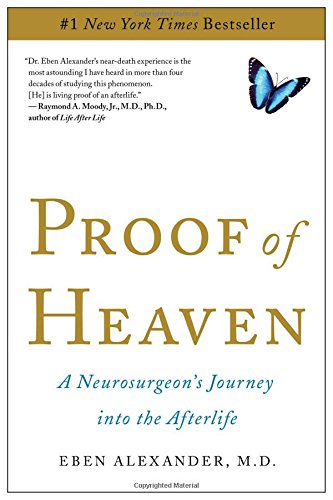
Eben Alexander: A Neurosurgeon's Journey through the Afterlife
Neurosurgeon Eben Alexander talks about his NDE while he had bacterial meningitis. Dr. Alexander has written about his experience in the remarkable book Proof of Heaven (for other similar books check out the Recommended Books page). The incredible rarity and severity of his illness, which wiped out not only his neocortex but brainstem as well, makes Dr. Alexander's experience a very strong case for the independence of consciousness from the physical structure and functioning of the brain. He explains more in this marvelous talk at the Theosophical Society.
Runs 98 minutes.
Runs 98 minutes.
Sunday, April 2, 2017
Do We Want Eternal Life?
Eternal life is feared and rejected by some because it is thought to be nothing more than a continuation of this life of struggle. Some (including Bob Couttie) suggest that a life of infinite duration would become boring or monotonous. My old teacher once pointed out that such an idea is preposterous. With infinite time on one's hands one could accomplish an infinite number of tasks. As he said, he would read an infinite number of books and then write an infinite number of books, and still have infinite time to do infinitely more things. Some, like poor old Bob again, suggest that a life of infinite duration would lead to infinite procrastination. Since we always have infinite time in which to accomplish some task we would see no hurry and so put off doing it forever.
It is suggested in this homily by Fr. Matthias that many people reject Christianity out of fear or revulsion to the idea of this life everlasting.
However, these people are all mistaken. Eternal life is not merely a continuation of this life indefinitely into the future. Eternity is not an infinite duration of time, eternity sits outside of time completely. Eternal life is life without time.
A timeless condition is attested to in the near death experience and in people who have experienced nirvikalpa samadhi. It is your true nature, your original face, the face you had before your parents were born. It is the state we will all experience following the resurrection.
Thursday, January 19, 2017
A Guide to Your Interiors
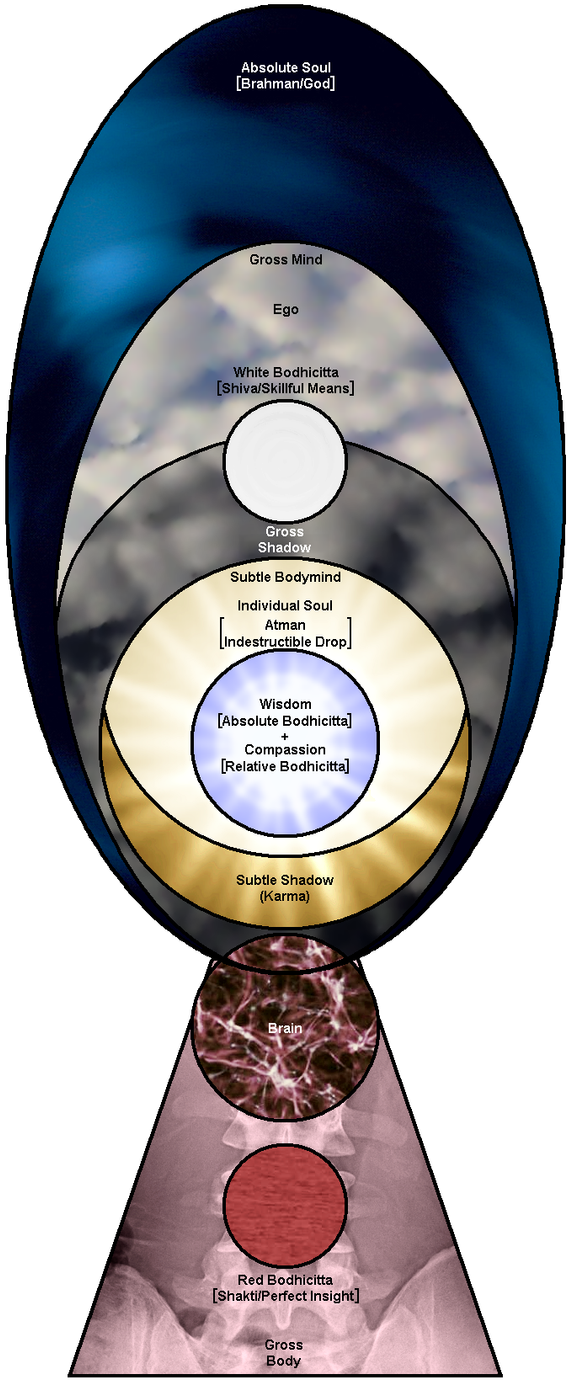
Starting at the bottom, everyone knows what the Gross Body is. It's the thing we normally think of when we think of the body. Sometimes it is gross, but here it's referred to as gross because it is the most dense form of matter.
At the top of the Gross Body is the Brain. Everyone knows what the brain is. It's a vital organ and most people only use the stem. The brain is the seat of consciousness, most likely the microtubules.
Right below the brain is something called the Red Bodhicitta, located at the navel. It's part of the subtle anatomy, but it's more tied to the gross anatomy than it is to the subtle bodymind. It's located here in relation to the brain because it's relative location is important. The red bodhicitta represents perfect insight. It is one of two anchors that hold keep the soul attached to the body, and is the power source of the body. It provides the energy for meditation. We get the red bodhicitta from our mother.
Atop the brain is a series of elliptical forms.
I'll start with the white circle. It is the White Bodhicitta, and it is skillful means. It is said to be the mind of enlightenment. At the moment of death the white bochicitta descends from the crown of the head and presents us with the perfect opportunity to attain enlightenment. If not, we'll get several other chances later on, but that's a topic for another day. We get the white bodhicitta from our father.
The next biggest ellipse, with the pretty clouds, is the Gross Mind. That's what we think of when we think of the mind. The gross mind is almost constantly full of thoughts that arise and cease, represented here as clouds that obscure the clear blue sky. The gross mind contains two parts, the Ego, which is the frontal personality that we associate with, and the Gross Shadow (the darker part), which is all the stuff we have disidentified with and have repressed. The shadow is almost always unconscious, and it is much larger than the conscious ego. It is the seat of projection. Any bit of the shadow we do not reintegrate into the ego during this lifetime we must deal with either in the between life state or the next life. There is no getting around it.
Inside the gross mind is the Subtle Bodymind (a combination of the subtle body and the subtle mind). It is full of golden light, often encountered in the early stages of meditation. The subtle bodymind is what reincarnates. Any it of the gross shadow that we failed to deal with in life will accumulate in the Subtle Shadow, the darker part of the subtle bodymind. Sometimes it's called Karma, but that word has a lot of baggage associated with it. It's the aspects of our self that we do not want to deal with. It is all the unconscious tendencies that pull us through life, and pull us to the next life. It doesn't seem to be a sort of accountant that balances good deeds and bad deeds, it seems to be more like a magnet that draws us to a life we are most attune with. Fears, addictions, unresolved issues, all of that pulls us in certain directions. Usually directions the ego does not want.
Inside that, at the very center of the self, is the Individual Soul (sometimes called the Atman or the Indestructible Drop), represented here as a sphere of blue light (often encountered in deeper stages of meditation). The soul is the original self-contraction that started manifestation. It is made of two things: wisdom (absolute bodhicitta) and compassion (relative bodhicitta). Wisdom is our capacity to recognise emptiness, and compassion is our capacity to be moral. The soul is said to be absolutely indestructible. It is the very subtlest mind of enlightenment that anchors all other structures. The soul is indestructible even for perfectly enlightened buddhas. It is not an unchanging substance, or a thing, it is the very heart of the mind. If the soul never changed then enlightenment would be impossible!
At the very outside, the biggest ellipse, is the Absolute Soul (God or Brahman). It is Absolute Existence and Absolute Truth. It is clear light (clear meaning transparent, like pre-dawn twilight). Absolute freedom and fulfillment; the source and goal of all existence. The gross body is projected out from the Absolute and appears to us to be something outside and apart from it, but you can see from the overlap that the gross bodymind, like everything else, exists within the Absolute. At the moment of enlightenment the individual soul identifies with and abides as the Absolute Soul without any loss of individuality.
Thursday, October 6, 2016
Evidentiality of Spiritualist Mediumship with Stephen E. Braude
Part two of yesterday's interview. Does mediumship present better evidence for survival or for living agent psi?
Wednesday, October 5, 2016
Philosophy and Post-Mortem Survival with Stephen E. Braude
Stephen Braude discusses philosophical questions related to survival of consciousness. He brings up two interesting points. First, that we're thinking of "super psi" wrong (he prefers to call it "living agent psi"). Most people think of the "super" more like super hero rather than super glue. It is not psi above and beyond anything we have experienced before, it is just really good quality psi (the issue of some remarkably accurate remote viewers was brought up. Check out Joe McMoneagle's Memoirs of a Psychic Spy, now in the convenient book section, for some stories.). Second, survival necessitates super psi, in that deceased persons would need remarkable ESP abilities to communicate with one another and the living, and to know what the living are currently doing, since they lack the five physical senses.
Saturday, April 9, 2016
Reincarnation Questions and Hypotheses
There are a few reasons I suspect reincarnation is both possible and exists:
1. As a child I had past life memories (I don't remember anything now). I stopped talking about it when no one believed me.
2. It is the best explanation for other children who have veridical past life memories.
3. It explains certain things about human development that we don't understand.
4. It makes sense mechanically, working as a sort of metaphysical version of gravity.
5. It's fair.
6. Pretty much everyone believed in reincarnation in some form until the 14th century. (Reincarnation, of at least certain individuals who suffer traumatic deaths, is still a part of orthodox Judaism today.)
The main questions that exist surrounding the idea of reincarnation are as follows:
1. Which of the two suggested mechanisms for reincarnation is accurate, the individual soul coming back life after life as all the world's religions suggest, or the new age model where different souls incarnate that are connected through an "over-soul"?
2. How long is the typical duration between successive incarnations on Earth?
There seems to be a great deal of leeway with this, depending on the belief of the person. Some people who believe in instantaneous reincarnation may indeed instantaneously reincarnate. In the Tibetan model rebirth takes place after 45 days, ideally, though with reincarnated lamas it looks like it usually takes 2 or 3 years. With a lot of people from the Second World War and the Holocaust they seem to have started coming back after 50 or 60 years. Yogananda suggests 200 years is a normal time. I suspect that people wait to reincarnate until after the whole family has died, so they can all meet up again before departing once more for Earth, although with sudden horrific deaths the wait time seems to be a lot shorter.
An enlightened being can reincarnate at will, but with the average person I suspect something akin to the Hindu system is in place where a person spends time in one of the astral heavens until the merit they accrued in the previous lifetime has expired (which may take hundreds or even thousands of years) before having to come back. This makes sense, metaphysically.
3. How many souls are there that are incarnating? Let's for the moment just talk about humans. (I suspect more advanced animals like apes and dolphins also reincarnate like humans, but we can't ask them so it's impossible to know. Also animals who have spent a great deal of time with humans, like pets, also may have individual rebirths. Generally it is said that wild animals, and I suspect plants too since recent studies with tomatoes and trees reveal that at least certain plants are conscious too, tend not to have individual souls, but I have no idea.) There are at least 8 billion human souls, and since the maximum number of humans possible on the Earth is assumed to be about 12 billion let's say that's the minimum number of individual souls. That would mean that the time between incarnations would necessarily be very short. If, on the other hand, there were 100 billion souls then the time between incarnations would be very long, since there have only been 108 billion people who have ever lived, so only a handful would have ever reincarnated. If there are 1 trillion souls then no one will ever need to reincarnate because it will take millions of years to run out and hopefully humanity will all reach enlightenment before then and we can be done with the Earth permanently.
4. Why are all, or most, of the faculties lost in the interim between incarnations? Babies, even of enlightened beings, still have to learn to walk and talk all over again, and very few people come here knowing calculus (reincarnation is, I think, the only explanation for genius as seen in people like Freeman Dyson who knew more about mathematics as a very young child than most people ever learn in a lifetime). You would think someone like the Dalai Lama who has come back 14 times now would be born knowing how to walk and talk, because he has that much more experience than an ordinary mortal.
It does seem that some memories sneak through, at least at the beginning. Young children exhibit xenoglossy, speaking languages they never learned, but they knew from a previous life. This universally disappears after 4 or 5 years. And with genius and rapid development of certain faculties there seems to be some degree of anemnesis at play. If you learned something ten times already then relearning it in your next life will be very easy.
These lists are in no way exhaustive. Rather, they serve as a useful summary of the situation.
1. As a child I had past life memories (I don't remember anything now). I stopped talking about it when no one believed me.
2. It is the best explanation for other children who have veridical past life memories.
3. It explains certain things about human development that we don't understand.
4. It makes sense mechanically, working as a sort of metaphysical version of gravity.
5. It's fair.
6. Pretty much everyone believed in reincarnation in some form until the 14th century. (Reincarnation, of at least certain individuals who suffer traumatic deaths, is still a part of orthodox Judaism today.)
The main questions that exist surrounding the idea of reincarnation are as follows:
1. Which of the two suggested mechanisms for reincarnation is accurate, the individual soul coming back life after life as all the world's religions suggest, or the new age model where different souls incarnate that are connected through an "over-soul"?
2. How long is the typical duration between successive incarnations on Earth?
There seems to be a great deal of leeway with this, depending on the belief of the person. Some people who believe in instantaneous reincarnation may indeed instantaneously reincarnate. In the Tibetan model rebirth takes place after 45 days, ideally, though with reincarnated lamas it looks like it usually takes 2 or 3 years. With a lot of people from the Second World War and the Holocaust they seem to have started coming back after 50 or 60 years. Yogananda suggests 200 years is a normal time. I suspect that people wait to reincarnate until after the whole family has died, so they can all meet up again before departing once more for Earth, although with sudden horrific deaths the wait time seems to be a lot shorter.
An enlightened being can reincarnate at will, but with the average person I suspect something akin to the Hindu system is in place where a person spends time in one of the astral heavens until the merit they accrued in the previous lifetime has expired (which may take hundreds or even thousands of years) before having to come back. This makes sense, metaphysically.
3. How many souls are there that are incarnating? Let's for the moment just talk about humans. (I suspect more advanced animals like apes and dolphins also reincarnate like humans, but we can't ask them so it's impossible to know. Also animals who have spent a great deal of time with humans, like pets, also may have individual rebirths. Generally it is said that wild animals, and I suspect plants too since recent studies with tomatoes and trees reveal that at least certain plants are conscious too, tend not to have individual souls, but I have no idea.) There are at least 8 billion human souls, and since the maximum number of humans possible on the Earth is assumed to be about 12 billion let's say that's the minimum number of individual souls. That would mean that the time between incarnations would necessarily be very short. If, on the other hand, there were 100 billion souls then the time between incarnations would be very long, since there have only been 108 billion people who have ever lived, so only a handful would have ever reincarnated. If there are 1 trillion souls then no one will ever need to reincarnate because it will take millions of years to run out and hopefully humanity will all reach enlightenment before then and we can be done with the Earth permanently.
4. Why are all, or most, of the faculties lost in the interim between incarnations? Babies, even of enlightened beings, still have to learn to walk and talk all over again, and very few people come here knowing calculus (reincarnation is, I think, the only explanation for genius as seen in people like Freeman Dyson who knew more about mathematics as a very young child than most people ever learn in a lifetime). You would think someone like the Dalai Lama who has come back 14 times now would be born knowing how to walk and talk, because he has that much more experience than an ordinary mortal.
It does seem that some memories sneak through, at least at the beginning. Young children exhibit xenoglossy, speaking languages they never learned, but they knew from a previous life. This universally disappears after 4 or 5 years. And with genius and rapid development of certain faculties there seems to be some degree of anemnesis at play. If you learned something ten times already then relearning it in your next life will be very easy.
These lists are in no way exhaustive. Rather, they serve as a useful summary of the situation.
Tuesday, April 5, 2016
My Problems with Spiritualists
I usually have two problems with most spiritualists. First to clarify, when I say "spiritualist" I categorically DO NOT mean people who say they are "spiritual but not religious." I've already written at length my distaste for those people. Spiritualism is the belief that spirit exists distinct from matter (or within some realm of more rarefied subtle matter or etheric or astral matter) and can be contacted through mediums. And this has been tested scientifically and there are really only two possible options to explain the data:
1. The Survival Hypothesis. The minds and personalities of people survive death of the body in pretty much the same state as when they were alive and they can communicate, at least at a rudimentary level, with the living.
or
2. The Super-ESP Hypothesis. The minds of certain living people are capable of extraordinary feats of ESP bordering on omniscience, whereby they can access information about the deceased by reading the minds of multiple living people all over the world simultaneously and access other information through remote viewing of locked drawers, diaries, or other varied sources, often coming up with information that is not known to the bereaved person or persons and not verified until much later, all this coupled with a subconscious dissociative personality disorder that the medium believes with absolute conviction is a real deceased individual they are communicating with.
And that's it. And after 150 years of testing no one has devised an experiment to distinguish between the two conclusively for the unfortunate reason that all the scientists working on the problem are stuck trying to convince die-hard atheist materialists who serve as the gatekeepers of what is and is not officially sanctioned science that real information is being attained through psychic means.
You might think that's a false dilemma and decide to take the third option, but, to be honest, if you take the third option I question your intelligence and would be surprised you would even know what a false dilemma is or that you had the capacity to fully comprehend the issue.
3. The Demon-Haunted World. A class of non-physical (or astral) beings called demons exist and they are omniscient, or at least as intelligent as necessary to trick humans that they are deceased humans because God is an asshole and filled the universe with billions of demons who trick people because God is an asshole and wants to send 99.999% of people to suffer in Hell forever.
If you accept options 1 or 2 you are a rational person who has examined the evidence. If you accept option 3 you are a moron. If you reject them all and accept option 4, that it's all deliberate trickery from often Nobel Prize winning scientists who want to ruin their reputations by studying ghosts, you're either ignorant of the data or a cynical asshole and most likely never even bothered looking at the data because you reject it a priori.
As a side note, we can get into metaphysics, with astral and etheric and subtle energies and all that stuff some other time, and I know Ken Wilber has talked down the issue and has promoted his "Integral Post-Metaphysics" and Kant's critique of metaphysics, but if you read Excerpt G (page 46), Ken does admit to true metaphysics within his model:
" The fact that the subtle (and causal) bodymind can transmigrate the gross bodymind is indeed metaphysical; but the fact that these subtle energies are postulated as real, concrete, detectable, often measurable—if subtler—energies, stops the whole conception from spinning off into the vaporware of pure metaphysics. If you read hypothesis #4 in conjunction with the first three hypotheses, I think you will see that they are at least consistent with each other; and thus I believe that an integral theory of subtle energies can accommodate the existence of transmigration, if we decide, on other grounds, that there is enough evidence to conclude that transmigration occurs."
It's a good read, but if you're in a hurry you can watch this video.
Getting back to the central issue of what my problems with spiritualists are.
The first problem is the denial of the good that other religions (specifically Christianity and to a lesser extent Buddhism) have and continue to bring to humanity. I wouldn't say this is the hatred of religion, as we see in the "spiritual but not religious" people (except Islam, which they adore), and it probably is not cultural relativism either that says "all religions are equal" or some such nonsense. It might be a sort of spiritual myopia. They are so invested in the truth claims of their own beliefs – the messages delivered by spirits – that they reject out of hand the truth claims of opposing beliefs. So, for example, if spirits say reincarnation does not exist they will believe it without hesitation even though the spirit they are communicating with might be lying or ignorant or both. A second possibility is similar to when you're a teenager and you're embarrassed by what you did as a child, which is basically how climbing the developmental ladder works all through first tier. First tier stages (archaic, magic, mythic, rational, pluralistic, or egocentric, ethnocentric, worldcentric, or any other conceptions) are all exclusive in their thinking. Someone who is ethnocentric looks down on someone who is egocentric (and on someone who is worldcentric), just as someone who is worldcentric looks down on someone who is egocentric and someone who is ethnocentric, even though they themselves necessarily had to pass through all the lower stages to get to where they are. This continues, quite naturally, until one reaches second tier – integral – and can appreciate that all levels have truth and utility appropriate for people at that level.
So, someone who is a spiritualist would reject the truth and utility of organised religion even though for the vast majority of people who have ever lived organised religion is the only thing keeping them from stealing and killing and raping. Religion not only serves as a social glue, it serves as the only affective social glue that has ever been discovered. And since everyone starts out at square one when they are born and has to learn reason and morality, eliminating religion is a particularly bad idea because until people mature to the level where they can apply reason to appreciate natural law and morality (which for most people is never), religion is necessary to keep people from becoming monsters.
Sometimes, yes, religions do influence people to become monsters, particularly lower level religions, but certainly Christianity has had its reformation and the worst Christians you will ever likely encounter are assholes who protest soldiers' funerals.
Aside from legitimacy, religion provides the only affective means of bringing people enlightenment. This ties into the second problem I have with most spiritualists, which is something I'll call subtle reductionism, what Ken Wilber calls the Vishnu Complex. I'll get to that in a minute.
One of the central beliefs of spiritualists is the extreme gradualist approach to development, that spirits develop astronomically slowly, though inexorably, over gazillions of years to reach ultimate perfection. If I could spend fifty trillion eons in an astral heaven where my thoughts instantly manifest my desires I'd say that's a pretty good deal. The general idea is that it gets boring after a time and then you decide to progress. And I'll admit, after the hell and hardship of this life I might look forward to some downtime.
The classic counter to this, which makes sense to me, is the argument of reincarnationists that once your merit is worn out you have to come back here, so the astral worlds are temporary. The only way out of the cycle is enlightenment. The idea of progression through infinitely more rarefied realms does have somewhat of a parallel with the idea of a pure land in Buddhism or Sri Yukteswar's Hiranyaloka from Autobiography of a Yogi. You can progress to a special astral world where the infinite merit and compassion of an enlightened being permits you to progress spiritually without the need to reincarnate.
Now you might not want to believe in reincarnation, and I think most spiritualists don't, for the pretty thoughtless reason "Who would want to come back?!" Very few people, I suspect, would want to come back, but the traditions maintain that it's more like jumping off a cliff. Once you jump you don't get to choose whether you fall down or not, gravity will take over automatically. You don't get to choose whether you reincarnate or not, unless you're already enlightened, your spiritual gravity pulls you unconsciously where you are most suited, and for most people that's back here on Earth. Even if you don't believe in reincarnation, and I think it makes a certain degree of sense, there's still one more reason to see the gradualist approach as not all that's great.
The gradualist approach really does not solve the problem of suffering in this life, it defers it to the next. There is a bit of an inherent laziness to it. "If I'm going to get there anyway I might as well take my time." That is very similar to the traditional religious approach of suffering through life with the knowledge of a reward in the afterlife. The idea of a metaphysical safety net is certainly comforting and has served humanity very well for millennia, but it does not bring about true transpersonal development. Even in an astral heaven there is still self and other, there is still separation, and where there is separation there is suffering. That is why spirits choose to leave the lower astral heavens, often called "Summerland", where thoughts manifest instantly, because it gets boring after a while. The types of suffering in astral worlds are radically different than in the physical world (and in the astral hells are much worse), but as long as separation exists suffering necessarily exists. Enlightenment is the only way out, and religion provides the only door to enlightenment.
That brings us to my second objection, subtle reductionism, which is nothing other than the denial of the causal. Subtle reductionism is nowhere near as disastrous as the gross reductionism of fundamaterialists, it is definitely a step in the right direction, but in denying the existence of the causal one is also denying the ultimate end of suffering.
Basically the subtle realms work like psychotherapy. One reaches an end of psychotherapy when one realises that one can go on forever. The subtle realms are like that. You ascend higher and higher, into ever more subtle planes of illumination and bliss, and it just doesn't stop. There is no upward limit, there is no ultimate end. In meditation people can spend a lifetime just getting to more rarefied states and just bliss-out and as soon as they come down and have to go to work they are the same jerk as they were from day one. You can certainly gain psychic powers through forms of meditation, but if you just keep ascending through all the essential lights and sounds you will not reach enlightenment. This inertial desire to keep ascending through the subtle is what Ken Wilber calls the Vishnu Complex. You are so enamored with God you don't want to seek your true identity. And since you have to stop meditating eventually you will suffer when it ends. As long as separation exists suffering necessarily exists. And that's all the gradualist approach of most spiritualists promises, ever higher states of lights and sounds.
This denial of the causal is wonderfully presented in Greg Stone's book Under the Tree. It's a pretty obscure book, so I'll explain it a little. This man with a punny name encounters ice on the highway and runs his car off a cliff and goes into a coma. He has a near death experience that spends a great many pages just trying to convince him he really is dead, since he doesn't believe in an afterlife, and then it goes off into explaining how the universe works.
Mr. Pun's spirit guide explains to him why all the religions are wrong when they say that we are all one. You see, we really are all separate, but when you incarnate on the Earth you have to pass through a filter, and that filter only lets one soul through at a time, and since we all have to squeeze through that filter we think, "Oh, only one can fit, so there must be only one of us," but that's just faulty logic.
Except that's not what any religion says at all. Remember, you do not automatically become enlightened upon death. If you did there would be absolutely no point to life here on Earth at all. It would all be a waste of time and you could be a child rapist or an axe murderer and it wouldn't matter because we all go up into light and bliss when we die anyway. That's exactly the same horrible belief as the materialists who say you die and rot, just in the opposite direction. If nothing you do in this life has any impact on the next, and we're all just here to learn lessons, or to experience suffering, or because it's rousing good fun, then life truly is meaningless and you might as well just shoot heroin all day, because it won't make one bit of difference. If Hitler and his victims go to the same place after death then the universe is completely lacking in justice or compassion and was created and run by Satan.
Since you do not become enlightened upon death (and we know this because spirits coming through mediums admit to it; they admit to not knowing everything), then anything you hear from spirits about anything other than their particular state of being is just their own guess. If spirits tell you they enjoy coffee and cigars and fine velvet arm chairs on the other side, then you can believe them. If spirits tell you what is happening at the ultimate level, and that they know with absolute certainty how everything works and the mechanisms of reincarnation or whatever, they're either outright lying or they are guessing. Since the personality remains intact then a liar on the Earth is a liar in the afterlife, and subconscious biases and fears still cloud one's thinking.
One group of people we can believe are enlightened individuals on this Earth, because they all say the same exact thing. There is no guessing with enlightenment, there is just experience, or more accurately lack of experience. In the causal there is nothing arising. There are no separate things, just consciousness as such. Nothing bad arises to torture you and leave, nothing good arises to torture you when it leaves, there are no others, there is no you, there just is. And they all say this, for the past 3000 years, they all say this. No one is guessing since this is not speculation of what is happening at higher levels because all levels have been left behind. You step off the ride completely.
Ramakrishna explains this beautifully. He was a life-long devote of Kali, and he would go into spontaneous ecstasy and be engrossed in her image. When he met the naked swami Totapuri and tried to learn Advaita he kept seeing Kali when he meditated. Furious, Totapuri stuck a piece of broken glass between Ramakrishna's eyes and admonished him to meditate on that spot. The next time Ramakrishna meditated he says "As soon as the gracious form of the Divine Mother appeared before me, I used my discrimination as a sword and with it clove Her in two. The last barrier fell. My spirit at once soared beyond the relative plane. I lost myself in samadhi." (The Gospel of Sri Ramakrishna, page 49)
You can see a wonderful depiction of this from the 1955 Bengali film biography of Ramakrishna.
And it's like that for everyone. Ramana Maharshi, Richard Rose, Ken Wilber, everyone. You too can check it out for yourself. I did. You do not need to take anyone's word for it, you need accept no beliefs handed to you from spirits, you can meditate for a really long time and see for yourself if enlightenment is all it's cracked up to be. You don't need to consult mediums, you don't need to wait countless eons to ascend higher planes in the afterlife, you can do this right now, in this lifetime, and it is the single most important thing you ever will, or can, do.
There is nothing in the causal. It is completely empty. If ascending higher subtle realms is like climbing stairs to higher and higher floors in a building, then the leap to the causal would be like going from the third to the fourth dimension. It's not higher than the highest floor in the building, it bypasses height all together. It is not getting to the next level in a video game, it's shutting the game off and realising that it was a game all along and not real. It's not that there is no you, there is only me, there's no me either. You step into the causal and no one is home, there is just consciousness as such. There is awareness but it is in no way tied to any identity, and you realise that any identity you held was just a contraction of all that is, no more real than the characters in a movie are to the actors who play them.
All that said, spiritualists are leagues ahead of the average person in the world today, and light years ahead of the fundamaterialists who are the elites who run the world and act as gatekeepers to what is and is not science. I would love for all the world to adopt the beliefs of spiritualists, I would love for mediumship to be taken seriously, for psychical studies to become the paramount branch of science. It would solve very nearly all the world's problems. At the same time it is imperative to realise that mediumship can only take one so far, and that we all must take up the discipline and strive toward enlightenment, whether now or in some future life. The comfort value of survival wears off once you survive death. Then a whole new set of challenges arise that you must face. Psychological challenges from all the subconscious baggage you have accumulated over this and possibly other lifetimes. All that needs to be worked through eventually. The choice is yours to deal with it over the next gazillion years or right now, all at once, in this lifetime. Most people can't, but you definitely should try. Try as if your life depended on it.
1. The Survival Hypothesis. The minds and personalities of people survive death of the body in pretty much the same state as when they were alive and they can communicate, at least at a rudimentary level, with the living.
or
2. The Super-ESP Hypothesis. The minds of certain living people are capable of extraordinary feats of ESP bordering on omniscience, whereby they can access information about the deceased by reading the minds of multiple living people all over the world simultaneously and access other information through remote viewing of locked drawers, diaries, or other varied sources, often coming up with information that is not known to the bereaved person or persons and not verified until much later, all this coupled with a subconscious dissociative personality disorder that the medium believes with absolute conviction is a real deceased individual they are communicating with.
And that's it. And after 150 years of testing no one has devised an experiment to distinguish between the two conclusively for the unfortunate reason that all the scientists working on the problem are stuck trying to convince die-hard atheist materialists who serve as the gatekeepers of what is and is not officially sanctioned science that real information is being attained through psychic means.
You might think that's a false dilemma and decide to take the third option, but, to be honest, if you take the third option I question your intelligence and would be surprised you would even know what a false dilemma is or that you had the capacity to fully comprehend the issue.
3. The Demon-Haunted World. A class of non-physical (or astral) beings called demons exist and they are omniscient, or at least as intelligent as necessary to trick humans that they are deceased humans because God is an asshole and filled the universe with billions of demons who trick people because God is an asshole and wants to send 99.999% of people to suffer in Hell forever.
If you accept options 1 or 2 you are a rational person who has examined the evidence. If you accept option 3 you are a moron. If you reject them all and accept option 4, that it's all deliberate trickery from often Nobel Prize winning scientists who want to ruin their reputations by studying ghosts, you're either ignorant of the data or a cynical asshole and most likely never even bothered looking at the data because you reject it a priori.
As a side note, we can get into metaphysics, with astral and etheric and subtle energies and all that stuff some other time, and I know Ken Wilber has talked down the issue and has promoted his "Integral Post-Metaphysics" and Kant's critique of metaphysics, but if you read Excerpt G (page 46), Ken does admit to true metaphysics within his model:
" The fact that the subtle (and causal) bodymind can transmigrate the gross bodymind is indeed metaphysical; but the fact that these subtle energies are postulated as real, concrete, detectable, often measurable—if subtler—energies, stops the whole conception from spinning off into the vaporware of pure metaphysics. If you read hypothesis #4 in conjunction with the first three hypotheses, I think you will see that they are at least consistent with each other; and thus I believe that an integral theory of subtle energies can accommodate the existence of transmigration, if we decide, on other grounds, that there is enough evidence to conclude that transmigration occurs."
It's a good read, but if you're in a hurry you can watch this video.
Getting back to the central issue of what my problems with spiritualists are.
The first problem is the denial of the good that other religions (specifically Christianity and to a lesser extent Buddhism) have and continue to bring to humanity. I wouldn't say this is the hatred of religion, as we see in the "spiritual but not religious" people (except Islam, which they adore), and it probably is not cultural relativism either that says "all religions are equal" or some such nonsense. It might be a sort of spiritual myopia. They are so invested in the truth claims of their own beliefs – the messages delivered by spirits – that they reject out of hand the truth claims of opposing beliefs. So, for example, if spirits say reincarnation does not exist they will believe it without hesitation even though the spirit they are communicating with might be lying or ignorant or both. A second possibility is similar to when you're a teenager and you're embarrassed by what you did as a child, which is basically how climbing the developmental ladder works all through first tier. First tier stages (archaic, magic, mythic, rational, pluralistic, or egocentric, ethnocentric, worldcentric, or any other conceptions) are all exclusive in their thinking. Someone who is ethnocentric looks down on someone who is egocentric (and on someone who is worldcentric), just as someone who is worldcentric looks down on someone who is egocentric and someone who is ethnocentric, even though they themselves necessarily had to pass through all the lower stages to get to where they are. This continues, quite naturally, until one reaches second tier – integral – and can appreciate that all levels have truth and utility appropriate for people at that level.
So, someone who is a spiritualist would reject the truth and utility of organised religion even though for the vast majority of people who have ever lived organised religion is the only thing keeping them from stealing and killing and raping. Religion not only serves as a social glue, it serves as the only affective social glue that has ever been discovered. And since everyone starts out at square one when they are born and has to learn reason and morality, eliminating religion is a particularly bad idea because until people mature to the level where they can apply reason to appreciate natural law and morality (which for most people is never), religion is necessary to keep people from becoming monsters.
Sometimes, yes, religions do influence people to become monsters, particularly lower level religions, but certainly Christianity has had its reformation and the worst Christians you will ever likely encounter are assholes who protest soldiers' funerals.
Aside from legitimacy, religion provides the only affective means of bringing people enlightenment. This ties into the second problem I have with most spiritualists, which is something I'll call subtle reductionism, what Ken Wilber calls the Vishnu Complex. I'll get to that in a minute.
One of the central beliefs of spiritualists is the extreme gradualist approach to development, that spirits develop astronomically slowly, though inexorably, over gazillions of years to reach ultimate perfection. If I could spend fifty trillion eons in an astral heaven where my thoughts instantly manifest my desires I'd say that's a pretty good deal. The general idea is that it gets boring after a time and then you decide to progress. And I'll admit, after the hell and hardship of this life I might look forward to some downtime.
The classic counter to this, which makes sense to me, is the argument of reincarnationists that once your merit is worn out you have to come back here, so the astral worlds are temporary. The only way out of the cycle is enlightenment. The idea of progression through infinitely more rarefied realms does have somewhat of a parallel with the idea of a pure land in Buddhism or Sri Yukteswar's Hiranyaloka from Autobiography of a Yogi. You can progress to a special astral world where the infinite merit and compassion of an enlightened being permits you to progress spiritually without the need to reincarnate.
Now you might not want to believe in reincarnation, and I think most spiritualists don't, for the pretty thoughtless reason "Who would want to come back?!" Very few people, I suspect, would want to come back, but the traditions maintain that it's more like jumping off a cliff. Once you jump you don't get to choose whether you fall down or not, gravity will take over automatically. You don't get to choose whether you reincarnate or not, unless you're already enlightened, your spiritual gravity pulls you unconsciously where you are most suited, and for most people that's back here on Earth. Even if you don't believe in reincarnation, and I think it makes a certain degree of sense, there's still one more reason to see the gradualist approach as not all that's great.
The gradualist approach really does not solve the problem of suffering in this life, it defers it to the next. There is a bit of an inherent laziness to it. "If I'm going to get there anyway I might as well take my time." That is very similar to the traditional religious approach of suffering through life with the knowledge of a reward in the afterlife. The idea of a metaphysical safety net is certainly comforting and has served humanity very well for millennia, but it does not bring about true transpersonal development. Even in an astral heaven there is still self and other, there is still separation, and where there is separation there is suffering. That is why spirits choose to leave the lower astral heavens, often called "Summerland", where thoughts manifest instantly, because it gets boring after a while. The types of suffering in astral worlds are radically different than in the physical world (and in the astral hells are much worse), but as long as separation exists suffering necessarily exists. Enlightenment is the only way out, and religion provides the only door to enlightenment.
That brings us to my second objection, subtle reductionism, which is nothing other than the denial of the causal. Subtle reductionism is nowhere near as disastrous as the gross reductionism of fundamaterialists, it is definitely a step in the right direction, but in denying the existence of the causal one is also denying the ultimate end of suffering.
Basically the subtle realms work like psychotherapy. One reaches an end of psychotherapy when one realises that one can go on forever. The subtle realms are like that. You ascend higher and higher, into ever more subtle planes of illumination and bliss, and it just doesn't stop. There is no upward limit, there is no ultimate end. In meditation people can spend a lifetime just getting to more rarefied states and just bliss-out and as soon as they come down and have to go to work they are the same jerk as they were from day one. You can certainly gain psychic powers through forms of meditation, but if you just keep ascending through all the essential lights and sounds you will not reach enlightenment. This inertial desire to keep ascending through the subtle is what Ken Wilber calls the Vishnu Complex. You are so enamored with God you don't want to seek your true identity. And since you have to stop meditating eventually you will suffer when it ends. As long as separation exists suffering necessarily exists. And that's all the gradualist approach of most spiritualists promises, ever higher states of lights and sounds.
This denial of the causal is wonderfully presented in Greg Stone's book Under the Tree. It's a pretty obscure book, so I'll explain it a little. This man with a punny name encounters ice on the highway and runs his car off a cliff and goes into a coma. He has a near death experience that spends a great many pages just trying to convince him he really is dead, since he doesn't believe in an afterlife, and then it goes off into explaining how the universe works.
Mr. Pun's spirit guide explains to him why all the religions are wrong when they say that we are all one. You see, we really are all separate, but when you incarnate on the Earth you have to pass through a filter, and that filter only lets one soul through at a time, and since we all have to squeeze through that filter we think, "Oh, only one can fit, so there must be only one of us," but that's just faulty logic.
Except that's not what any religion says at all. Remember, you do not automatically become enlightened upon death. If you did there would be absolutely no point to life here on Earth at all. It would all be a waste of time and you could be a child rapist or an axe murderer and it wouldn't matter because we all go up into light and bliss when we die anyway. That's exactly the same horrible belief as the materialists who say you die and rot, just in the opposite direction. If nothing you do in this life has any impact on the next, and we're all just here to learn lessons, or to experience suffering, or because it's rousing good fun, then life truly is meaningless and you might as well just shoot heroin all day, because it won't make one bit of difference. If Hitler and his victims go to the same place after death then the universe is completely lacking in justice or compassion and was created and run by Satan.
Since you do not become enlightened upon death (and we know this because spirits coming through mediums admit to it; they admit to not knowing everything), then anything you hear from spirits about anything other than their particular state of being is just their own guess. If spirits tell you they enjoy coffee and cigars and fine velvet arm chairs on the other side, then you can believe them. If spirits tell you what is happening at the ultimate level, and that they know with absolute certainty how everything works and the mechanisms of reincarnation or whatever, they're either outright lying or they are guessing. Since the personality remains intact then a liar on the Earth is a liar in the afterlife, and subconscious biases and fears still cloud one's thinking.
One group of people we can believe are enlightened individuals on this Earth, because they all say the same exact thing. There is no guessing with enlightenment, there is just experience, or more accurately lack of experience. In the causal there is nothing arising. There are no separate things, just consciousness as such. Nothing bad arises to torture you and leave, nothing good arises to torture you when it leaves, there are no others, there is no you, there just is. And they all say this, for the past 3000 years, they all say this. No one is guessing since this is not speculation of what is happening at higher levels because all levels have been left behind. You step off the ride completely.
Ramakrishna explains this beautifully. He was a life-long devote of Kali, and he would go into spontaneous ecstasy and be engrossed in her image. When he met the naked swami Totapuri and tried to learn Advaita he kept seeing Kali when he meditated. Furious, Totapuri stuck a piece of broken glass between Ramakrishna's eyes and admonished him to meditate on that spot. The next time Ramakrishna meditated he says "As soon as the gracious form of the Divine Mother appeared before me, I used my discrimination as a sword and with it clove Her in two. The last barrier fell. My spirit at once soared beyond the relative plane. I lost myself in samadhi." (The Gospel of Sri Ramakrishna, page 49)
You can see a wonderful depiction of this from the 1955 Bengali film biography of Ramakrishna.
And it's like that for everyone. Ramana Maharshi, Richard Rose, Ken Wilber, everyone. You too can check it out for yourself. I did. You do not need to take anyone's word for it, you need accept no beliefs handed to you from spirits, you can meditate for a really long time and see for yourself if enlightenment is all it's cracked up to be. You don't need to consult mediums, you don't need to wait countless eons to ascend higher planes in the afterlife, you can do this right now, in this lifetime, and it is the single most important thing you ever will, or can, do.
There is nothing in the causal. It is completely empty. If ascending higher subtle realms is like climbing stairs to higher and higher floors in a building, then the leap to the causal would be like going from the third to the fourth dimension. It's not higher than the highest floor in the building, it bypasses height all together. It is not getting to the next level in a video game, it's shutting the game off and realising that it was a game all along and not real. It's not that there is no you, there is only me, there's no me either. You step into the causal and no one is home, there is just consciousness as such. There is awareness but it is in no way tied to any identity, and you realise that any identity you held was just a contraction of all that is, no more real than the characters in a movie are to the actors who play them.
All that said, spiritualists are leagues ahead of the average person in the world today, and light years ahead of the fundamaterialists who are the elites who run the world and act as gatekeepers to what is and is not science. I would love for all the world to adopt the beliefs of spiritualists, I would love for mediumship to be taken seriously, for psychical studies to become the paramount branch of science. It would solve very nearly all the world's problems. At the same time it is imperative to realise that mediumship can only take one so far, and that we all must take up the discipline and strive toward enlightenment, whether now or in some future life. The comfort value of survival wears off once you survive death. Then a whole new set of challenges arise that you must face. Psychological challenges from all the subconscious baggage you have accumulated over this and possibly other lifetimes. All that needs to be worked through eventually. The choice is yours to deal with it over the next gazillion years or right now, all at once, in this lifetime. Most people can't, but you definitely should try. Try as if your life depended on it.
Sunday, March 20, 2016
The Science of Eternity
An older documentary with Alan Pemberton, featuring interviews with survival enthusiast Michael Roll, physicist Ronald Pearson (whose work has come under scrutiny by other pro-survival scientists, including Brian Josephson), Tom Harrison and Gwen and Alf Byrne who have participated in medium circles where their loved ones materialised, and David Icke, who talks about why the elite do not want us to believe in life after death. Runs 68 minutes.
Tuesday, March 15, 2016
Richard Rose

Do things for the sake of a higher power, and it will correctly guide your every step. There is a god within every man... that finds his contact with the Chief Engineer of this scenario... the Absolute God that has everything planned or is able to at least enable us to see that everything is for the best. And the best includes eternal contentment at the cost of momentary inconvenience.
Yesterday was Richard Rose's birthday. He would have been 99 years old.
The American Buddha. The last unquestionably enlightened being of the 20th century. Mr. Rose, as he was called, was only ever interested in one thing his whole life: the Truth. He got special permission to enter a Capuchin seminary at age 12, believing the way to Truth was to become a Catholic monk. He was disillusioned with the worldliness and lack of critical thinking within the Church, so he left at age 17 to find the Truth through science. He studied chemistry and physics and worked in a laboratory and on submarines, but was again disillusioned by the whole system of science as just another ego trip. Rose then decided to embark on the path of mysticism, making his body "a laboratory, not a cesspool." He became a vegetarian, stopped drinking alcohol, coffee, and tea, and became completely celibate, later remarking "Those years of celibacy and solitude were the most joyful of my life."
At the age of 30, in a hotel room in Seattle, Richard Rose had an experience of death as had Ramana Maharshi half a century earlier, wherein the last of his ego was dropped and he experienced God Realization. For years he lived a quiet, unassuming life afterward, not speaking about his experience until 1972, when he gave his first public lecture. The next year he would publish The Albigen Papers, a book outlining the system he had used 26 years earlier to gain enlightenment. Rose would continue to give talks and teach a handful of students at his ranch in West Virginia, until the 1990s when his health began to decline from Alzheimer's.
When asked if consciousness survives death Mr. Rose said "Yes. If it did not, I wouldn't talk to you. If oblivion were what is waiting for you, I would keep my mouth shut. It would be better for your peace of mind. It's better to have peace of mind if you're going no-place. If I had discovered that oblivion were the answer, I wouldn't talk."
But immortality is not all it's cracked up to be. You have to cultivate the enlightened mind in this lifetime in order to prepare for very real prospect of continuing forever: "You have to go through these traumas in life--now, while you're on Earth--in order to improve your situation after death. Everyone may be immortal, but we don't all go to the same place when we die. Awareness may not terminate for anyone, but you can't expect to advance into a dimension that you haven't mentally vaccinated yourself to beforehand. If the average mind--with its convictions and limitations--landed in an Absolute dimension, it would think it was either in oblivion or hell."
And about his own death, he said: "My life is no longer tied to this planet. This place is a stage, and when you leave, you turn out the lights."
After his death the teachings of Richard Rose have been kept alive by the TAT Foundation (Truth and Transmission), in West Virginia.
If you want you can buy his book The Albigen Papers at the link to the right.
Tuesday, January 12, 2016
Stuart Hameroff and Deepak Chopra
Did Stuart Hameroff just explain what is vibrating when spiritualists have spoken of spirits existing on different vibrations? At 18 minutes he discusses the different resonance frequencies of the microtubules of the brain. I've watched this four times now and I don't fully understand it, but the the different frequencies of the microtubules corresponds to something that has to do with quantum gravity, and that makes it possible to have different worlds (physical, etheric, astral, etc.) all superimposed in the same physical space. A mind vibrating at 80 hz would be aware of one world (ours), while a mind vibrating at 8000 hz would be aware of a different world, and a mind at 80,000 hz would be aware of a different world, but they would all be in the same place, just at different frequencies, and an observer in one would not be aware of any others. The smaller the scale, from our scale to the Planck scale, the lower the energy but the greater the information processing capacity. That means the higher planes described in channeled messages are actually microscopic in size!
Also in this dialogue is a discussion of zombies, near death experiences, reincarnation, and quantum holography. Runs 33 minutes.
Also in this dialogue is a discussion of zombies, near death experiences, reincarnation, and quantum holography. Runs 33 minutes.
Friday, November 20, 2015
Science and the Survival of Consciousness after Death
Dr. Bruce Greyson in a 2010 talk about survival of consciousness. Runs 42 minutes. Some of it seems familiar. Maybe there is overlap with the last presentation, maybe from another interview.
Monday, November 16, 2015
Stuart Hameroff on Quantum Consciousness
Dr. Stuart Hameroff, anesthesiologist and philosopher, is the co-creator, along with Dr. Roger Penrose, of the Orch-OR (Orchestrated Objective Reduction) theory of consciousness. Orch-OR postulates consciousness as a quantum phenomenon located mainly in the microtubules of the brain. As coherent quantum information, consciousness can exist outside the brain, possibly indefinitely, retaining its unique identity, and might even be able to enter a new brain, accounting for reincarnation. Orch-OR may be unique in that it may be the only materialistic explanation for consciousness that can account for survival after death and the effects of psychedelic drugs and intense states of meditation. Dr. Hameroff also proposes an experiment for testing the hypothesis, involving different regimens of anesthetic drugs.
Dr. Hameroff explains the Orch-OR model in greater detail in this one hour interview.
Dr. Hameroff explains the Orch-OR model in greater detail in this one hour interview.
Friday, November 13, 2015
Is Consciousness Produced by the Brain?
Dr. Bruce Greyson, professor of psychiatry and neurobehavioral sciences at the University of Virginia, gives a one hour talk on evidence that consciousness can exist independent of the brain, including deathbed lucidity, patients with little brain tissue, children remembering past lives, and the near death experience. Followed by questions.
From the Cosmology and Consciousness Conference - Mind and Matter in 2011.
From the Cosmology and Consciousness Conference - Mind and Matter in 2011.
Tuesday, September 29, 2015
The Mystery of Death
Kriyananda expounds upon Yogananda's teaching of death, suicide, and the three worlds: gross, subtle, and causal. He talks about how desires become karma that keep us trapped in a cycle of rebirth. Runs 21 minutes.
Saturday, August 15, 2015
William Buhlman on OBEs as Spiritual Practice
William Buhlman, an out-of-body experience specialist at the Monroe Institute, gives an hour long talk followed by 20 minutes of questions and answers. He talks about the importance of preparing for death and what comes after, something this society totally ignores to its detriment. That's the one thing the jihadis get right, eternity is more important than the temporal.
The best part was a question at 1h13m.
"Do you believe we are entering a more spiritual age?"
"No.... Without getting into it too deeply, definitely not."
Brilliant answer. I agree completely. People seem to me to be more materialistic now than ever before. Everyone drinks their thousand calorie Starfucks milkshake cup of chino drinks and they wonder why they get fat, they play video games on their Texas phones, buy their $300 Nike shoes that are made for half a penny in a sweatshop in Vietnam, mow their lawns fifty times a week, throw away more food in a day than all of Africa eats in a month, and complain about their triggurz. I hate you all. Fuck love, you people disgust me. You don't deserve love. That's something else the jihadis get right, the West is absolutely full of human garbage that is polluting the world. Jihadis are also polluting the world with their ideology of rape and murder and worship of a pedophile rapist murderer, but that's probably why they can spot human garbage with such ease, they're the worst of the worst. The West at least has some good people mixed in with the assholes, jihadism is entirely filled with assholes. The West can still be fixed, jihadis can only be bombed.
A couple of minor objections:
He does go into the whole "we need to experience things to learn about them" that I previously said sounds like nonsense. He admits this is his opinion.
In the beginning he talks about brainwashing as children and how if we were in Iran or China our belief systems would have been different. That may be, and probably is, true for most people, but it certainly was not true for me. I never bought into the game. I always thought "if adults say something is true or the way things are supposed to be, don't believe them." Adults lie to maintain the power structure because that is their only source of legitimacy. Certainly not using reason, only using force.
The best part was a question at 1h13m.
"Do you believe we are entering a more spiritual age?"
"No.... Without getting into it too deeply, definitely not."
Brilliant answer. I agree completely. People seem to me to be more materialistic now than ever before. Everyone drinks their thousand calorie Starfucks milkshake cup of chino drinks and they wonder why they get fat, they play video games on their Texas phones, buy their $300 Nike shoes that are made for half a penny in a sweatshop in Vietnam, mow their lawns fifty times a week, throw away more food in a day than all of Africa eats in a month, and complain about their triggurz. I hate you all. Fuck love, you people disgust me. You don't deserve love. That's something else the jihadis get right, the West is absolutely full of human garbage that is polluting the world. Jihadis are also polluting the world with their ideology of rape and murder and worship of a pedophile rapist murderer, but that's probably why they can spot human garbage with such ease, they're the worst of the worst. The West at least has some good people mixed in with the assholes, jihadism is entirely filled with assholes. The West can still be fixed, jihadis can only be bombed.
A couple of minor objections:
He does go into the whole "we need to experience things to learn about them" that I previously said sounds like nonsense. He admits this is his opinion.
In the beginning he talks about brainwashing as children and how if we were in Iran or China our belief systems would have been different. That may be, and probably is, true for most people, but it certainly was not true for me. I never bought into the game. I always thought "if adults say something is true or the way things are supposed to be, don't believe them." Adults lie to maintain the power structure because that is their only source of legitimacy. Certainly not using reason, only using force.
Saturday, August 1, 2015
Suffering and The Meaning of Life
Fitting in with what I've written two weeks ago about reincarnation, I'll talk here about the meaning of life.
Michael Prescott has some speculations about why there is suffering in the world where an intelligent but not omniscient God created the world to gain life experience. Here's what I left as a comment.
I don't like the idea of God creating the universe to experience things. That seems like a cosmic version of the TV show Jackass. "Wouldn't it be cool to see what it would be like to get burned alive in a car crash? Maybe I could get out before getting killed? Wouldn't that be fun to see if I could?" It's a bit of an oversimplification, but it seems to reduce God or Spirit or even individual souls to adrenaline junkies, or at the very least people who are extremely bored with too much free time. Seeking experience for the sake of experience seems so very underwhelming to me. In its absolute worst form, as seen in some versions of "new age" literature, souls plan their lives beforehand in minute details, so you end up with a scenario where souls are basically masochists. A group of souls floating around planning their next life together when one soul says to the others "I'll be the child and you'll be my parents. At age five, no four and a half, I'll get cancer and die and break your hearts. Then, fifty years of misery later, you'll die and we'll meet up back here and I'll point and laugh and say 'fooled ya!' Then, the next go around I'll be the parent and you two can be the children who die. It will be rousing great fun!"
There are two explanations for this world of suffering that I see merit to. They both say primarily that our purpose here is to escape the world and only really differ in explaining how we got stuck here in the first place, to a degree.
In the perennial traditions and in A Course in Miracles, we individual souls exist because God needed someone to love. It's not loneliness in the everyday sense, because God lacks nothing. This is a higher level need based on over-abundance. God is so overflowing with love that it wanted someone to share it with. The world itself is seen as illusory, but even if it's not there need be no problem with suffering at all.
"Natural suffering" like volcanoes and asteroids and having to kill other creatures to survive is an easy one. The world is pretty close to as optimal as one can get. The photoreceptors in the eye can detect single photons, so they can't get any better, for example. There are trade-offs to everything because of the physical constraints of the world (which need to be unimaginably precise to permit the universe and life to exist). Humans have easily injured backs and knees, and narrow hips make childbirth painful, but those are offset by the greater benefits that are gotten through walking upright. So natural suffering can be explained through utilitarianism. Certain unpleasant situations must exist to permit much greater benefits.
The much bigger problem is human caused suffering, like rape and murder and war. That is traditionally explained through the free will defense. God wants us to share in the divine love voluntarily. Forcing us to love would be a form of metaphysical rape.
Even if the world is to an extent "real", more good is wrought through the way the world is than the bad caused by the suffering. We can share in love in more ways, even if we choose not to. Suffering then is no longer God's problem, it is a problem of our own refusal to be moral and treat one another as we should.
Of course, if the world is illusory, then we are tricking ourselves into thinking this suffering exists and our goal is to realize this and get out and back to the perfection into which we were created.
A Course in Miracles explains this wonderfully. God did not create the world, we did, and suffering exists because of our fear and guilt. Unsatisfied with the equal love God was giving to all of us in perfection, we (who find ourselves in this universe) demanded special love. We wanted to be loved more. When God refused to give in to our egoistic demands we then imagined this world up where we could be special. The dream of suffering and death "prove" we are more powerful than the God who refused us the special status we "deserve". Knowing we can't really hurt ourselves, God permits us to sulk in the corner until we get over our upset. At the same time God descended into the dream to remind us that we are dreaming and can wake up at any time when we are ready to return to the perfection into which we were created.
It makes sense because real people do this all the time. There is nothing new that we can't test about what may or may not be the motivations of spirits who want to experience horrible things just to see what it's like. The psychology of the Course is real world human psychology and can be seen in child development all over the world. Children sulk. Adults sulk. We project our emotions and delusions onto the world. We punish ourselves unnecessarily out of misplaced guilt. It makes sense to suppose that if we do this on Earth than we would do the same on a grander scale in some higher dimension. There's nothing in it that resembles speculation about what stunts Superman would pull to see if he could jump off the Empire State Building or whatever.
Suffering acts also as a motivation to escape the world. It acts as a motivation to do good to others so that we can grow in wisdom and compassion. So we move up the evolutionary ladder from plants to animals on to humans, and while the capacity for suffering increases so too do the benefits increase at a much faster rate. So a plant suffers less than a cow but it gets less out of life than the cow, and the cow suffers less than a human but it gets less out of life than the human. And this continues until we realize that the world is illusory and then we can either leave it forever or we can take the path of the bodhisattva and deliberately return to the world and choose to suffer more to alleviate the suffering of others. We can grow into perfect expressions of morality rather than just being bored and bouncing around the universe to see what it's like.
And as I've written over a thousand words by now I'll end here.
Michael Prescott has some speculations about why there is suffering in the world where an intelligent but not omniscient God created the world to gain life experience. Here's what I left as a comment.
I don't like the idea of God creating the universe to experience things. That seems like a cosmic version of the TV show Jackass. "Wouldn't it be cool to see what it would be like to get burned alive in a car crash? Maybe I could get out before getting killed? Wouldn't that be fun to see if I could?" It's a bit of an oversimplification, but it seems to reduce God or Spirit or even individual souls to adrenaline junkies, or at the very least people who are extremely bored with too much free time. Seeking experience for the sake of experience seems so very underwhelming to me. In its absolute worst form, as seen in some versions of "new age" literature, souls plan their lives beforehand in minute details, so you end up with a scenario where souls are basically masochists. A group of souls floating around planning their next life together when one soul says to the others "I'll be the child and you'll be my parents. At age five, no four and a half, I'll get cancer and die and break your hearts. Then, fifty years of misery later, you'll die and we'll meet up back here and I'll point and laugh and say 'fooled ya!' Then, the next go around I'll be the parent and you two can be the children who die. It will be rousing great fun!"
There are two explanations for this world of suffering that I see merit to. They both say primarily that our purpose here is to escape the world and only really differ in explaining how we got stuck here in the first place, to a degree.
In the perennial traditions and in A Course in Miracles, we individual souls exist because God needed someone to love. It's not loneliness in the everyday sense, because God lacks nothing. This is a higher level need based on over-abundance. God is so overflowing with love that it wanted someone to share it with. The world itself is seen as illusory, but even if it's not there need be no problem with suffering at all.
"Natural suffering" like volcanoes and asteroids and having to kill other creatures to survive is an easy one. The world is pretty close to as optimal as one can get. The photoreceptors in the eye can detect single photons, so they can't get any better, for example. There are trade-offs to everything because of the physical constraints of the world (which need to be unimaginably precise to permit the universe and life to exist). Humans have easily injured backs and knees, and narrow hips make childbirth painful, but those are offset by the greater benefits that are gotten through walking upright. So natural suffering can be explained through utilitarianism. Certain unpleasant situations must exist to permit much greater benefits.
The much bigger problem is human caused suffering, like rape and murder and war. That is traditionally explained through the free will defense. God wants us to share in the divine love voluntarily. Forcing us to love would be a form of metaphysical rape.
Even if the world is to an extent "real", more good is wrought through the way the world is than the bad caused by the suffering. We can share in love in more ways, even if we choose not to. Suffering then is no longer God's problem, it is a problem of our own refusal to be moral and treat one another as we should.
Of course, if the world is illusory, then we are tricking ourselves into thinking this suffering exists and our goal is to realize this and get out and back to the perfection into which we were created.
A Course in Miracles explains this wonderfully. God did not create the world, we did, and suffering exists because of our fear and guilt. Unsatisfied with the equal love God was giving to all of us in perfection, we (who find ourselves in this universe) demanded special love. We wanted to be loved more. When God refused to give in to our egoistic demands we then imagined this world up where we could be special. The dream of suffering and death "prove" we are more powerful than the God who refused us the special status we "deserve". Knowing we can't really hurt ourselves, God permits us to sulk in the corner until we get over our upset. At the same time God descended into the dream to remind us that we are dreaming and can wake up at any time when we are ready to return to the perfection into which we were created.
It makes sense because real people do this all the time. There is nothing new that we can't test about what may or may not be the motivations of spirits who want to experience horrible things just to see what it's like. The psychology of the Course is real world human psychology and can be seen in child development all over the world. Children sulk. Adults sulk. We project our emotions and delusions onto the world. We punish ourselves unnecessarily out of misplaced guilt. It makes sense to suppose that if we do this on Earth than we would do the same on a grander scale in some higher dimension. There's nothing in it that resembles speculation about what stunts Superman would pull to see if he could jump off the Empire State Building or whatever.
Suffering acts also as a motivation to escape the world. It acts as a motivation to do good to others so that we can grow in wisdom and compassion. So we move up the evolutionary ladder from plants to animals on to humans, and while the capacity for suffering increases so too do the benefits increase at a much faster rate. So a plant suffers less than a cow but it gets less out of life than the cow, and the cow suffers less than a human but it gets less out of life than the human. And this continues until we realize that the world is illusory and then we can either leave it forever or we can take the path of the bodhisattva and deliberately return to the world and choose to suffer more to alleviate the suffering of others. We can grow into perfect expressions of morality rather than just being bored and bouncing around the universe to see what it's like.
And as I've written over a thousand words by now I'll end here.
Thursday, July 16, 2015
A Tale of Two Rebirths
There are two main versions of the mechanics of reincarnation that I will call "old" and "new" for sake of simplicity.
The old system has been around for thousands of years. While the details differ slightly, it is the system of reincarnation taught primarily by Hindus and Buddhists, but also by some ancient Christian sects and in Judaism until about the fifteenth century. A good outline is provided in an essay by Ken Wilber called "Death, Rebirth, and Meditation". There exists some disagreement as to what survives and how long the whole process takes, but in general rebirth takes between 49 days and 200 years; some say personality and memories do not transmigrate and others do. All the differences are really pretty minor when viewed against the similarities regarding how the mechanism itself works. Human psychology is basically the same as what modern science has shown us. Our fears and addictions carry on with us where we have to deal with them in very real terms. Psychological traumas we suffer in this life must be dealt with in this life or the next, and if we cannot overcome our problems than we will be carried aloft by them into a new rebirth. Some say we meet up with people we've known in this life (or even other past lives) in the between life stage, and that certain souls transmigrate together, and others say we do this all alone, but every action in this life always has an equal reaction in the next. There is no escaping causality, the books must be balanced, full stop. We work through our troubles, gradually perfecting ourselves lifetime after lifetime until we finally break free from suffering all together and abide as Spirit forever.
In the new system, promulgated by certain spiritualist circles and "new age" movements, the whole old system is turned on its head. Rather than beginning in ignorance and spending lifetimes trying to end suffering, in the new system we all begin enlightened and we come to this life to experience suffering. Every soul is enlightened, we come to this world with a sort of willful amnesia, and when we die we are automatically restored to perfect knowledge. The lives we live are games we play with one another, and they don't really mean anything on the other side. When we die there is no balancing of good and bad deeds, because there is no good or bad, as we plan our lives out in minute details from the beginning. People who get raped or murdered make agreements with other souls who will be doing the raping and murdering, so there are no villains and victims, and not because the world is ultimately illusory, but because the world is a game we play for life experience. In the new system souls are basically masochists. You can't really know what something is like until you experience it first hand, so a soul living in perfection might have an idea what suffering is, but it doesn't really know until it experiences it for itself.
Why anyone would want to partake of such experiences I cannot understand. If I were Superman and I knew with absolute certainty I could never get hurt I still wouldn't care to know what it felt like to drive a car into a tree or get shot in the face. I wouldn't care to know what it was like to drown or get exploded. I wouldn't care to know what it was like to live in poverty on the streets, or for that matter what it would be like to live in a mansion eating lobster every day.
The new system is very distasteful and reeks of wish fulfillment. Imagine a group of souls floating around planning their next life together. One soul says to the others "I'll be the child and you'll be my parents. At age five, no four and a half, I'll get cancer and die and break your hearts. Then, fifty years of misery later, you'll die and we'll meet up back here and I'll point and laugh and say 'fooled ya!' Then, the next go around I'll be the parent and you two can be the children who die. It will be rousing great fun!" The idea infuriates me, to be honest. I think that's much worse than the materialist idea that when you're dead you're dead and there's no justice. I would much rather live in a universe where life is ultimately meaningless and there is no afterlife than have a universe where the Nazis made an agreement with the millions of people murdered in the Holocaust that the whole thing would be staged just to see what it would be like to gas eleven million people. Admittedly the grotesquery of such a scenario is not evidence that it is not true in itself, but it does not help the case either.
It is also not helped by the types of evidence that are available to support either system. The old system, which recapitulates everything we know from earthly psychology, is attested to through near death experiences that reveal our mental state and personalities are pretty much the same after death as before, and through spontaneously remembered past lives of children that often turn out to be phenomenally accurate when later investigated. Enlightened sages also attest to the veracity of the old system through the remembrance of their past lives.
The primary evidence for the new system is through hypnosis of adults, that sometimes does produce highly accurate results (which could be more akin to a form of remote viewing), but a lot of times these memories are false, crafted by the imagination of the subject and the leading of the hypnotist. The new system is also, sometimes, attested to by channeled material, but by no means all. Some channeled material flatly denies the existence of reincarnation, other spirits admit they don't know, and some affirm the old system. The spirits that talk about group souls, of instant enlightenment following death, of coming to Earth to experience things no sane person would ever want to experience such as disease, disasters, and war, and flat out deny the existence of good and evil, seem to me to be lower spirits. Whether malicious or simply tricksters (like Internet trolls of the spirit world), they will say whatever gets them the most attention, and earthly interlocutors receiving confirmation of their desires pass it along in books that say you can literally create your reality and that morality is for squares. As John admonishes in his first epistle, we are to test the spirits to see if they are of God. Anyone from the other side can say they are advanced spirits with brilliant insight into the workings of the universe, and that is why we must use our reason and intelligence to see if what they say makes sense.
In the light of the evidence and the moral implications I would have to say that if reincarnation does exist it seems far more likely that the old system with a gradual progression from ignorance to perfection is correct.
The old system has been around for thousands of years. While the details differ slightly, it is the system of reincarnation taught primarily by Hindus and Buddhists, but also by some ancient Christian sects and in Judaism until about the fifteenth century. A good outline is provided in an essay by Ken Wilber called "Death, Rebirth, and Meditation". There exists some disagreement as to what survives and how long the whole process takes, but in general rebirth takes between 49 days and 200 years; some say personality and memories do not transmigrate and others do. All the differences are really pretty minor when viewed against the similarities regarding how the mechanism itself works. Human psychology is basically the same as what modern science has shown us. Our fears and addictions carry on with us where we have to deal with them in very real terms. Psychological traumas we suffer in this life must be dealt with in this life or the next, and if we cannot overcome our problems than we will be carried aloft by them into a new rebirth. Some say we meet up with people we've known in this life (or even other past lives) in the between life stage, and that certain souls transmigrate together, and others say we do this all alone, but every action in this life always has an equal reaction in the next. There is no escaping causality, the books must be balanced, full stop. We work through our troubles, gradually perfecting ourselves lifetime after lifetime until we finally break free from suffering all together and abide as Spirit forever.
In the new system, promulgated by certain spiritualist circles and "new age" movements, the whole old system is turned on its head. Rather than beginning in ignorance and spending lifetimes trying to end suffering, in the new system we all begin enlightened and we come to this life to experience suffering. Every soul is enlightened, we come to this world with a sort of willful amnesia, and when we die we are automatically restored to perfect knowledge. The lives we live are games we play with one another, and they don't really mean anything on the other side. When we die there is no balancing of good and bad deeds, because there is no good or bad, as we plan our lives out in minute details from the beginning. People who get raped or murdered make agreements with other souls who will be doing the raping and murdering, so there are no villains and victims, and not because the world is ultimately illusory, but because the world is a game we play for life experience. In the new system souls are basically masochists. You can't really know what something is like until you experience it first hand, so a soul living in perfection might have an idea what suffering is, but it doesn't really know until it experiences it for itself.
Why anyone would want to partake of such experiences I cannot understand. If I were Superman and I knew with absolute certainty I could never get hurt I still wouldn't care to know what it felt like to drive a car into a tree or get shot in the face. I wouldn't care to know what it was like to drown or get exploded. I wouldn't care to know what it was like to live in poverty on the streets, or for that matter what it would be like to live in a mansion eating lobster every day.
The new system is very distasteful and reeks of wish fulfillment. Imagine a group of souls floating around planning their next life together. One soul says to the others "I'll be the child and you'll be my parents. At age five, no four and a half, I'll get cancer and die and break your hearts. Then, fifty years of misery later, you'll die and we'll meet up back here and I'll point and laugh and say 'fooled ya!' Then, the next go around I'll be the parent and you two can be the children who die. It will be rousing great fun!" The idea infuriates me, to be honest. I think that's much worse than the materialist idea that when you're dead you're dead and there's no justice. I would much rather live in a universe where life is ultimately meaningless and there is no afterlife than have a universe where the Nazis made an agreement with the millions of people murdered in the Holocaust that the whole thing would be staged just to see what it would be like to gas eleven million people. Admittedly the grotesquery of such a scenario is not evidence that it is not true in itself, but it does not help the case either.
It is also not helped by the types of evidence that are available to support either system. The old system, which recapitulates everything we know from earthly psychology, is attested to through near death experiences that reveal our mental state and personalities are pretty much the same after death as before, and through spontaneously remembered past lives of children that often turn out to be phenomenally accurate when later investigated. Enlightened sages also attest to the veracity of the old system through the remembrance of their past lives.
The primary evidence for the new system is through hypnosis of adults, that sometimes does produce highly accurate results (which could be more akin to a form of remote viewing), but a lot of times these memories are false, crafted by the imagination of the subject and the leading of the hypnotist. The new system is also, sometimes, attested to by channeled material, but by no means all. Some channeled material flatly denies the existence of reincarnation, other spirits admit they don't know, and some affirm the old system. The spirits that talk about group souls, of instant enlightenment following death, of coming to Earth to experience things no sane person would ever want to experience such as disease, disasters, and war, and flat out deny the existence of good and evil, seem to me to be lower spirits. Whether malicious or simply tricksters (like Internet trolls of the spirit world), they will say whatever gets them the most attention, and earthly interlocutors receiving confirmation of their desires pass it along in books that say you can literally create your reality and that morality is for squares. As John admonishes in his first epistle, we are to test the spirits to see if they are of God. Anyone from the other side can say they are advanced spirits with brilliant insight into the workings of the universe, and that is why we must use our reason and intelligence to see if what they say makes sense.
In the light of the evidence and the moral implications I would have to say that if reincarnation does exist it seems far more likely that the old system with a gradual progression from ignorance to perfection is correct.
Tuesday, June 30, 2015
Mind in Tibetan Buddhism
At death you can no longer lie to yourself. You cannot rationalise away all the negative aspects of your life and your personality. The state of mind you have at the moment of death determins what you will experience, so it is vitally important to prepare now, while you are in this body, for what is to come. Lama Ole Nydahl of the Karma Kagyu tradition of Tibetan Buddhism explains the mind and the bardos.
Subscribe to:
Posts (Atom)