
Garrett Stevens, host of the Hemi-Sync Podcast, interviews Dean Radin about his new book Real Magic.
Showing posts with label ESP. Show all posts
Showing posts with label ESP. Show all posts
Saturday, April 28, 2018

Saturday, September 23, 2017
The Case of the Gold Leaf Lady with Stephen E. Braude
Stephen Braude presents his research on the case of Katie, the Gold Leaf Lady -- an
individual who experiences a metallic substance, similar to gold leaf,
forming on and around her body. Chemical analysis has shown that the
substance is actually brass. Braude goes into some detail explaining why
he was able to rule out fraud in this puzzling case. He also describes
Katie's other psychic gifts, including trance mediumship, xenoglossy,
and clairvoyance. He also describes the psychodynamics behind the gold
leaf manifestations.
Saturday, May 20, 2017
The Nature of Psi with Vernon Neppe
Thinking Allowed with Jeffrey Mishlove
Dr. Vernon Neppe describes areas of psi research that have all achieved statistical significance at the six sigma level. These include remote viewing, random event generator research, the global consciousness project, the ganzfeld studies, studies on the sense of being stared at, and feeling the future studies based on the work of Daryl Bem, presentiment studies. Neppe also includes some research in the area of survival after death. All of this research shows that human consciousness is capable of interacting with the physical world in ways that bypass the normal sensory and motor systems of the body. Neppe presents a single, multi-dimensional model that could account for psi.
Wednesday, April 19, 2017
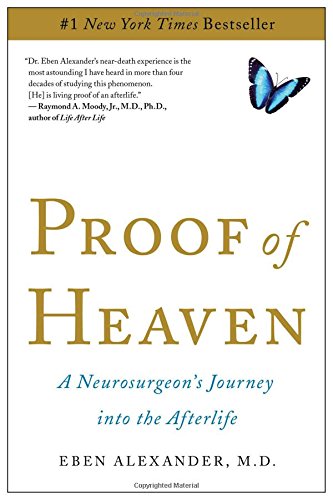
Eben Alexander: A Neurosurgeon's Journey through the Afterlife
Neurosurgeon Eben Alexander talks about his NDE while he had bacterial meningitis. Dr. Alexander has written about his experience in the remarkable book Proof of Heaven (for other similar books check out the Recommended Books page). The incredible rarity and severity of his illness, which wiped out not only his neocortex but brainstem as well, makes Dr. Alexander's experience a very strong case for the independence of consciousness from the physical structure and functioning of the brain. He explains more in this marvelous talk at the Theosophical Society.
Runs 98 minutes.
Tuesday, February 14, 2017
The Supernatural with Richard Smoley
Fabulous talk from Thinking Allowed. Easily one of the best of the series.
Richard Smoley is editor of Quest: The Journal of the Theosophical
Society in America. He is also former editor of Gnosis Magazine. His
books include Hidden Wisdom: The Guide to the Western Inner Traditions,
Inner Christianity: The Guide to the Esoteric Tradition, Forbidden
Faith: The Secret History of Gnosticism, The Essential Nostradamus,
Conscious Love: Insights from Mystical Christianity, The Dice Game of
Shiva: How Consciousness Creates the Universe, The Supernatural:
Writings on an Unknown History, The Deal: A Guide to Radical and
Complete Forgiveness, and How God Became God: What Scholars Are Really
Saying About God and the Bible.
Here he notes that many of the
great spiritual teachers of the twentieth century (Blavatsky, Steiner,
Gurdjieff, Jung) had teachers who remain unknown. He suggests that this
reflects the desire of all these individuals to avoid the limelight of
public scrutiny. While describing most channeled material as “banal”, he
praises Jane Roberts’ Seth material as well as A Course in Miracles. He
reviews the history of Satanism and, paradoxically, associates it with
the objectivist philosophy of Ayn Rand. He also comments on the writings
of Aleister Crowley as well as tantra.
Thursday, October 6, 2016
Evidentiality of Spiritualist Mediumship with Stephen E. Braude
Part two of yesterday's interview. Does mediumship present better evidence for survival or for living agent psi?
Wednesday, October 5, 2016
Philosophy and Post-Mortem Survival with Stephen E. Braude
Stephen Braude discusses philosophical questions related to survival of consciousness. He brings up two interesting points. First, that we're thinking of "super psi" wrong (he prefers to call it "living agent psi"). Most people think of the "super" more like super hero rather than super glue. It is not psi above and beyond anything we have experienced before, it is just really good quality psi (the issue of some remarkably accurate remote viewers was brought up. Check out Joe McMoneagle's Memoirs of a Psychic Spy, now in the convenient book section, for some stories.). Second, survival necessitates super psi, in that deceased persons would need remarkable ESP abilities to communicate with one another and the living, and to know what the living are currently doing, since they lack the five physical senses.
Tuesday, November 11, 2014
Mind over Matter
Another 5th Dimension documentary. This one rates a solid A. There is a nice history of psychical research, including Ted Serios, Nina Kulagina, and Uri Geller. They talk about the work of J. B. Rhine and the Princeton Engineering Anomalies Research program, then move on to the random event generators of the Global Consciousness Project and the work of Dean Radin. Unlike the last program this was not a debunking exercise. Overall this was a much better, more honest work that presented data and asked the viewer to draw one's own conclusions.
Sunday, October 19, 2014
Do It Yourself Dowsing
The following describes a dowsing experiment in Francis Hitching's 1976 book Earth Magic (pages 197-99). Given the opportunity (and the funds) I would love turning this book into a documentary film. Hitching's thorough presentation of the facts is what convinced me that ley lines exist.
That bit at the end is telling about the whole field of parapsychology, and psi in general. It doesn't work like in the movies. You can't just make things happen on command, especially when under pressure. Psi effects manifest when a person is relaxed, which makes studying these phenomena very difficult in a laboratory setting. It also explains why a psychic cannot perform the skep-dick's much touted feat of winning big money in a casino, as the environment of a casino is very distracting (intentionally).
Having never attempted any of these exercises myself I cannot comment on
the in particular. I can say that dowsing is real (Uri Geller made his
millions not on bending spoons but on dowsing for oil) and that I do not
know how it works. Feel free to experiment on your own.
Experiments and Theories
Most dowsers were introduced to the art by watching another dowser at work and then having a try themselves, and simple experiments for newcomers have been devised. Tom Lethbridge, the archaeologist who was able to date Stonehenge correctly, used to suggest holding a short pendulum about three inches long, between thumb and finger, and letting it swing between two coins placed a few inches apart on a table. If the coins are the same metal and value – say, two 10 penny pieces – a natural rhythm will set up in the pendulum, keeping it swinging in a straight line between them. If someone then replaces one of the coins with a different kind of coin – say, a 2 penny piece – the pendulum will swing out of line and probably begin to gyrate. Switch the coins back again, and the pendulum will return to its swing.
Major-General James Scott Elliot, a president of the British Society of Dowsers for some years, thinks it is easier to imagine the pendulum as simply an instrument to find out the answer "yes" or "no" to a question. If you switch on an electric light, hold a pendulum over the cord and ask the question (in your mind): "Is this cord live or not?" the chances are that the pendulum, instead of staying stationary or oscillating, will begin to gyrate clockwise or anticlockwise. If you try the experiment again, this time with the light switched off, and ask the same question, the pendulum will probably gyrate in the opposite direction. The purpose of the exercise is to establish for yourself which way the pendulum gyrates when you want to find the answer "yes" or "no". Afterwards, it is just a question of practice, using common household objects to experiment with. Those suggested often include:
Put four similar coins and one different, under a cloth; seek the different one. (The question you ask must be precise, such as "Is the different coin here?" The pendulum's "yes" or "no" gyration will tell you.)
Take half a dozen or so black playing cards and one red; shuffle and lay face downward on the table: seek the red one.
Get someone to hid a note or object in the shelf of a book case. Work along the book case with a pendulum and locate it.
Take half a dozen cups of water. Ask someone to dissolve a little salt in one. Find the cup with the salt water.
How successful anybody is at these tests, beginners or not, may depend on a number of unmeasurable factors: how good an innate dowser the person is, his or her state of mind, the influence of outsiders – almost anything including, some dowsers would say, the phase of the moon. For the truth is that although expert dowsers would regard the exercises as very basic, none of them would guarantee to get the answers right all the time, and on unresponsive days no better than chance would predict. The very best water dowsers, of whom there are only a handful in the whole of Great Britain, can claim and prove a success rate of at least 90 percent, but they of all people know that dowsing is a tantalizing, personal and irrational gift and that because of its unpredictability, it is extremely difficult to produce enough of the repeated and repeatable experiments demanded for scientific proof.
When we try for these kinds of tests, they so often go wrong," says one such dowser. "Expecting or hoping for a specific result, anxiety that we'll fail, distraction caused by other people on the site, self-consciousness – any of these things can lead to a misleading result."
Monday, April 28, 2014
The First Mystics
The Aboriginal Australians possess the oldest extant culture in the world, dating back at least 40,000 years, and possibly extending 100,000 years into the past or more. Theirs is the oldest unbroken lineage of mystics. In their tradition the Dreamtime is a realm beyond space and time where the past, present, and future coexist simultaneously in a seamless wholeness. Through practice they are able to locate subterranean water, navigate through inhospitable wastelands to find food and shelter, heal the sick, and travel out of the body. Their highest deity is the Rainbow Serpent, a mother goddess who may be related to the Kundalini subtle energy currents in the spine, depicted as a serpent in the Hindu traditions.
Leonard Nimoy hosts a program about the history and mysticism of the first Australians. Runs 45 minutes.
Friday, February 22, 2013
Dean Radin: Changes in Consciousness
Dean Radin talks about how meditation (usually) makes you a better person and trying to study the siddhis (supernormal powers attained through meditation) scientifically.
Tuesday, April 26, 2011
Mind Over Matter
The sixth episode in the 1980 television program "Mind Over Matter" with Kit Pedler. Features interviews with such luminaries as Lawrence LeShan, David Bohm, Brian Josephson, Geoffrey Chew, Charles Tart, Elizabeth Rauscher, and Fritjof Capra.
Mr. Pedler's own views:
"I think a scientist would have to be massively ignorant or a confirmed bigot to deny the evidence that the mind can make connections with space, time, and matter in ways that probably have nothing to do with the ordinary senses, and also he'd find it difficult to deny these strange effects are compatable with current thinking in physics, and may, in the future, become part of an extended science in which they are no longer viewed as paranormal but as normal."
Runs 26 minutes.
Sunday, October 31, 2010
Great Winter of 2010
During my meditation last night I had a precognitive experience that later proved true (ten minutes later to be exact). This got me thinking about a topic I have wanted to post for a while but never got around to. I had two powerful precogs in February 2006, around the time many miracles were happening and I got involved on the path of the mystics. The first one, 24 February, came to me in hypnonogogic sleep. I saw two men attacking an oil refinery in a desert and on that same day there was just such an attack in Saudi Arabia. At the time I posted it on the original Urban Mystic (now taken down). On 22 February I had another experience that hasn't come true yet, but the time it described is rapidly approaching.
(From my notes) I was reading a book when I saw the Morph strongly on its pages. It was like water sheeting down from the top of the book to the bottom. After a few seconds I felt compelled to close my eyes. Scrolling across from right to left were newspaper headlines. I don't remember the first one but the second one read: "CERN, Great Winter of 2010." What follows is a bit sketchy but it was something like "Discovery - Soul."
What I take from this is at least two things.
1. There will be a big story out of CERN in the Winter of 2010 (December), possibly an important discovery.
2. The Winter will be very bad, so bad in fact it will be called the "Great Winter of 2010."
It's also possible that there's some important discovery regarding the existence of the soul or survival of consciousness. I know there's that AWARE study going on; maybe the results are going to be really good.
-Dee|
Friday, January 8, 2010
The Geller Papers: A Final Assessment
Sorry, but I've been a bit off this year and should have posted this days ago.
What can I say about the paranormal abilities of Uri Geller. Before reading this book I was, in fact, thoroughly convinced that some of the abilities manifested by Geller were genuine. I have personally had experience with ESP and metal bending, so I know they're not fake like Geller's critics claim.
At times The Geller Papers is very involved and makes scientific references to areas in which I am unfamiliar and therefore cannot assess the quality of (there were several pages I barely understood, mostly involving statistical analysis and engineering equations). This should obviously appeal to the scientists who no doubt should read this tome to spark interest in psychical research. Many scientists who wrote for this book came away concluding that science should invest more time, effort, and money (especially money, if you ask me, and I suspect if you ask them too) into psychical research involving psychic all stars like Uri Geller and other people dubbed "mini-Gellers." Don't get me wrong, all this research involving "ordinary mortals" (read: college sophmores) and their performance in Ganzfeld, telephone telepathy, micro-PK, etc., is very good and very important, but you learn far less about basketball by watching gradeschoolers play than you do by watching professionals. Some people are more talented at generating psychic effects as others, just as in every field of human endevor, and it makes a lot of sense to study these psychic super stars so we can learn the limits of these abilities and work toward developing practical technologies to utilize psychic phenomena.
From my own experiments I must concur with J. G. Taylor's findings that length of an object corresponds to the ease of bending that object, with longer objects bending more easily, and also that objects with a regular shape bend easier than others (which explains why I can bend a spoon or fork, but not a key of identical thickness). The metal becomes momentarily plastic when it is ready to bend, then deforms at a point where the least effort is required - the metal's weakest point, where a bend or break would first occurr under mechanical stress.
Uri Geller of the 1970s was phenomenal. Uri Geller of today, seems to have watered himself down. On a television appearance he made promoting his new show with Chris Angel he broke a spoon in half and said something to the effect of "some people say this is magic, others say it is psychic, but I want to leave it a mystery." This is a huge departure from thirty years ago when he went around the world claiming to be psychic and damn the opposition. In no way does this detract from past performance. He has bent metal without touching it; several magicians came away from testing him staking thier reputations that Geller was not using any form of trickery known to magic; he has performed in ESP experiments with odds against chance of a trillion to one, but perhaps in recent years Uri has gotten soft and accustom to the fame, and perhaps now he is under more pressure to perform and employs a degree of trickery to reclaim the audience he had decades ago.
Anyway, I highly recommend the book The Geller Papers: Scientific Observations on the Paranormal Powers of Uri Geller, edited by Charles Panati. This book gives a glimps at what psychical research could be if we employ modern tools and techniques to pro-psychics like Uri Geller.
-Dee
Monday, January 4, 2010
The Geller Papers
From the preface to The Geller Papers by Charles Panati.
A growing number of professionals, most notably physical scientists, believe Geller can do these things. They have tested him. They have observed events for which there are no present scientific explanations. Other people, however, among them magicians, see Geller as tremendously talented, lightning-fast in his deceptions, and disarmingly humble over his many failures. They take him to task not because of his talent and theatrics, but because, according to them, he pawns off what he does as "the real thing" – the product of innate paranormal abilities.
The purpose of this book is to present firsthand observations on the talents of Uri Geller and, in doing so, to bring to light and offer for public scrutiny much material that has either never before appeared in print or has surfaced only piecemeal in the popular press. The book is written – through papers, reports, diary entries, and letters – by the scientists and professionals who, in various ways, have scrutinized Geller's talents, and feel that Geller is an individual who deserves further scientific attention.
Since 1972, when he first came to worldwide attention, Geller has been tested in seventeen laboratories in eight different countries. The scientists who have worked with him have watched him deform solid steel rods without touching them, cause part of an exotic crystal to vanish from within a sealed container, alter the memory of a rare metal alloy, erase information from computer tapes, set Geiger counters ticking with only his thoughts, and read the thoughts of others while he is sealed in a room that blocks out all types of radio waves. They are men and women of probity, affiliated with major universities and research centers throughout the world. To prevent fraud the scientists have searched Geller for metals that might be hidden under his fingernails and magnets sewn into his clothing, x-rayed his teeth for evidence of minute electronic devices, bound his hands, blindfolded his eyes, all but stripped him naked. Many of the scientists flatly stake their reputation on the genuineness of Geller's paranormal talents.
But scientists, it is rightfully said, should not be the final arbiters in separating what is psychic from what is magic. And they have not been. Four magicians have worked closely with Geller, applied their own standards to prevent any sleight of hand, and have observed inexplicable events. It is their unanimous opinion that Geller either has paranormal abilities or is acquainted with a form of magic unknown to the entire brotherhood of magicians. Their observations are presented here along with those of the scientists.
Some of the papers in this book were originally meant for publication in reputable scientific journals – and several were submitted to these journals. In each case it was the scientist's hope that publication of his work with Geller would provide a platform for healthful debate and would generate further and more exhaustive experimentation. To date, however, only one paper has appeared in a major scientific journal. It is not the purpose of this preface to examine the procedures of scientific publishing, lest of all for such a highly unorthodox subject as parapsychology. Suffice it to say that all of those papers appear here. No material in them has been altered; no terminology diluted; the reports contain all the original charts, diagrams, pictures, and references that support the research. Geller's failures as well as his successes are discussed.
Some of the papers are heavily detailed, giving all the specifics necessary for a scientific investigation. Others are short sketches, informal notes, or personal observations about the hours and days a particular researcher spent with Geller. Fourteen papers are by physicists, mathematicians, and engineers; three by parapsychologists; four by magicians; one by a professional photographer (who witnessed Geller take a "thought photograph"); and one (a letter that appears in the Introduction) by a dentist who x-rayed Geller's mouth for evidence of hidden devices. These men and women who have tested Geller are convinced that he is a phenomenon worthy of, indeed, demanding, the serious attention of science. As the prestigious British technical journal Nature editorialized, Geller "has clearly created a prima facie case for further investigation."
Who are the professionals who have investigated Geller? What are their credentials? How rigorous or causal were their investigations? Exactly what did they do? And, of course, what did they discover? These questions will be examined, in part, in the Introduction. It should be noted, however, that the Introduction is not meant to be an evaluation of the papers; the papers stand or fall on their own contents. Rather, because of the technical nature of many of the papers and the sheer volume of the material they contain, the Introduction will serve as a general review, for the layman, of the major highlights of the research that has been done with Geller.
There can be no doubt that this research will affect different people in radically different manners. Geller-advocates who read this collection of firsthand observations may fell confirmed in their present opinion of him. His critics will dissect these papers and will find large loopholes and countless faults with the experiments and descriptions they contain, for all of the evidence presented here is certainly not of equal quality. There is nevertheless a considerable amount of new and impressive information – from responsible scientists and professional magicians alike. Their observations taken as a whole are hard to dismiss on the grounds of simple fraud or mass delusion. But whatever one's opinion of the events described in this book, the thoughtful reader should give these reports a careful review before drawing final conclusions on the phenomena associated with Uri Geller.
Sunday, January 3, 2010
Uri Geller and the Magician
The following is from pages 244-46 of The Geller Papers: Scientific Observations on the Paranormal Powers of Uri Geller, edited by Charles Panati. Leo Leslie – a professional magician from Denmark, was asked to prep the audience of a television show, being filmed in Copenhagen in 1974, before Uri Geller was to come on. He told them what tricks he thought Geller would be performing and instructed the staff how to avoid potential fraud. After the show he met with Geller backstage to investigate Geller's claims personally.
I told Geller I was still skeptical despite what I had seen him do on the television show. He asked what he could do to convince me of the genuineness of his paranormal powers. "Well," I said, "you could either bend one of my keys or attempt, if you can, to read my thoughts." Geller responded enthusiastically. "OK," he said. "Make a drawing." He asked me to sit at one end of the sofa with my back to him while he sat at the opposite end with his back to me. I decided to draw a flower. (From the psychologist who stood near Geller and observed his every move, I later learned that Geller started to draw a flower immediately, even before I set my pencil to the paper. He had finished his drawing before I had even begun mine.) "Are you finished?" Geller asked me. I told him that I was not, and that I was still concentrating on the object I had decided to draw.
"Then we must start over again," said Uri, "Because I have already received an image and finished my drawing." He thought this attempt had failed.
Now I drew a flower and took some time putting finishing touches on it. But apparently Geller was receiving nothing. "I don't thik I can do it," he said. "Are you having difficulty concentrating on the object?" he asked. I told him that I was, but still I asked to see whatever sketches he might have made. He turned around and said, "I can only get the image of flowers." He had drawn a crude sketch of another flower.
My suspicions of him had begun to fade. There was no chance that he could have cheated. None of his own people was present in the room. The girl from the studio sat at Geller's end of the room and she could not possibly see my drawing. A photographer roamed around the room, but he said nothing and did nothing but take photographs. Geller could not have used accomplices or relied on secret signs to receive the drawings.
What about the possibility that Geller relied on "sound readings," that is, the reproduction of lines from the sound impressions a pencil makes on paper. Because I am an experienced mentalist, I intentionally had distorted the sounds my pencil made while I drew the flower. In addition, I spoke constantly during the time I was drawing – partly to drown out sound from my pencil and in part actually to confuse Geller. I believe that sound-reading must be ruled out as a possible method by which Geller could have received the drawings.
Could Geller have used a "thumb-writer"? This clever little magician's aid is a tiny metal clip, filled with lead, which is held tightly underneath the thumbnail so that the lead point sticks out slightly. With such a device, an accomplished mentalist can, in a moment, reproduce a simple drawing or a small series of numbers on a card behind his back. When the mentalist pulls the card from behind his back, it looks as if the drawing had been there all along. Being a practicing mentalist, will not go into complete detail here on exactly what else a person experienced with a thumb-writer can ahieve. The only thing that must be stated is that the psychologist at Geller's end of the sofa saw Geller draw both flowers before he said he "gave up." I have to admit that I believe Geller actually read my thoughts.
After his demonstration of telepathy Geller tried psychokinesis. A nickle-plated, enameled key was given to Geller. He asked the journalist who was present to hold the key between two fingers. Geller then rubbed it a couple of times, very lightly, with his forefinger. "I can't do it," he suddenly said. "You have done something to this key. I cannot get in contact with the metal." I immediately suspected that Geller probably used a chemical to soften metal, and that with the coating on the key he felt defeated. I took the key from the journalist and studied it closely. But while I sat looking at the key the enamal suddenly started to crack, and a second later strips of the nickel plating curled up like small banana peels, while the key actually started to bend in my hand. I don't know who was more excited, Geller or the rest of us in the room. I only know that we were all thrilled.
The judgment of all of us who were present for what occurred was one of total endorsement of Geller's paranormal claims: both his ability to bend metal and his talent for receiving telepathic signals. When I am asked about the strength of my own conclusions as to what I witnessed, I can answer only that while Geller was in Copenhagen I did not catch him in any deceptions. Therefore I have to continue to rely on my own judgment and experience as a mentalist; they tell me that Uri Geller is genuine.
Wednesday, December 23, 2009
Uri Geller at SRI
The Stanford Research Institute in California investigates the psychic phenomena associated with Uri Geller in the 1970s (you can tell by the tight pants and poofy hair everyone has). The ESP and remote viewing tests provided the best results (the one test had odds against chance of a trillion to one). Geller also produced a full scale deflection of a magnetometer, altered the reeding of a weight on a scale that was under a glass dome, and dowsed for water, sugar cubes, and ball bearings inside sealed metal tins. The experiment where Geller moved a compass needle was discarded because of bad protocol. Informal demonstrations were conducted of Geller's metal bending ability on a variety of objects with different compositions. The entire series of videos lasts about 30 minutes.
-Dee
Subscribe to:
Posts (Atom)