
People say the Soviet Union and United States lost in Afghanistan and Vietnam, respectively, because of asymmetric warfare. This is not true in either circumstance.
Russia succeeded in its goals in Afghanistan and left the country because they had more pressing concerns elsewhere. The pro-Soviet Afghan government faired very well for several years after the Soviet withdrawl in 1989, the Mujahideen had largely been crushed by 1986 when the Soviets began to leave, allowing the Mujahideen to return from Pakistan, and the Soviets learned valuable lessons from testing new field tactics. 1 million Afghans were killed, 2 million internally displaced, and 5 million fled to Pakistan and Persia, and all at the cost of 15,000 Soviet troops.
The United States never set out to win the war in Vietnam in the traditional sense. US goals involved defending the South from communist invasion. US forces could have invaded Hanoi, destroyed the DVR and left the VC to wither away after having the support kicked from under them, but Washington saw the risk of escalation with China as too great and decided to play small ball and eventually pull out, never having been defeated on the field.
The lessons learned from the Soviet-Afghan War and the Vietnam War can be applied to an hypothetical alien invasion of the earth to understand why asymmetrical warfare against extaterrestrials is doomed to fail.
Runs 12:30
Thursday, September 15, 2011

Tuesday, September 13, 2011
Exploring the Near Death Experience
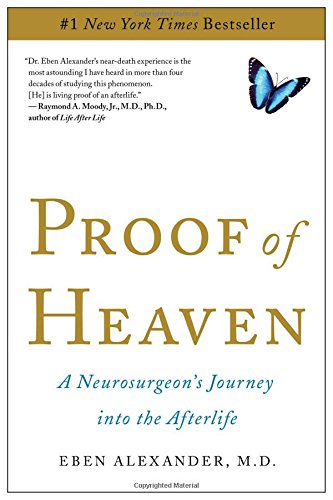
Someone called TheSurvivalIndex has put out a 15 minute video detailing the cultural phenomena associated with the NDE. He says three main groups of people form the bulk of the popular presentation on the NDE:
1. Fundamentalist Christians,
2. New Age Haberdashers, and
3. Fundamaterialist Skep-Dicks.
Group 1 latches on to the pro-Fundamentalist Christian NDEs as proof of their beliefs and ignores or even denigrates NDEs that are favourable to other religions or to no religions at all (like atheists who have NDEs that tell them part of their life's mission is to be an atheist). Group 2 extrapolates from the NDE to believe all sorts of stuff that most likely is untrue (Loch Ness Monster, Fairies, Vampires, etc.*) and often tries to profit large offering spurious services to unknowledgable people. Group 3 likes to come up with bullshit just-so stories to explain away the NDE because they are committed to materialism, even when those stories blatantly ignore real facts, are based on illogic, and other fundamaterialists disagree and tear apart opposing stories. All three groups are able to thrive because the general populous doesn't actually read the primary material - actual NDE accounts and the reports of NDE investigators. Even though all three groups are contradicted by the evidence that doesn't bother them because as long as the vast majority of people are ignorant of that evidence they can still come off looking like authority figures.
*I'm not necessarily saying things like the Loch Ness Monster and fairies are not real - they may be - but I have looked into the topics and can't really find any good evidence for them. Loch Ness almost certainly can't support a single large creature, let alone a breeding population. There were biosonar signals detected in Lake Champlain though, indicating that, while not a "monster" there has to be a freshwater equivalent of a cetacean, something that has never before been seen. Things like fairies, gnomes, and other little people stretch my credulity a might, but they may have something to do with some spiritual force, I don't know and am open to the possibility. Vampires, either corpses reanimated by evil spirits (as the original vampires were), people infected with a virus that compells them to drink blood, or these psychic vampires who are real people who claim to drain people's energy in some way they never quite explain, are probably one of the least likely of these "paranormal" phenomena. If vampires reproduce like zombies there should have been a "vampire" apocalypse by now. The vampires in the Blade movies kept changing to suit the story and the Underworld vampires were never really explained very well, so I don't know how they stayed in hiding all these centuries. Psychic vampirism appears to be a lifestyle choice, like hippies or bikers other such groups, and probably aren't vampires at all, although they get happiness from playing a role. There are people who are difficult or depressed or assaholic and drain your energy that way, but there's nothing "paranormal" about that.
1. Fundamentalist Christians,
2. New Age Haberdashers, and
3. Fundamaterialist Skep-Dicks.
Group 1 latches on to the pro-Fundamentalist Christian NDEs as proof of their beliefs and ignores or even denigrates NDEs that are favourable to other religions or to no religions at all (like atheists who have NDEs that tell them part of their life's mission is to be an atheist). Group 2 extrapolates from the NDE to believe all sorts of stuff that most likely is untrue (Loch Ness Monster, Fairies, Vampires, etc.*) and often tries to profit large offering spurious services to unknowledgable people. Group 3 likes to come up with bullshit just-so stories to explain away the NDE because they are committed to materialism, even when those stories blatantly ignore real facts, are based on illogic, and other fundamaterialists disagree and tear apart opposing stories. All three groups are able to thrive because the general populous doesn't actually read the primary material - actual NDE accounts and the reports of NDE investigators. Even though all three groups are contradicted by the evidence that doesn't bother them because as long as the vast majority of people are ignorant of that evidence they can still come off looking like authority figures.
*I'm not necessarily saying things like the Loch Ness Monster and fairies are not real - they may be - but I have looked into the topics and can't really find any good evidence for them. Loch Ness almost certainly can't support a single large creature, let alone a breeding population. There were biosonar signals detected in Lake Champlain though, indicating that, while not a "monster" there has to be a freshwater equivalent of a cetacean, something that has never before been seen. Things like fairies, gnomes, and other little people stretch my credulity a might, but they may have something to do with some spiritual force, I don't know and am open to the possibility. Vampires, either corpses reanimated by evil spirits (as the original vampires were), people infected with a virus that compells them to drink blood, or these psychic vampires who are real people who claim to drain people's energy in some way they never quite explain, are probably one of the least likely of these "paranormal" phenomena. If vampires reproduce like zombies there should have been a "vampire" apocalypse by now. The vampires in the Blade movies kept changing to suit the story and the Underworld vampires were never really explained very well, so I don't know how they stayed in hiding all these centuries. Psychic vampirism appears to be a lifestyle choice, like hippies or bikers other such groups, and probably aren't vampires at all, although they get happiness from playing a role. There are people who are difficult or depressed or assaholic and drain your energy that way, but there's nothing "paranormal" about that.
Sunday, September 11, 2011
9/11: Ten Years Later
9/11 remains one of the four most significant days in my life (and the only one that didn't happen in a short period between 2005-6). I remember exactly where I was ten years ago. I remember the innocence of the age and the girl at school I paid more attention to than the lessons. I remember the palpable dread that hung over everything. I remember the conversations, the denial, the grim disbelief. I remember having to learn to draw a new New York skyline. I remember how everyone was drawn into patriotism and brotherhood then quickly sunk back into the tick-tock of everyday life. I remember all the freedom I've had to give up. I remember the conversations with "truthers" and all their dreck, listening to people balancing between green and red reproach Capital Bush with the obsession of an alcoholic, ruining even what should have been their own dining experiences (I did attend university once). I remember the scenes of people jumping from buildings, now forever burned into my memory. I remember anger, confusion, sadness, government ineptitude at finding a single man, who was eventually caught and killed and dumped at sea with no proof given to the people who waited a decade for that day and to the country's enemies to serve as a warning.
Damn.
What a decade.
Damn.
What a decade.
Saturday, September 10, 2011
Swami Kriyananda on the Economic Collapse
Recall earlier how I was pleasantly surprised to discover that Paramhansa Yogananda's disciple Kriyananda's world brotherhood colonies, dubbed "Ananda Villiages", were neither hippie nor communist. Everyone must be fiscially responsible and contribute financially to the community. Now Swami Kriyananda gives an hour talk on the global economic collapse. In summary:
*Using creative energy to help others is like a muscle - it gets stronger the more you use it - and not like a fixed quantity like gold that diminshes the more you use it
*A lot of people care only for money, not for people, and they often play the stock market
*Government is too damn big (though he doesn't say "damn")
*Welfare helps government orders of magnitude more than it helps the needy
*...And it's FDR's fault!
*Deficite spending doesn't work and is killing the world economy
*"Legalise pot and maybe hard drugs so criminals can't make profits off of it and addicts can be given help, not rectal exams
*(Interestingly) Rock music (especially metal) is the vibration of negative dimensions and can cause natural disasters!
*Kindness and generosity can shelter you from economic hardship, though not always immediately, and, consequently, if you apply for enough jobs you'll eventually get one
*The Dollar will collapse, leading to world-wide hyperinflation
*The Euro sucks (too)
*Gold coins are very good to survive the economic apocalypse, but good farm land is the best investment
*Starting small communities in the country with similar minded individuals is the key to saving humanity, because cities will explode with apocalyptic crime
*Using creative energy to help others is like a muscle - it gets stronger the more you use it - and not like a fixed quantity like gold that diminshes the more you use it
*A lot of people care only for money, not for people, and they often play the stock market
*Government is too damn big (though he doesn't say "damn")
*Welfare helps government orders of magnitude more than it helps the needy
*...And it's FDR's fault!
*Deficite spending doesn't work and is killing the world economy
*"Legalise pot and maybe hard drugs so criminals can't make profits off of it and addicts can be given help, not rectal exams
*(Interestingly) Rock music (especially metal) is the vibration of negative dimensions and can cause natural disasters!
*Kindness and generosity can shelter you from economic hardship, though not always immediately, and, consequently, if you apply for enough jobs you'll eventually get one
*The Dollar will collapse, leading to world-wide hyperinflation
*The Euro sucks (too)
*Gold coins are very good to survive the economic apocalypse, but good farm land is the best investment
*Starting small communities in the country with similar minded individuals is the key to saving humanity, because cities will explode with apocalyptic crime
Monday, September 5, 2011
The Son I Should Have Had
The following is intended to become an episode of The Urban Mystic Show (episode 302):
Twenty-six minutes into the movie Gladiator, the emperor Marcus Aurelius asks his general, Maximus, to become emperor following his death; to fulfill the one thing that he was unable to do. Marcus Aurelius says: "I will empower you to one end alone: to give power back to the people of Rome, and end the corruption that has crippled it." This request is problematic for several reasons, least of all having to do with the structure of the Roman senate itself.
First of all, to get the pesky problem with the senate out of the way as quick as possible, it should be noted that the senate of Rome did not function the way it is portrayed by the filmmakers. Senators were never elected by the people at all, they were appointed, and one had to be fairly wealthy in order to even be considered eligible for appointment. The senators did not represent the people of Rome at all, but a very minute group of elites at he very pinnacle of Roman society. Aside from having to endure the foul smell and terrible racket of chariot wheels on cobblestone streets of the city itself, senators really had nothing in common with the people. Returning the empire of Rome to a republic would not end the corruption – senators were always corrupt and looked out for their own potential benefit from political dealings – and it would certainly not give power back to the people because power never rested in the hands of the people to begin with.
More importantly, the very idea of handing power over to the people of Rome would be a profoundly stupid idea with extraordinarily disastrous results. One would expect Marcus Aurelius, the great Stoic philosopher whose Meditations are still quoted today, would have realized this. Of course, one cannot fault the emperor for this error; Ridley Scott appears to be crafting a vision of "Rome" that will appeal to the great idea of American of a government of the people, by the people, for the people, instead of creating something accurate that would be completely alien to a modern audience.
Just who is to be included under the banner of "the people of Rome?" Are the people of Mauritania and Moesia to be given equal say in the governing of the empire as the Latins themselves? Or is it just the people inhabiting the city itself that will rule, as a great many-headed tyrant over the vast conquered masses of the empire? At the rate it took to travel the vast spans of the empire anything more than the confines of the city would be too great a territory to permit any governance within a reasonable time frame. Should the Parthians invade it would be suicide to wait for the inhabitants of Britannia to decide whether to go to war or seek diplomatic means of crisis resolution.
The average Roman was preoccupied with more important matters, like securing food, and could not possibly have been educated in the finer points of governance. The average Roman was cold, hungry, illiterate, fearful. They desperately held on to their customs and traditions, their rituals and routines just to carve out mere subsistence. For as bad as the emperors were, as corrupt the senators, it was the people of Rome who were perhaps the worst possible choice as for who should rule. While Marcus Aurelius' vision makes for a wonderful story, and a wonderful picture of 21st century America, for second century Rome the idea would be absolutely nonsensical, and would be the farthest thing from Marcus Aurelius' mind.
Twenty-six minutes into the movie Gladiator, the emperor Marcus Aurelius asks his general, Maximus, to become emperor following his death; to fulfill the one thing that he was unable to do. Marcus Aurelius says: "I will empower you to one end alone: to give power back to the people of Rome, and end the corruption that has crippled it." This request is problematic for several reasons, least of all having to do with the structure of the Roman senate itself.
First of all, to get the pesky problem with the senate out of the way as quick as possible, it should be noted that the senate of Rome did not function the way it is portrayed by the filmmakers. Senators were never elected by the people at all, they were appointed, and one had to be fairly wealthy in order to even be considered eligible for appointment. The senators did not represent the people of Rome at all, but a very minute group of elites at he very pinnacle of Roman society. Aside from having to endure the foul smell and terrible racket of chariot wheels on cobblestone streets of the city itself, senators really had nothing in common with the people. Returning the empire of Rome to a republic would not end the corruption – senators were always corrupt and looked out for their own potential benefit from political dealings – and it would certainly not give power back to the people because power never rested in the hands of the people to begin with.
More importantly, the very idea of handing power over to the people of Rome would be a profoundly stupid idea with extraordinarily disastrous results. One would expect Marcus Aurelius, the great Stoic philosopher whose Meditations are still quoted today, would have realized this. Of course, one cannot fault the emperor for this error; Ridley Scott appears to be crafting a vision of "Rome" that will appeal to the great idea of American of a government of the people, by the people, for the people, instead of creating something accurate that would be completely alien to a modern audience.
Just who is to be included under the banner of "the people of Rome?" Are the people of Mauritania and Moesia to be given equal say in the governing of the empire as the Latins themselves? Or is it just the people inhabiting the city itself that will rule, as a great many-headed tyrant over the vast conquered masses of the empire? At the rate it took to travel the vast spans of the empire anything more than the confines of the city would be too great a territory to permit any governance within a reasonable time frame. Should the Parthians invade it would be suicide to wait for the inhabitants of Britannia to decide whether to go to war or seek diplomatic means of crisis resolution.
The average Roman was preoccupied with more important matters, like securing food, and could not possibly have been educated in the finer points of governance. The average Roman was cold, hungry, illiterate, fearful. They desperately held on to their customs and traditions, their rituals and routines just to carve out mere subsistence. For as bad as the emperors were, as corrupt the senators, it was the people of Rome who were perhaps the worst possible choice as for who should rule. While Marcus Aurelius' vision makes for a wonderful story, and a wonderful picture of 21st century America, for second century Rome the idea would be absolutely nonsensical, and would be the farthest thing from Marcus Aurelius' mind.
Friday, September 2, 2011
The World Gone Mad: REDUX
Remember the map from The World Gone Mad that displayed countries around the world where various social, economic, political, and military turmoil was going on? Well, someone has now made an interactive version of the map here with story and explanation here. The world gone mad map and the world opinion on intervention in Libya map are both interactive and updated since the one posted on The Urban Mystic back in February.
Milton Friedman on Donahue - 1979
Economist Milton Friedman takes down Phil Donahue's appeal to emotion by pointing out that greed is not capitalism's fault but is a basic human condition plaguing all political and economic systems. 9:28
Subscribe to:
Posts (Atom)