
Barney Frank (the guy whose speech no one can understand) is on MSNBC on the Rachel Maddow Show, being watched by all of ten people, when he lifts his cheek and lets out an atomic fart, without excusing himself, without even pausing. Thanks to the video being posted on the Internet something produced by MSNBC is getting more viewers than I have fingers and toes. This made my day. This is easily the funniest thing I have seen in months and probably one of the funniest things ever. In this world gone mad it's nice to have something good like this to report about.
Thursday, August 18, 2011

Wednesday, August 17, 2011
Surgeons and the Soul
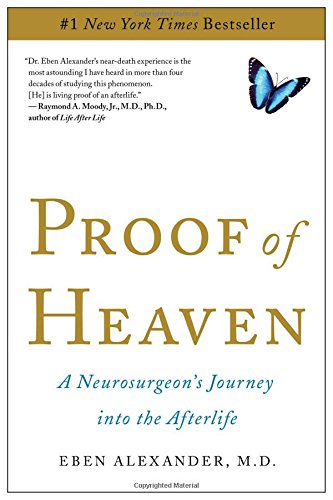
Neurosurgeon Eben Alexander talks about his NDE while he had bacterial meningitis (2 videos, 9 minutes total).
Cardiac surgeon Lloyd Rudy tells two stories about his patients NDEs and what they brought back (12 1/2 minutes). One man comes back after twenty minutes with no heart beat with veridical perceptions of the operation.
Cardiac surgeon Lloyd Rudy tells two stories about his patients NDEs and what they brought back (12 1/2 minutes). One man comes back after twenty minutes with no heart beat with veridical perceptions of the operation.
Tuesday, August 16, 2011
The One Beyond Duality
Prior to being. Above essence. Here is a thirty minute lecture with Prof. Philip Cary on Plotinus, Neoplatonism, and the unity of all things. First is a diagram I made while listening of Plotinus' cosmology:
 In the center is the One, beyond distinctions, the source of all existence, shining like the sun. Around it is the Divine Mind (Nous), which is suffused with the light of the One. It is perfect in its intelligence and is unmoved and unchanging. Beyond this is the Soul. When turned in, to take part in the perfection of the Divine Mind, it is the one World Soul. When turned out it takes on the multiplicity of every individual soul. Beyond this is the world of matter and seperation, suffering, desire, and death. The soul looks out and falsly identifies with images in the physical world. Everything is created as an outflowing of the One, its superabundance, although it is not actually doing anything. The rays of the One become more and more diffuse the farther out one goes, and the more imperfect and fragmented things become.
Here is another 30 minute lecture, also by Prof. Cary, that gets into Plotinus' spirituality. I think it is actually better than the first.
 In the center is the One, beyond distinctions, the source of all existence, shining like the sun. Around it is the Divine Mind (Nous), which is suffused with the light of the One. It is perfect in its intelligence and is unmoved and unchanging. Beyond this is the Soul. When turned in, to take part in the perfection of the Divine Mind, it is the one World Soul. When turned out it takes on the multiplicity of every individual soul. Beyond this is the world of matter and seperation, suffering, desire, and death. The soul looks out and falsly identifies with images in the physical world. Everything is created as an outflowing of the One, its superabundance, although it is not actually doing anything. The rays of the One become more and more diffuse the farther out one goes, and the more imperfect and fragmented things become.
Here is another 30 minute lecture, also by Prof. Cary, that gets into Plotinus' spirituality. I think it is actually better than the first.
Monday, August 15, 2011
Sunday, August 14, 2011
I Make It Rain
Remy explains why the debt ceiling was raised.
Talking dogs explain quantitative easing.
Talking dogs explain quantitative easing.
Saturday, August 13, 2011
A Short Quiz on Intelligent Design
VJ Torley at UD posts a ten question quiz for proponents and opponents of ID. Here are the questions and my answers.
1. On a scale of 0 (diehard disbeliever) to 10 (firm believer), how would you rate your level of belief in Intelligent Design? (Minimal Definition of Intelligent Design: The idea that certain features of the universe and of living things are best explained by an intelligent cause, and not by an undirected process.)
Update: When I say “certain features”, I mean, “certain generic features of the universe-as-a-whole (e.g. constants of Nature) and of living things in general (e.g. the specified complexity of DNA”. When I say “an undirected process” I mean a process lacking long-range foresight.
10
2. What do you regard as the best argument for Intelligent Design?
I really like cosmological fine-tuning, because I like very large numbers. I also like that there is no mathematical model for “natural selection” (it is such a nebulous concept, existing in whatever form is most convenient at the time, that I doubt it can have a mathematical model or that it even meets the criteria of science). Mutations not producing new genetic information (where did information come from in the first place then?) and life not being able to self-assemble (abiogenesis) are also good ones.
3. What do you regard as the best argument against Intelligent Design?
Suboptimality (the designer either does not no how to, cannot, or will not design an optimal world for what reason(s)?). Actually, this is not an argument against ID, just certain assumptions about the nature of the designer. That said I can’t think of any counter arguments I think are good.
4. I’d like you to think about the arguments for Intelligent Design. Obviously they’re not perfect. Exactly where do you think these arguments need the most work, to make them more effective?
Perform A LOT MORE experiments, which necessarily entails mainstream science opening up to the possibility of ID. I would also like to see more atheist/agnostic ID proponents, or even just more non-Christian ID proponents (or at least Christians who don’t quote the Bible as scientific evidence).
5. Now I’d like you to think about the arguments against Intelligent Design. Obviously they could be improved. Exactly where do you think these arguments need the most work, to make them more effective?
Stop with the snarky cheap shots like talking about ID versus “real” science or claming that it is religion or the “overwhelming evidence” for RM+NS that is genuine evidence but nowhere near “overwhelming”, nor is it “fact” or demonstrated as well as gravity. Either rebut ID on purely scientific grounds or admit you don’t like it for religious reasons and that’s why you attack ID proponents.
Demonstrating that life can self-assemble, or at least that all the proteins needed for life can self-assemble. Demonstrating that random processes can produce completely new information, not just delete or rearrange pre-existing information in a genome.
6. (a) If you’re an ID advocate or supporter, what do you think is the least bad of the various alternatives that have been proposed to Intelligent Design, as explanations for the specified complexity found in living things and in the laws of the cosmos? (e.g. The multiverse [restricted or unrestricted?]; Platonism; the laws of the cosmos hold necessarily, and they necessarily favor life; pure chance; time is an illusion, so CSI doesn’t increase over time.)
(b) If you’re an ID opponent or skeptic, can you name some explanations for life and the cosmos that you would regard as even more irrational than Intelligent Design? (e.g. Everything popped into existence out of absolutely nothing; the future created the past; every logically possible world exists out there somewhere; I am the only being in the cosmos and the external world is an illusion requiring no explanation; only minds are real, so the physical universe is an illusion requiring no explanation.)
(a) I don’t think there are any acceptable alternatives that are purely materialistic. I suppose if I had to choose I would say that the alternative I see as best is that the future act as a teleological attractor to the past, guiding the evolution of forms in the past to a predetermined future (I’ve read this somewhere).
1. On a scale of 0 (diehard disbeliever) to 10 (firm believer), how would you rate your level of belief in Intelligent Design? (Minimal Definition of Intelligent Design: The idea that certain features of the universe and of living things are best explained by an intelligent cause, and not by an undirected process.)
Update: When I say “certain features”, I mean, “certain generic features of the universe-as-a-whole (e.g. constants of Nature) and of living things in general (e.g. the specified complexity of DNA”. When I say “an undirected process” I mean a process lacking long-range foresight.
10
2. What do you regard as the best argument for Intelligent Design?
I really like cosmological fine-tuning, because I like very large numbers. I also like that there is no mathematical model for “natural selection” (it is such a nebulous concept, existing in whatever form is most convenient at the time, that I doubt it can have a mathematical model or that it even meets the criteria of science). Mutations not producing new genetic information (where did information come from in the first place then?) and life not being able to self-assemble (abiogenesis) are also good ones.
3. What do you regard as the best argument against Intelligent Design?
Suboptimality (the designer either does not no how to, cannot, or will not design an optimal world for what reason(s)?). Actually, this is not an argument against ID, just certain assumptions about the nature of the designer. That said I can’t think of any counter arguments I think are good.
4. I’d like you to think about the arguments for Intelligent Design. Obviously they’re not perfect. Exactly where do you think these arguments need the most work, to make them more effective?
Perform A LOT MORE experiments, which necessarily entails mainstream science opening up to the possibility of ID. I would also like to see more atheist/agnostic ID proponents, or even just more non-Christian ID proponents (or at least Christians who don’t quote the Bible as scientific evidence).
5. Now I’d like you to think about the arguments against Intelligent Design. Obviously they could be improved. Exactly where do you think these arguments need the most work, to make them more effective?
Stop with the snarky cheap shots like talking about ID versus “real” science or claming that it is religion or the “overwhelming evidence” for RM+NS that is genuine evidence but nowhere near “overwhelming”, nor is it “fact” or demonstrated as well as gravity. Either rebut ID on purely scientific grounds or admit you don’t like it for religious reasons and that’s why you attack ID proponents.
Demonstrating that life can self-assemble, or at least that all the proteins needed for life can self-assemble. Demonstrating that random processes can produce completely new information, not just delete or rearrange pre-existing information in a genome.
6. (a) If you’re an ID advocate or supporter, what do you think is the least bad of the various alternatives that have been proposed to Intelligent Design, as explanations for the specified complexity found in living things and in the laws of the cosmos? (e.g. The multiverse [restricted or unrestricted?]; Platonism; the laws of the cosmos hold necessarily, and they necessarily favor life; pure chance; time is an illusion, so CSI doesn’t increase over time.)
(b) If you’re an ID opponent or skeptic, can you name some explanations for life and the cosmos that you would regard as even more irrational than Intelligent Design? (e.g. Everything popped into existence out of absolutely nothing; the future created the past; every logically possible world exists out there somewhere; I am the only being in the cosmos and the external world is an illusion requiring no explanation; only minds are real, so the physical universe is an illusion requiring no explanation.)
(a) I don’t think there are any acceptable alternatives that are purely materialistic. I suppose if I had to choose I would say that the alternative I see as best is that the future act as a teleological attractor to the past, guiding the evolution of forms in the past to a predetermined future (I’ve read this somewhere).
Wednesday, August 10, 2011
The Kamchatka Expeditions: Russia's Lewis and Clark

 The following was written in April 2008, so it is not as good as it could be today. I remember one day I was half asleep while watching a program on the television about a group of men who got lost in the White Sea for several months and most or all of them died. This inspired me to investigate this situation, but instead of learning anything about them I discovered
Danish explorer Vitus Bering (for whom the Bering Strait is named) and thus began my fascination with Russian history. The unfortunate fact is that there are only about two books in English about Bering. The rest are in Russian and the only copies I could find were in the Moscow University library, neither of which is very helpful. Here is what I could glean from those two sources. This is probably the most detailed English language page on Vitus Bering on the Internet.
The image to the left is Vitus Bering, who for years had been given the wrong portrait and was not correctly identified until his body was dug up centuries later. The image on the right is a French map (interestingly enough) of the Chukotka region, where Bering launched several expeditions. The name "Chukotski Nos" means "Holy Cape," with "Holy" meaning "impossible to circumnavigate." The caption (too small to read in the reduced image) reads "It is not known whether this mountain chain terminates somewhere or joins another continent."
The popular view of the First Kamchatka Expedition, launched in 1725, was that Emperor Peter the Great of Russia ordered Vitus Jonassen Bering to discover whether or not Asia and America were joined by a land route or were separate land masses and to explore the possibility of a sea route between the Arctic and Pacific oceans. The importance of a Northeast passage to the Far East for purposes of trade seems undeniable in light of the undeveloped status of most of the Eastern regions of Siberia and the difficulty of crossing the terrain by land; answering the question of the land connection between Asia and America was a necessary corollary to the more important question of the Northeast passage. Over three centuries dozens of scholars have held this view including Gerhard F. Müller, one of the first to write on Bering's voyages, Johann G. Gmelin, William H. Dall, Frank A. Golder, and Stuart R. Tompkins.
Gerhard Müller taught history and geography at the Russian Imperial Academy of Sciences along with working in the library. He was one of the main translators of documents and correspondences for Vitus Bering during his explorations of Siberia. Müller first wrote about the expedition in 1730 and was possibly the first person to advance the view that the purpose of the voyage was to search for the Northeast passage. According to Carol Urness it is no surprise that Müller advanced such a view as it suited his interests quite well. Had the first written account of the voyages been written by someone not interested in geography the problem of the connection between Asia and America would not have played so prominent a role in such a person's writing. None-the-less, for whatever reason Müller chose to emphasize the geographical problem, this would become the prevailing view of the purpose behind the voyages and would not be challenged until after the Second World War.
Since then new views arose questioning the traditional view. This reexamination was in part due to evidence that proof of the separation of the continents had already been established much earlier, eliminating the need for such an expedition as proposed by the traditional view of the Kamchatka Expeditions. In 1648 a group of merchant vessels in search of walrus ivory became lost at sea and sailed around the Chukotsk Peninsula, which was believed to have continued on to join with North America. This accidental voyage proved that the two continents were separated. In light of this discovery why then did Peter the Great commission the two Kamchatka Expeditions?
Raymond Fisher proposes that there were four possibilities as to why these expeditions were commissioned: 1. Peter wanted better proof of the separation of the continents from more credible explorers; 2. The significance and details of the discovery had not reached Moscow and Saint Petersburg by the time the explorations were commissioned; 3. Knowledge of the accidental voyage had been forgotten over the 77 years since it had taken place; 4. Peter had much grander goals in mind, namely designs on colonies in North America, than solving a seemingly unimportant geographical question. [1]
There is no evidence that Peter or his officials knew of the previous voyage 77 years earlier. "Knowledge of the voyage in Moscow and European Russia seems to have disappeared by the end of the Seventeenth Century." [2] This discredits the first possibility. Fisher feels that while the second and third possible reasons for the voyage are still viable, in the light of evidence for the fourth one being true the other two are reduced to being irrelevant.
According to Boris P. Polevoi, the real objective of the expeditions was to create accurate maps of North America so Russia could exert dominance over the continent and further the Russian Empire. However, Peter feared a voyage explicitly directed toward America would provoke European powers in America to forestall Russian expansion and so he "circulated the story... that Bering was being sent into the North Pacific for the purely scientific purpose of ascertaining whether an Arctic-Pacific passage between Asia and America exists." [3] The Western European powers had been interested in the existence of such a passage for centuries by this point and would see any investigation of the passage to be to their benefit, as oppose to the establishment of future sites for Russian colonization which would be met with hostility.
This fictitious story being propagated to distract the Western European powers reached Bering before Peter's actual instructions did, because he did not send them until the last minute to prevent them from falling into the wrong hands. When Bering read the instructions he mistakenly combined them with the story he had heard about the phony reason for the expedition and combined them into his own interpretation of the instructions. It is clear from this why Bering turned his ships back and ended the first expedition after sailing around the Chukotsk Peninsula believing that he had completed his assigned task.
Fisher disagrees. He thinks that the original goal Peter had in mind was to find out where Asia and America are joined by land, and, from there, to explore farther to locate the nearest European settlement in America. Bering did not reach any European cities but instead turned back after finding that the Chukotsk Peninsula does not extend to America. Had his goal been to discover a passage between the Arctic and Pacific oceans, Bering would not have turned back but instead would have kept sailing onward into the Arctic ocean. Fisher bases his argument on the original instructions given to Bering by Peter the Great. Peter's original instructions for Bering read (paraphrasing from multiple translation):
1. At Kamchatka or elsewhere you are to build one or two boats.
2. You are to sail along the coast of the land which goes north with these boats. It is expected that since the end of this land is not known that it appears to be part of America.
3. You are to search for where the land is joined with America, and go from there to any European possessions, or if you find a European ship, find out from it the name of the coast, and go ashore and obtain any information you can; write everything down and bring it back so a map can be constructed from the information.
It is clear from the original instructions that they are not supportive of the traditional interpretation of the voyage. The instructions say nothing of a Northeast passage or determining the relationship between Asia and North America. In fact, Peter assumes the two continents are joined as one and he does not ask Bering to further investigate into his assumption.
Though Bering discovered no land connection between the continents it is likely he believed such a land bridge existed farther West of where he had explored.
Yet another proposed reason behind the first expedition, argued by Carol Urness, involves settlement of a problem relating to the Russian maps at the time. The map made by Johann Homann in 1723 was the chief map of Siberia used at the time. Urness argues against Polevoi and Fisher's interpretations of the reasons behind the expedition. She argues that Bering was to discover whether or not a land labeled "incognita" on the Homann map (to the Northeast of the Eastern end of Siberia) was part of America. Having found that the land in question was part of Siberia and not America Bering figured he had completed his objective for the mission and decided to turn back, as he was only to go on to America if there was such a land connection as the one in question.
There is ample documentation regarding the destination and purpose of the Second Kamchatka Expedition, unlike the first. Bering proposed the second expedition to develop the land and infrastructure of Eastern Siberia in order to pave the way for large scale exploration necessary to establish trade between Japan and the native populations of North America and to exert better control over Russia's borders in the East. Fisher asserts that Bering was not interested in solving the problem of whether Asia and America are connected by land or not. The overland routes across Siberia were difficult to traverse and transporting goods and materials by land took too long. Finding the Northeast sea route was important for trade, not to quell scientific curiosity.
The Russian government added further objectives to the second expedition. Included in these further reasons were voyages from Kamchatka to America and Japan, looking for undiscovered islands between Russia and America and to bring them under Russian control, to explore the resources of these new lands so that they can be exploited later on, and to write a natural history of all the lands discovered. They also planned to extend the Russian Empire to all the native populations that would be discovered, the area that would become Alaska. [4]
References
[1] Page 5. Raymond H. Fisher, Bering's Voyages: Whither and Why. Seattle and London, University of Washington Press,1977.
[2] Page 5. Fisher.
[3] Page 73. Fisher.
[4] Page 34. Gerhard Friedrich Müller, Translated with Commentary by Carol Urness, Bering's Voyages: The Reports From Russia. Fairbanks, The University of Alaska Press, 1986.
Subscribe to:
Posts (Atom)