
And two that don't really do it for me.
Note: my commentary will be in [square brackets]. The rest of the text is directly from the Yahoo News story.
1. Abolish lifetime tenure for federal judges by amending Article III, Section I of the Constitution.
[Couldn't agree more. Kings serve for life, and we fought two wars to rid ourselves of the yoke of a king (the Revolution and War of 1812, when Britain fought back). By giving the judges lifetime tenure it divorces them from reality and from the people, the concent of whom is from whence they derive their power.]
2. Congress should have the power to override Supreme Court decisions with a two-thirds vote.
[Maybe not a two-thirds vote, maybe something stronger, but nothing in government should be final. Even the Constitution can be amended, so should the Supreme Court, lest they become absolutist.]
3. Scrap the federal income tax by repealing the Sixteenth Amendment.
[Last year this was one of two BIG things I said needed to be done to fix the country. If not possible to achieve a repeal I did propose an alternate income tax scheme.]
4. End the direct election of senators by repealing the Seventeenth Amendment.
Overturning this amendment would restore the original language of the Constitution, which gave state legislators the power to appoint the members of the Senate.
Ratified during the Progressive Era in 1913 , the same year as the Sixteenth Amendment, the Seventeenth Amendment gives citizens the ability to elect senators on their own. Perry writes that supporters of the amendment at the time were "mistakenly" propelled by "a fit of populist rage."
"The American people mistakenly empowered the federal government during a fit of populist rage in the early twentieth century by giving it an unlimited source of income (the Sixteenth Amendment) and by changing the way senators are elected (the Seventeenth Amendment)," he writes.
[This is even more important than getting rid of the tax. When the Constitution was written it was decided that the two houses of Congress would be populated in two different ways: Representatives are chosen by the people and Senators are chosen by the state legislatures. This was one of the most brilliant decisions in all of world history. The whole point of the Constitution was to maximise the power of the States, but reign them in just enough so the Union could stick together, which wasn't possible under the Articles of Confederation. Representatives were elected by popular vote and each state got a number of Representatives proportional to total population, this way we the people get our say. Senators were chosen by the state legislatures and each state got two so that the power held by big states and small states would be equal where it really counted. Having Senators chosen by the state legislatures was a guarantee to states' rights. The Senators represented the will of the states whereas the Representatives represented the will of the people. This was a brilliant balancing act to protect everyone from each other. Then along came the populists who wanted to turn the United States into a mobocracy and changed the Constitution to say the Senators are elected by the people too, taking power away from the states and giving it to whoever had the deepest pockets and the Federal government, as the two are one and the same.]
5. Require the federal government to balance its budget every year.
Of all his proposed ideas, Perry calls this one "the most important," and of all the plans, a balanced budget amendment likely has the best chance of passage.
"The most important thing we could do is amend the Constitution--now--to restrict federal spending," Perry writes in his book. "There are generally thought to be two options: the traditional 'balanced budget amendment' or a straightforward 'spending limit amendment,' either of which would be a significant improvement. I prefer the latter . . . . Let's use the people's document--the Constitution--to put an actual spending limit in place to control the beast in Washington."
A campaign to pass a balanced budget amendment through Congress fell short by just one vote in the Senate in the 1990s.
Last year, House Republicans proposed a spending-limit amendment that would limit federal spending to 20 percent of the economy. According to the amendment's language, the restriction could be overridden by a two-thirds vote in both Houses of Congress or by a declaration of war.
[I want to scream in orgasmic delight at the thought of a balanced budget. I even like the provision that special circumstances, like war, can call for extra spending, because Hitler had to die whatever the cost in treasure.]
And the two I'm not too thrilled about:
6. The federal Constitution should define marriage as between one man and one woman in all 50 states.
[I don't think government has the power to make this decision. The government, including state governments, should stay as far away from marriage as possible.]
7. Abortion should be made illegal throughout the country.
[I lean toward states rights on this one, but not entirely. There are circumstances where I think abortion is justified (e.g. certain congenital abnormalities that are always fatal, often with the baby surviving only a few hours or days), or even required (situations that lead to maternal death). Is Perry saying he would rather have the mother die to preserve "the soul of this country and to the traditional values [of] our founding fathers"?]
Friday, August 19, 2011

Thursday, August 18, 2011
Barney Frank
Barney Frank (the guy whose speech no one can understand) is on MSNBC on the Rachel Maddow Show, being watched by all of ten people, when he lifts his cheek and lets out an atomic fart, without excusing himself, without even pausing. Thanks to the video being posted on the Internet something produced by MSNBC is getting more viewers than I have fingers and toes. This made my day. This is easily the funniest thing I have seen in months and probably one of the funniest things ever. In this world gone mad it's nice to have something good like this to report about.
Wednesday, August 17, 2011
Surgeons and the Soul
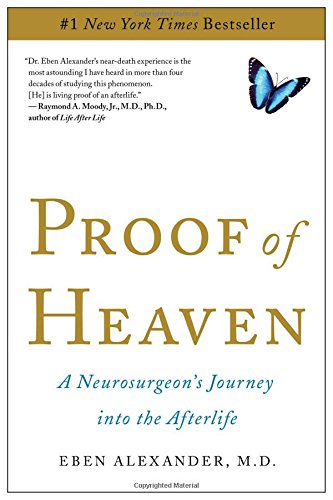
Neurosurgeon Eben Alexander talks about his NDE while he had bacterial meningitis (2 videos, 9 minutes total).
Cardiac surgeon Lloyd Rudy tells two stories about his patients NDEs and what they brought back (12 1/2 minutes). One man comes back after twenty minutes with no heart beat with veridical perceptions of the operation.
Cardiac surgeon Lloyd Rudy tells two stories about his patients NDEs and what they brought back (12 1/2 minutes). One man comes back after twenty minutes with no heart beat with veridical perceptions of the operation.
Tuesday, August 16, 2011
The One Beyond Duality
Prior to being. Above essence. Here is a thirty minute lecture with Prof. Philip Cary on Plotinus, Neoplatonism, and the unity of all things. First is a diagram I made while listening of Plotinus' cosmology:
 In the center is the One, beyond distinctions, the source of all existence, shining like the sun. Around it is the Divine Mind (Nous), which is suffused with the light of the One. It is perfect in its intelligence and is unmoved and unchanging. Beyond this is the Soul. When turned in, to take part in the perfection of the Divine Mind, it is the one World Soul. When turned out it takes on the multiplicity of every individual soul. Beyond this is the world of matter and seperation, suffering, desire, and death. The soul looks out and falsly identifies with images in the physical world. Everything is created as an outflowing of the One, its superabundance, although it is not actually doing anything. The rays of the One become more and more diffuse the farther out one goes, and the more imperfect and fragmented things become.
Here is another 30 minute lecture, also by Prof. Cary, that gets into Plotinus' spirituality. I think it is actually better than the first.
 In the center is the One, beyond distinctions, the source of all existence, shining like the sun. Around it is the Divine Mind (Nous), which is suffused with the light of the One. It is perfect in its intelligence and is unmoved and unchanging. Beyond this is the Soul. When turned in, to take part in the perfection of the Divine Mind, it is the one World Soul. When turned out it takes on the multiplicity of every individual soul. Beyond this is the world of matter and seperation, suffering, desire, and death. The soul looks out and falsly identifies with images in the physical world. Everything is created as an outflowing of the One, its superabundance, although it is not actually doing anything. The rays of the One become more and more diffuse the farther out one goes, and the more imperfect and fragmented things become.
Here is another 30 minute lecture, also by Prof. Cary, that gets into Plotinus' spirituality. I think it is actually better than the first.
Monday, August 15, 2011
Sunday, August 14, 2011
I Make It Rain
Remy explains why the debt ceiling was raised.
Talking dogs explain quantitative easing.
Talking dogs explain quantitative easing.
Saturday, August 13, 2011
A Short Quiz on Intelligent Design
VJ Torley at UD posts a ten question quiz for proponents and opponents of ID. Here are the questions and my answers.
1. On a scale of 0 (diehard disbeliever) to 10 (firm believer), how would you rate your level of belief in Intelligent Design? (Minimal Definition of Intelligent Design: The idea that certain features of the universe and of living things are best explained by an intelligent cause, and not by an undirected process.)
Update: When I say “certain features”, I mean, “certain generic features of the universe-as-a-whole (e.g. constants of Nature) and of living things in general (e.g. the specified complexity of DNA”. When I say “an undirected process” I mean a process lacking long-range foresight.
10
2. What do you regard as the best argument for Intelligent Design?
I really like cosmological fine-tuning, because I like very large numbers. I also like that there is no mathematical model for “natural selection” (it is such a nebulous concept, existing in whatever form is most convenient at the time, that I doubt it can have a mathematical model or that it even meets the criteria of science). Mutations not producing new genetic information (where did information come from in the first place then?) and life not being able to self-assemble (abiogenesis) are also good ones.
3. What do you regard as the best argument against Intelligent Design?
Suboptimality (the designer either does not no how to, cannot, or will not design an optimal world for what reason(s)?). Actually, this is not an argument against ID, just certain assumptions about the nature of the designer. That said I can’t think of any counter arguments I think are good.
4. I’d like you to think about the arguments for Intelligent Design. Obviously they’re not perfect. Exactly where do you think these arguments need the most work, to make them more effective?
Perform A LOT MORE experiments, which necessarily entails mainstream science opening up to the possibility of ID. I would also like to see more atheist/agnostic ID proponents, or even just more non-Christian ID proponents (or at least Christians who don’t quote the Bible as scientific evidence).
5. Now I’d like you to think about the arguments against Intelligent Design. Obviously they could be improved. Exactly where do you think these arguments need the most work, to make them more effective?
Stop with the snarky cheap shots like talking about ID versus “real” science or claming that it is religion or the “overwhelming evidence” for RM+NS that is genuine evidence but nowhere near “overwhelming”, nor is it “fact” or demonstrated as well as gravity. Either rebut ID on purely scientific grounds or admit you don’t like it for religious reasons and that’s why you attack ID proponents.
Demonstrating that life can self-assemble, or at least that all the proteins needed for life can self-assemble. Demonstrating that random processes can produce completely new information, not just delete or rearrange pre-existing information in a genome.
6. (a) If you’re an ID advocate or supporter, what do you think is the least bad of the various alternatives that have been proposed to Intelligent Design, as explanations for the specified complexity found in living things and in the laws of the cosmos? (e.g. The multiverse [restricted or unrestricted?]; Platonism; the laws of the cosmos hold necessarily, and they necessarily favor life; pure chance; time is an illusion, so CSI doesn’t increase over time.)
(b) If you’re an ID opponent or skeptic, can you name some explanations for life and the cosmos that you would regard as even more irrational than Intelligent Design? (e.g. Everything popped into existence out of absolutely nothing; the future created the past; every logically possible world exists out there somewhere; I am the only being in the cosmos and the external world is an illusion requiring no explanation; only minds are real, so the physical universe is an illusion requiring no explanation.)
(a) I don’t think there are any acceptable alternatives that are purely materialistic. I suppose if I had to choose I would say that the alternative I see as best is that the future act as a teleological attractor to the past, guiding the evolution of forms in the past to a predetermined future (I’ve read this somewhere).
1. On a scale of 0 (diehard disbeliever) to 10 (firm believer), how would you rate your level of belief in Intelligent Design? (Minimal Definition of Intelligent Design: The idea that certain features of the universe and of living things are best explained by an intelligent cause, and not by an undirected process.)
Update: When I say “certain features”, I mean, “certain generic features of the universe-as-a-whole (e.g. constants of Nature) and of living things in general (e.g. the specified complexity of DNA”. When I say “an undirected process” I mean a process lacking long-range foresight.
10
2. What do you regard as the best argument for Intelligent Design?
I really like cosmological fine-tuning, because I like very large numbers. I also like that there is no mathematical model for “natural selection” (it is such a nebulous concept, existing in whatever form is most convenient at the time, that I doubt it can have a mathematical model or that it even meets the criteria of science). Mutations not producing new genetic information (where did information come from in the first place then?) and life not being able to self-assemble (abiogenesis) are also good ones.
3. What do you regard as the best argument against Intelligent Design?
Suboptimality (the designer either does not no how to, cannot, or will not design an optimal world for what reason(s)?). Actually, this is not an argument against ID, just certain assumptions about the nature of the designer. That said I can’t think of any counter arguments I think are good.
4. I’d like you to think about the arguments for Intelligent Design. Obviously they’re not perfect. Exactly where do you think these arguments need the most work, to make them more effective?
Perform A LOT MORE experiments, which necessarily entails mainstream science opening up to the possibility of ID. I would also like to see more atheist/agnostic ID proponents, or even just more non-Christian ID proponents (or at least Christians who don’t quote the Bible as scientific evidence).
5. Now I’d like you to think about the arguments against Intelligent Design. Obviously they could be improved. Exactly where do you think these arguments need the most work, to make them more effective?
Stop with the snarky cheap shots like talking about ID versus “real” science or claming that it is religion or the “overwhelming evidence” for RM+NS that is genuine evidence but nowhere near “overwhelming”, nor is it “fact” or demonstrated as well as gravity. Either rebut ID on purely scientific grounds or admit you don’t like it for religious reasons and that’s why you attack ID proponents.
Demonstrating that life can self-assemble, or at least that all the proteins needed for life can self-assemble. Demonstrating that random processes can produce completely new information, not just delete or rearrange pre-existing information in a genome.
6. (a) If you’re an ID advocate or supporter, what do you think is the least bad of the various alternatives that have been proposed to Intelligent Design, as explanations for the specified complexity found in living things and in the laws of the cosmos? (e.g. The multiverse [restricted or unrestricted?]; Platonism; the laws of the cosmos hold necessarily, and they necessarily favor life; pure chance; time is an illusion, so CSI doesn’t increase over time.)
(b) If you’re an ID opponent or skeptic, can you name some explanations for life and the cosmos that you would regard as even more irrational than Intelligent Design? (e.g. Everything popped into existence out of absolutely nothing; the future created the past; every logically possible world exists out there somewhere; I am the only being in the cosmos and the external world is an illusion requiring no explanation; only minds are real, so the physical universe is an illusion requiring no explanation.)
(a) I don’t think there are any acceptable alternatives that are purely materialistic. I suppose if I had to choose I would say that the alternative I see as best is that the future act as a teleological attractor to the past, guiding the evolution of forms in the past to a predetermined future (I’ve read this somewhere).
Subscribe to:
Posts (Atom)