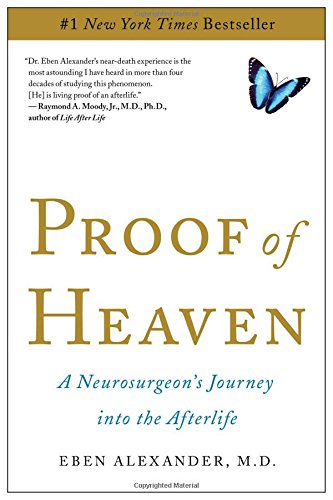
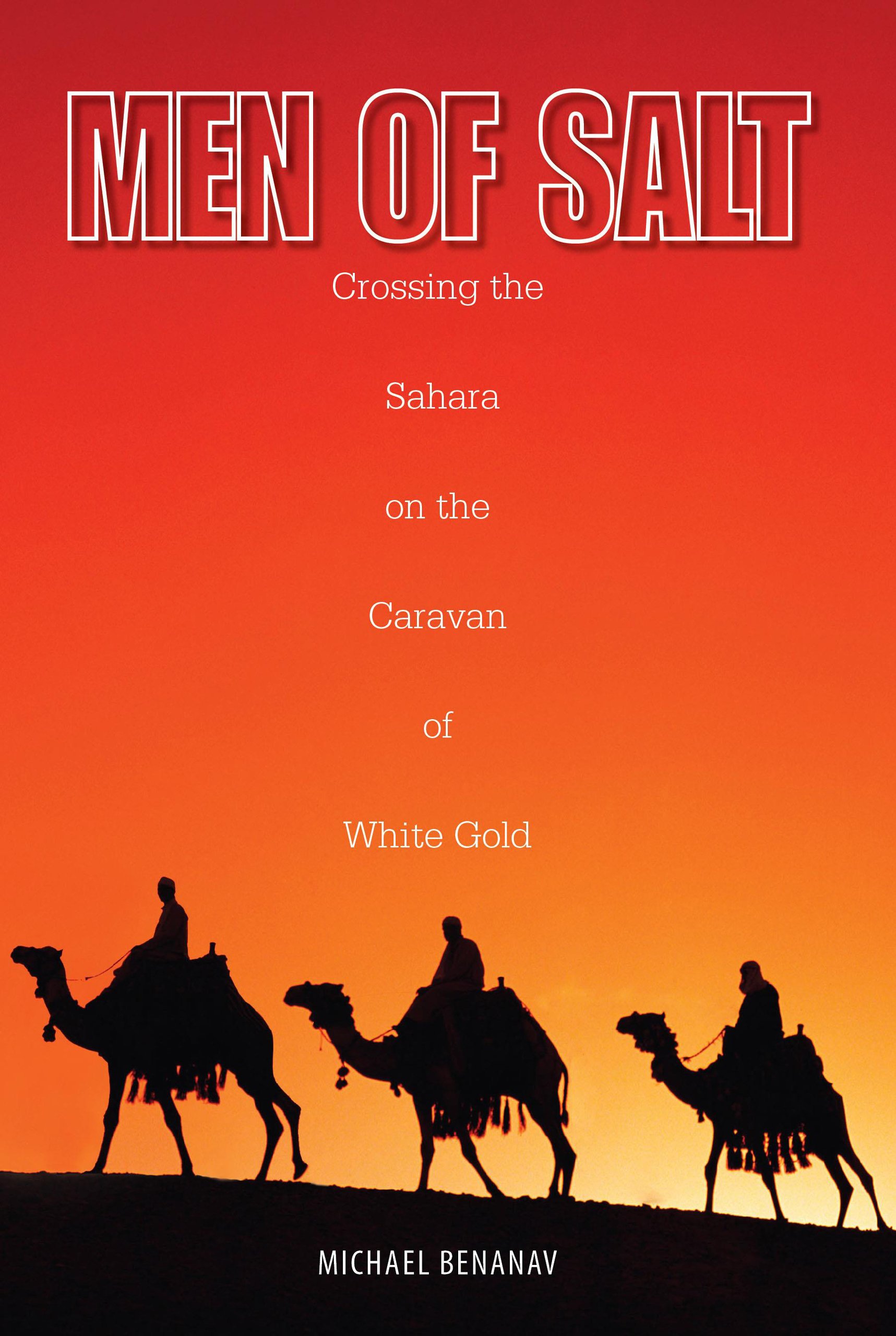
Poverty does not cause crime. Taoudenni is the poorest place in the world, and they don't even have a word for crime. The couple of times a year when there's a disagreement between two men (the population is 100% male, because the environment is so harsh the women and children live hundreds of miles away and the men see them a few months out of the year) the village elder comes up with a solution and everyone accepts it as final.
What causes crime is relative poverty. If very poor people live in the same area as very rich people that conflict causes crime.
Ken Wilber explains why only religion provides the structures and tools necessary for both growing up and waking up. Nothing else can create a cohesive community that gives meaning to our lives, or provide the means of escaping suffering and discovering our true identity.
We already know why Europe wastes so much food. We've all heard of the butter mountains and wine lakes. The EU's socialistic Common Agricultural Policy demands that farmers produce hundreds of millions of Euros worth of surpluss goods, that the government buys with confiscated taxpayer money, in order to keep the paper lantern economy afloat. But the United States is different. Except with corn production, which is wasted to make horribly inefficient E85 gasoline, the US does not have anywhere the same level of central planning when it comes to agriculture as the EU (thank God). So why does the US waste enough food to feed an extra billion people? It turns out that capitalism (or crapitalism when it fails like this) can be just as destructive as socialism.
Blaise Pascal formulated his famous "wager" in his notes and never published them in his lifetime. The wager says basically that we cannot know whether God exists or not, so we should act as if God does exist because the promised reward for living a moral life is infinitely beneficial and the punishment for living an immoral life is infinitely harmful. If God does exist and we live a moral life then we get infinite reward. If God does not exist and we live a moral life we sacrifice nothing because life would be equally meaningless no matter how one chooses to live.
As Clavius states in the movie Risen what his greatest fear is: "Being wrong, and wagering eternity on it."
The main objections most people have to Pascal's wager never seemed to cut it for me.
The first objection, which Pascal himself simply laughed at as a word game, is that there are multiple religions with different gods and to follow one religion faithfully would mean violating the tenants of other religions, all of which have infinite consequences. This objection is false, and obviously so, because there really are only two religions with infinite consequences – Christianity and Islam – and the two are mirror opposites of one another. And if you need help figuring out which is which then you're hopeless and shouldn't be pursuing philosophy.
The second objection argues that God would never accept someone who is persuaded by the wager because such a person is being moral for selfish reasons. This objection, too, has been transformed into a joke by the anti-Christians, because the only people opposing Pascal very rarely talk about other religions, which always seemed suspicious to me, as if their primary objective was just anti-Christian. They are not atheists because none of them seem to oppose the infusion of paganism into modern society, like all the days of the week and the months being named after pagan deities (and yes, there are many thousands of people who profess belief in Odin and nature spirits and all of that, so the argument that these are dead religions falls flat). And very few of them ever dare criticise Islam, and most actively praise it. Let's face it, if the money said "In Thor We Trust" or "In Allah We Trust" none of these so-called atheists would complain. Their only problem is with Christianity because it gives them the out to be edgelords.
Atheists seem to be saying that God, or at least the Christian God, would endow humans with the faculties of reason and intelligence and then demand that we never use them. The God of the objectors wants humans to be stupid, based on the false notion that faith means "belief without evidence", when, in actuality, faith in the Biblical context means something closer to trust, and is arrived at through reason and evidence.
But God is not the Devil, and God wants people to be moral, because God is moral. If God wants people to be moral then God wants people to be smart. Smart people come to trust God through reason and evidence, and can apply that reason to see that it is better to be moral and believe in God than to be immoral and disbelieve in God. An intelligent person can appreciate Pascal's wager, because morality within a Western context is inextricably linked to Christianity.
This isn't to say that God exists. Pascal was not arguing for the existence of God with his wager, although he did present arguments for the existence of God in the same unpublished book. Pascal was merely saying that it is better to act as if God exists, meaning that it is better to act morally than to not act morally, because the consequences otherwise are too horrific to contemplate.
And we've seen those consequences. We've seen the hundreds of millions dead as a result of societies that have tried to kill God. The consequences go above and beyond survival after death, they impact the world of the here and now. The only thing that can replace God is the absolutist state, and the problem with the absolutist state is that it does not recognise any authority outside of itself. The absolutist state has no room for forgiveness, where as God's mercy is very great indeed. We've seen this with the gulags and the killing fields, and more recently with cultural Marxism and how the left has begun to eat its own. In the great oppression olympics, the left has sought to crucify its own members who are not extreme enough. There is only one place behaviour like this ends, and that's a mass grave.
Whether we want to think of the metaphysical implications or not, the pragmatic implications of cultural Christianity more than justify the continuation and strengthening of Christian culture within Western society.
Atheist Richard Dawkins identifies as culturally Christian.
Matt O'Dowd from the web series PBS Space Time gives a 30 minute presentation on the possibility of escaping the Long, Slow Decline and building a galactic civilisation. The problems facing us are lack of drive, the energy cliff, and most importantly the ability to communicate.
His conclusion? If the speed of light is the absolute limit to communication then it should only be possible to sustain a civilisation over a few hundred light years before distances become too great and fragmentation occurs. The galaxy may be full of civilisation, but they are too far spread out to effectively communicate with one another.
Had Germany not rushed to provide blanket support (the "blank cheque") of Austria-Hungary after Serbia was only 20 minutes late responding to the Austro-Hungarian list of demands the chickenhawks in Vienna would have been forced to sit on some ice, and then, in 1916 when the emperor died, the empire would have fallen apart on its own.
Had Britain not rushed to defend Belgian neutrality against the evils of the Hun (7,000 dead Belgians were worth more to the British than 10 million dead Congolese) the war would have ended in 1914 with a repeat of the Franco-Prussian War 40 years earlier.
The war could have been avoided in at least three different ways. The question is should the war have been avoided? If not 1914 would not another casus belli arisen eventually as two bloated and decrepit empires teetered on the verge of collapse and as Germany would inevitably sought its place in the sun? Was it better to preempt a potentially more disastrous future war by charging into war in 1914?
The Kessler Syndrome, proposed by Donald Kessler in 1978, is a runaway destruction of satellites in orbit by space debris. As each satellite is destroyed it produces more debris that destroys more satellites until space becomes inaccessible from the Earth because the planet will be surrounded by an impenetrable barrier of shrapnel for decades. The more rockets that are sent up, and the more decommissioned satellites that remain in orbit, creates an increasing probability for a cascading failure of low earth orbit. Currently there are no extant methods of reducing the amount of garbage in space. This represents yet another technological hurdle that humanity will need to solve in order to avoid the decline and pursue a spacefaring future.
Do we want the Truth or do we want to be "educated"? There is a tendency of people in control, whether in universities or in governments, to want to "educate". Not for the Truth, but for the convenience of the moment, thinking they are the prophets of the zeitgeist, and by their manipulation of the public mind they will bring people around to the "right" direction.
- Richard Rose
Like the Tao, any description of this thing (I don't know what to call it) would limit what it is, and what it is is limitless, so it cannot be described. Even saying this is limiting it. Go figure.




 Do we want the Truth or do we want to be "educated"? There is a tendency of people in control, whether in universities or in governments, to want to "educate". Not for the Truth, but for the convenience of the moment, thinking they are the prophets of the zeitgeist, and by their manipulation of the public mind they will bring people around to the "right" direction.