Ad agency Workforce Central Florida spent $73,000 of YOUR money on a campaign to design a cartoon character "Dr. Evil Unemployment" and $14,000 of YOUR money buying 6,000 capes to give to unemployed people. They call it the "Cape-A-Bility Challenge." Wow! It is literally impossible for someone to write this. This could NEVER have been a fictional story. No writer, no matter how talented, could EVER assume someone would do something anywhere near this asinine. There are 20 million unemployed people in the country, and these assholes spend tax money on this? I don't want a fucking cape. I don't want to vanquish a foam cutout of a fictional character who isn't responsible for anything. The agency pulled the plug on the campaign because it was "too out-of-the-box."
These two stories have been in the stack for months. What with the world going mad and all I've dug deep into the stack to find two stories that are not depressing (I was originally going to do something on income tax).
The first story comes from The Seattle Times, October 2010. A man from Ballard (which I assume is a neighborhood in Seattle), Kenny Johnson, was pulling out of his driveway when he witnessed a car accident. No one went to help the people trapped inside the burning car, a man and his daughter. Kenny went in the car and pulled the two to safety because he's a real hero (not an anti-hero or a tv hero or someone out for revenge). The girl, three year old Anna Kotowicz, survived with relatively unharmed. Her father, 37 year old Andy Kotowicz, died in the hospital three days later.
Several days later Kenny was sleeping beside his wife when, in the hours known as wee, a man appeared in the room standing over him. It was Andy, and he had a message for Kenny to deliver to his wife and daughter, and another message to give to his co-workers. He would go on to deliver the messages, which were well recieved.
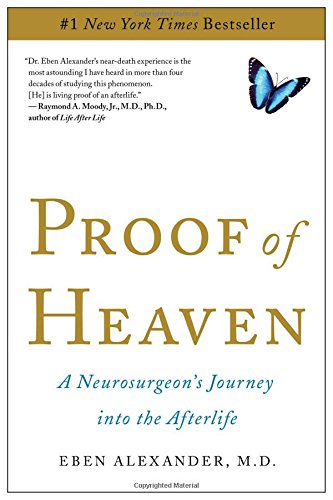
The second story comes from HotAir.com, 19 November 2010. The story recounts events from three years ago, when then four year old Colton Burpo was in surgery for a burst appendix. During the operation he had a perfect example of a Near Death Experience, seeing what his parents were doing while outside his body. These veridical perceptions were accurate and represent knowledge Colton could not have gained had he not really witnessed his parents from outside his body.
Colton later visited Heaven where he met his grandfather, whom he had never known, as a young man. He was later able to identify his grandfather in a photograph that his father had to go searching for. Colton also met with his sister, who had died before she was born. His parents had not told him of the miscariage, and were quite surprised by their son's knowledge.
The author of the second story needs to take a few more lessons in journalism (a lot more), but otherwise, another wonderful and uplifting story for us during these very troubling times.
But now that moment has passed, damped by the recognition that for many people life today is even harder than before, especially for the poor and for those who survive on tourism — like the army of taxi drivers who are forced to battle ever worsening traffic for ever fewer passengers.
“No one is joking,” said Mohamed Saleh Mohamed, as he navigated a taxi through downtown Cairo’s congested streets recently. “There is no happiness, no work. The country is a mess.”
The sudden turn from humor points to a sense of revolution fatigue that has swept over a nation where people had hoped for overnight change only to awaken to the myriad challenges facing them.
Who warned you of that? Who warned you? Who said the Egyptian people have no idea how to govern themselves and Mubarak should have been allowed to serve out his term while a new government was worked out?
The glow of people power that toppled the president has not vanished, but it has dimmed. After 30 years of predictable discomfort, the public is not accustomed to so much uncertainty.
There are signs of increased sectarian tensions. The economy is in deep trouble. The crime rate is rising. The military is suddenly not looking like such a good guy any longer, accused of using beatings, torture and military tribunals to silence critics. And there are far too many reminders of the past, like the state security apparatus that, though renamed, is effectively functioning as before with mostly the same personnel.
Who said the country would fall apart once Mubarak was gone?
The surge of revolutionary humor was already beginning to slow, many people said, when Egyptians voted on a referendum to the Constitution that would speed up the election of a parliament and president.
The vote served as a wake-up call to many secular, liberal activists involved in the revolution, who had campaigned against the referendum because they thought they needed time to build organizations to compete with established groups like the Muslim Brotherhood.
When the referendum passed, there was an uptick of humor — sarcasm, really — that was not unifying, indicative of re-emerging divisions: “Businesses should turn to importing ankle-length galabiyas, beards and head scarves from China,” went one quip, a reference to religious garb.
“Women will not be allowed to vote, as their voices are considered obscene,” went another.
Who warned of the Muslim Brotherhood taking over post-Mubarak and instituting sharia law? Me and Harvard professor and economist Niall Ferguson. I don't like to gloat, but, Wow! I sure called this one. While all the liberal racists and know-it-all teenagers who inhabit the internet were cheering on the face-space democratic revolution I was posting a little watched video saying that this could only lead to ruin. And I was right. And you were wrong! Winner! Winner! I am a winner!
I first learned of Sadhu Haridas just this year while reading Man's Eternal Quest, an anthology of talks given by Paramhansa Yogananda (the first of three such anthologies put out by SRF, each, I assume, about 500 pages long. To be fair, I may have read something about him in passing in some other book and simply forgotten, though I don't think it is pertinent to this subject.). Yogananda mentions Sadhu Haridas performing a feat similar to that of Pilot Baba, namely, he was buried alive for forty days in 1837 with only the limited supply of air inside the coffin, and when he was dug up he sprung out without any ill effects.
An article written at the time by Claude Wade, describes the situation as follows. Sadhu Haridas, refered to as the fakir, was tied into a white linen bag "squatted like a Hindu idol" (lotus posture?), with his ears and nostrils plugged with cotton and wax. He was then sealed with a padlock in a wooden box measuring four feet by three feet and buried in a cell three feet beneath the ground that was just big enough for two men to sit inside next to the box (in another article the box is said to be four feet by eight feet, see Cpt. Osborn link below). This cell was dug inside a small room made of brick. The door was made of heavy wood sealed also with a padlock and mud (so people would know if the room had been opened before it was supposed to). The building belonged to Ranjit Singh, the Maharaja of the Punjab, who placed his personal seal on the door to prevent it from being tampered with. He placed four guards at the door who were relieved every two hours, day and night, for the duration of the forty days.
Mr. Wade describes the moment when Sadhu Haridas was removed from the wooden box:
"The servant then began pouring warm water over the figure; but as my object was to see if any fraudulent practices could be detected, I proposed to Runjeet Singh to tear open the bag, and have a perfect view of the body before any means of resuscitation were employed. I accordingly did so; and may here remark, that the bag, when first seen by us, looked mildewed, as if it had been buried some time. The legs and arms of the body were shrivelled and stiff, the face full, the head reclining on the shoulder like that of a corpse. I then called to the medical gentleman who was attending me to come down and inspect the body, which he did, but could discover no pulsation in the heart, the temples, or the arm. There was, however, a heat about the region of the brain, which no other part of the body exhibited."
Servants removed the stoppers from his nostrils and ears, bathed him in warm water, massaged his limbs, and gave him ghee to drink. After about thirty minutes Sadhu Haridas woke up and spoke to the Maharaja "do you believe me now?" to which the Maharaja "replied in the affirmative," and then bestowed upon the Sadhu a royal token reserved for princes and other persons of distinction.
Claude came out of the experience completely convinced that there had been "no fraud or collusion in the exhibition [they] had witnessed."
This event, according to a British Captain Osborn writing in 1880, was an experiment performed by the Maharaja who did not believe Sadhu Haridas could return to life from a deathlike state as he claimed he could. If we are to believe this account (and remember, vintage DOES NOT discount scientific experiments, otherwise every experiment ever conducted would have to be repeated every year because time erases factuality), then this provides a good example of the genuine scientific mindset alive and well in India more than a century ago. Just like the experiments with Prahlad Jani, genuine science can be performed to test yogic powers, NOT just debunking exercises. According to Cpt. Osborn, the Maharaja believed that fraud was involved and took every step necessary to prevent anyone from tampering with the Sadhu's body before the experiment was completed. The Maharaja was determined to leave the Sadhu's body inside the cell for forty days, and then discover either a living man, thus demonstrating his claim, or a corpse, demonstrating a fraud.
According to Cpt. Osborn, Sadhu Haridas lived off of milk for several days before being interred. On the day he was buried he swallowed thirty yards of linen and then brought it up again to clean his stomach. He then had his long beard shaved on the day he was buried in the ground and when he was dug up there was no hair growth on his face, which for the Captain proved he had been in suspended animation the whole time.
On the day he was buried Haridas first entered suspended animation; he "[layed] his tongue far back in his throat, crosses his hands on his breast, and suspends animation by means of holding his breath," and then was enclosed in the linen bag and locked into a wooden chest by the Maharaja himself. The chest was buried in a barley field and the above mentioned brick room was manufactured around where the chest was buried. (In the yogic tradition if one places the tongue up behind the palate they can stimulate a nerve that will allow them to go without food for several weeks or months. I've never met or read about anyone who has done this, so I can't say if it is true or not.)
What this experiment tells us, about yoga, or the siddhis, or human physiology, is, in itself, not much. No single experiment can stand as arbiter over anything. However, it does serve as one example among many that can lead us to certain conclusions, namely: 1. At least some siddhis are real (so far all those we can test have been demonstrated to be real), and 2. Human beings are capable of far greater control over their physiological functions than current medical science is willing to permit. In conclusion, I will borrow the words of Claude Wade on the subject:
"I shared entirely in the apparent incredulity of the fact of a man being buried alive and surviving the trial without food or drink for various periods of duration; but, however incompatible with our knowledge of physiology, in the absence of any visible proof to the contrary, I am bound to declare my belief in the facts which I have represented, however impossible their existence may appear to others."
The other wiki has a very short article on Sadhu Haridas that doesn't say much, if anything, beyond what is mentioned above.
Post Script Sai Baba's health is continuing to improve slowly after 15 days of hospitalisation. Updates can be found at this site created specifically for devotees to follow the progress of Swami's condition.
According to the Hindustan Times Sai Baba has been in the Super Specialty Hospital since 28 March due to a lung infection. In early April he has had a pacemaker put in, and is on a ventilator and dialysis. Doctors say he is in stable condition and is conscious and responsive, though he cannot speak as he is intubated.
Even Avatars have physical bodies that undergo physical trauma. Buddha died of food poisoning after eating tainted pork, Christ was tortured and crucified, and Ramakrishna had throat cancer. Integral frontman Ken Wilber suffered serious injuries in July 2006 due to his autoimmune disease, injuring his shoulder and spine. He suffered twelve grand mal seizures in December of the same year and flatlined three times (That's also the year Baba broke his hip, an injury which has confined him to a wheelchair, as well as the year where my own trauma started me on the path of the mystic). Since then he has aged rapidly. One must remember, however, that Ken is built like Achilles, whereas Sai Baba is made of something softer. (UPDATE: Radio Sai has provided a short video of one of Baba's discourses from 2003 in which he says basically the same thing I had written here yesterday. An exerpt reads:
Dr. A. N. Safaya has put out a 16 minute video detailing Swami's condition and the efforts taken by the doctors to save him. Dr. Safaya says that Swami's condition has improved since he was admitted and he should make a full recovery. I will pray for Baba's swift recovery.
Baba said in 1963 that he will live for 96 years and that eight years later, 2030, he will incarnate for the third and final time as Prema Sai Baba, whose mission is to end the Kali age (according to one source this should happen in 2053).
In 2008 I was writing a short story called "The Man from Heaven" about a Buddhist monk who tried to prevent the First World War in 1889, warning the world leaders of the impending disaster, but had an accident and entered suspended animation. He wakes up in the present day and becomes a minor media sensation for a while, then, realizing not only he failed to prevent the war but that the world did not come to an end, must struggle to adapt to a world radically different from his own. After writing 19 pages and realizing that I was less than a quarter done with the story, it became apparent that this would not be a "short" story by any stretch of the imagination. An 80 page story occupies a sort of limbo. It is too short to be published on its own, but too long for the few remaining literary magazines to accept it. I supposed it could be adapted to a film script, but seeing as how the only audience the studios care about is 15 to 30 year old men who only like tits and explosions, no one would green-light a script about a 19th century Buddhist monk trying to adapt to 21st century life (not to say tits and explosions are bad, just that they are different from confused monks wandering around searching for answers to troubling questions). For that reason the project was scrapped.
Anyway, the idea for the story came from this real life example, Dashi-Dorzho Itigilov, a high level Siberian Lama whose body has been preserved for over 80 years (other wiki warning!). In 1927 Lama Itigilov told his monks to perform funeral rituals on him. He warned of the coming of communism and for all the monks to flee Russia (Stalin would try to exterminate them). One source I read says he told the monks that in 100 years (or 75 years, according to other sources) he would awaken from his hibernation to save the world, just like the fictional monk from "The Man from Heaven." Whether or not he's coming back, 84 years without any sign of decay with no form of preservation is amazing.
Stories of miraculous preservation are well known from the lives of saints. The bodies of some saints remain in very good condition without any preservation for centuries, despite being subjected to conditions that should rapidly decay a body (exposure to mositure, air, or chemicals). What makes Lama Itigilov interesting is that his skin remains soft, his joints flexible, and liquid blood remains in his veins. A medical examination revealed his body to be similar to that of a person who died between 12 and 36 hours ago (judging from the few available pictures, his moustache seems to be missing though, and his nose has deflated). His body's proteins have not denatured in any way.
The 16th Karmapa, Rangjung Rigpe Dorje, died in a hospital in Zion, Illinois in 1981. The doctors allowed his followers to perform the traditional three day Tibetan death rituals in the hotel room. During that time, while the Karmapa's body was in lotus posture, his heart remained warm, just like in a living person. The chief of staff at the hospital, Radulfo Sanchez, admits that there is no medical explanation for the Karmapa's heart remaining at body temperature for three days after death. When his body was cremated the Karmapa's two perfectly healthy dogs died and a rainbow appeared over the monestary where the cremation was being performed. Tibetan tradition speaks of the rainbow body, a body made of pure light which only those who reach highest enlightnment assume following the death of their physical body. The ranibow body is completely indestructable, and some say it can even be constituted into a new physical body at will (perhaps as Jesus did during the resurrection?). Yogananda's guru Sri Yukteswar said the same thing in Autobiography of a Yogi (Chapter 43: The Resurrection of Sri Yukteswar), that perfected beings possess bodies of light that can materialize and dematerialize at will.
Is Lama Itigilov really in a state of suspended animation? Will he awaken in 2027 to save the world, or did he realize the rainbow body, leaving his earthly form intact merely as a relic, a symbol to demonstrate to the world the veracity of the path of spirit? We'll have to wait 16 years to find out. In the mean time we can watch this clip from Al Jazeera of all sources. Runs 3 minutes 19 seconds.
Do we want the Truth or do we want to be "educated"? There is a tendency of people in control, whether in universities or in governments, to want to "educate". Not for the Truth, but for the convenience of the moment, thinking they are the prophets of the zeitgeist, and by their manipulation of the public mind they will bring people around to the "right" direction.
- Richard Rose
Like the Tao, any description of this thing (I don't know what to call it) would limit what it is, and what it is is limitless, so it cannot be described. Even saying this is limiting it. Go figure.




 Do we want the Truth or do we want to be "educated"? There is a tendency of people in control, whether in universities or in governments, to want to "educate". Not for the Truth, but for the convenience of the moment, thinking they are the prophets of the zeitgeist, and by their manipulation of the public mind they will bring people around to the "right" direction.